Matcha Wholesale Price in Utah: 2026 Landed Cost, MOQ & Delivery Guide
If you source matcha for a Salt Lake City or Lehi cafe group, a Wasatch Front supplement or protein maker, a grocery private-label program, or a Utah co-packer, the first question is almost always the same: what matcha costs at wholesale in Utah. The honest answer is that no fixed per-kilogram number exists until the grade, origin, packaging, certification, order size, and the trade term it is quoted against are all settled. What really decides your margin in an inland state like Utah is the landed cost delivered to your dock in Salt Lake City, Provo, or Ogden — the powder price with freight, insurance, duty, customs handling, and the run in from a West Coast gateway layered on top — not the headline rate on a national web shop. Utah, though, has a twist most inland markets lack: it can clear and consolidate freight inland, near Salt Lake City rather than only at the coast. This guide walks a Utah buyer through how a wholesale price is built, how it moves by grade, what is pushing it in 2026, how the powder actually arrives, how to keep it in a dry high-desert climate, which federal and state rules apply, and how to pin down a current, comparable quote.
For Companies Seeking Matcha Powder
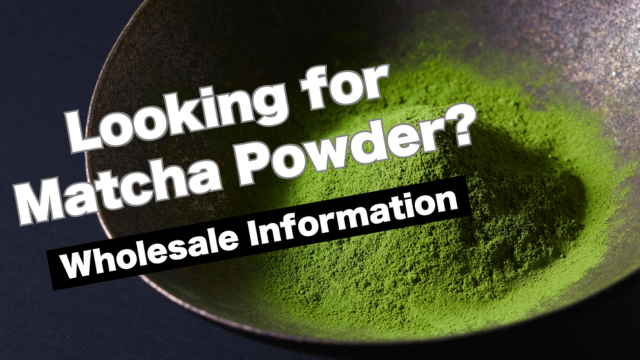
We source matcha from Japan’s premier production regions including Kyoto Uji, Kagoshima, Fukuoka, and Shizuoka, offering comprehensive grade ranges from organic JAS-certified ceremonial grade to processing-grade matcha.
Common Challenges:
- “We have projects but cannot secure stable matcha supply…”
- “We want to incorporate matcha into new café menu items!”
If you face these concerns, consult with Matcha Times. Feel free to contact us for initial inquiries.
\Read Also/
Key takeaways on matcha wholesale price in Utah
- No single per-kilogram wholesale rate exists; price is driven by grade, origin, packaging, certification, and volume, and it only means something once it is tied to a trade term such as FOB Japan, CIF a US port, or delivered Utah.
- Judge suppliers on the delivered landed cost into Utah, not the bare powder price, because ocean freight, duty, West Coast clearance, and the rail-and-truck leg into Utah all sit between a quote and your warehouse.
- Grade sets the tier — ceremonial sits well above barista and culinary, with ingredient grade lowest — and a retail tin price is never a wholesale benchmark.
- Utah is landlocked but not stranded: the Salt Lake City inland port, Foreign-Trade Zone, and Union Pacific intermodal terminal let freight clear and consolidate inland, which a good quote can turn into an advantage.
- Utah’s arid, high-elevation climate is quietly kind to matcha — low moisture helps it keep — but intense UV, dry summer heat, and big day-to-night and elevation swings are the real risks to design around.
- You carry two compliance layers: federal FDA rules plus, if you manufacture, repack, or warehouse here, a Utah Department of Agriculture and Food registration.
- Wholesale levels have risen sharply since 2023 on tight Japanese supply, so get a current written quote for your exact grade, volume, and delivery point instead of trusting a static online figure.
Researched and reviewed by the Matcha Times Editorial Team, operated by the Japan Matcha Export Organization (JMEX). See our Editorial Policy and Sources & Methodology. Found an error? Tell us.
\Read More/
What a delivered matcha wholesale price actually includes in Utah
Wholesale is the business rate for matcha bought in bulk to resell or to formulate with; it is not a consumer tin sold at a volume discount. The first thing a supplier quotes is usually the powder price at one trade term, and the space between that figure and stock resting in a Utah warehouse is exactly where buyers quietly lose margin. Treating every quote as a delivered landed cost rather than a shelf price is what keeps a comparison fair when the goods still have to travel inland to the Wasatch Front.
| Landed-cost layer | What you are paying for | Why it matters in Utah |
|---|---|---|
| FOB / ex-works powder price | The matcha itself at a stated grade and pack size | The only piece a web price hints at; everything below is added on top |
| Ocean freight | Japan to a US West Coast gateway | Utah has no seaport, so an ocean-to-coast leg is almost always in the picture |
| Cargo insurance | Cover while the goods are in transit | Small, but it scales with value on premium ceremonial lots |
| US import duty | Customs duty assessed at entry | Green tea and matcha are duty-free at the General rate under HTS 0902 |
| Customs & handling | Clearance, terminal fees, and drayage off the dock | Can be done at the coast or, usefully, inland at the Salt Lake City port |
| Inland rail & trucking | Intermodal line-haul plus the final truck leg | West Coast to Salt Lake City by Union Pacific rail and I-15/I-80 trucking is a real, distance-driven cost |
| Storage | Warehousing until the powder is used or shipped on | Cheap and climate-friendly in dry Utah, if UV, heat, and air exposure are controlled |
Two Utah buyers can be handed the same FOB price and still land it at very different costs, depending on grade value, which coast the goods clear on, who moves them inland, and whether customs is handled at the port of entry or in Salt Lake City. That is why a quote showing only a per-kilogram figure, with no trade term and no delivery city, can never be lined up fairly against another.
Matcha wholesale price by grade
Grade is the single biggest lever on price, so the discipline is to buy the grade the job needs rather than the most impressive-sounding label. The tiers below run from highest to most economical, and we describe where each one sits relative to the others instead of printing a per-kilogram number, because the figures published online are commercial estimates that swing widely by provider, grade definition, and volume — and we do not repeat a vendor’s number as if it were a fact.
| Grade tier | Typical Utah use | Where it sits on price |
|---|---|---|
| Ceremonial | Signature whisked drinks, specialty cafes, hotel and resort menus | Highest — shade-grown, early-harvest, finely stone-milled tencha |
| Barista / latte | Cafe lattes and iced matcha that must hold color in milk | Upper-middle — tuned for milk performance, below ceremonial |
| Culinary | Bakeries, pastry, ice cream, and dessert production | Lower-middle — color built to survive baking and freezing, in larger packs |
| Ingredient / industrial | Supplement capsules and powders, RTD drinks, protein and smoothie blends, private label | Lowest per kilogram — specified for dispersion and scale, not straight drinking |
- Whisking a ceremonial grade into a capsule, a baked good, or a bottled drink is money poured away — a culinary or ingredient grade performs identically there for far less.
- A “ceremonial” priced like culinary, or a barista grade sitting below the culinary floor, usually signals mis-grading or dilution, so confirm the grade against a sample rather than a label claim.
- Inside any one tier, named-region single-origin leaf and an earlier harvest cost more than blended, later-harvest material.
What is moving matcha wholesale prices in 2026
The short version: how tight Japanese supply is, what your order looks like, and how the goods travel. Any one of the levers below can shift the final landed cost into Utah on its own, which is why two quotes for what sounds like the same matcha rarely match.
- Grade and specification: ceremonial, barista, culinary, and ingredient grades price in that descending order, and the grade should follow the use, not the other way around.
- Origin and harvest: single-origin, named-region, earlier-harvest leaf sits above blended, later-harvest lots.
- Certification and testing: organic status, a certificate of analysis per lot, and pesticide, heavy-metal, and microbiological testing each add cost that protects you downstream — and matters doubly for a supplement maker.
- Packaging: retail tins and sachets cost more per kilogram than bulk foodservice bags, and nitrogen-flushed or foil packs add a little more.
- Order size and commitment: steady, contracted volume generally earns better per-kilogram terms than one-off spot buys.
- Logistics and trade term: FOB versus CIF versus delivered, the coast of entry, and whether you clear customs inland at Salt Lake City all feed the landed number.
- Supply pressure and FX: tencha supply is tight and the yen moves, so both availability and currency shape the 2026 picture.
For the supply backdrop, Japan’s green tea exports — counting every form, not matcha alone — reached roughly ¥36.4 billion on about 8,798 tonnes in 2024 according to the Japan Ministry of Finance Trade Statistics, with powdered tea (matcha and similar) making up a majority of that volume. Read those as green-tea totals, labelled by value and by volume, never as matcha-only figures. Industry trackers separately report that wholesale matcha has climbed steeply since 2023 on constrained tencha; treat that as a commercial observation that varies by source, and confirm today’s level with a live quote.
How matcha reaches Utah through the Salt Lake City inland port
This is where sourcing into Utah parts ways with the national price pages, which say nothing about geography. Utah is a deep-inland Intermountain market with no seaport, yet it is one of the better-positioned landlocked states in the country for freight. Salt Lake City sits where Interstates 15, 80, and 84 meet — the self-styled Crossroads of the West — and the Utah Inland Port Authority is building out rail-served intermodal capacity, a Foreign-Trade Zone, and inland customs clearance around the Union Pacific Salt Lake City terminal and the airport. For a matcha buyer, that means the goods do not have to be fully processed at a congested coast before they move your way.
- West Coast entry: most Asian cargo still enters at Los Angeles/Long Beach, Oakland, Seattle, or Tacoma before heading east.
- Direct intermodal rail: Union Pacific runs a Salt Lake City intermodal terminal, so containers can rail directly to the Wasatch Front instead of being trucked the whole way.
- Inland customs and FTZ: Utah’s inland port and Foreign-Trade Zone allow customs clearance, consolidation, and storage inland — handy for consolidating a mixed ingredient order, though the duty saving on matcha itself is limited because it is already duty-free.
- Interstate trucking: I-15 north-south and I-80 east-west put same-day or next-day trucking within reach of Salt Lake City, Provo, Ogden, and much of the Intermountain West.
- Air freight for premium lots: for small, high-value ceremonial lots or an urgent top-up, airfreight into Salt Lake City trades a higher rate for speed and skips the ocean timeline.
- Put the route in the quote: whichever path you choose, insist it appears inside a delivered quote so the inland leg is never a surprise after the powder is already on the water.
The practical rule for a Utah buyer: make every quote state the trade term and the Utah delivery point — for example FOB Japan, CIF a named West Coast port, or delivered to your Salt Lake City or Provo warehouse — so you compare a true landed cost rather than an ex-works powder price. A supplier who already understands the coast-to-Salt-Lake lane, and whether clearing inland helps you, removes friction a purely product-focused vendor leaves on your desk.
Storing matcha in Utah’s dry, high-elevation climate
Matcha is perishable in a way most dry goods are not: heat, light, oxygen, and moisture fade its color and flatten its flavor. Here Utah hands buyers a genuine edge, because the state’s low ambient humidity is one of matcha’s best friends — moisture is the hardest spoiler to control elsewhere, and Utah simply has less of it. The flip side is the high desert’s own hazards: fierce UV, hot and dry summer afternoons, and sharp day-to-night and elevation temperature swings that stress sealed packs. Those belong in your real cost per usable kilogram just as humidity would in a wetter state.
- Lean into the low humidity: the dry air means condensation is rarely your problem, so you can focus storage effort on heat and light rather than fighting moisture.
- Block light and heat: keep storage cool, dark, and airtight, and keep packs out of direct sun and off hot south-facing walls, because Utah’s UV and summer heat are the real degraders here.
- Guard the seal against swings: big diurnal and altitude temperature swings can still pull air through a loose seal, so nitrogen-flushed or foil packaging and tight reseals protect color across the inland leg and in the warehouse.
- Order to turnover: buy to genuine turnover rather than overbuying for a lower unit price, because even in dry air oxidized powder that fades before it sells costs more than a higher headline rate.
MOQ and order-scale bands for Utah buyers
MOQ and per-kilogram pricing are not arbitrary — they follow milling runs, packing, certification paperwork, and freight economics. Rather than quote one number that shifts by supplier and grade, it helps to think in order-scale bands and in what genuinely improves as you move up them. Utah matters here because the Wasatch Front holds one of the densest clusters of dietary-supplement and nutraceutical manufacturers in the country, so volume-and-contract buying of ingredient-grade matcha is a bigger part of this market than a cafe-only state would suggest.
| Order-scale band | Who it fits in Utah | What usually improves with scale |
|---|---|---|
| Sample / trial | A first evaluation before any commitment | Taste, color, and dispersion testing in your real recipe, line, or capsule blend |
| Entry wholesale | A single cafe, bakery, or young brand | Case or few-kilogram packs and the first true per-unit wholesale pricing |
| Growing wholesale | Multi-store Wasatch Front cafe groups, a grocery program, or a regional brand | Stronger per-kilogram terms, packaging choices, and steadier lead times |
| Volume / contract | Supplement and protein makers, co-packers, distributors, and private label | Grade and origin customization, allocation, a COA per lot, and planned supply |
Because no price means anything without those conditions, insist on a written quote stating grade, origin, pack size, certification, volume, and the trade term — then compare like with like across suppliers.
Compliance: federal FDA rules plus Utah registration
Importing or wholesaling matcha in Utah stacks two layers — the federal food-import rules that apply to every US shipment, and a Utah registration that applies because you operate inside the state. Both run more smoothly when the supplier hands over clean documentation, and both belong in your cost and lead-time plan from the start rather than as an afterthought once a container is already moving.
- Federal facility registration: foreign facilities that manufacture, process, pack, or hold food for US consumption generally must register with the FDA, per FDA food facility registration.
- Federal FSVP: if your business is the US owner or consignee at entry, you are typically the importer of record and must run a Foreign Supplier Verification Program — hazard analysis, supplier verification, and recordkeeping — under the FDA Foreign Supplier Verification Programs (FSVP) rule.
- Federal duty: matcha and other green tea sit under HTS heading 0902, duty-free at the General (MFN) rate per the U.S. International Trade Commission Harmonized Tariff Schedule; treat any 2024–25 country-level reciprocal measure as separate, time-varying, and best confirmed with a licensed customs broker.
- Utah UDAF registration: a firm that manufactures, repackages, warehouses, or distributes food — including a dietary-supplement maker — for wholesale in Utah generally needs to register its establishment and pass inspection under the Utah Department of Agriculture and Food manufactured-food program, on top of any federal registration; confirm your exact scope and current fee with the department.
If you only resell pre-packaged tins through a distributor, your obligations are lighter than a direct importer’s; if you import or formulate at volume for Utah’s supplement and food manufacturers, map both layers before the first container sails. A supplier whose export paperwork is already in order shortens all of it.
2026 price outlook for Utah buyers
No one can promise a 2026 figure, but the direction is reasonable to plan around. Japanese tencha supply stays tight against global demand, and currency swings feed straight into import costs, so continued firmness rather than a fall is the prudent planning assumption. Two habits protect a Utah buyer: ordering to real turnover so you are never forced to chase spot availability at a bad moment, and keeping a supplier relationship that can commit to steady monthly supply at an agreed grade.
The counterweight is that Utah’s sourcing and logistics options keep improving: experienced exporters, direct intermodal rail into Salt Lake City, and inland clearance can take time and cost out of the leg between a coast and the Wasatch Front, partly offsetting powder-price pressure. The buyers who come out ahead treat price as a planned, contracted input, not a monthly scramble.
How to vet any matcha supplier on price and value
Rather than ranking vendors, hold every candidate — a US distributor, a Japanese producer, or JMEX — to the same questions. Treat each row below as something to get in writing before you commit to volume, so the lowest headline does not quietly hide the higher true cost of landing matcha in Utah.
| Criterion | What to verify with any supplier |
|---|---|
| Quote structure | A written quote naming grade, origin, pack size, certification, volume, and the trade term (FOB/CIF/delivered Utah) |
| Grade & origin control | Can they hold a defined grade and named origin consistently, lot after lot? |
| Certifications | Organic and any other certifications your product, label claims, or supplement format require |
| Documentation | A COA per lot, plus pesticide, heavy-metal, and microbiological testing, and clean customs paperwork |
| Logistics into Utah | Do they understand a West Coast entry plus intermodal rail to Salt Lake City, the inland port and FTZ option, drayage, and realistic Intermountain lead times? |
| Dry-climate & transit handling | Packaging and handling that protects color and flavor through UV, summer heat, and the inland leg |
| Lead time & supply stability | Can they commit to steady monthly supply and planned reorders through a tight market? |
| Samples | Will they send samples so you can test in your actual product, line, or capsule blend before scaling? |
A vendor who answers these in writing is easy to scale with; one who dodges them is a risk no matter how attractive the opening price looks.
Common pricing mistakes Utah buyers make
- Comparing an ex-works powder price against a delivered price — always line up the same trade term and delivery city.
- Reading a retail tin price as a wholesale benchmark.
- Buying a ceremonial grade for a capsule, baked, or blended product where an ingredient grade performs identically for less.
- Forgetting the inland tail — coast clearance (or inland clearance at Salt Lake City), rail, drayage, and the truck leg — when weighing quotes.
- Over-ordering to chase a lower unit price, then losing color and flavor before the stock turns over.
- Assuming dry air removes every storage worry, and leaving packs exposed to UV and summer heat.
- Leaving federal FDA steps and Utah UDAF registration until a shipment is already inbound.
How to lock a stable Utah price
- Match your grade to your actual use with the grade table above, so you are not paying for a tier you do not need.
- Request samples and test taste, color, and dispersion in your real product, line, or capsule blend before committing.
- Get a written quote naming grade, origin, pack size, certification, volume, and the trade term — the only basis for a fair landed-cost comparison into Utah.
- Settle the import path: importer of record, FDA registration and FSVP, whether to clear inland at the Salt Lake City port, Utah UDAF registration if you manufacture or repack, and US labeling.
- Place a first order sized to genuine turnover, then agree a reorder cadence and, as volume grows, a contract that fixes grade and supply against a tight market.
- Revisit the pricing as volumes and FX move, but keep the relationship that guarantees supply through the inland lane.
Why Buyers Choose JMEX (Japan Matcha Export Organization)

For Utah importers, wholesalers, supplement and protein makers, and co-packers, JMEX works on the Japanese export side — origin and grade selection, certifications, and customs documentation — so a quote arrives with the specification fixed and the paperwork ready, and your West Coast or inland Salt Lake City clearance, the rail and truck leg to the Wasatch Front, and your FDA and Utah state filings all run more smoothly.
export track record to 43 countries
Frequently asked questions about matcha wholesale price in Utah
Direct answers to the pricing questions Utah buyers ask most before sourcing at volume.
How much does wholesale matcha cost per kilogram in Utah?
There is no single figure, and we will not invent one. The wholesale price per kilogram depends on grade (ceremonial, barista, culinary, or ingredient), origin and harvest, packaging, certification, and order volume, and it only means something quoted against a trade term such as FOB Japan, CIF a West Coast port, or delivered Utah. A retail tin price is not a wholesale rate. Ask for a current written quote for your exact grade and volume so you can compare landed cost like with like.
What is landed cost, and why does it matter for an inland state like Utah?
Landed cost is the powder price plus ocean freight, insurance, duty, customs and handling, the inland rail and truck run, and storage — everything it takes to get usable matcha onto your Utah dock. It matters here because the state has no seaport, so the leg from a West Coast gateway to the Wasatch Front is always part of the real cost. The upside is that Salt Lake City’s inland port and intermodal rail can make that leg efficient. Compare delivered or CIF quotes, not an ex-works number.
Which matcha grade should a Utah business buy?
Match the grade to the use. Ceremonial suits signature whisked drinks and premium hospitality; barista or latte grade is built to hold color and taste in milk for cafes; culinary suits bakery and desserts; and ingredient or industrial grade fits supplement capsules and powders, RTD drinks, protein blends, co-pack, and private label. Buying a ceremonial grade for a capsule or blended product usually wastes money without improving the result.
Is matcha subject to US import duty when it enters the country?
Green tea including matcha falls under HTS heading 0902, which is duty-free at the General (MFN) rate according to the U.S. International Trade Commission’s Harmonized Tariff Schedule. Any country-level reciprocal measure is separate, time-varying, and best confirmed with a licensed customs broker before you ship, so it is not part of the base product duty — and because matcha is already duty-free, the main benefit of Utah’s Foreign-Trade Zone for matcha is consolidation and inland clearance, not a duty saving.
What license do I need to sell wholesale matcha in Utah?
Expect two layers. Federally, a foreign facility generally registers with the FDA, and if you are the importer of record you run a Foreign Supplier Verification Program and meet US labeling rules. At the state level, a firm that manufactures, repackages, warehouses, or distributes food for wholesale in Utah — including a dietary-supplement maker — generally registers its establishment and passes inspection with the Utah Department of Agriculture and Food. Confirm your exact obligations and the current fee with the department, since they depend on what you do with the product.
Does Utah’s dry climate and elevation affect storing wholesale matcha?
Yes, and mostly in your favor. The low humidity means condensation is rarely a problem, which helps matcha keep its color and flavor. The risks shift to light and heat: intense UV, hot dry summer afternoons, and sharp day-to-night and elevation temperature swings that can pull air through a loose seal. Keep storage cool, dark, and airtight, keep packs out of direct sun, use nitrogen-flushed or foil packaging, and ask how the supplier packs for the inland transit — all of which protect your effective cost per usable kilogram.
Sources & Methodology
This guide was researched and last reviewed in October 2026, and relies only on the external primary and official sources listed below — each shown with what it supports, its date, and its scope. Wholesale price levels are described qualitatively because published per-kilogram figures are commercial estimates that vary by provider, grade definition, and volume; we do not reuse a vendor’s number as fact or average differing figures. This article presents no first-party Matcha Times dataset.
- U.S. International Trade Commission, Harmonized Tariff Schedule — US duty position for green tea/matcha (HTS heading 0902, duty-free General rate); accessed 2026; scope: US MFN product duty.
- FDA, Foreign Supplier Verification Programs (FSVP) final rule — US importer verification obligations; accessed 2026; scope: US food imports.
- FDA, Registration of Food Facilities — foreign food facility registration requirement; accessed 2026; scope: US food facilities.
- Utah Department of Agriculture and Food, Manufactured Food program — Utah establishment registration and inspection for manufacturing, repacking, warehousing, and distributing food (including dietary supplements) for wholesale; accessed 2026; scope: Utah food establishments.
- Utah Inland Port Authority — Salt Lake City inland port, Foreign-Trade Zone, and Union Pacific intermodal context for inland customs clearance and consolidation; accessed 2026; scope: Utah freight logistics.
- Japan Ministry of Finance, Trade Statistics — Japan green tea export value/volume (all forms, 2024) and powdered-tea volume share; data year 2024; scope: Japan green tea exports.
Learn More About Global Matcha Trends at Matcha Times

Matcha Times is a specialist media platform covering the global matcha market — sourcing and wholesale, supply and pricing, trade and regulations, production and origins, and the companies shaping the industry.
From market analysis and price trends to café case studies and interviews with tea farmers, we help buyers, importers, distributors, and manufacturers stay ahead of where matcha is heading. Explore more and put the global matcha market to work for your business.
Conclusion
When origin, grade, and export conditions align, matcha becomes a stable revenue source. Start by defining your requirements and confirming quality with a sample.
Looking for wholesale or OEM matcha samples? Contact us — we will recommend the optimal origin and grade based on your application and target markets.
Related Articles