
The Matcha Supply Chain Anatomy: Understanding the 12-Layer Structure from Farm to Cup

That cup of matcha latte you enjoy at your café—have you ever imagined the journey that powder took to reach your hands? In reality, before matcha arrives to consumers, it passes through a multi-layered network involving farmers, tencha processing, finishing operations, intermediaries, and trading companies, forming a surprisingly complex distribution structure.
“Why do prices differ so drastically between companies?” “Why is ‘direct from origin’ so difficult?”—behind these questions lies the unique division of labor and high specialization characteristic of Japan’s tea industry. This article dissects the matcha supply chain into 12 distinct layers, clearly organizing the roles, profit structure, and challenges of each.
Understanding the inner workings of the matcha industry will provide fresh perspectives for your business’s procurement, OEM, and export strategies.
Key Takeaways
- Matcha supply chains comprise 12 specialized layers, each adding technical expertise and cost
- Tencha processing facilities number only ~50 nationwide, creating structural bottlenecks
- Profit margins are lowest for farmers (5-10%) and highest for overseas importers and retailers (2-5x markup)
- “Direct from farm” models are structurally impossible due to processing specialization, export documentation complexity, quality consistency requirements, and volume stability needs
- Key challenges include tencha factory shortages, aging roasting craftsmen, limited quality data transparency, stricter export regulations, and delayed digital transformation
\For Companies Seeking Matcha Powder/
We source matcha from Japan’s premier production regions including Kyoto Uji, Kagoshima, Fukuoka, and Shizuoka, offering comprehensive grade ranges from organic JAS-certified ceremonial grade to processing-grade matcha.
Common Challenges:
- “We have projects but cannot secure stable matcha supply…”
- “We want to incorporate matcha into new café menu items!”
If you face these concerns, consult with Matcha Times. Feel free to contact us for initial inquiries.
Why Is the Matcha Supply Chain So Complex?

The reason matcha prices and quality vary dramatically between companies stems from an extremely specialized and multi-layered supply chain. While commonly assumed to be simply “sourcing tea leaves from farmers and grinding them,” the reality involves numerous specialized operators between these steps.
Primary structural factors:
In other words, matcha production to sales involves dozens of processes, each carrying its own costs and profit margins. Consequently, “direct from origin” proves realistically difficult, with prices escalating proportionally to distribution layers.
The “12 Layers” of Matcha Production
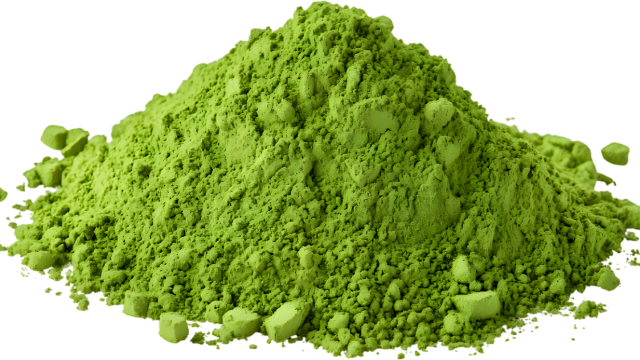
Matcha doesn’t follow a simple “farm → mill → sale” flow. Instead, it consists of 12 stages where quality and costs accumulate.
① Raw Leaf Farmers (Cultivation)
The source of matcha quality lies in the tea leaves themselves. Growing first-harvest tea requires labor-intensive practices: shading (covering), fertilization, and hand-picking. With rising fertilizer and labor costs, farmer profit margins remain lowest at approximately 5-10%. Aging populations and successor shortages present serious challenges.
② Tencha Processing Factories (Primary Processing)
Picked raw leaves undergo steaming, drying, and stem removal to become “tencha.” Factories handling this process are limited nationwide, creating a supply bottleneck. Minute differences in steaming and drying critically affect quality, generating technical gaps that create price differences.
③ Finishing Operations (Roasting, Color Adjustment, Selection)
Here, roasting intensity and color fine-tuning occur. Decisions between strong fire for aromatic depth or light fire for color vibrancy determine final quality. “Roasting craftsmen’s” experience literally embodies brand value.
④ Blending Operations (Stability Keystone)
This process blends tencha from multiple origins to balance taste, color, and aroma. Because climate variations affect quality, this proves indispensable for OEM applications. The “unsung hero” enabling year-round stable supply.
⑤ Grinding Facilities (Stone Mill or Machine)
Traditional stone grinding proves time and cost-intensive but generates no heat, preserving aroma for premium grades. Conversely, mechanical milling suits mass production, dominating food processing and commercial applications.
⑥ Packaging Operations (Bagging and Filling)
Because matcha proves extremely vulnerable to oxidation, light, and moisture, filling processes determine quality. Even microscopic leaks from pinholes or static electricity can cause quality incidents, requiring cleanroom standards meeting sanitation criteria.
⑦ Primary Intermediaries (Large-Volume Handlers)
These operators provide stable annual supply contracts primarily to restaurant chains and confectionery manufacturers. By shouldering warehouse storage and inventory risk, they secure relatively high margins.
⑧ Secondary Intermediaries (Small-Lot, Multi-Variety Response)
The coordination role serving diverse needs like cafés and small-scale facilities. Strength lies in small-lot variety and short delivery times, operating on thin-margin, high-volume business models.
⑨ Trading Companies (Export and Compliance)
FDA registration, EU Organic certification, pesticide residue certification, composition tables—exports require dozens of document types. Trading companies handle these processes, adding margins as “peace of mind fees”.
⑩ Overseas Importers and Distributors
This layer handles local customs clearance, storage, and delivery. Vulnerable to exchange rates and logistics costs, prices can increase 2-3x more at this stage.
⑪ Retail, Food Service, OEM Manufacturers
The layer closest to consumers. Prices determined based on cost ratios and brand strategy. Processed into matcha confections and beverages, “reconstructed as premium matcha“.
⑫ Consumers
The final layer recognizing products as “luxury, authentic, health-oriented.” Consumer prices include technical expertise and labor from all 12 layers.
Where Do Profits Accumulate? The Reality of Profit Structure

Matcha’s price structure proves highly complex, but in conclusion, profits prove thinnest for “farmers” and thickest for “overseas importers through retail” distribution layers. If matcha price equals 100, farmers receive approximately 15-20 in reality, with the specialized division structure significantly impacting profit distribution.
Why do such profit disparities emerge? Key points: ①technical costs, ②equipment investment, ③risk burden, ④distribution distance. Below, we explain profit structure by process.
Farmers: Lowest Profit Margins, High Costs, Thin Returns
While farmers represent the most critical primary producers, they face the harshest profit conditions.
- Covering materials (shading), fertilizer, soaring labor costs
- Climate risks (frost damage, drought, typhoons)
- First-harvest-centered seasonal labor makes annual income stability difficult
Consequently, profit margins often remain at 5-10%.
This unrewarding structure despite intensive labor contributes to successor shortages.
Tencha Processing and Finishing: Highest Profit Margin “Technical Layer”
Steaming, drying, selection, and roasting processes determine matcha’s taste and color—the most critical stages. These processes require specialized equipment and skilled expertise, with these characteristics:
- Factory construction requires several hundred million yen to 1 billion investment
- Roasting craftsmen’s skills determine quality
- Technology becomes differentiation factor, enabling premium pricing
Therefore, profit margins prove relatively high, comprising the core value layer of matcha pricing.
Primary Intermediaries: Stable Revenue Model Handling Large Volumes
Primary intermediaries purchase from factories and multiple finishing operators, acting as “hubs” for mass supply to café chains and confectionery manufacturers.
- Optimized procurement unit prices through large volumes
- Stable revenue through annual contracts
- Manageable inventory risk
Thus, profit margins range medium to moderately high with stable business models.
Secondary Intermediaries: Thin Margins Despite Small-Lot Handling
Secondary intermediaries conduct small-lot sales to diverse customers: cafés, small workshops, individual proprietors.
- Requires multi-variety, small-volume inventory management
- Relatively high delivery costs and damage risks
- High unit prices but small quantities prevent large profits
Therefore, while margins appear high, reality proves thin-margin, high-volume with modest profitability.
Trading Companies: Margins as “Peace of Mind Fees” for Export Risk
Trading companies handle all export aspects: documentation, food regulations, logistics, insurance.
- FDA, EU Organic and other national regulation compliance
- International risks: cargo insurance, damage, delays
- Administrative costs: English documentation, sample exports
As compensation for bearing these risks, margins of approximately 10-25% may be added.
Overseas Importers: Layer Where Profits Most Easily Accumulate
Local importers and distributors represent the layer most readily securing high profits through domestic market resale.
- Add “logistics costs” including local warehousing and delivery to prices
- “Premiumization” through local brand positioning
- Prices to cafés and retailers can increase 2-3x
This represents the highest profit accumulation point, with final retail prices sometimes reaching 3-5x export prices.
Conclusion: Profits Thin Near Production, Thick Near Distribution
In matcha industry, profits thin closer to farmers and processing sites, growing thicker approaching distribution and overseas sales—a “reverse pyramid” structure prevails.
This stems from:
- Technical and equipment specialization
- International logistics risks
- Marketing and branding effects
Creating this unique profit structure through layering.
Therefore, matcha prices varying dramatically between companies proves natural, not conforming to simple “direct from origin = cheap” formulas.
Why “Direct from Origin” Cannot Work

In conclusion, matcha doesn’t follow the simple structure of “cheap if bought directly from farmers.” For matcha to function as a commercial product, highly specialized processes must layer extensively: tencha processing, finishing operations, blending, grinding, filling, quality certification, export procedures—making independent farmer completion nearly impossible.
Therefore, the “direct from origin model” that many businesses and consumers idealize proves structurally difficult to establish. Here we organize four reasons.
① Tencha Processing and Finishing Operate as Complete Division of Labor
Farmers cannot directly produce “matcha.” Manufacturing “tencha,” matcha’s raw material, requires advanced facilities:
- Steam heating equipment
- Hot air drying lines
- Tea stem sorting machines
- Roasting furnaces
- Color sorting machines (optical selection)
These exceed scales individual farmers can maintain, with equipment investment reaching hundreds of millions to ¥1 billion. Therefore, tencha factories nationwide remain extremely limited, with this division structure creating “the greatest barrier to direct shipping.”
② Export Documentation, Inspection, and Certification Prove Massive and Highly Specialized
Matcha is food, requiring international standard certificates for overseas export. Trading companies and specialized intermediaries exist because this “documentation response” proves extremely complex.
Required documentation examples:
- FDA food facility registration (USA)
- COI (Certificate of Inspection: EU organic)
- Pesticide residue testing (hundreds of items)
- Nutritional analysis tables (Nutrition Facts)
- Certificate of origin
- English Invoice/Packing list
- Sanitation certificates,照明certificates (country-dependent)
Expecting farmers to handle these individually proves unrealistic. Particularly FDA and EU Organic require specialized knowledge and English documentation, with errors carrying shipment delay or confiscation risks.
Conclusion: Farmers attempting direct shipping face administrative burdens “heavier than processing.”
③ Single Estates Experience Quality Variation; Year-Round Supply Difficult Without Blending
Matcha is agricultural produce, with weather, soil, and harvest timing significantly affecting quality.
Homogenizing these requires blending operator adjustments. Beverage manufacturers, major OEM operations, and overseas brands demand consistent annual quality and volumes, making single-estate direct sales difficult.
④ Unstable Lots Prevent Major Company Adoption
One major reason direct shipping proves difficult: “lot instability.” Particularly in B2B markets, these lot conditions are standard:
- Monthly 50kg-500kg
- Annual 1-several tons
- Color and aroma variation within ±5% across multiple lots
However, individual farmers can handle at best 100-300kg/year.
Moreover, quality differences prove very large, preventing continuity supply guarantees.
Consequently, major companies normally select primary intermediaries or processing companies capable of guaranteeing quality and supply volume rather than “direct from farms.”
Conclusion: “Direct from Origin” Structurally Nearly Impossible
Matcha operates through multi-layer structure: farm → processing → finishing → blending → grinding → filling → quality certification → export → distribution… Therefore, farmers cannot independently complete the system.
In other words,
“direct from origin matcha” represents marketing language; reality cannot support it.
This constitutes the matcha industry’s defining characteristic.
Supply Chain Challenges and Future Directions
Tencha Factory Shortages
Factory numbers remain limited nationwide, causing raw leaf acceptance restrictions. This creates production volume expansion bottlenecks.
Roasting Craftsman Aging Issues
Skilled roasting craftsmen age, making technical succession urgent.
Quality Data Non-Disclosure
Color, aroma, and umami analysis data often remain undisclosed, presenting low transaction transparency challenges.
Export Regulation Complexity
EU and North America increasingly stricten pesticide residue standards, creating entry barriers for small-scale producers.
DX and Traceability Delays
Digital management advances slowly, with some cases unable to prove production history. Future blockchain-type traceability implementation is anticipated.
For Those Seeking Matcha Powder
If you’re interested in matcha raw material supply, OEM, or overseas export, Artem Corporation proposes optimal matcha according to origin, quality, and quantity. Please consult via the link below for details.
Summary | Matcha Value Emerges from “Accumulated Processes”
Matcha isn’t “powdered tea” but rather the crystallization of 12 layered specialized processes. Farmer efforts, craftsman techniques, distribution systems—all support its value.