Japanese Matcha Ingredient Supplier for US Food & Beverage Manufacturers
For a US food or beverage manufacturer, the right matcha ingredient supplier for the USA is not the vendor with the greenest photo — it is a partner who ships a Japanese matcha matched to your application, backs every lot with a Certificate of Analysis, and clears US import requirements. In practice: choose a grade by use (beverage, bakery or nutrition), write color, particle-fineness and thermal behavior into your spec, and confirm certifications and compliance before the first production run.
This guide is for procurement, R&D and QA managers sourcing at hundreds-of-kilogram scale — beverage and RTD brands, bakeries and confectioners, and nutrition, protein and supplement makers, not single-store cafes. Where a figure would be a guess we keep it qualitative; where a fact is verifiable we cite the primary source.
Key Takeaways
- Match the grade to the application: a milk-ready beverage grade, a heat-tolerant culinary grade for baking, and a cost-efficient grade for capsules or blends are different products — specify by use.
- The COA is your real spec: color target, particle fineness (D50/D90), moisture, and microbiological and heavy-metal/pesticide results belong in your written spec and on every lot’s COA.
- Heat changes color: heat degrades chlorophyll, so baked colors fade regardless of grade; design the dose for the finished color.
- Duty-free is not obligation-free: US duty on green tea under HTS heading 0902 is Free, but FSVP, Prior Notice and facility registration still apply.
- Vet on evidence, not marketing: vet any supplier, including JMEX, on origin proof, per-lot COA, certifications and consistency — never on a scored ranking.
For Companies Seeking Matcha Powder
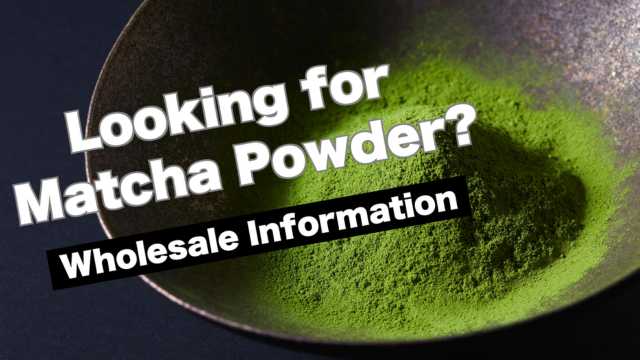
We source matcha from Japan’s premier production regions including Kyoto Uji, Kagoshima, Fukuoka, and Shizuoka, offering comprehensive grade ranges from organic JAS-certified ceremonial grade to processing-grade matcha.
Common Challenges:
- “We have projects but cannot secure stable matcha supply…”
- “We want to incorporate matcha into new café menu items!”
If you face these concerns, consult with Matcha Times. Feel free to contact us for initial inquiries.
\Read Also/
Which matcha grade for which US application?
Match the grade to the finished product, because a matcha that is perfect in a latte can be the wrong choice — and the wrong cost — in a cookie or a capsule. For US food and beverage manufacturers there are three broad application families, and the deciding factors are color, flavor intensity, particle fineness and how the powder behaves under heat and in a matrix.
- Beverage / RTD and latte: bright, spring-green, fine-milled matcha that stays vivid and suspends well in milk, oat milk and water. Color and clean umami carry the product; sedimentation and dull color are the failure modes.
- Bakery and confectionery: a more robust culinary grade chosen for value and flavor that survives dilution by flour, sugar, fat and heat. Ceremonial-style delicacy is wasted here because baking mutes it.
- Nutrition, protein and supplements: a cost-efficient, consistent grade where matcha is a functional or label ingredient; tight microbiological and contaminant specs and lot-to-lot uniformity matter more than a show-stopping color.
None of these is ‘better’ than the others — they are different specifications. The common mistake is buying a single grade for every SKU, then paying ceremonial prices to bake it away or shipping a flat, grey latte because a culinary powder was poured into a drink.
\Read More/
Spec by application: color, particle and thermal behavior
Turn the grade decision into a written specification your supplier can hold to. The table below maps each application to the attributes you should define and the COA fields that verify them. Treat the descriptions as the direction to specify with your supplier, then pin exact numeric tolerances (for example a color target or a D50 range) with samples and your own lab — a responsible supplier will agree tolerances in writing rather than quote a universal micron figure.
| Application | Color priority | Particle fineness | Thermal / matrix behavior | COA fields to specify |
|---|---|---|---|---|
| Beverage / RTD / latte | Vivid spring-green; must stay bright cold and in plant milk | Very fine for suspension and smooth mouthfeel (agree D50/D90) | Served cold or warm; guard against sedimentation and oxidation | Color (CIE L*a*b*), particle size (D50/D90), moisture, total plate count |
| Bakery / confectionery | Green that reads well after baking; expect some fade | Fine, but dispersion in batter matters more than ultra-fineness | Chlorophyll degrades with oven heat; design dose for finished color | Color, moisture, microbiological limits, pesticide/MRL, heavy metals |
| Nutrition / protein / supplement | Consistent lot-to-lot color; vividness secondary | Uniform, free-flowing for blending and encapsulation | Blended dry or into liquids; stability and uniformity over show color | Heavy metals, pesticide/MRL, microbiological, moisture, uniformity |
| Ice cream / dairy / desserts | Bright green that survives fat and freezing | Fine for smooth texture without grit | Fat and cold dull perceived color; may need a higher dose | Color, particle size, microbiological, allergen statement |
Formulation and handling guidance
Matcha behaves differently from a soluble flavor or color, so a few physical realities should shape your formulation and your spec. Getting these right protects color, shelf life and consumer perception across a production run.
Matcha suspends, it does not dissolve
Matcha is milled leaf, so in a beverage it forms a suspension rather than a true solution and will settle over time. Finer particle size, higher viscosity and emulsifiers all help keep it dispersed; in an RTD you are engineering against sedimentation, which is why particle size (D50/D90) belongs in the spec and on the COA.
Heat and light degrade the green
Chlorophyll — the source of matcha’s green — breaks down with heat, light and oxygen. In baking the oven will mute the color regardless of grade, so the practical move is to design the recipe and dose for the finished color you need and protect the powder with light-barrier, low-oxygen packaging in storage. Buying a delicate, expensive grade will not stop the oven from dulling it.
Moisture, microbiology and shelf life
As a low-moisture powder, matcha is shelf-stable when kept dry, cool and sealed, but it readily absorbs moisture and odor. Specify a moisture ceiling and microbiological limits (total plate count, yeast and mold, and pathogen absence) on the COA, and set storage conditions in your own specification so shelf life is defined rather than assumed.
Cost vs quality: what actually drives price
Matcha price is driven by the leaf (shading, harvest timing, cultivar and origin), the milling, and the grade — not by the label alone. For an ingredient buyer the goal is not the cheapest kilo or the most prestigious tin; it is the lowest cost that still meets your finished-product spec. We keep specific numbers out of this guide on purpose: a per-kilogram price or MOQ copied from another market or another buyer’s contract is not a fact about your order.
- Over- and under-specifying both cost you: paying for a ceremonial grade to bake it, or under-specifying color for a hero latte and losing the reorder, both waste money.
- Compare landed cost, not sticker price: request a formal quote with a trade condition (FOB, CIF or EXW) and confirm what is included, because a landed cost, not a headline per-kilo number, is what hits your COGS.
- Consistency is a cost lever: lock a grade, a color target and a per-lot COA so quarter-to-quarter pricing reflects the same product, and volume commitments can be negotiated against a stable spec.
When you request pricing, ask the supplier to tie the quote to the exact grade and specification you have defined above and to state MOQ and lead time for that spec — that is the only price comparison that means anything.
US import and compliance essentials
Sourcing Japanese matcha into the United States is routine, but it is governed by US food-import rules that apply whether you import directly or buy from a domestic distributor. The essentials below are drawn from primary FDA and USITC sources; confirm the specifics of your shipments with a licensed customs broker, because country-level trade measures change over time.
- Prior Notice: US importers of food must file electronic Prior Notice with FDA before a shipment arrives and meet importer responsibilities, per FDA, Importing Food Products into the United States.
- Facility registration: the foreign manufacturing facility must register with FDA and renew biennially, and designate a US agent, per FDA, Registration of Food Facilities.
- FSVP: as the US importer you must verify your foreign supplier’s food-safety controls (hazard analysis, supplier verification and records) under the FDA FSVP final rule (21 CFR part 1, subpart L).
- Import duty: green tea under Harmonized Tariff Schedule heading 0902 carries a Free (duty-free) general rate per the USITC Harmonized Tariff Schedule; any country-specific ‘reciprocal’ or Section 301 measure is separate and time-varying — verify it for your origin at entry.
- Organic labeling: to label a product ‘organic,’ the matcha must be certified to the USDA National Organic Program; a Japanese supplier may hold JAS organic, but US organic labeling follows USDA National Organic Program.
Supplier selection checklist for ingredient buyers
Use these criteria to evaluate any matcha ingredient supplier — including JMEX — on evidence rather than marketing. Ask for each item in writing before you commit a production volume.
- Origin and traceability: confirmed Japanese cultivation region and harvest, not just ‘authentic’ language.
- Per-lot Certificate of Analysis covering color, particle size (D50/D90), moisture, microbiological limits, heavy metals and pesticide/MRL results.
- Grade designed to your application, with evaluation samples of more than one option so you can test in your own matrix.
- Certifications relevant to your claims: USDA/NOP or JAS organic, kosher, halal, and allergen documentation as needed.
- Batch-to-batch consistency: an agreed color target and specification held across reorders.
- Export documentation and logistics competence: the ability to supply the paperwork your import (FSVP, Prior Notice) depends on.
- Lead time and MOQ stated for your defined spec, plus a quote with a clear trade condition.
Why Buyers Choose JMEX (Japan Matcha Export Organization)

For a US manufacturer, the deciding factor in a matcha partner is rarely the lowest per-kilo price — it is whether the supplier can prove Japanese origin, design a grade to your application, back every lot with a COA, and supply the documents your US import compliance depends on. JMEX (Japan Matcha Export Organization) is a wholesale and export partner focused on shipping authentic Japanese matcha overseas, treating origin selection, quality assurance, certification and export documentation as one continuous flow.
That matters for product development because JMEX designs origin and blend by application — beverage color and suspension, baking stability, blend uniformity — and, with an export track record to 43 countries, supports OEM and private-label programs from evaluation sample to steady, specification-held supply. It can prepare samples of more than one grade, hold a per-lot COA and an agreed color target for consistency, and scale from a trial lot to large-volume supply for beverage, bakery and nutrition manufacturers.
Frequently asked questions
Common procurement and formulation questions from US food and beverage manufacturers sourcing Japanese matcha as an ingredient.
What grade of matcha do US food manufacturers use?
It depends on the product. Beverage and latte brands use a bright, fine, milk-ready grade; bakeries and confectioners use a more robust culinary grade chosen for value and flavor that survives heat; nutrition, protein and supplement makers prioritize a consistent, cost-efficient grade with tight contaminant and microbiological specs. Specify by application rather than buying one grade for every SKU.
Is matcha heat stable for baking?
Matcha’s flavor carries through baking, but its green color is not fully heat stable: chlorophyll degrades with oven heat, light and oxygen, so baked goods will lose some vividness regardless of grade. Design the recipe and dose for the color you want in the finished product, and store the powder sealed away from heat and light.
Do I need FDA registration to import matcha into the US?
The foreign facility that manufactures the matcha must be registered with FDA and renew biennially, and the US importer must file Prior Notice for each shipment and maintain a Foreign Supplier Verification Program. See the FDA guidance on importing food and food-facility registration, and work with a customs broker for your specific entries.
Is there an import duty on matcha entering the United States?
Green tea classified under Harmonized Tariff Schedule heading 0902 carries a Free (duty-free) general rate in the USITC HTS. However, country-specific trade measures (such as Section 301 or reciprocal tariffs) can apply on top of the base rate and change over time, so confirm the current treatment for your origin with a customs broker before you rely on it.
What should a matcha Certificate of Analysis include?
At minimum: color (ideally CIE L*a*b*), particle size (D50/D90), moisture, microbiological results (total plate count, yeast and mold, pathogen absence), heavy metals, and pesticide/MRL results. Ask for the COA per lot, not once, so you can verify batch-to-batch consistency.
Can a supplier match matcha to my specific product?
A capable ingredient supplier will design origin and grade to your application, provide evaluation samples of more than one option, and agree a written specification and color target you can hold across reorders. That is an OEM and export-side capability, distinct from simply stocking a fixed catalog.
Researched and reviewed by the Matcha Times Editorial Team, operated by the Japan Matcha Export Organization (JMEX). Last reviewed: September 23, 2026. See our Editorial Policy and Sources & Methodology. Found an error? Tell us.
Sources & Methodology
This guide synthesizes US federal primary sources with matcha ingredient-formulation practice. Regulatory and duty statements are cited to the official body below; each was reviewed on September 23, 2026. We state no specific per-kilogram price, MOQ or micron figure as fact, because those vary by supplier, lot and contract — confirm them against your own quote, samples and lab results. Where a country-level trade measure could change, we flag it as time-varying and defer to a licensed customs broker.
- FDA, Importing Food Products into the United States — US food-import responsibilities and Prior Notice (US federal, FDA).
- FDA, FSVP final rule (FSMA) — Foreign Supplier Verification Program obligations of US importers, 21 CFR part 1 subpart L (US federal, FDA).
- FDA, Registration of Food Facilities — biennial food-facility registration and US agent requirement (US federal, FDA).
- USITC, Harmonized Tariff Schedule — green tea heading 0902 general duty rate, Free; country-specific measures are separate and time-varying (US federal, USITC).
- USDA, National Organic Program — US organic labeling standard required for an ‘organic’ claim (US federal, USDA AMS).
Learn More About Global Matcha Trends at Matcha Times

Matcha Times is a specialist media platform covering the global matcha market — sourcing and wholesale, supply and pricing, trade and regulations, production and origins, and the companies shaping the industry.
From market analysis and price trends to café case studies and interviews with tea farmers, we help buyers, importers, distributors, and manufacturers stay ahead of where matcha is heading. Explore more and put the global matcha market to work for your business.
Conclusion
When origin, grade, and export conditions align, matcha becomes a stable revenue source. Start by defining your requirements and confirming quality with a sample.
Looking for wholesale or OEM matcha samples? Contact us — we will recommend the optimal origin and grade based on your application and target markets.
Related Articles