Connecticut Matcha Wholesale: Japanese Supplier, MOQ, Price & Delivery Guide
For a Connecticut café, hotel, or brand, matcha wholesale means buying Japanese matcha by the kilogram instead of the retail tin. The practical entry point for matcha wholesale Connecticut buyers is a minimum order quantity (MOQ) that typically starts in the low kilograms from a national distributor and is set by production scheduling and grade when you buy Japan-direct. The twist unique to this state: Connecticut has a working coastline but no consumer-container seaport, so your powder almost always arrives overland from a larger gateway rather than off a local dock.
That changes the buying decision in ways a generic “bulk matcha” page never addresses. Your real questions are how much you move per month, how tightly you need to control origin and grade, who carries the U.S. food-safety paperwork, and how the overland inbound leg into Connecticut folds into your lead time and landed cost.
This guide walks a Connecticut café group, hotel, or packaged brand through MOQ and grade tiers, what actually moves the per-kilogram price, the distributor-versus-Japan-direct choice, how imported matcha physically reaches Connecticut, the import compliance a wholesale buyer must own, a documented supplier checklist, Northeast storage, and how JMEX bridges Japanese origin and the Connecticut buyer.
For Companies Seeking Matcha Powder
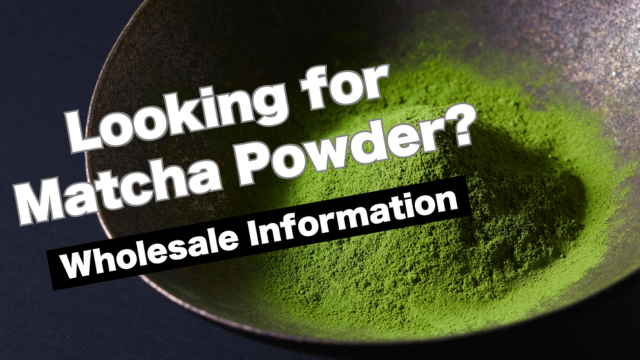
We source matcha from Japan’s premier production regions including Kyoto Uji, Kagoshima, Fukuoka, and Shizuoka, offering comprehensive grade ranges from organic JAS-certified ceremonial grade to processing-grade matcha.
Common Challenges:
- “We have projects but cannot secure stable matcha supply…”
- “We want to incorporate matcha into new café menu items!”
If you face these concerns, consult with Matcha Times. Feel free to contact us for initial inquiries.
\Read Also/
Key Takeaways
- Think in order-scale tiers, not one MOQ: a national U.S. distributor lets a single café start around a kilogram, while a Japan-direct processor sets its minimum by grade and production run — often tens of kilograms and up.
- Grade drives both MOQ and price — culinary and latte grades usually carry lower minimums and unit costs than ceremonial — and “ceremonial” has no legal definition, so treat it as marketing, not proof.
- Price per kilogram is moved by grade, named origin, pack size, certification (JAS organic, Halal) and annual volume; always ask whether a quote is FOB, CIF or delivered so you can compare like with like.
- Green tea — matcha included — enters the U.S. duty-free under HTS heading 0902 at the MFN base rate, so duty is rarely the cost driver; freight and the inland leg are. Confirm any country-level “reciprocal” surcharge separately with a customs broker.
- Connecticut is not a container port, so plan the inbound route overland: matcha clears through the Port of New York & New Jersey or Boston and trucks in on I-95, putting most of the state within a day of one stockholding point.
\Read More/
What matcha wholesale and MOQ mean for a Connecticut buyer
Wholesale simply means buying in bulk at a trade price under agreed terms, rather than by the consumer tin. The figure that trips up first-time buyers is the MOQ — the minimum a supplier will sell in one order. There is no single national MOQ; it moves with the channel and the grade you choose.
Rather than quote a number we cannot stand behind, it helps to think in tiers that map to how a Connecticut operator actually grows. The table frames the order-scale bands and the channel that usually fits each — request a current minimum from any supplier before you plan around it.
| Order-scale tier | Who it fits in Connecticut | Typical channel |
|---|---|---|
| Launch (around 1kg) | A single café, a pop-up, a menu or recipe test. | National U.S. distributor holding domestic stock — no import paperwork. |
| Growing (roughly 10kg per order) | A multi-site café group or a hotel beverage program finding its footing. | Japanese processor or export organization, so grade and origin stay fixed across reorders. |
| Program (100kg and up, or annual) | Private-label manufacturing, RTD or supplement brands, catering contracts. | Direct export arrangement with negotiated grade design, allocation and a documented supply plan. |
The pattern is consistent: as volume climbs, control and cost efficiency improve on the Japan-direct side, while the smallest orders are cheapest to start domestically. Pick the tier honestly from your real monthly pull-through, not your ambition.
Grade tiers — and why they set both MOQ and price
Grade is the single biggest lever on what you pay and the minimum you can order. Broadly, matcha spans three working tiers, and the right one is decided by the recipe, not by prestige.
| Grade band | Best use | MOQ / price tendency |
|---|---|---|
| Culinary | Baking, ice cream, smoothies, sauces where other ingredients share the stage. | Lowest minimums and unit cost; most forgiving of color and bitterness. |
| Latte / café | The workhorse for a café latte program — needs color, froth and milk compatibility. | Mid minimums and price; the volume grade for most Connecticut foodservice buyers. |
| Ceremonial | Straight usucha or a premium menu line served without milk. | Highest price and often higher minimums; the term is unregulated, so verify with a sample. |
Because “ceremonial” carries no legal definition in the U.S., do not pay a premium on the label alone. Match the grade to the drink, then let a sample and a certificate of analysis — not an adjective — justify the price.
What actually moves the per-kilogram price landed in Connecticut
A wholesale quote is the sum of several moving parts, and comparing two numbers is meaningless until you normalise them. These are the factors to pin down before you judge whether a price is fair.
- Grade — the largest single driver, from culinary up to ceremonial.
- Named origin and cultivar — a specific prefecture such as Uji, Kagoshima, Fukuoka or Shizuoka commands more than unspecified “Japan.”
- Pack size and format — retail-ready pouches cost more per kilogram than bulk food-service packs.
- Certification — JAS organic or Halal documentation adds verifiable cost you may need for your market.
- Annual volume and commitment — standing supply and larger lots usually earn better unit pricing.
- Trade terms — a quote is FOB (at the Japan port), CIF (freight and insurance included), or delivered; the inland leg into Connecticut sits on top of FOB.
One cost that is NOT a real driver is import duty: because matcha enters duty-free under HTS 0902, the variable money is in freight and the overland leg, not the tariff. Insist every quote states its trade condition so you are not comparing a Japan-dock price against a delivered one.
National distributor or Japan-direct into Connecticut: the decision
No matcha is grown or milled near Connecticut — it is cultivated and stone-ground in Japan — and there is no genuine producer headquartered in the state. So the choice is really between buying domestically from a U.S. distributor and sourcing from Japan, directly or through an export organization.
- A national U.S. distributor — fastest to start, no import paperwork, buy by the kilogram, sensible for a single location or a trial; in return you accept their grade decisions, their origin disclosure and their margin.
- A tea processor in Japan — the tightest control over cultivar, region, harvest and grade, with per-lot COAs and bespoke blends; the fit for multi-unit operators and brands that cannot let specs drift.
- An export-oriented trading organization such as JMEX — a Japan-side partner that selects origin and grade for you, assembles the documentation and runs export logistics, so you manage one accountable counterpart instead of a chain.
How imported matcha actually reaches Connecticut
This is where Connecticut differs sharply from a container-port metro. The state runs a quasi-public deep-water port system through the Connecticut Port Authority — New Haven (its largest by tonnage), Bridgeport and New London — but their trade is energy, petroleum, aggregates and, at New London’s State Pier, offshore-wind components, not the consumer container cargo a food shipment moves in. Bridgeport’s channel has long gone undredged, further limiting container-scale calls.
In practice, Japanese matcha clears through a major box gateway — most often the Port of New York & New Jersey, the East Coast’s largest container port — or through Boston, and then trucks into Connecticut. Build that overland leg into lead-time and landed-cost planning rather than assuming a local dockside pickup.
The upside is reach. Connecticut sits on the Northeast Corridor between New York and Boston, so from one stockholding point on I-95 a distributor can serve most of the state — Fairfield County and the dense NYC-commuter belt around Stamford and Greenwich, New Haven and Yale, and the Hartford corporate corridor — comfortably within a day.
Import and food-safety compliance for Connecticut wholesale buyers
If you import Japan-direct, the U.S. compliance load is yours — not the Japanese producer’s — so either build the capability or choose a supplier that hands you the documents. The core federal obligations:
- Under FDA Foreign Supplier Verification (FSVP), you are the importer responsible for verifying that your foreign supplier meets U.S. food-safety standards.
- Each shipment needs Prior Notice of imported food to FDA before it arrives.
- The producing/handling facility must hold a current FDA food-facility registration.
- Classification and duty: green tea including matcha sits under HTS heading 0902 and enters duty-free at the MFN base rate — confirm any separate country-level “reciprocal” measure with a licensed customs broker.
At the state level, a Connecticut business that stores, repacks or further processes food should check licensing with the Connecticut Department of Consumer Protection and its local health district before trading; requirements vary by activity, so verify them for your specific operation rather than assuming. Buying from a U.S. distributor that has already imported the product shifts the federal import burden onto them.
A neutral supplier checklist for any matcha vendor
The most valuable sourcing habit is simple: make every supplier prove quality with documents and samples, not adjectives. Apply the same criteria to a U.S. distributor, a Japanese processor and JMEX so they stand on equal footing.
| Criterion | What to verify with any supplier |
|---|---|
| Per-lot COA | A certificate of analysis for every production lot — moisture, particle fineness and contaminant screening — not one generic sheet. |
| Named origin | A specific prefecture or region (Uji, Kagoshima, Fukuoka, Shizuoka), not merely “Japan.” |
| Food-safety system | A recognised scheme (HACCP, ISO 22000 or FSSC 22000) at the production facility. |
| Residue / organic claims | MRL results against U.S. limits, plus a valid JAS organic certificate if you market the product as organic. |
| Lot repeatability | Evidence that color, flavor and fineness hold batch to batch — retained samples or reorder history. |
| Import responsibility | Who files FSVP, Prior Notice and facility registration — the supplier, a broker, or you. |
Before a bulk commitment, put these questions to your supplier in writing:
- Can you ship a current production lot with its COA so our kitchen or lab can taste and test it?
- What is your minimum order, and how does pricing move with grade, pack size and annual commitment?
- Which origin and cultivar is this blend, and does it stay the same on reorder?
- On a direct shipment, who is the FSVP importer of record, and can you supply the backing documents?
- What is your realistic sample-to-order and reorder lead time into a Connecticut destination?
Storing wholesale matcha through New England seasons
Matcha fades in color and flavor when it meets heat, light, oxygen and moisture. Connecticut pairs humid summers with dry, heated winters, so the threat shifts across the year rather than disappearing. Keep stock sealed and nitrogen-flushed where you can, store it cold and dark, open only working quantities, and size each order to real turnover so powder never sits from one season into the next. This is also why MOQ discipline matters: over-ordering to chase a lower unit price can cost more in stale inventory than it saves.
Ordering wholesale matcha for Connecticut, step by step
For a Connecticut buyer moving from first interest to standing supply, this order of operations keeps risk low:
- Define your use and honest monthly volume (latte program, bakery, RTD, supplement) and the grade it needs.
- Shortlist two or three suppliers across channels and request samples with per-lot COAs.
- Taste and test against your own recipe; check color, flavor, fineness and the COA figures.
- Confirm the trade terms, who files U.S. import documentation, and how freight and the inland leg land in your delivered cost.
- Run a small paid trial order, verify lot consistency, then negotiate grade, pricing, MOQ and lead time for standing supply.
Why Buyers Choose JMEX (Japan Matcha Export Organization)

JMEX (Japan Matcha Export Organization) is a wholesale and export partner dedicated to bringing Japanese matcha overseas, selecting origin and grade across Uji, Kagoshima, Fukuoka and Shizuoka for your use case and issuing a certificate of analysis for every lot. For a Connecticut buyer that means one accountable Japan-side counterpart for sourcing, documentation and export logistics — backed by an export track record to 43 countries.
For wholesale buyers, JMEX scales from small trial lots toward stable larger supply and keeps unit pricing and replenishment predictable across seasons, supporting COA, MRL and organic documentation and the customs paperwork so your matcha program stays consistent reorder after reorder.
FAQ: Connecticut Matcha Wholesale
Common questions from Connecticut cafés, hotels and brands sourcing Japanese matcha wholesale.
What is the minimum order quantity (MOQ) for wholesale matcha in Connecticut?
There is no fixed statewide MOQ. A national U.S. distributor may let you start around a single kilogram, while a Japan-direct processor sets its minimum by grade and production run, often from tens of kilograms upward. Rather than assume a figure, ask each supplier for its current minimum and how it changes with grade, pack size and annual commitment.
How much does wholesale matcha cost per kilogram?
Wholesale matcha is priced per kilogram, and the figure is driven by grade, named origin, pack size, certification and order volume, so a single “market price” is misleading. Because matcha enters the U.S. duty-free under HTS 0902, the variable cost is freight and the overland leg into Connecticut, not tariff. Always confirm whether a quote is FOB, CIF or delivered before comparing suppliers, and request a current quote for your grade and volume.
Should I buy from a U.S. distributor or import from Japan directly?
Buy domestically from a U.S. distributor when you are small, testing, or want zero import overhead. Source Japan-direct — through a processor or an export organization — when your volume justifies tighter control of origin, grade and per-lot COAs across reorders. Many Connecticut operators start domestic and move Japan-direct as their program stabilises.
Do I need an FDA or FSVP program to import matcha into Connecticut?
If you are the U.S. owner or consignee importing directly, yes — you are the FSVP importer and must verify your foreign supplier, and the food is subject to FDA facility registration and Prior Notice. Buying from a U.S. distributor that has already imported the product moves that burden onto them. See the FDA guidance linked under Sources.
How is imported matcha delivered to Connecticut?
Connecticut’s deep-water ports handle bulk and energy cargo rather than consumer containers, so matcha typically clears through the Port of New York & New Jersey or Boston and then trucks into the state on I-95. From one stockholding point on the Northeast Corridor a distributor can reach most of Connecticut within a day, so plan the overland leg into your lead time.
Sources & Methodology
This guide synthesises current U.S. government and port-authority sources with standard matcha trade practice. Each source states what it supports, its date and its scope; all are external primary or official references. Prices and MOQs are described qualitatively because they vary by supplier, grade and trade terms — confirm current figures in a quotation.
- U.S. International Trade Commission — Harmonized Tariff Schedule — Green tea (matcha) classification under heading 0902 and duty-free MFN base rate — accessed Oct 2026, U.S. import tariff classification
- U.S. FDA — Foreign Supplier Verification Programs (FSVP) — Importer verification obligations for imported food — accessed Oct 2026, U.S. food-safety (FSMA)
- U.S. FDA — Prior Notice of Imported Food — Prior Notice requirement for food shipments entering the U.S. — accessed Oct 2026, U.S. import procedure
- Connecticut Port Authority — Connecticut’s deep-water ports (New Haven, Bridgeport, New London) and their bulk/energy and offshore-wind role — accessed Oct 2026, State port / logistics context
- Port Authority of New York & New Jersey — The East Coast’s largest container gateway, through which Connecticut-bound imports typically clear — accessed Oct 2026, Regional container gateway
Researched and reviewed by the Matcha Times Editorial Team, operated by the Japan Matcha Export Organization (JMEX). Last reviewed: October 2026. See our Editorial Policy and Sources & Methodology. Found an error? Tell us.
Learn More About Global Matcha Trends at Matcha Times
Matcha Times is a specialist media platform covering the global matcha market — sourcing and wholesale, supply and pricing, trade and regulations, production and origins, and the companies shaping the industry.
From market analysis and price trends to café case studies and interviews with tea farmers, we help buyers, importers, distributors, and manufacturers stay ahead of where matcha is heading. Explore more and put the global matcha market to work for your business.
Conclusion
When origin, grade, and export conditions align, matcha becomes a stable revenue source. Start by defining your requirements and confirming quality with a sample.
Looking for wholesale or OEM matcha samples? Contact us — we will recommend the optimal origin and grade based on your application and target markets.
Related Articles