Best Wholesale Matcha for Cafés in Ohio: Grade, Cost per Cup & Supply
For café operators across Ohio — whether running a single shop in Columbus’s Short North, a multi-location group in Cleveland, or a campus café near a major university — sourcing wholesale matcha starts with three decisions: which grade fits your menu application, what cost per cup your menu pricing can support, and how you will secure a consistent reorder supply. The direct answer: most Ohio café drink menus — matcha lattes, iced matcha, and blended drinks — are best served by a commercial latte-grade Japanese matcha that delivers a vivid green colour, mild bitterness, and stable batch-to-batch flavour. A ceremonial grade raises ingredient cost without a proportional opportunity to lift menu price in the Midwest café market; a culinary/ingredient grade works for baked items but lacks the colour intensity and flavour balance required in a milk-based drink.
For Companies Seeking Matcha Powder

We source matcha from Japan’s premier production regions including Kyoto Uji, Kagoshima, Fukuoka, and Shizuoka, offering comprehensive grade ranges from organic JAS-certified ceremonial grade to processing-grade matcha.
Common Challenges:
- “We have projects but cannot secure stable matcha supply…”
- “We want to incorporate matcha into new café menu items!”
If you face these concerns, consult with Matcha Times. Feel free to contact us for initial inquiries.
\Read Also/
Key Takeaways
- Most Ohio café menus — lattes, iced matcha, smoothies — are best matched to a latte-grade or barista-grade Japanese matcha; reserve ceremonial grade for premium straight servings.
- Cost per cup is a formula, not a feel: quoted price ÷ (1,000 ÷ grams per serving). Optimise grade and pour weight together, not price alone.
- Confirm colour performance in your specific milk (whole, oat, almond) before committing to a commercial order — colour and body behaviour vary by product and temperature.
- Request a Certificate of Analysis (COA) covering pesticide residues and heavy metals; Japanese matcha exported to the US must comply with FDA import requirements under the FSMA Foreign Supplier Verification Program.
- Ohio’s café season extends across all four quarters, with hot latte volume peaking in autumn and winter; secure reorder lead times before the October–November demand ramp.
- JMEX (Japan Matcha Export Organization) supplies commercial matcha with export track record to 43 countries and can provide grade specifications, COA, and sample lots for café applications.
\Read More/
Grade Selection for Ohio Café Menus
Matcha marketed for cafés is broadly divided into four commercial tiers. Ohio café buyers should evaluate each by its performance in a real menu application — colour in milk, flavour balance under sweetener, and visual appeal — rather than by tier name alone. The table below maps typical applications to grade characteristics.
| Grade tier | Typical application | Colour in milk | Flavour profile | Practical notes |
|---|---|---|---|---|
| Ceremonial / premium | Straight matcha, high-end signature latte | Vivid bright green | Smooth, sweet-umami, low bitterness | Highest COGS; suits premium positioning where menu price supports it |
| Latte / barista grade | Standard matcha latte, iced matcha, frappé | Bright-to-vivid green | Mild, balanced; holds well in oat and whole milk | Most common commercial café choice; best COGS-to-colour trade-off |
| Culinary-matcha (premium) | Smoothies, blended drinks, soft serve | Medium-to-bright green | Slightly more robust; masks well under fruit | Check particle size for dispersion in cold preparations |
| Ingredient / baking grade | Matcha cakes, cookies, mochi, glazes | Medium green (varies by bake temperature) | Bold, earthy | Not suited to straight lattes; economical for baked goods |
Note on grade labelling: In the absence of a regulated international standard for matcha grades, tier names are defined by individual suppliers and may differ. Request a product specification sheet and a sample lot before relying on tier terminology. Japanese matcha from documented producing regions — Uji (Kyoto), Nishio (Aichi), Yame (Fukuoka) — with confirmed cultivar and harvest information provides a more reliable quality anchor.
Cost per Cup: Building an Ohio Café COGS Model
A café’s ingredient cost per matcha drink is a direct function of the powder price quoted per kilogram and the grams used per serving. Because the relationship is linear, small changes in pour weight compound significantly across a week’s volume. Before committing to a wholesale grade, calculate your own cost per serving from the formula below and cross-check it against your target menu price and gross margin.
The Cost-per-Cup Formula
Cost per serving = Quoted price per kg ÷ (1,000 ÷ grams of powder per drink)
For example, at 3 g per latte one kilogram yields approximately 333 servings; at 4 g per drink, 250 servings. Most café-grade lattes use between 2 g (lighter) and 4 g (bold) of matcha powder per 8–12 oz drink. Adjust for your specific recipe and cup size before comparing supplier quotes. Industry commentary from the Specialty Coffee Association’s trade publications places the average menu price of a matcha latte in the US at approximately USD 5 per drink (SCA partner editorial, 2024); your actual cost target depends on your market positioning and overhead structure.
Ohio Market Considerations
Ohio’s café market is anchored by Columbus, Cleveland, and Cincinnati as the three major metropolitan consumer bases, with secondary demand in Dayton, Akron, Toledo, and university towns such as Athens (Ohio University) and Oxford (Miami University). Several dynamics shape wholesale matcha decisions in the state:
- Seasonal volume pattern: Iced matcha drinks are popular year-round, but hot latte volume rises substantially in Ohio’s autumn and winter months (October–March). Build reorder schedules to avoid stockouts before the seasonal ramp.
- University campus demand: Campuses such as The Ohio State University in Columbus drive concentrated, high-volume demand during term time. Operators serving these locations typically need consistent 2–4 week reorder cycles during term.
- Logistics from West Coast ports: Commercial Japanese matcha typically arrives via the Port of Los Angeles/Long Beach or Seattle, then moves east by ground freight. For Ohio, most commercial lots reach their destination within 5–10 business days of customs clearance, depending on the carrier and origin point. Confirm lead times with your supplier for your specific delivery address.
Formulation Guidance: Matcha in Ohio Café Drinks
Performing well on a café menu requires more than a high-grade powder. The final cup depends on how the matcha behaves with your specific milk or alternative, at your serving temperature. Validate the following before finalising a commercial order.
Colour Retention in Milk
Matcha colour in a latte depends on the chlorophyll content of the powder, the fat content of the milk, and the serving temperature. Oat milk tends to mute colour relative to whole dairy; iced preparations preserve colour longer before oxidation. Request a sample and prepare your full recipe — your recipe, your milk, your temperature — before approving a grade for menu use. A green that photographs well cold may shift toward olive in a hot preparation.
Dispersion and Clumping
Café-grade matcha is typically micronised to a fine particle size; premium grades are often cited at approximately 10–20 microns, though supplier specifications vary. Pre-sifting or using a shaker-cup method reduces clumping, particularly in cold preparations. Confirm particle size with the supplier’s product specification sheet if dispersion is a concern for your workflow or equipment.
Supplier Selection Criteria for Ohio Café Buyers
The checklist below covers the practical questions to ask any potential wholesale matcha supplier, regardless of origin or brand. Evaluate these before requesting a price quote or placing a sample order.
| Criterion | What to verify with any supplier |
|---|---|
| Origin and harvest | Japanese-grown; producing region stated (Uji, Nishio, Yame); harvest year or season documented |
| Grade specification | Written product spec sheet: particle size, colour value (if available), moisture content |
| Colour in your milk | Test with your exact milk (whole dairy, oat, almond) hot and iced before approving |
| Certificate of Analysis (COA) | Pesticide MRL compliance with US FDA standards; heavy-metal panel; microbiological specs; lot-specific, not generic |
| MOQ and reorder terms | Minimum order quantity and whether repeat commercial orders can be placed at the same grade |
| Lead time | Time from order to delivery at your Ohio address; critical for the autumn–winter demand ramp |
| Batch-to-batch consistency | Lot-to-lot colour and flavour comparison data; inconsistency is the most common café complaint |
| Export documentation | FDA-compliant labelling; country-of-origin certificate; FSMA prior notice filed by the importer |
US Import Duty and Food-Safety Compliance
Ohio café operators purchasing Japanese matcha from an overseas supplier rather than a domestic distributor should understand the regulatory framework that applies to each import shipment. For operators buying through a US-based distributor or importer, these steps are handled upstream; confirm with your distributor which party holds the FSVP importer-of-record responsibility.
US Import Duty on Matcha from Japan
Matcha and green tea powder imported from Japan is classified under HTS Chapter 09 (Coffee, Tea, Maté and Spices), with the specific 10-digit subheading depending on packaging format and processing state. The general (MFN) duty rate for green tea and matcha powder under Chapter 09 subheadings is free (0%) for imports from Japan, per the US International Trade Commission Harmonized Tariff Schedule. Ohio importers should confirm the correct subheading with a licensed customs broker. Note: tariff measures can change; verify the current applicable rate at the time of your shipment at hts.usitc.gov or through your broker.
FDA Requirements: FSMA and Prior Notice
Under the US Food Safety Modernization Act (FSMA), matcha imported from Japan must meet Foreign Supplier Verification Program (FSVP) requirements. The FSVP importer of record must verify that the foreign supplier’s food safety practices meet US standards — typically through COA review, audit documentation, or supplier questionnaires. Prior notice must be filed with the FDA before the shipment arrives at a US port. Cafés purchasing from a US-based distributor are not the FSVP importer of record; requesting current COA documentation from your distributor is standard due diligence regardless.
Why Buyers Choose JMEX (Japan Matcha Export Organization)
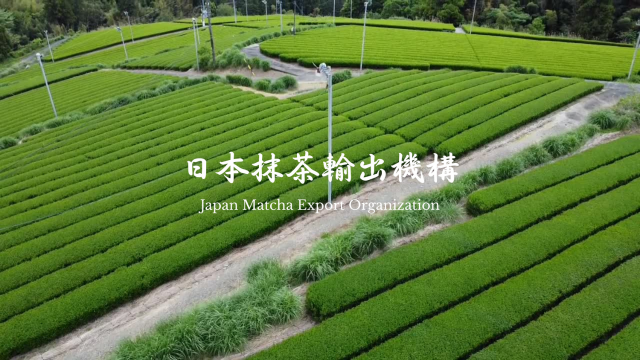
JMEX (Japan Matcha Export Organization) is a Japanese matcha exporter with an export track record to 43 countries across North America, Europe, Southeast Asia, and the Middle East. For Ohio café operators sourcing directly or through a US importer, JMEX can provide:
- Grade design for café applications: JMEX can specify latte-grade and culinary-matcha products matched to colour, flavour, and cost-per-cup targets for café drink programmes.
- Certificate of Analysis (COA): Lot-specific documentation covering pesticide MRL compliance and heavy-metal testing relevant to US FDA import standards.
- Sample provision: Commercial sample lots are available to allow Ohio café operators to validate colour in their specific milk and preparation method before placing a commercial order.
- Origin transparency: JMEX sources from verified Japanese producing regions; origin documentation is available on request.
- Stable commercial supply: With experience supplying food-service and OEM buyers globally, JMEX can support consistent reorder volumes for Ohio café groups.
FAQ: Wholesale Matcha for Ohio Cafés
What grade of matcha is best for café lattes in Ohio?
For most café latte and iced matcha applications, a commercial latte-grade or barista-grade Japanese matcha offers the best balance of colour performance, flavour, and COGS. Ceremonial grade is suited to premium straight-serve menus where the per-cup price justifies the higher ingredient cost. Culinary-matcha grade is appropriate for smoothies and baked goods but typically lacks the colour vibrancy expected in a milk-based latte.
How do I calculate cost per cup for wholesale matcha?
Divide your quoted price per kilogram by the number of servings per kilogram: cost per serving = price per kg ÷ (1,000 ÷ grams per drink). At 3 g per drink, one kilogram yields approximately 333 servings. The pour weight — not just the grade tier — has the largest impact on your cost per cup.
Is there import duty on Japanese matcha entering Ohio?
Green tea and matcha powder from Japan is classified under HTS Chapter 09. The general (MFN) duty rate is free (0%) per the USITC Harmonized Tariff Schedule. Ohio operators importing directly should file FDA prior notice and comply with FSMA FSVP requirements. Confirm the current rate and correct subheading with a licensed customs broker at the time of your shipment, as tariff schedules are subject to revision.
What documentation should I request from a Japanese matcha supplier?
Request a lot-specific Certificate of Analysis (COA) covering pesticide residue MRL compliance, heavy-metal panel (lead, arsenic, cadmium, mercury), and microbiological specifications. For US import, also request a country-of-origin certificate and product specification sheet. If you are the FSVP importer of record, you will need supplier audit documentation or equivalent verification records.
Can I source Japanese matcha locally in Ohio?
Ohio does not have domestic Japanese matcha production. Wholesale matcha reaches Ohio either through US-based importers and distributors who stock Japanese-origin product, or through direct import relationships with Japanese exporters. Purchasing through a domestic distributor simplifies the regulatory burden; direct import can improve traceability and grade consistency for high-volume buyers. Either route requires verifying COA documentation and consistent supply terms.
How much matcha does an Ohio café use per month?
Monthly usage depends on your menu, daily cover count, and pour weight per serving. Calculate from your own sales data and recipe; usage projections not grounded in your own volume are not reliable. Request quotes for a volume that matches your actual weekly usage to negotiate appropriate terms and avoid excess stock or stockouts.
Sources & Methodology
This article draws on the following primary and authoritative sources. No proprietary market-size figures, JMEX-specific prices, or fabricated statistics are cited.
- US International Trade Commission — Harmonized Tariff Schedule of the United States: duty classification and rate for HTS Chapter 09 (tea and matcha).
- US Food and Drug Administration — FSMA Foreign Supplier Verification Programs (FSVP) rule: import compliance framework applicable to tea and matcha.
- Specialty Coffee Association (SCA) partner editorial: US matcha latte average menu price reference (industry commentary, 2024).
Editorial note: Grade tier names (ceremonial, latte, culinary) are not regulated internationally. All grade characterisations reflect general commercial usage; request a product specification sheet from any supplier before placing an order. JMEX pricing, MOQ, and logistics terms are not quoted here — contact JMEX directly for current commercial terms.
Learn More About Global Matcha Trends at Matcha Times

Matcha Times is a specialist media platform covering the global matcha market — sourcing and wholesale, supply and pricing, trade and regulations, production and origins, and the companies shaping the industry.
From market analysis and price trends to café case studies and interviews with tea farmers, we help buyers, importers, distributors, and manufacturers stay ahead of where matcha is heading. Explore more and put the global matcha market to work for your business.
Conclusion
For Ohio café operators, selecting wholesale matcha comes down to grade matched to application, a cost-per-cup model verified against your menu pricing, and a supply chain that delivers consistently through Ohio’s autumn and winter season. Validate with samples before committing to a commercial volume, and always request lot-specific COA documentation from any supplier.
Related Articles