
Global Matcha Boom 2026: Health Trends, Social Media, and Market Reality

Matcha has evolved from a Japan-originated trend into a global lifestyle phenomenon, spreading across America, Europe, the Middle East, and Southeast Asia.
Against the backdrop of social media proliferation and rising health consciousness, matcha is becoming a worldwide cultural movement.
This article thoroughly examines the reality and future prospects of the global matcha boom based on latest data and field voices.
Key Takeaways
- Scientific evidence confirms matcha’s superfood status with catechins providing antioxidant/immune/beauty benefits, theanine enhancing focus/relaxation, and EGCG boosting fat burning 25% when combined with exercise
- Social media drives virality with #matcha hashtag surpassing 500 million TikTok views, celebrity influencers like Emma Chamberlain launching brands, and photogenic green aesthetics capturing Gen Z and millennials
- Export data proves sustainability: April 2025 Japanese green tea exports reached ¥4.7 billion (185.7% year-over-year), with powder tea representing 83% by value and 90%+ in cafe-dominant markets like UK, Canada, Singapore
- Regional expansion accelerates beyond North America/Europe into Middle East (Dubai, Tel Aviv specialty cafes) and Southeast Asia (Thailand, Philippines, Malaysia hybrid products), positioning these as second-wave growth markets
- Supply challenges intensify with tencha auction prices quadrupling over 5 years, century-old Kyoto shops implementing sales restrictions, and resale issues affecting domestic tea ceremony practitioners
\For Companies Seeking Matcha Powder/
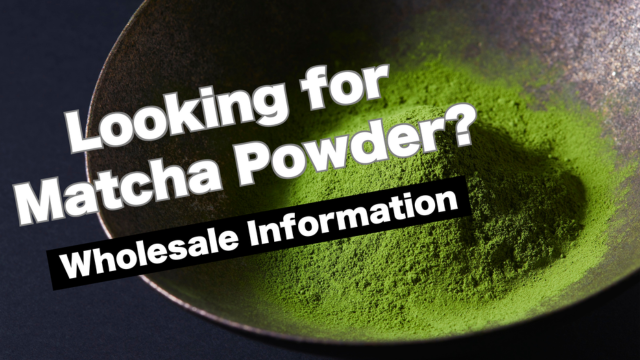
We source matcha from Japan’s premier production regions including Kyoto Uji, Kagoshima, Fukuoka, and Shizuoka, offering comprehensive grade ranges from organic JAS-certified ceremonial grade to processing-grade matcha.
Common Challenges:
- “We have projects but cannot secure stable matcha supply…”
- “We want to incorporate matcha into new café menu items!”
If you face these concerns, consult with Matcha Times. Feel free to contact us for initial inquiries.
Health Consciousness Drives Matcha’s “Superfood” Status

Scientific Evidence for Matcha’s Health Benefits
Matcha attracts worldwide attention as a “superfood” due to its abundance of catechin with superior antioxidant properties, theanine as a relaxation component, plus vitamins and minerals.
Primary Health Benefits:
- Catechin antioxidant action, immune enhancement, beauty effects
- Theanine concentration improvement, relaxation promotion
- EGCG fat burning, metabolism enhancement
- Vitamin A/C/E and dietary fiber intake capability
A 2020 review published in Molecules journal (Molecules, 2020) confirmed that polyphenol antioxidant capacity in matcha exceeds regular green tea and black tea.
Catechin Antioxidant Action, Immune Enhancement, Beauty Effects

Source: Oigawa Chaen (https://www.ooigawachaen.co.jp/blog/2021/04/12/825)
Matcha’s reputation as a “superfood” stems primarily from catechin health benefits. Catechins abundant in green tea represent powerful antioxidant components, possessing functionality matching modern needs: immune strengthening, anti-aging, and beauty creation.
Antioxidant Action: Protecting the Body from “Active Oxygen”
Catechins, a polyphenol type, protect our bodies from “active oxygen” causing aging and disease.
- Reduces UV and stress damage, contributing to spot and wrinkle prevention
- Supports declining antioxidant enzyme function with age
- Suppresses cell oxidation rust, maintaining youthfulness
Tea catechins are called the “7th nutrient,” with increasing attention as antioxidant substances.
Immune Enhancement: Building Bodies Resistant to Colds and Viruses
Among catechins, “epigallocatechin” research reveals immune function enhancement properties.
- Activates macrophages (immune cells), preventing virus and bacteria invasion
- Effects obtainable even with low-temperature extraction like cold-brewed green tea
- Long-term intake also balances natural immune systems
During cold and flu seasons, catechin-rich matcha serves as daily protection.
Beauty Effects: Dual Care Against “Oxidation” and “Glycation” for Youthful Skin
Tea catechins suppress both skin-aging oxidation and glycation, essential for smart aging (wisely confronting aging).
- Removes active oxygen causing spots, wrinkles, sagging (anti-oxidation)
- Suppresses AGE formation causing skin dullness and yellowing (anti-glycation)
- Prevents dermis collagen and elastin degradation, maintaining elastic skin
Daily intake of 500mg+ catechins (approximately 10 tea cups) is recommended (※J. Agric. Food Chem., 2001).
Theanine Concentration Enhancement and Relaxation Promotion

Modern stress and declining concentration issues draw attention to “theanine,” abundant in matcha. Theanine, tea’s unique umami component, represents a notable amino acid balancing seemingly contradictory effects: mental relaxation and concentration enhancement.
Theanine Relaxation: “Healing” Power Inducing Brain Alpha Waves
Theanine demonstrates scientifically confirmed stress reduction and relaxation effects.
- Approximately 30 minutes post-theanine intake, relaxation-characteristic alpha waves dominate brain activity (※EEG measurement experiments)
- Activates neurotransmitters “GABA” and “glycine,” relieving stress and stabilizing mood
- During sleep, suppresses sympathetic nervous activity, making parasympathetic dominant (= sleep quality improvement)
“Calm mood while sharp thinking” — Theanine truly serves as a mental balancer.
Theanine Concentration Enhancement: Alpha Waves Elevate Brain Performance
Theanine’s additional notable effect involves concentration improvement.
Research reveals relaxed states facilitate entering “the zone.”
- Experiments with 18 high-anxiety students showed attention test accuracy increases and reaction speed shortens
- More alpha waves correlate with enhanced thinking clarity and creativity tendencies
- No daytime drowsiness, supporting concentration during work and study
Rather than “forced stimulation with energy drinks,” theanine promotes “quiet concentration.”
Sleep Quality Improvement Contribution: Nighttime Stress Reset
Theanine excels as nighttime relaxation support.
- Adult male experiments showed reduced awakening fatigue, decreased mid-sleep wakening
- Confirmed mid-sleep wakening reduction and sleep quality improvement for menopausal women and ADHD children
- Reports also show suppression of excess excitatory neurotransmitter glutamate
Unlike sleeping pills’ side effects, theanine’s appeal lies in enhancing “natural sleep quality.”
Why Matcha Works Effectively: “Theanine-Preserved Tea Leaves”
Theanine originally generates as tea leaf sweetness component but photosynthesis converts it to catechins.
Therefore, matcha tea leaves (= gyokuro and tencha) grown under shade retain abundant theanine.
- Matcha enables complete theanine-containing leaf intake
- Even quantities difficult to obtain from regular tea efficiently incorporate through matcha
- High theanine content = proof of flavorful, premium tea
Intake Guidelines and Precautions
- Recommended daily theanine intake: approximately 200mg
- Approximately 10mg per 80ml sencha, requiring 20 cups for tea-only intake
- Those requiring caution with caffeine intake or diuretic effects may find supplement combination effective
Due to blood pressure lowering effects, exercise caution with antihypertensive medication combinations (physician consultation recommended).
EGCG Burns Fat! Green Tea’s Diet & Metabolism Enhancement Power

Matcha and green tea component “EGCG (epigallocatechin gallate)” attracts attention as nature-derived diet support component effective for fat burning and metabolism enhancement. Recent research reports EGCG-caffeine synergy doubles exercise effectiveness, achieving body fat reduction and energy efficiency improvement.
Green Tea × Exercise Accelerates Fat Burning
Anglia Ruskin University (UK) research showed EGCG-consuming groups achieved 25% fat burning rate increase and 1.63% body fat reduction versus non-consuming groups.
- Pre-exercise green tea intake facilitates fat utilization as energy
- EGCG promotes fatty acid metabolism in mitochondria
- Caffeine synergy enables longer-duration, higher-intensity exercise
Simply stated, “green tea + exercise” = golden combination for efficient fat burning.
Meal Combination Contributes to “Fat Absorption Suppression”
EGCG not only “burns” but also “prevents storage.”
- Inhibits digestive enzyme lipase, suppressing fat absorption
- Moderates sugar absorption, contributing to blood sugar rise suppression
- Appetite suppression effects also prevent overeating
High-temperature (80°C+) brewed green tea extracts abundant EGCG, recommended during and after meals.
Endurance and Exercise Performance Enhancement Support
EGCG-caffeine benefits extend beyond fat burning to exercise performance and endurance improvement.
- Suppresses glycogen (sugar energy) consumption, shifting to preferential fat utilization
- Antioxidant effects achieve muscle fatigue reduction and recovery promotion
- Also supports concentration maintenance during exercise and cardiopulmonary function
A cup of green tea before exercise may soon become the new standard for gym habits and running.
Optimal EGCG Intake Methods
| Scene | Method | Effect |
|---|---|---|
| Pre-exercise | 1-2 green tea cups (~30 min before) | Fat burning efficiency UP, endurance improvement |
| During/after meals | 1 cup each | Fat absorption suppression, post-meal blood sugar control |
| Daily habit | 3-5 cups daily | Comprehensive metabolism improvement, body fat reduction |
Note: Recommended EGCG intake is approximately 300-500mg daily. Kyusu-brewed green tea contains about 120mg per cup, suggesting approximately 4 daily cups.
Cancer Prevention and Anti-Aging Expectations
EGCG’s strong antioxidant and antiviral properties show the following research-reported effects:
- Lowers cancer cell oxidative resistance, promoting selective death (Pennsylvania State University experiments)
- Blood lipid oxidation suppression, preventing arteriosclerosis and lifestyle diseases
- Skin and cellular aging prevention = anti-aging effects
Truly a natural component with “drink-and-rejuvenate-whole-body” potential.
Abundant Vitamins and Dietary Fiber: Matcha Simultaneously Cares for Beauty and Intestinal Environment

Matcha contains not only catechins and theanine but “vitamins” and “dietary fiber” rivaling vegetables and fruits.
As easily supplementing nutrients often lacking in daily diets, matcha serves as “drinkable supplement” attracting attention.
Vitamins A, C, E Support Skin and Body Health
Matcha contains the following three major antioxidant vitamins:
- Vitamin A (β-carotene): Necessary for skin and mucous membrane health. Deficiency causes rough skin and immune decline
- Vitamin C: Assists collagen production, aiding beauty and immune function strengthening. Essential for stress-fighting hormone production
- Vitamin E: Prevents cellular oxidation, contributing to aging prevention (anti-aging)
Matcha represents one of few beverages enabling complete intake.
Particularly, heat-sensitive vitamin C remains relatively stable in matcha.
Abundant Dietary Fiber Reason: “Whole Leaf Drinking”
Regular sencha and hojicha enable only water-extracted component intake, but matcha differs.
- Powdered leaf drinking enables complete dietary fiber and fat-soluble vitamin intake unavailable in water
- Dietary fiber contains both water-soluble and insoluble types, effective for intestinal environment regulation
- Japanese average daily dietary fiber intake falls short of targets; matcha ideally complements deficiency
One cup (approximately 2g) matcha contains approximately 1/4 lettuce-equivalent dietary fiber.
“Green Universal Tea” Achieving Both Health and Beauty
抹茶に含まれるビタミンや食物繊維には、以下のような幅広い健康効果があります。
| Component | Expected Effects |
|---|---|
| Vitamin A | Vision maintenance, mucous membrane strengthening, skin metabolism improvement |
| Vitamin C | Antioxidant, whitening, stress resistance improvement, immune strengthening |
| Vitamin E | Blood circulation promotion, aging prevention, hormonal balance stabilization |
| Dietary Fiber | Intestinal environment improvement, constipation prevention, blood sugar rise suppression |
For modern people caring about both beauty and health, matcha represents a two-birds-one-stone superfood.
Easy “Inner Beauty Habit” for Daily Routine
- Incorporate matcha latte or smoothie into morning cups
- Supplement with matcha sweets or drinks after lunch or snacks
- Even in busy days, “instant beauty” drinkable with just hot water
Before relying on vitamin supplements or intestinal regulators, why not first choose matcha as natural nutritional supplementation?
Social Media and Celebrities as Catalysts: How Matcha Boom Spread

Source:Forbes JAPAN (https://forbesjapan.com/articles/detail/70543)
Matcha boom’s global expansion owes much to social media and celebrity influence.
Particularly centered on Instagram and TikTok, posts tagged #matcha and #matchalatte surged, capturing many young hearts as beautiful visuals and healthy lifestyle symbols.
“Photogenic Matcha” Resonates with Gen Z and Millennials

Source:Pretty Online (https://www.pretty-online.jp/news/4458/)
Matcha’s greatest appeal lies in its vibrant green color and smooth texture. On TikTok and Instagram, matcha latte gradients poured into transparent glasses and matcha sweets videos receive hundreds of millions of views, exploding as “visually appealing” food and drink.
- Beautiful gradient matcha lattes
- Matcha pancakes and matcha cookies
- Cute-shaped matcha iced lattes (e.g., bear shapes)
For instance, in 2024, TikTok #matcharecipe views exceeded 500 million, with user posts even covered by major media.
Overseas Celebrities and Influencers Broadcast “Matcha Love”

Source:FRONTROW (https://front-row.jp/_ct/17067934)
Influencers and celebrities drive matcha boom promotion.
- Emma Chamberlain developed matcha lines in her brand, posting numerous matcha latte whisking videos on SNS
- Model Sanne Vloet distributes healthy matcha recipe videos, selling matcha products in her wellness brand
- K-POP idol Mingyu (SEVENTEEN), plus Miranda Kerr and Billie Eilish also broadcast matcha-incorporating lifestyles on SNS
Thus, celebrity-introduced products and lifestyles ripple to general demographics, establishing matcha as “healthy, refined lifestyle” symbol.
Matcha Evolving into “Daily Energy Drink”

Source:Glimpse (https://glimpse.jp/articles/new-matchaenergydrink-20200801)
Among celebrities, matcha attracts attention not merely as luxury item but as “wellness drink” supporting daily performance and beauty.
- “Matcha energy drinks” combining matcha with mint or ginger
- Golden milk (turmeric + matcha) recipes
- Yogurt and smoothie arrangements
Particularly in New York and Los Angeles, matcha specialty cafes “Matcha Bar” and “Cha Cha Matcha” gain popularity, establishing “matcha culture as healthy morning routine”.
Synergy with Cafe Culture and Japanese Food Boom

Source: Yomiuri Shimbun Online (https://www.yomiuri.co.jp/national/20250414-OYT1T50146/)
Matcha export increases closely relate to global cafe culture expansion and Japanese food boom. Indeed, April 2025 export results reveal extremely high powder tea (= matcha) export ratios in high-cafe-demand countries.
90%+ Powder Tea Ratio Countries Are “Cafe Powerhouses”
According to Ministry of Agriculture, Forestry and Fisheries materials, April 2025 export results showed 90%+ powder tea composition ratios in the following “cafe culture”-established countries:
| Country | Export Value (¥10,000) | Powder Tea Ratio |
|---|---|---|
| America | 20,504 | 85.0% |
| UK | 3,351 | 96.4% |
| Germany | 3,127 | 92.4% |
| Canada | 2,391 | 96.6% |
| Singapore | 1,306 | 97.6% |
| UAE | 1,205 | 92.4% |
| Saudi Arabia | 1,162 | 96.5% |
These countries see products like matcha lattes, matcha frappes, matcha sweets establishing as standard coffee shop and cafe chain menu items.
Increasing “Matcha Pairing” Combined with Japanese Food Popularity

Source: Rurubu & more. (https://rurubu.jp/andmore/article/19399)
Furthermore, Japanese food boom also propels matcha demand. Compatibility with Japanese menu items like sushi, tempura, and udon receives re-evaluation, with restaurants standardizing post-meal “matcha dessert” and “matcha tea” offerings.
- North America popularizes “SUSHI + MATCHA” course offerings
- European upscale Japanese restaurants standardize “matcha tiramisu” and “matcha fondant”
- Middle East and ASEAN trend toward fusion matcha with local ingredients (coconut, nutmeg)
“Matcha Experience” Spreads from Storefronts to SNS
Matcha’s vivid green color spreads on global SNS as “photogenic material.” Influencers and cafe operators accelerate matcha incorporation, consequently extending both export volume and recognition.
- TikTok #matchalatte exceeds 500 million views
- Overseas “MATCHA BAR” and “matcha ceremony experiences” also popular with tourists
Export Value and Market Scale Reach Record Highs: Numbers Tell Matcha Boom Story

Reference:https://www.chunichi.co.jp/article/1018896
The matcha boom no longer represents a temporary phenomenon but sustained trends proven by international real demand and statistical data. Particularly, April 2025 export results demonstrate remarkable growth versus the past.
April 2025: Green Tea Export Value Increases 185.7% Year-Over-Year to Approximately ¥4.7 Billion
In April 2025, total Japanese tea export value reached ¥4,707.78 million (powder form representing approximately 67%), surging to approximately 1.85x versus the previous year.
- Total export volume: 3,920 tons → 4,708 tons (120% increase)
- Total export value: Approximately ¥2.53 billion → approximately ¥4.71 billion (185.7% increase)
- Powder tea (primarily matcha) ratio: 83% by value
Primary Markets:
- United States: ¥2,050 million (176.5% previous year)
- UK: ¥335 million (568.1% previous year)
- Germany: ¥312 million (262.8% previous year)
- Thailand: ¥312 million (390.1% previous year)
- UAE, Philippines, Vietnam, Saudi Arabia also show 100%+ year-over-year growth
Matcha Becomes “Global Category”

In America, 85%+ overall represents powder tea including matcha, while UK shows 96% powder form. This demonstrates matcha latte, protein, and confection usage penetration.
Across North America, Europe, ASEAN, Middle East four major spheres:
- “MATCHA LATTE” becomes standard drink
- Cosmetics and skincare ingredient demand also increases
- Organic-certified Japanese matcha receives high evaluation
Domestic Production Systems Rapidly Expanding

Responding to rising matcha popularity, domestic “tencha (matcha raw material)” production surges.
- Kagoshima Prefecture: Approximately half national matcha production (2,000+ tons)
- Shibushi City tencha factories: 2016: 1 location → 2024: 5 locations
- Nishi Tea Factory establishing organic farming responds to beyond-expectation overseas demand
- Uji, Kyoto: Premium matcha shortages lead established shops to implement quantity restrictions and sales suspensions
The Ministry of Agriculture, Forestry and Fisheries also promotes matcha as priority export item, strengthening support for mechanization, organic certification, and export standard development.
Challenges: Resale, Price Surges, Counterfeit Risks

With rapid international market expansion, the following risks manifest:
- Matcha purchased domestically resold overseas at 3-5x prices
- Chinese “Uji matcha” counterfeit circulation with falsified quality labeling
- High-quality hand-picked matcha supply cannot keep pace, scarcity progressing
Indeed, in 2025, Kyoto establishments “Marukyu Koyamaen” and “Ippodo Tea” implemented sales restrictions and price revisions.
Middle East and Southeast Asia Also Heat Up MATCHA Boom

The global matcha boom extends not only to Europe and America but certainly spreads to Middle East and Southeast Asia. Background factors include rising health consciousness, visual SNS appeal, and growing interest in Japanese culture.
Middle East: Israel and Dubai See “Authentic Matcha Latte” Popularity Surge

Middle East regions see matcha rapidly growing as “wellness orientation” symbol. Particularly Israel, Dubai, Saudi Arabia confirm the following phenomena:
- Israel Tel Aviv sees successive matcha latte cafe births → “HOC” and “T-LAB” provide authentic chasen-whisked matcha lattes, with diverse variations like vegan-compatible and maple syrup-infused gaining popularity
- Dubai sees upscale shopping mall matcha latte specialty cafes becoming youth standards → Expanding through organic-oriented, appearance-emphasizing Gen Z and millennial support
- Japanese cultural interest also provides background, with tea ceremony workshops and Japanese sweet pairing experiences also popular
Notably, “healthy luxury” presentation combining matcha lattes with almond milk or soy milk gains acceptance. This demonstrates matcha establishing as “daily energy drink” centered on high health and beauty-conscious demographics.
Southeast Asia: Matcha Frappes Compatible with Hot Climates Hit Youth

Southeast Asian matcha popularity also rises steadily. Particularly Thailand, Vietnam, Philippines, Malaysia, Singapore show remarkable spread.
- Malaysia sees cafes offering “chasen-whisked authentic matcha lattes” → Local customers post SNS videos, becoming topics as “authentic yet approachable taste” → Strawberry matcha lattes and matcha × coconut milk arrangements also standardized
- Philippines and Vietnam see matcha frappuccinos and matcha teas becoming popular menu items → Local major cafe chains (Bo’s Coffee, Highlands Coffee, etc.) introduce limited matcha products → Standardization
- Thailand sees overheating matcha sweets and drink markets → “Matcha + tapioca” and “matcha mont blanc” etc., East × Japanese hybrid products supported by youth
- SNS and YouTube also surge “matcha recipe” videos → Visually appealing drinks and sweets spread, influencer distribution expands recognition
Furthermore, Southeast Asia advances not only matcha imports from Japan but local company matcha product development. High compatibility with “Southeast Asia-unique healthy orientation” like organic and vegan specifications promises future market expansion.
Asia-Wide Matcha Market Growth and Future Outlook
- Rising health and beauty consciousness draws attention to matcha as “drinkable skincare”
- Growing interest in organic and natural foods evaluates matcha functionality
- Household matcha product (powder, snacks, bakery materials, etc.) distribution expands
- Local manufacturing × Japanese technology OEM development also increasing
Across Asian nations, matcha no longer remains “traditional tea” but permeates daily life centered on youth, women, and health-conscious demographics as new wellness culture symbol.
Middle East and Southeast Asia Become Matcha’s Second Growth Market
Middle East and Southeast Asian matcha booms clearly represent not mere “fads” but beginning deep roots adapted to regional culture, climate, and consumption styles.
Matcha evolves from Japanese cultural origin into global wellness market core. Discussing future matcha markets requires viewing Middle East and Southeast Asia as second growth areas following Europe and America warranting close attention.
Demand Expansion’s Underlying Challenges: Supply, Resale, Price Surges

While rising global matcha boom represents major business opportunities for Japan, various “distortions” manifest on-site. Supply-demand balance collapse, price surges, resale activities significantly impact production areas and consumers.
Production Site Pressure: Established Tea Merchants “Cannot Win Bids This Year”

Kyoto Uji and other premium matcha production areas see tencha auction prices approximately quadruple over the past 5 years. Spring 2025 auctions saw even 170-year-old establishment Nakamura Tokichi Honten “defer bidding due to stable high prices” (Yomiuri TV, 2025).
Production systems cannot keep pace with rapid matcha popularity expansion.
- Average producer age exceeds 65
- Premium hand-picked tea leaves originally have limited production
- Stone-mill grinding requires time, preventing production speed increases
These circumstances create Uji and Nishio high-price-tier matcha shortages, with storefront sales restrictions normalized.
✅ Reference: Tencha slowly grinds via stone mill for quality maintenance, approximately 40g per hour. Unsuitable for mass production.
Resale and “Panic Buying” Reality: Domestic Tea Ceremony Practitioners Also Affected

Source: FNN Prime Online. (https://www.fnn.jp/articles/-/879568?display=full)
Compounding supply shortages are overseas resale-purpose “panic buying” and high-grade matcha resale at inflated prices.
- Uji matcha purchased in Japan for several thousand yen sells overseas at 2-5x prices
- Consecutive individual limits and sales suspensions make tea ceremony and practice matcha procurement difficult
Tea ceremony particularly requires high-quality hand-picked first flush for thick tea. However, voices emerge from the field that “matcha doesn’t reach those who truly need it.”
💬 Tea ceremony teacher: “Prices doubled. Facing choices between reflecting in lesson fees or bearing losses personally.”
Domestic Demand Impact: Sencha and Gyokuro Scarcity Also Progresses

Demand concentration affects not only matcha but Japanese tea industry structure itself.
- Farmers increasingly convert from sencha to matcha tencha cultivation
- Consequently, sencha and gyokuro production decreases, prices rising 20-30%
- Some established shops also consider ending sencha product production
This change suggests risks of matcha monopoly damaging Japanese tea diversity.
🔍 Japanese Tea AWARD representatives: “Matcha serves as catalyst, but mechanisms supporting sencha and Japanese black tea also necessary.”
Production Cost Increases and Climate Change Double Punch

Matcha price surges cannot ignore fertilizer and fuel cost increases and climate change impacts.
- Fertilizer prices 1.6-1.8x versus 2020
- High-temperature damage and abnormal weather destabilize tea leaf quality
- Aging skilled technicians and successor shortages accelerate
Against these backgrounds, cautious voices increase among producers: “Matcha profits don’t offset excessive risks.”
“For Those Wanting to Know Authentic Matcha”

“Matcha Times” publishes numerous articles realistically conveying matcha’s present.
Authentic matcha for your lifestyle. Please find your favorite cup.
Summary: Is MATCHA Boom Temporary or Future Culture?
Matcha now establishes positions as “next-generation global beverage” combining health, beauty, culture, and visual appeal.
However, challenges clearly exist for elevating boom into “culture”:
- Resale countermeasures and quality maintenance
- Stable production systems
- Appropriate-price distribution
References and Sources
- Fact.MR(2025)『Matcha Tea Market Outlook 2025–2033』
https://www.factmr.com/report/matcha-tea-market - The Business Research Company(January 2025)『Matcha Global Market Report 2025』
https://www.thebusinessresearchcompany.com/report/matcha-global-market-report - Ministry of Agriculture, Forestry and Fisheries (March 2024) “Tea Export Trends FY2023”
https://www.maff.go.jp/j/tokei/index.html - The Guardian(July 31, 2024)”The new green giant: how matcha took over the world”
https://www.theguardian.com/food/2024/jul/31/matcha-boom-paris-london - Yomiuri TV (January 2025) “Overseas Boom ‘Matcha’ What’s Happening in Kyoto?”
https://www.ytv.co.jp/news - Japan Forward (February 3, 2025) “‘Uji Matcha’ Shortage, Export Surge Background”
https://japan-forward.com - Chalait Blog(June 2025)『The Rise of Matcha in the Global Beverage Market』
https://chalait.com/blogs/news/matcha-global-rise - ARAB NEWS JAPAN (June 1, 2025) “Will Green Tea Wave Cover Middle East Coffee Culture?”
https://www.arabnews.jp - Thai Rath (March 12, 2025) “Matcha Shortage Worldwide”
https://www.thairath.co.th/ - Molecules Journal(2020)“Health Benefits and Chemical Composition of Matcha Green Tea: A Review”
https://www.mdpi.com/1420-3049/25/9/2081