Matcha in Thailand: Cafe Culture & Health Trends Fuel Market Expansion
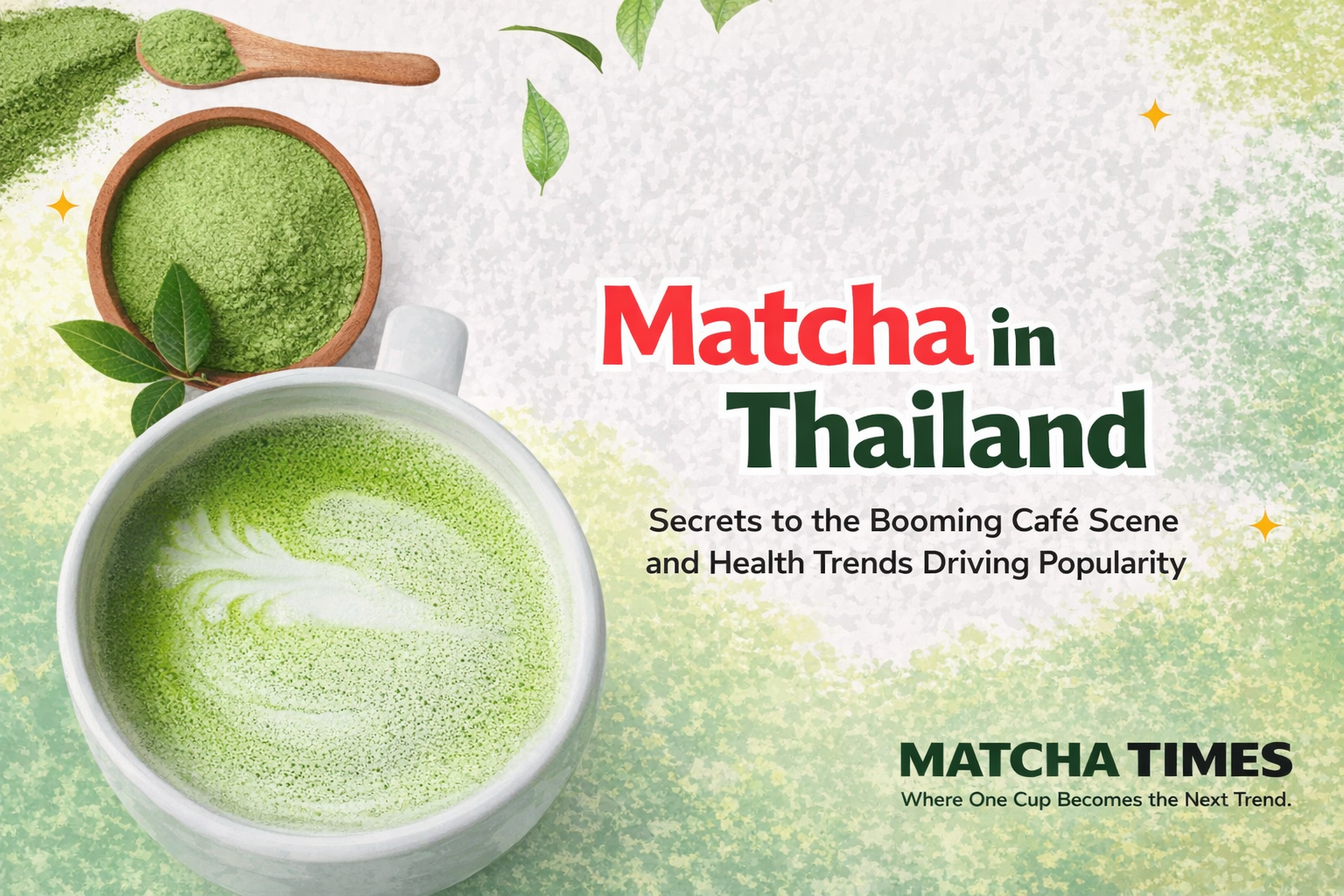
In Thailand over recent years, matcha has rapidly gained popularity. Centered in Bangkok, matcha cafes consecutively emerge, becoming beloved across broad segments from chain stores to premium specialty shops. Background factors include cafe culture momentum, rising health and beauty consciousness, and interest in Japanese culture, with matcha establishing itself beyond mere beverage as “part of lifestyle.”
This article examines why matcha attracts attention in Thailand, latest market scale trends, popular cafe and brand examples, and clearly explains business opportunities for Japanese matcha brands. Those seeking to understand Thailand’s market position and future matcha potential should read through to the end.
Key Takeaways
- Thailand’s matcha market demonstrates remarkable expansion from limited high-end venues to widespread chain cafes, convenience stores, and supermarkets
- Three major drivers fuel growth: youth cafe culture with Instagram-worthy appeal, health and beauty consciousness post-COVID, and Japanese cultural affinity through tourism and anime
- Market data shows matcha lattes achieving highest SNS engagement (41%) on Pantip.com, becoming standard youth beverages
- Dual-tier pricing structure: chain stores (100-150 baht) serve students and youth, while premium cafes (200-250+ baht) target affluent middle class
- Local chains (Cafe Amazon, FUKU Matcha, Inthanin) drive mass adoption while Japanese specialty stores (Tsujiri, Nana’s Green Tea) serve premium authenticity-seeking segments
- SNS and KOL marketing prove critical for brand success in Thailand’s highly visual, digitally-engaged consumer landscape
\Read this too/
\For Companies Seeking Matcha Powder/

We source matcha from Japan’s premier production regions including Kyoto Uji, Kagoshima, Fukuoka, and Shizuoka, offering comprehensive grade ranges from organic JAS-certified ceremonial grade to processing-grade matcha.
Common Challenges:
- “We have projects but cannot secure stable matcha supply…”
- “We want to incorporate matcha into new café menu items!”
If you face these concerns, consult with Matcha Times. Feel free to contact us for initial inquiries.
Background of Matcha’s Growing Attention in Thailand
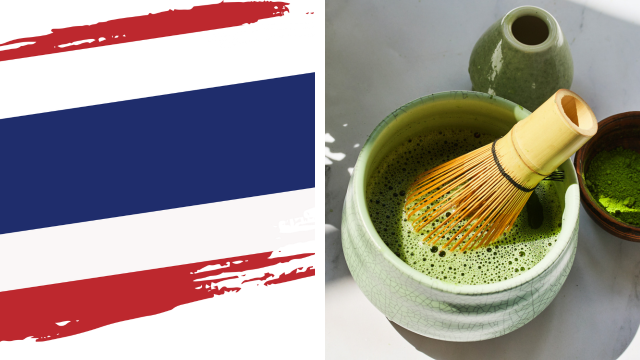
Behind Thailand’s rapidly rising matcha popularity lie three major factors: youth culture, health consciousness, and the Japanese culture boom. Characteristics show this transcends temporary trends, intimately connecting with social and lifestyle changes. Here we examine each element systematically.
Youth Culture and Cafe Boom
In Thailand’s urban areas, cafe hopping has established itself as “everyday enjoyment.” Particularly in Bangkok, numerous stylish cafes line bustling districts like Siam and Sukhumvit, becoming standard weekend destinations for youth.
Central to this are beverages like matcha lattes and matcha frappes. Vibrant green colors and photogenic presentations spread explosively via Instagram and Facebook. Indeed, Pantip.com review rankings show “matcha latte” achieving the highest engagement at 41%, becoming a “standard cup” for youth.
Further noteworthy is the popularity of cafes whisking matcha with chasen before customers. “Enjoyable not merely as drink but as experience” gains support, positioning matcha as central to the cafe boom.
Health and Beauty Consciousness Compatibility with Matcha
COVID-19 triggered rapidly rising health and wellness consciousness in Thailand. People now choose “beverages with healthy rationale” rather than simply “because they taste good.”
Within this context, matcha gains attention for antioxidant effects and anti-aging properties, emerging as healthy coffee alternatives. When catechins, theanine’s relaxation properties, and gentle caffeine effects receive introduction, support rapidly expands from diet and beauty-conscious demographics.
Furthermore, as SNS and YouTube influencers communicate “matcha benefits beauty” and “healthy with moderate calories,” consumption accelerates particularly among Gen Z and women aged 20-30. Health boom compatibility with matcha will remain a major pillar supporting future growth.
Japanese Culture, Anime, and Travel Influence
Thailand’s extremely high affinity for Japanese culture also propels matcha popularity. Many have visited Kyoto and Uji during Japan travel, with strong voices seeking to “enjoy again the matcha tasted authentically.”
Additionally, tea ceremony scenes appearing in anime and films spread recognition of “matcha = symbol of Japanese culture.” Indeed, Kyoto’s established tea houses and tea ceremony experience events attract attention from Thailand’s affluent and youth demographics.
For Thai people, matcha increasingly becomes “means of experiencing Japan” beyond mere beverage. Chasen and tea bowl whisking performances receive evaluation as “special experiences,” elevating consumption with added cultural value.
Thailand’s Matcha Market Scale and Trends
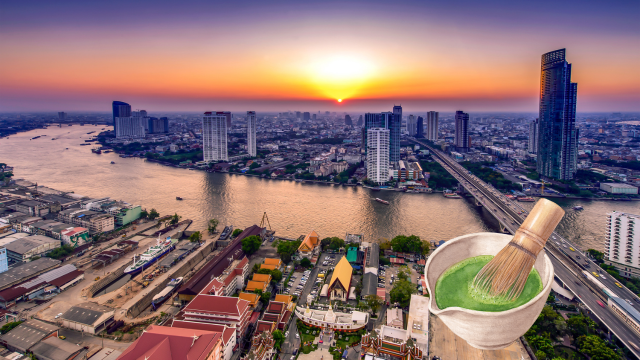
Thailand’s matcha market demonstrates remarkable expansion over recent years. Previously limited to select Japanese restaurants and upscale cafes, matcha now spreads to chain cafes, convenience stores, and supermarkets, establishing itself as “beverages familiar to everyone.” Organizing market data and trends reveals matcha represents not temporary boom but sustained growth industry.
Matcha Drink Market Growth
Matcha lattes have become indispensable to Thai cafe menus, recording the highest SNS engagement rate (41%). At cafe chains “Cafe Amazon” and “Inthanin,” matcha drinks enjoy popularity as “standard beverages” among youth and office workers.
Furthermore, premium matcha specialty cafes emerging centered in Bangkok create broad choices spanning “everyday drinking matcha” to “special premium matcha.” By late 2024, home-use matcha powder demand surged to shortage levels, with matcha consumption scenes expanding from cafes to households.
Expanding Demand in Matcha Desserts and Bakeries
Beyond beverages alone, matcha desserts and bakery products significantly drive markets. Matcha cheesecake, matcha roll cake, and matcha ice cream combine “Instagram-worthiness” with “healthy impressions,” enjoying popularity centered on youth demographics.
From 2023 onward, Bangkok’s major malls consecutively held “Matcha Fairs,” demonstrating prosperity with queues even on weekdays. Department store brands and major confectionery manufacturers successively introduce matcha-flavored products, establishing firm positioning as “matcha = standard dessert flavor.”
Price Point and Purchasing Demographics Characteristics
Thailand’s matcha products characteristically deploy across broad price ranges.
Through this polarization, matcha is consumed simultaneously as “everyday enjoyable beverage” and “special premium experience.” While core consumer demographics include Gen Z and millennials, health consciousness backgrounds expand demand even to senior demographics aged 30-50, progressing cross-generational market expansion.
進んでいます。
Popular Thai Matcha Cafes and Brand Examples
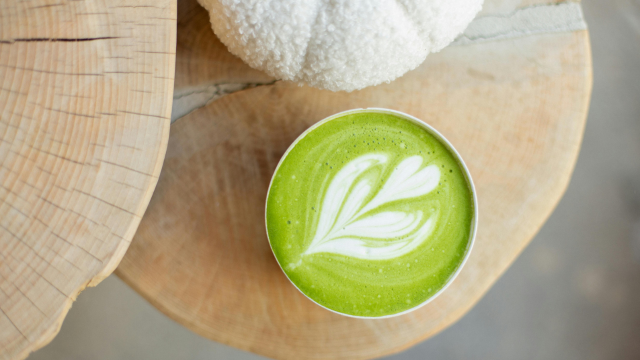
Three sectors drive Thailand’s matcha boom: local chain cafes, Japanese matcha specialty stores, and retail distribution. Each captures different target demographics, expanding matcha from “special cups” toward “everyday beverages.” Let’s examine respective examples.
Matcha Menus at Local Chain Cafes
Thailand’s largest cafe chain “Cafe Amazon,” along with “FUKU Matcha” and “Inthanin,” standardize matcha menus. These stores deploy extensively across streets and shopping malls, becoming entry points for readily drinkable matcha beverages for students and office workers.
Furthermore, Starbucks also provides matcha frappuccinos and matcha lattes as standard products, penetrating youth demographics’ “usual choices” with matcha. Particularly frappuccino-style matcha drinks combine sweetness, volume, and visual appeal in triple attraction, enjoying popularity as Instagram-worthy beverages. Such chain presence serves as driving force widely popularizing matcha in Thai society.
Japanese Matcha Specialty Store Entry
Japanese brands including “Tsujiri” and “Nana’s Green Tea” differentiate through authentic, high-quality positioning. Styles whisking Japan-imported matcha with chasen receive strong support as “special experiences” for Thai consumers.
Additionally, premium sweets like matcha afternoon tea and matcha parfaits enjoy popularity centered on affluent and middle classes. Stores particularly within department stores and major malls serve as places for “enjoying slightly luxurious moments after shopping,” elevating matcha toward cultural lifestyle icons.
Furthermore, recent years see local brands “MTCH” and “SO! MATCHA” also deploying premium-oriented stores using Japanese matcha, gaining popularity through live chasen-whisking services and creative menus like matcha sparkling beverages. This balance of authenticity × creativity generates development distinctive to Thailand’s market.
Supermarket and Convenience Store Penetration
Matcha extends beyond cafes alone, becoming commonplace on convenience store and supermarket shelves. Seven-Eleven and FamilyMart sell matcha-flavored snacks and drinks, establishing casual accessibility for youth and homemaker demographics.
Particularly, major beverage manufacturer “Ichitan’s” launched “Shizuoka Genmaicha with Matcha” attracted attention through large-scale promotions featuring famous athletes, achieving major hits centered on health-conscious demographics. Such products approach demographics finding “authentic matcha still high-barrier,” playing roles making matcha accessible.
Thus, Thailand forms matcha markets through cafe, specialty store, and retail trinity, with each supporting different consumption scenes.
Business Opportunities for Japanese Matcha Brands
Thailand’s market represents a central hub where continued Southeast Asian expansion is anticipated. With matcha integrating into cafe culture and penetrating supermarkets and convenience stores, major opportunities exist for Japanese brands. Here we organize particularly noteworthy focal points.
Demand for High-Quality Authentic Matcha
While chain store matcha lattes penetrate youth daily life in Thailand, demographics “wanting to taste authentic, pure matcha” also steadily increase. Particularly middle-class-plus and affluent consumers demonstrate strong interest in ceremonial-grade (high-quality matcha for tea ceremony) and organic-certified matcha.
Products from Kyoto and Uji established brands sold in limited periods gather high support, with sellout cases demonstrating popularity. Such movements represent strengths for Japanese brands in prominently featuring “authentic quality,” connecting to premium-oriented market development.
Tea Ceremony and Matcha Experiences Linked with Tourism
Thai people frequently encounter matcha during Japan travel, with these experiences directly connecting to consumption behaviors. Locally too, “tea ceremony experiences” and “matcha workshops” collaborating with travel agencies and Japanese cultural events gather popularity.
Bangkok matcha cafes generate queues merely through chasen whisking performances, with approaches combining cultural value with experience connecting to brand differentiation. Japanese brands directly deploying such experiential promotions can establish positions as “bearers of Japanese culture” beyond mere product sales
SNS Marketing and KOL Utilization
Thailand demonstrates extremely high Facebook, Instagram, and TikTok usage rates, with “trending on SNS” = selling directly connecting. Particularly matcha represents merchandise with strong visual viral capacity through vibrant green colors and beautiful presentations.
Collaborating with KOLs (Key Opinion Leaders) and influencers holding influence across health, beauty, and lifestyle sectors rapidly elevates brand recognition. Indeed, hashtags like “#matchalatte” and “#matchathailand” demonstrate high engagement, with Japanese brands having active entry opportunities.
Furthermore, introducing “online × offline strategies” combining SNS communication with real events enables creating mechanisms simultaneously providing topicality and experiential value.
Learn More About Latest Matcha Trends

For those wanting deeper exploration of spreading global matcha booms, market data, and local interview articles, please visit “Matcha Times.”
Whether wanting to know more about matcha’s appeal or considering matcha business, new discoveries certainly await here.
Summary: Thailand as Central Market for Southeast Asian Matcha Expansion
Thailand’s matcha popularity, through overlapping youth culture, health consciousness, and Japanese cultural penetration, now evolves from social trend toward lifestyle component. Beyond cafe and dessert markets alone, matcha spreads to everyday settings including supermarkets and convenience stores, revealing momentum rooted not in temporary boom but sustained growth foundations.
Additionally, Thailand’s strong “experiential consumption” and “SNS sharing culture” position matcha as merchandise satisfying both dimensions. Vibrant green colors when whisked and Japanese dessert visuals carry high viral capacity, exponentially expanding brand recognition. Furthermore, with connections to inbound tourism and expanding authentic orientation, value of Japanese brands delivering authentic matcha will further increase.
In essence, Thailand’s market represents a field where Japanese brands can challenge leveraging “quality and culture,” potentially serving as strategic hub toward broader Southeast Asian expansion. Depending on future development, Thailand will undoubtedly become the center of new matcha culture spreading from Thailand to the world.
Also recommeded