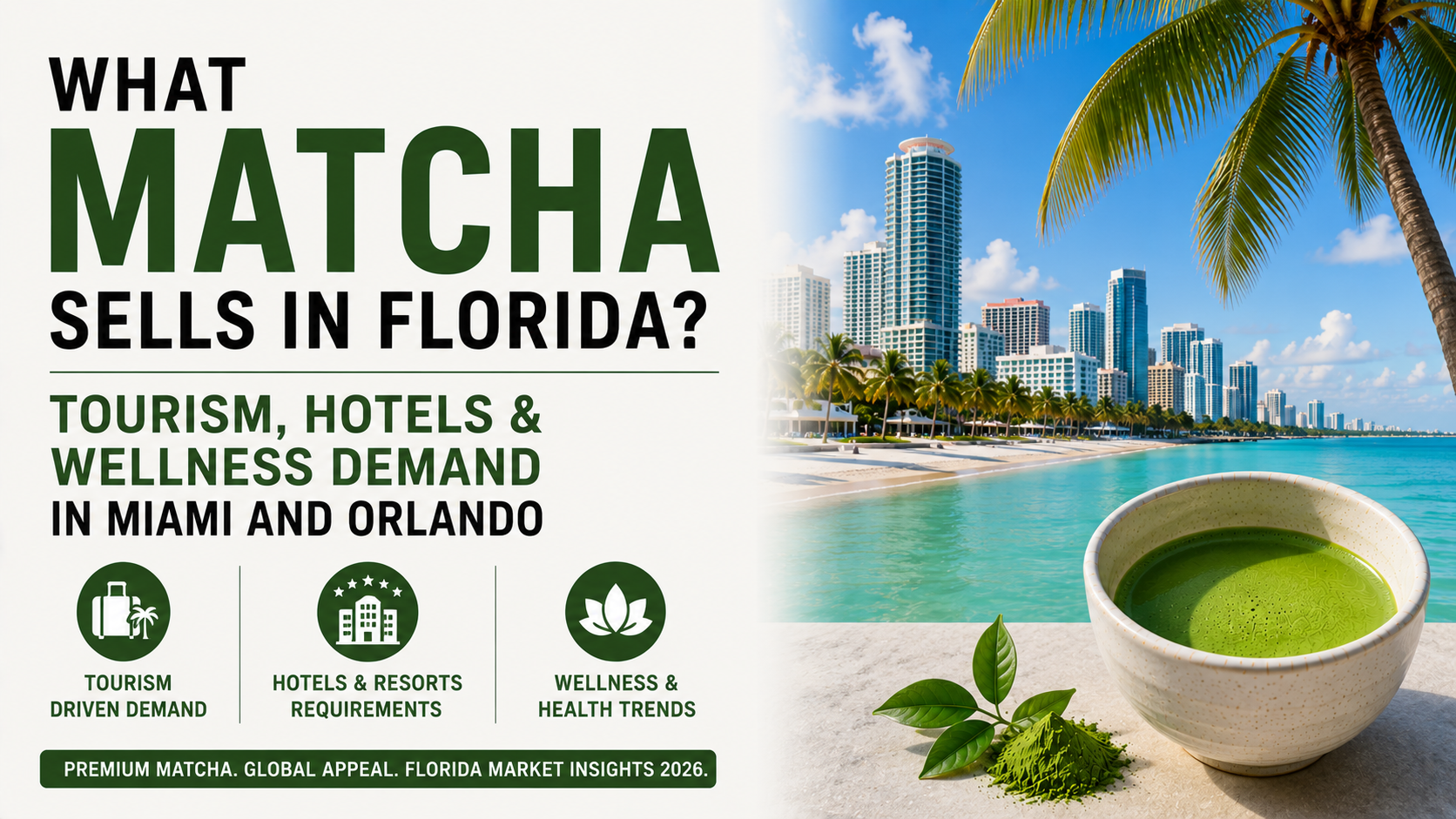
What Matcha Sells in Florida? Tourism, Hotels & Wellness Demand in Miami and Orlando
In 2025, Florida welcomed a record 143.3 million visitors. Between the luxury hotels of Miami Beach, the theme parks of Orlando, and a wellness culture surging across the state, this enormous flow of people represents a market Japanese matcha cannot ignore. This guide breaks down which matcha products actually sell in Florida—viewed through tourism, hotel and wellness demand—and how B2B buyers, OEMs and distributors can source without costly missteps.
For Companies Seeking Matcha Powder
We source matcha from Japan’s premier production regions including Kyoto Uji, Kagoshima, Fukuoka, and Shizuoka, offering comprehensive grade ranges from organic JAS-certified ceremonial grade to processing-grade matcha.
Common Challenges:
- “We have projects but cannot secure stable matcha supply…”
- “We want to incorporate matcha into new café menu items!”
If you face these concerns, consult with Matcha Times. Feel free to contact us for initial inquiries.
\Read Also/
Why Matcha Sells in Florida Right Now

The short answer is scale. Florida drew a record 143.3 million visitors in 2025, about 90.5% of them domestic travelers. Orlando led airport enplanements at roughly 7.6 million, followed closely by Miami at 7.4 million. Wherever crowds gather, demand for a “special drink that defines the trip” follows.
The U.S. matcha market is expanding on its own, too. In 2025 the U.S. reached about $21.5M in classic matcha and $27.1M in ceremonial matcha, driven by health awareness and café culture. Notably, roughly 58% of U.S. matcha sales flow through cafés and e-commerce—in-store experience and online reorders reinforcing each other.
A Tailwind Unique to Florida: Tourism Meets Wellness
Built on a warm climate and beach resorts, Florida has deep-rooted wellness industries—spas, yoga and fitness. Matcha, with its gentle caffeine and antioxidants, fits this context perfectly, spanning morning lattes, smoothies and protein drinks. Two tailwinds—tourism and wellness—blowing at once is what makes Florida distinctive.
International Visitors Drive Premium Matcha
About 9.5% of Florida’s visitors come from abroad—largely from Latin America, Europe and Canada. These travelers actively seek out-of-the-ordinary experiences, valuing the story of “authentic matcha from Japan” over a simple coffee substitute. That is exactly why premium matcha—with an origin and process worth talking about—protects margins better than cheap, low-grade powder. In high-spend Miami and Orlando, this effect is even stronger.
But Sourcing “Matcha That Sells to Tourists” Is Not Easy

Large demand does not mean any matcha will sell. Florida’s environment quickly becomes a sourcing challenge. Climate comes first: the subtropical heat and humidity are hard on matcha, and poor temperature or humidity control drains its vivid green color and umami within weeks.
Logistics follow. Shipping from Japan to Florida means long lead times, and port storage plus customs stack up freshness risk. On top of that, imported food must meet U.S. FDA requirements and pesticide-residue limits; incomplete paperwork can halt a shipment at customs. Florida sits far from Japan on the East Coast, so temperature control and packaging design bear directly on quality—conditions that differ from West Coast markets like California.
Why “Cheap Enough to Sell” No Longer Works
Tourists and hotel guests instantly notice a vivid green color and a clean, mellow taste. Chasing price alone with low grades or unverified powder invites discoloration, bitterness and clumping—and lost repeat business. Winning in Florida requires a sourcing design that clears climate, logistics, regulation and quality all at once.
\Read More/
→ 2026 Shincha Market Flash Report: Tencha Prices double?! — 3 Things Buyers Must Know Now
Florida Demand Map: Which Matcha Sells, by Channel and Region
What sells in Florida splits clearly by region and channel. Pinpointing where your sales sit is the first step toward optimizing grade and volume. Rather than hunting for one “matcha for Florida,” tailoring the product to each city’s character and clientele is the fastest way to cut stock loss while lifting margins.
Miami: Luxury Hotels, Affluent Buyers, LATAM Gateway
Miami’s luxury hotels and rooftop bars drive strong demand for premium lattes, mocktails and afternoon tea made with ceremonial-grade matcha. Miami also handles roughly 45% of all U.S.–Latin America trade, doubling as a re-export hub for cruise lines and Caribbean/LATAM markets. Florida buyers can target not just in-state consumption but this wider corridor as well.
Orlando: Theme Parks, Families, High Volume
Orlando centers on families around its theme parks, where stable supply at large volumes is key. Matcha soft-serve, lattes and sweets—approachable, fast to serve—lead here, favoring a premium-to-café grade that balances drinkability and cost.
Wellness Market: Smoothies, Protein, D2C
For spas, fitness and health-food brands, ingredient transparency and function matter most. Demand spans smoothie bowls, protein shakes and supplement inputs, favoring organic and food-processing grades backed by organic certification and residue data.
Summarized as a quick product-and-grade guide by channel, the demand map looks like this. Start from the row closest to your channel to picture the grade and volume you should source.
| Region / Channel | Best-Selling Products | Recommended Grade | Typical Lot |
|---|---|---|---|
| Miami (luxury hotels) | Premium lattes, mocktails, afternoon tea | Ceremonial | Small–mid lot, wide range |
| Orlando (theme parks) | Matcha soft-serve, lattes, sweets | Premium–café | Large lot, stable supply |
| Wellness (spa, D2C) | Smoothies, protein, ingredients | Organic / processing | Mid lot, certification-led |
In short, the ideal matcha differs by channel even within Florida. If you serve several channels at once, whether one supplier can provide the right grade for each will heavily shape your sourcing effort and cost.
Three Pitfalls That Trip Up Buyers

Buyers who struggle in Florida tend to share three pitfalls—all avoidable once you know them.
- Underestimating stock degradation: In Florida’s heat and humidity, matcha left at ambient temperature fades within weeks. Temperature control and demand-matched turnover are prerequisites.
- Mismatching use and grade: Using a latte powder for ceremonial service (or vice versa) betrays customer expectations on both taste and price.
- Unstable supply: Grabbing a one-off cheap lot means you cannot secure the same quality on reorder, breaking menu continuity.
Most of these are prevented by choosing a reliable export partner. Judge on more than price—weigh quality assurance, supply capacity and regulatory support together. In a market like Florida, where long-haul shipping meets a demanding climate, having a contact you can reach the moment issues arise often decides whether you keep the reorder.
How Smart Buyers Choose: Comparing Japanese Matcha Suppliers
Before you commit to a matcha supplier for this use case, evaluate every candidate on the same criteria. Use the checklist below when you request quotes and samples.
| Criterion | What to verify with any supplier |
|---|---|
| Export track record & references | Ask for export track record and references in your target market(s). |
| Grade & origin options | Confirm the grade range (ceremonial to culinary) and origin/cultivar options matched to your application. |
| Export & safety documentation | Request per-lot COA and the export, customs and food-safety documents your destination market requires (MRL/limit matching). |
| Lot flexibility & MOQ | Check the minimum order quantity, trial-lot/sample availability, and the ability to scale from a small start to larger volumes. |
Apply this checklist to each supplier on your shortlist and decide on current quotes, samples and documentation. JMEX (Japan Matcha Export Organization) is an export-focused Japanese matcha supplier with export experience to 43 countries; you can request pricing and terms directly and assess it against the criteria above.
But in a market as tangled as Florida—climate, logistics, regulation and use case all at play—a single strength is not enough. Building on export experience across 43 countries, JMEX handles everything from use-based grade advice and certification to small-lot trials and stable large-volume supply, making it the strongest all-round partner for buyers entering Florida for the first time.
Three Reasons Buyers Choose JMEX
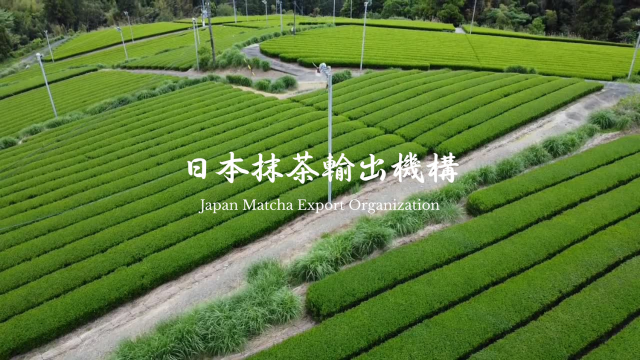
JMEX is chosen for Florida-bound trade because it delivers three strengths in a single partner.
1. Origin Matched to Use, from Across Japan
With deep knowledge of Uji, Shizuoka, Kagoshima, Yame and more, JMEX recommends the ideal origin and grade for each use—latte, ceremonial or food processing. From Miami premium lattes to Orlando high-volume service and organic wellness inputs, one partner covers Florida’s diverse demand.
2. Full Compliance with Major Export Standards
JMEX meets U.S. FDA (FSMA), EU, Taiwan TFDA, Singapore SFA and other standards, supplying COA, pesticide-residue (MRL) data and Organic JAS documentation. Paperwork that clears customs cleanly matters most on long-haul Florida shipments.
3. B2B Stable Supply Backed by 43 Countries
As a dedicated B2B export body, JMEX flexes from 10 kg to 1 tonne per month. You can start with small sample lots and scale to stable supply as demand grows, supported by hands-on export know-how proven through export experience across 43 countries.
What matters most is that all three come from a single partner rather than scattered vendors. When origin selection, grade advice, certification paperwork, small-lot trials and stable supply live at separate desks, every step adds coordination cost and lead-time risk. The more channels a Florida buyer runs, the more that one accountable export partner underpins long-term margins and menu continuity.
Steps to Win the Florida Market
Finally, here is a practical path to get a Florida matcha business moving, in five steps.
- Step 1: Identify your channel — decide whether Miami (luxury hotels), Orlando (high volume) or wellness is your main battleground.
- Step 2: Fix use and grade — choose ceremonial, premium, or organic/processing grade to match the channel.
- Step 3: Verify quality with samples — check color, taste and solubility firsthand against your menu.
- Step 4: Prepare regulatory paperwork — line up FDA compliance, COA and residue data before shipping.
- Step 5: Start small, then scale — test the market with a small lot, then raise volumes as demand builds.
When each stage—origin selection, documentation, supply scaling—is shared with an export-side partner, Florida’s hurdles fall away fast.
Frequently Asked Questions About the Florida Matcha Business
Q. Can quality hold up in Florida’s heat and humidity?
A. Yes—with the right packaging and temperature control. Nitrogen-flushed, light-blocking foil packaging guards against oxidation and light; store refrigerated or frozen on arrival, and use through quickly once opened. Building this packaging and transport design into the export stage is what makes quality hold in Florida.
Q. Can we start with a small quantity first?
A. Absolutely. Starting with small sample lots or trial volumes and scaling orders as you read menu and retail response is the low-risk standard. Confirm in advance that your partner can move smoothly from samples to stable supply as demand grows.
Q. Can we also target re-export to LATAM and cruise lines?
A. Miami is a logistics hub for Latin America and the Caribbean, so building outward from Florida is a realistic option. Because regulations and labeling differ by destination, align documentation and origin design early with a partner fluent in export practice.
Learn More About Global Matcha Trends at Matcha Times

UK-spreading matcha booms result from overlapping health consciousness, Japanese culture popularity, and lifestyle transformations. However, matcha’s appeal and potential still lie ahead. Knowing latest trends across countries and Japanese tea region initiatives reveals matcha’s deeper dimensions.
Matcha Times broadly publishes from matcha market analysis to cafe situations and farmer interviews. Won’t you also take this opportunity to deeply explore matcha’s world? The more you know matcha, the more surely its charm will draw you in.
Conclusion: Turning Florida’s Foot Traffic into Matcha Sales
Florida is a rare, promising market where three opportunities overlap: 143.3 million annual visitors, an expanding wellness sector, and re-export to Latin America. Success comes down to one thing—a sourcing design that clears climate, logistics, regulation and use case at once.
Choose the right origin and grade for each region and channel, secure compliance and stable supply, and draw that design together with a reliable export partner—that is the fastest route into the Florida market.
Looking for wholesale or OEM matcha samples? Contact us — we will recommend the optimal origin and grade based on your application and target markets.
Related Articles
→ Texas Matcha Market Is Booming: Houston, Dallas, and Austin B2B Demand Analysis 2026
→ California Matcha Market 2026: A B2B Deep Dive Into Café, Wellness, and Food Brand Demand