Why Massachusetts Chooses Premium Matcha: Inside Boston’s University, Research & Medical Market
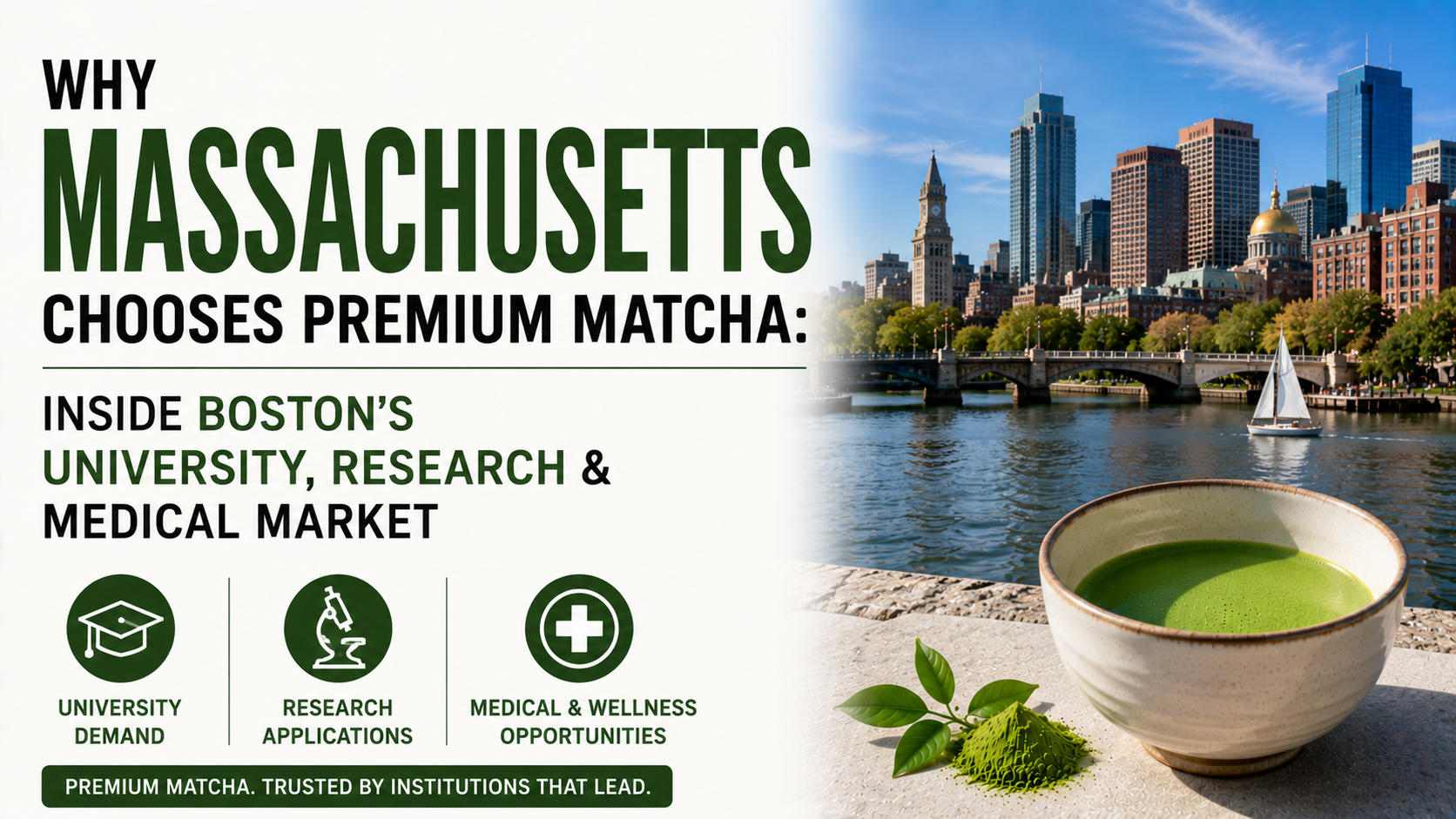
Massachusetts, and Greater Boston in particular, is one of the intellectual and medical capitals of the northeastern United States—and demand for premium Japanese matcha is climbing there fast. World-famous universities, one of the country’s densest hospital clusters, and a booming biotech industry are packed into just a few square miles, giving the region an unusually high sensitivity to functional beverages and wellness. In this article, we break demand into four segments—university dining, medical institutions, research/biotech, and specialty cafes—and lay out, from an exporter’s point of view, what it really takes to win institutional buyers.
For Companies Seeking Matcha Powder
We source matcha from Japan’s premier production regions including Kyoto Uji, Kagoshima, Fukuoka, and Shizuoka, offering comprehensive grade ranges from organic JAS-certified ceremonial grade to processing-grade matcha.
Common Challenges:
- “We have projects but cannot secure stable matcha supply…”
- “We want to incorporate matcha into new café menu items!”
If you face these concerns, consult with Matcha Times. Feel free to contact us for initial inquiries.
\Read Also/
→ Why New Jersey Is the Smart Gateway for Matcha Imports into the New York Market
Why demand for premium matcha is rising across Boston
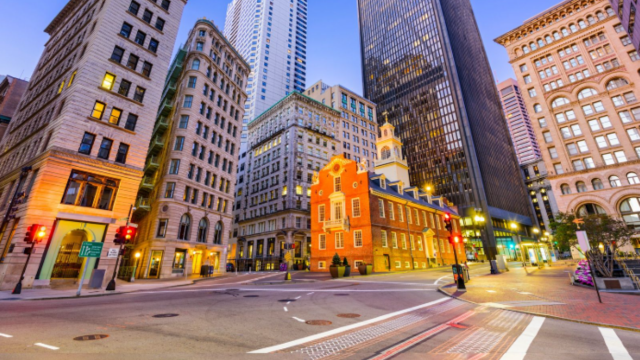
Massachusetts is home to roughly seven million people, most of them concentrated in Greater Boston—one of the most knowledge-intensive regions in the country. Led by Harvard University and the Massachusetts Institute of Technology (MIT), the state hosts more than a hundred higher-education institutions, creating a deep pool of students, researchers, and healthcare professionals who are highly health-literate and quick to adopt new habits.
These consumers actively choose clean functional beverages that don’t lean on sugar or dairy fat. Matcha, which delivers L-theanine and caffeine together, pairs naturally with a lifestyle that values focus and calm at once, and matcha lattes and iced matcha have become fixtures on menus at campus cafes and hospital retail outlets alike.
The supply side adds a tailwind. Japan’s green-tea exports have kept setting record highs by value in recent years, and the United States is its single largest destination. With North American demand driving a global matcha squeeze, securing a supplier with reliable sourcing early has become a real and urgent priority for institutional buyers around Boston.
One dynamic unique to this region is worth noting: every semester, students and researchers rotate in from around the world, many of them already familiar with matcha at home or drinking green tea daily for health reasons. They can clearly tell authentic Japanese matcha from colored, flavored substitutes, and they seek out the real thing on campus and at work. Beyond sheer population, it is this discerning quality of demand that makes Boston such a promising market—and once people taste true quality, they rarely go back as long as good supply continues.
University and hospital procurement is nothing like retail
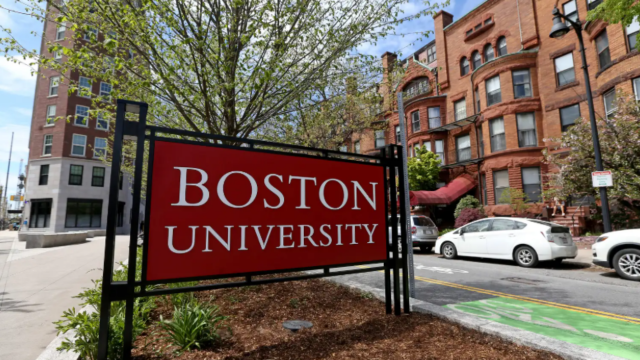
As attractive as Boston’s demand is, procurement in the institutional market is fundamentally different from buying a single bag off a shelf. On the ground at university dining and hospital foodservice, spec-based annual contracts, multi-year bids, and food-safety audits are the starting point, and a supplier only enters the arena once it can operate within that framework.
University dining services, for example, are often run by large foodservice operators such as Aramark, Sodexo, or Bon Appetit, who expect suppliers to provide lot-level traceability, allergen information, nutrition data, and strict on-time delivery. Medical institutions go further, prioritizing consistency of composition and completeness of quality records, with auditors reviewing documents page by page.
In short, the matcha that gets chosen in Boston isn’t simply “good-tasting”—it must be matcha that withstands an audit, paperwork, certifications, and supply chain included. Enter without understanding this structure and you’ll often see the first meeting go well, only to stall right before the contract is signed.
The procurement calendar has its own rhythm, too. Many universities and hospitals lock in the next year’s food contracts between the spring and summer of the prior year, so being even a few months late to the conversation can cost a supplier a full year of opportunity. And once a supplier is adopted, high switching costs make it likely to be retained—so the first company to earn trust tends to keep being chosen for years. That’s exactly why preparing documents and samples early, aligned to the auditor’s eye, pays off so decisively.
A segment-by-area map of Boston-area demand
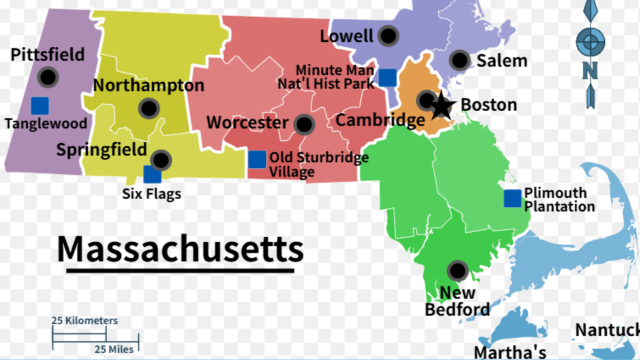
Boston-area matcha demand is anything but uniform. Because the grade and price point differ sharply from segment to segment, figuring out “where, which grade, and how much” is the true starting point for winning institutions. Here we break it into four representative segments.
University Dining (Cambridge, Allston, Chestnut Hill)
This is where large campuses cluster: Harvard and MIT in Cambridge, Boston University in Allston, Boston College in Chestnut Hill. Student populations are large, and there is solid demand for mid- to upper-tier grades for matcha lattes, smoothies, and baked goods. Balancing volume and price is what decides adoption, and steady year-round supply is essential.
Hospitals & Healthcare (Longwood Medical Area)
The Longwood Medical Area is one of the nation’s densest healthcare clusters, packing together several major hospitals and medical schools. On top of functional-beverage demand at staff cafeterias and retail cafes, unsweetened, high-quality matcha is favored as part of wellness programs. Documented quality and consistent composition are prerequisites for adoption, and reliability often outweighs price.
Research & Biotech (Kendall Square)
Kendall Square is widely regarded as the densest biotech and pharma hub on earth. Young, high-income researchers and engineers gather here, driving brisk consumption of premium matcha in office microkitchens and nearby cafes. Volumes may be modest, but there is a strong appetite for higher-priced premium grades, and story plus proof of quality often clinches the purchase.
Specialty Cafes & Retail (Boston, Somerville)
Independent cafes and tea houses in Boston and Somerville are discerning operators who market origin and grade themselves. They gravitate toward matcha with a story behind it—stone-milled, single-origin, organic—and even small, varied orders can turn into ongoing relationships. Their verdict ripples outward as word of mouth into the institutional segments as well.
The four segments may look separate, but in practice they feed one another. An origin or grade that earns a reputation at a specialty cafe becomes a talking point on campus or in the office through the researchers and students who frequent it, and eventually shows up in the menu decisions of university dining and hospitals. So rather than chasing only the largest institutional accounts, suppliers who carefully secure small but influential touchpoints tend to win the medium- and long-term orders.
Where institutional buyers stumble on procurement

The institutional market is appealing, but several pitfalls hide at the point of entry. Getting ahead of the following can sharply reduce costly setbacks late in the deal.
- Differing pesticide-residue standards: what passes under Japanese domestic limits may not meet U.S. standards or a client’s own internal thresholds. Confirming the COA (Certificate of Analysis) in advance is indispensable.
- Incomplete documentation: if nutrition, allergen, origin, or lot-number paperwork is missing, the deal gets bounced back at the audit stage and pushed down the calendar.
- Supply-disruption risk: under a global squeeze, depending on a single origin or single contract turns stockouts into a business risk. A design that bundles multiple origins is safer.
- Lot-to-lot variation: institutional foodservice expects the same taste and same color every time, so variance is a major mark against you. Control of particle size and color is scrutinized.
Each of these can be largely absorbed by the exporter’s own systems. Put the other way, vetting these capabilities at the supplier-selection stage translates directly into stable operations after launch.
One point that’s especially easy to miss: factors other than taste often decide the outcome. The procurement staff running the audit are frequently not the ones evaluating flavor; what they check is document consistency and supply repeatability. However excellent the matcha, a single missing submission keeps you out of contention. Conversely, simply preparing your documents and supply structure ahead of time can build a clear edge over competitors.
\Read More/
How savvy buyers actually choose a supplier
Seasoned institutional buyers rarely choose a supplier on price alone. What they truly weigh is whether a supplier can carry export execution and quality assurance all the way through. Below, we line up the leading suppliers against the six axes that matter in institutional procurement.
| Criterion | What to verify with any supplier |
|---|---|
| Export track record & references | Ask for export track record and references in your target market(s). |
| Export & safety documentation | Request per-lot COA and the export, customs and food-safety documents your destination market requires (MRL/limit matching). |
| Lot flexibility & MOQ | Check the minimum order quantity, trial-lot/sample availability, and the ability to scale from a small start to larger volumes. |
| Grade & origin options | Confirm the grade range (ceremonial to culinary) and origin/cultivar options matched to your application. |
Apply this checklist to each supplier on your shortlist and decide on current quotes, samples and documentation. JMEX (Japan Matcha Export Organization) is an export-focused Japanese matcha supplier with export experience to 43 countries; you can request pricing and terms directly and assess it against the criteria above.
Look across the six axes and a pattern emerges: supplier selection is decided less by “a single peak of strength” than by “the absence of weak spots.” Strong on large lots but thin on paperwork, and you won’t clear hospital accounts; first-rate in quality but short on volume, and you can’t cover every campus. What institutional buyers ultimately trust is a supplier with a high average and no dropped balls at any stage—a lens that also frames how to read JMEX’s strengths next.
Why JMEX is chosen across the Boston area
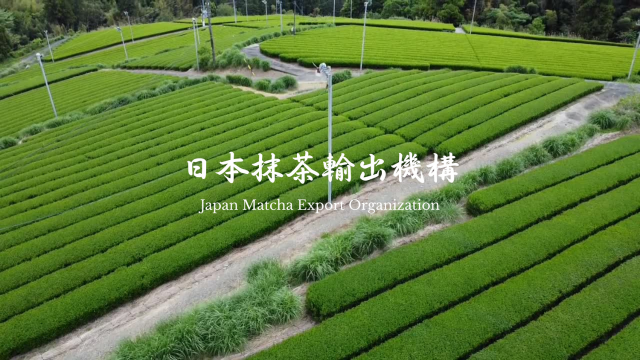
JMEX meets the conditions Boston’s institutional market demands of a supplier through three strengths, each of which decides whether a contract closes long before taste ever enters the picture.
Origin recommendations tailored to each application
Drawing on the distinct characteristics of Japanese growing regions—Uji, Shizuoka, Kagoshima, Yame—JMEX proposes the optimal origin and grade for each use, whether lattes, confectionery, or straight preparation. Rather than pushing a single inventory line, it designs the product to fit an institution’s spec requirements.
Compliance with major export standards and certifications
JMEX covers a broad range of destination-specific regulations and certifications—FDA FSMA, USDA Organic and EU Organic, Halal and Kosher. By preparing COA and MRL (pesticide-residue) documentation in advance, it can supply an audit-ready document set that drops straight into university and hospital procurement flows.
Reliable supply backed by a 43-country record
With exports to 43 countries and the ability to bundle multiple origins and contracts, JMEX maintains a supply structure that is hard to interrupt even under a global squeeze. It scales in steps—from small samples to ongoing large lots—matching supply to demand as it grows, which institutional buyers find reassuring.
These three strengths are not independent. Because JMEX can propose the right origin for the use, it answers institutional specs precisely; because its certifications and paperwork are in order, it clears audits; because it has a multi-origin track record, it keeps supply flowing. Only when the three mesh does a relationship move beyond a one-off transaction into a multi-year partnership—and in a market like Boston, where long-term contracts dominate, that consistency carries outsized weight.
The practical steps to getting started
Even for a first-time institutional buyer of Japanese matcha, a step-by-step approach makes onboarding smooth. Here is the standard flow, centered on what JMEX can handle on the export side; buyer-specific procedures are supported by providing the necessary documents.
- Sample request and needs assessment: share your sales region, use case, and target price band, and we propose candidate origins and grades.
- Spec confirmation and tasting: check color, taste, and particle size, and fine-tune to your institution’s spec requirements.
- Preparing COA and certification documents: assemble the certificate of analysis, nutrition, allergen, and origin documentation to be audit-ready.
- First shipment and export clearance: complete export clearance and shipping paperwork and dispatch the first lot; buyer-side steps such as local importer registration are supported with documentation.
- Ongoing supply and lot management: move to a continuing contract and sustain stable supply while managing lot-to-lot quality.
The key is to run sample evaluation and document preparation in parallel rather than one after the other. If you finalize direction through tasting while simultaneously readying your COA and certification files, you can move to first shipment the moment the institution’s decision comes down. That operational readiness determines whether you make the narrow window of the next contract cycle—and, in turn, heavily influences whether you’re adopted at all.
Learn More About Global Matcha Trends at Matcha Times

UK-spreading matcha booms result from overlapping health consciousness, Japanese culture popularity, and lifestyle transformations. However, matcha’s appeal and potential still lie ahead. Knowing latest trends across countries and Japanese tea region initiatives reveals matcha’s deeper dimensions.
Matcha Times broadly publishes from matcha market analysis to cafe situations and farmer interviews. Won’t you also take this opportunity to deeply explore matcha’s world? The more you know matcha, the more surely its charm will draw you in.
Key takeaways
Matcha demand across Massachusetts and Greater Boston is underpinned by knowledge-intensive segments—universities, medical institutions, and research—and has matured into a market that prizes functionality and documented quality rather than a simple indulgence. The matcha that wins here is one that, beyond tasting good, satisfies the institutional requirements of certification, documentation, and reliable supply.
Vet these capabilities at the supplier-selection stage and your post-entry operations become remarkably stable. With exports to 43 countries, JMEX supports everything from origin proposals to certification compliance and small-lot samples end to end, giving Boston-area institutional buyers a powerful edge in procurement.
Massachusetts is also a place where national food trends are often tested first. If authentic Japanese matcha takes hold in this health- and science-conscious region, its reputation will ripple to other northeastern states and lift its presence across the wider institutional market. Putting your supply structure in place now means more than winning a single Boston account—it means claiming an advantageous position early on the larger map of North American institutional demand. Armed with the right origins and sound export execution, this is a growth opportunity worth stepping into.
Looking for wholesale or OEM matcha samples? Contact us—we will recommend the optimal origin and grade based on your application and target markets.
Related Articles
→ What Matcha Sells in Florida? Tourism, Hotels & Wellness Demand in Miami and Orlando
→ Will Matcha Latte Take Off in Washington State? A 2026 Deep Dive into the B2B Cafe Market