Matcha Wholesale Brooklyn: Japanese Supply, MOQ, Price & Delivery Guide
Buying wholesale matcha in Brooklyn means setting up a recurring supply of authentic Japanese-origin matcha powder for a Brooklyn or wider New York business — a cafe group, bakery, restaurant, hotel, retailer or health brand — at case or kilogram volume rather than retail tins. There is no single wholesale MOQ or price per kilogram: both move with grade, packaging, certification, order size and how you take delivery. This guide answers whether the Brooklyn wholesale demand is real, who buys at volume, how order-scale bands and MOQ actually work, what drives the per-kilogram price, how delivery and lead time shape your buffer stock, the US FDA import and labeling path, a neutral checklist for vetting any wholesaler, and how JMEX supplies Brooklyn buyers direct from Japan.
For Companies Seeking Matcha Powder
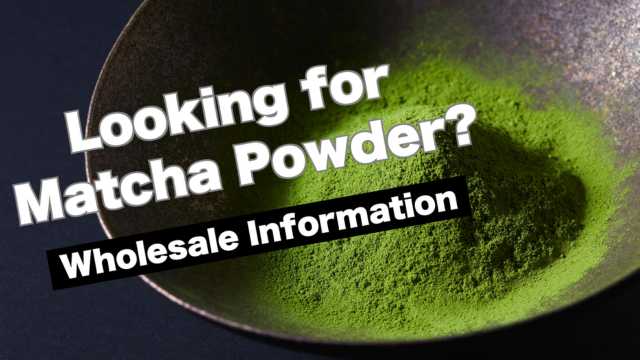
We source matcha from Japan’s premier production regions including Kyoto Uji, Kagoshima, Fukuoka, and Shizuoka, offering comprehensive grade ranges from organic JAS-certified ceremonial grade to processing-grade matcha.
Common Challenges:
- “We have projects but cannot secure stable matcha supply…”
- “We want to incorporate matcha into new café menu items!”
If you face these concerns, consult with Matcha Times. Feel free to contact us for initial inquiries.
\Read Also/
Key Takeaways
- Brooklyn and greater New York carry real recurring wholesale demand: dedicated matcha bars, coffee chains, bakeries, hotels and wellness brands all reorder bulk matcha, so volume demand is steady rather than seasonal.
- There is no universal wholesale MOQ — it is set per supplier by grade, packaging and format, and is usually discussed in order-scale bands from single-kilogram trials up to tonne-scale annual supply.
- Published per-kilogram prices vary widely move with grade, volume, certification and incoterms, and they fall as order size rises; compare landed cost in Brooklyn, not the ex-works figure.
- Treat delivery and lead time as part of the price: a short, reliable reorder window lets you hold less buffer stock, and matcha is perishable, so oversized lots lose colour and flavour before they sell.
- Selling imported matcha wholesale in the US runs through the FDA — foreign facility registration, Prior Notice, FSVP and compliant labeling — while green tea including matcha enters duty-free under HTS 0902.
Researched and reviewed by the Matcha Times Editorial Team, operated by the Japan Matcha Export Organization (JMEX). See our Editorial Policy and Sources & Methodology. Found an error? Tell us.
\Read More/
Is wholesale matcha demand real in Brooklyn?
Yes, and it is a durable B2B supply relationship rather than a passing trend. Across Greenpoint, Williamsburg, Bushwick, Park Slope and DUMBO, dedicated matcha bars sit next to coffee shops that have added a matcha line, while bakeries, dessert makers, hotels and wellness brands reorder on a schedule. Because these buyers run menus and production, they need the same grade and colour shipment after shipment — which is exactly what a wholesale relationship, not retail buying, is built to deliver.
On market size, treat any figure as an attributed estimate, not an official statistic. One commercial provider, SNS Insider, estimates the US matcha market at roughly USD 0.54 billion in 2025; estimates vary widely by provider and by how “matcha” is defined (pure powder versus matcha-containing products), so read them for direction only. For upstream context — not a matcha-specific number — official Japan MAFF / Ministry of Finance figures put Japan’s green tea exports (all forms combined, not matcha alone) at about ¥36.4 billion and 8,798 tonnes in 2024. Matcha is one slice of that green-tea flow, so always read value and volume separately and never treat the green-tea total as a matcha-only figure.
Who buys wholesale matcha in Brooklyn
Wholesale matcha serves businesses that resell or serve it, and each format reorders a different grade, volume and consistency — which is why one supplier profile rarely fits every buyer in the borough.
| Wholesale buyer | Typical use | Grade & volume tendency | What they reorder on |
|---|---|---|---|
| Matcha bars & specialty cafes | Whisked matcha, lattes, signature drinks | Higher ceremonial-style grades; small-to-medium volume | Colour, flavour and batch-to-batch consistency |
| Coffee & cafe chains | Matcha lattes, iced and seasonal menus | Culinary / latte grade; medium-to-large volume | Cost per serving and reliable repeat supply |
| Bakeries & dessert makers | Baking, ice cream, confectionery | Culinary / ingredient grade; medium volume | Stable colour after heat and a steady unit cost |
| Hotels & foodservice groups | Beverages, banqueting, amenities | Mixed grades; medium volume | Documentation, food-safety certs, service reliability |
| Retail & private label | Packaged matcha, gifting, own brand | Grade by price tier; medium volume | Packaging, FDA-compliant labeling, MOQ flexibility |
| Health, wellness & RTD makers | Supplements, protein, ready-to-drink | Ingredient / culinary grade; large volume | Particle size, dispersion, COA and batch consistency |
If you run at multi-store or production scale — a multi-store cafe or chain, a hotel group, a private-label brand or a manufacturer — a direct or semi-direct wholesale line usually earns its keep. A single independent cafe can start with a local distributor and move to direct supply once monthly turnover justifies importing and holding your own compliance records.
How wholesale MOQ and order-scale bands work
Wholesale matcha is usually quoted in order-scale bands rather than one fixed minimum, because a supplier’s MOQ depends on grade, packaging format and whether you want a stock item or a made-to-spec lot. Published wholesale formats are commonly packed as one-kilogram bags, with the minimum and the unit price both improving as you move up a band. Use the bands below to frame a conversation, then confirm the exact minimum for your grade and packaging in writing — the figures are illustrative, not a quote.
| Order-scale band | Typical purpose | What tends to improve as you scale up |
|---|---|---|
| Single-kilogram trial | Validate grade, colour and flavour in your recipe | Nothing yet — you pay a trial premium for flexibility |
| Small commercial (tens of kg) | Launch a menu item or a first retail run | Unit price begins to improve; packaging options open |
| Scaling volume (hundreds of kg) | Chain, bakery or brand with steady turnover | Better unit price, grade design and priority scheduling |
| Tonne-scale annual supply | Manufacturers and large multi-site operators | Best unit economics and committed allocation / lead time |
Two rules keep MOQ sensible. First, size the order to turnover, not to the discount: match the minimum to real weekly turnover so you never commit to more matcha than you can serve while it is fresh. Second, buy a trial before you buy volume — a one-kilogram trial of the exact lot you would reorder is worth more than a large order of an unvalidated grade.
What moves the wholesale price per kilogram
Because there is no single Brooklyn wholesale price, it helps to understand the levers behind a quote rather than chase a headline number. Published price lists segment by grade — broadly from industrial and culinary through latte and ceremonial to competition grade — and the same levers move your quote:
- Grade and application — ceremonial and competition grades command the highest per-kilogram prices and often higher minimums, while culinary, latte and ingredient grades used in chains, baking and RTD cost less.
- Packaging and format — bulk foodservice bags differ from retail tins or private-label sachets; custom packaging and US-compliant label printing raise both the price and the MOQ.
- Certification — organic (USDA/JAS), halal and food-safety certifications add verification steps and can lift the minimum, but they open specific channels and reassure US buyers.
- Volume and commitment — larger, committed or recurring volume typically earns a better unit price and unlocks grade design, while a one-off order pays a premium.
- Logistics and incoterms — the incoterm (EXW/FOB/CIF), freight mode, brokerage and US compliance all sit between the quoted unit price and your true landed cost in Brooklyn.
Protect margin with one discipline above all: compare landed cost in Brooklyn rather than the ex-works unit price. Green tea including matcha is duty-free under HTS 0902 (below), but freight, brokerage, FDA compliance and labeling still change the ranking between a local distributor and a Japan-direct order. A price list number is only a starting point; your landed cost per usable kilogram is the figure that decides which channel actually wins.
Delivery, lead time and keeping matcha fresh
For a wholesale buyer, how matcha reaches your door is part of the price, not an afterthought. A short, dependable reorder window lets you hold less buffer stock and tie up less cash, while a long or unpredictable one forces you to over-order — which is costly for a perishable product. Ask every wholesaler how a reorder is produced and shipped, not just what it costs.
- Reorder lead time — a local New York distributor can often deliver held stock within days; a Japan-direct lot may be milled to order and then shipped, so agree the reorder window in writing for your grade.
- Freshness handling — confirm whether matcha is kept as leaf and milled near shipping, which protects freshness, and how it is packed (nitrogen-flushed, light-blocking, resealable) for transit and storage.
- Inventory and perishability — matcha oxidises and fades, so store it cool, sealed and away from light, and rotate stock; size each order to a few weeks of turnover rather than a year of shelf life.
- Clearance timing — clarify who files Prior Notice, who is importer of record, and how customs timing affects the delivery date so a shipment is not held at the border.
The US FDA import and labeling path for wholesale buyers
If you import matcha to resell wholesale in the US, sourcing and compliance are one decision, so confirm a supplier can support the import layer before you commit volume. Importing for sale runs through the US Food and Drug Administration (FDA): the foreign processing facility registers with FDA, the importer files Prior Notice for each shipment, the importer keeps Foreign Supplier Verification Program (FSVP) records, and the label meets US requirements. Timelines and document lists change, so verify the current process with the FDA or a licensed customs broker before your first shipment.
| Step | What it involves | What to confirm with any wholesaler |
|---|---|---|
| Foreign facility registration | The Japanese processing facility is registered with FDA (renewed biennially) | A current FDA facility registration number |
| Prior Notice | Prior Notice filed to FDA before each shipment arrives | Product details, facility numbers and COA ready in time |
| FSVP (importer) | The US importer verifies the supplier and keeps FSVP records | Hazard-analysis inputs: COA, testing and food-safety docs |
| US labeling | Compliant retail label (identity, net quantity, ingredients, importer, nutrition) | The supplier can provide the data your label and claims need |
| Import duty (HTS 0902) | Tea, incl. matcha, classified under HTS heading 0902 | Duty-free status and any current country-level measure, via a broker |
On duty, tea including matcha sits under HTS heading 0902, and per the US Harmonized Tariff Schedule green tea (0902.10 / 0902.20) carries a 0% (duty-free) MFN base rate. Any 2024–25 country-level “reciprocal” measure is a separate, time-varying matter — not the product duty — so confirm current applicability with a customs broker instead of assuming a figure. For background, the USDA Foreign Agricultural Service publishes food-import guidance worth reading before you commit, and Japan Customs covers the Japanese export-side customs process.
A checklist to vet any wholesale matcha supplier
Rather than ranking brands, evaluate every wholesaler — a New York distributor or a Japan-direct exporter — against the same verifiable criteria. Compare candidates on facts you can confirm, not on marketing, and apply the checklist equally to every option, including JMEX.
| Criterion | What to verify with any wholesaler |
|---|---|
| Origin & grade | Confirmed Japanese origin, named region and, ideally, cultivar and harvest, with a grade matched to your menu or product |
| Per-lot COA & testing | Sensory, microbiological, pesticide and heavy-metal (lead, cadmium, arsenic) results from an accredited (ISO 17025) lab, per lot |
| MOQ & pricing clarity | A written MOQ, unit price by band and incoterm (FOB/CIF) for your exact grade and packaging — not a verbal ballpark |
| Lead time & delivery | A realistic reorder window, how matcha is milled and packed for freshness, and who handles US clearance |
| US FDA support | Foreign facility registration, Prior Notice inputs, FSVP documentation and the data your US label needs |
| Certifications | USDA/JAS organic and/or halal and food-safety (HACCP / ISO / FSSC) evidence where your channel needs it |
| Batch consistency | How colour, flavour and particle size are held stable across repeat production for a menu |
The most useful questions to ask a wholesaler are concrete: Which region and cultivar is this, and can you confirm Japanese origin? Can I see the COA for the exact lot I would receive? What is your MOQ, unit price by band and incoterm for my spec? How quickly can you deliver a reorder, and how is it packed for freshness? Are you FDA-registered, and can you supply what I need for Prior Notice and FSVP? Wholesalers who answer precisely — and put the answers in writing — are the ones worth scaling with.
From trial lot to a recurring Brooklyn supply line
A disciplined process turns a good sample into a dependable wholesale line. A practical order flow runs as follows:
- Write the specification — application (latte, ceremonial, baking, RTD), grade target, monthly volume, packaging and your delivery market.
- Shortlist wholesalers by channel (New York distributor versus Japan-direct processor or export organization) against your order scale and documentation needs.
- Request a trial lot matched to your spec and a per-lot COA, and confirm Japanese origin plus any organic, halal or food-safety certifications up front.
- Validate the sample in your actual drink or on your line, and check the COA numbers against your requirements.
- Agree commercial terms — MOQ, unit price by band, incoterm, reorder lead time and packaging — in a written quotation.
- Confirm the US FDA import path — facility registration, Prior Notice, FSVP records and US labeling — with the wholesaler and a customs broker.
- Scale to a supply agreement once quality, consistency, documentation and delivery are proven across lots.
Avoid the recurring wholesale mistakes: treating all “matcha” as equal regardless of origin, comparing ex-works prices instead of landed cost, leaving FDA registration and labeling to the last minute, and over-ordering so the powder fades before it sells.
Sources & Methodology
This guide synthesises official US food-import (FDA), US tariff (USITC), US agricultural-import (USDA) and Japanese trade and customs sources, plus one attributed commercial market estimate. Each source below states what it supports, its date and scope; market-size figures are labeled as provider estimates, not official statistics, and no unverified wholesale price or MOQ is presented as fact. Regulatory detail changes, so confirm the current requirement with the named authority or a licensed customs broker before shipping.
- US FDA — Importing Food Products into the United States — US food import framework incl. FSVP and importer responsibilities — accessed 2026 US food imports
- US FDA — Prior Notice of Imported Foods — Prior Notice requirement for each food shipment before US arrival — accessed 2026 US import / Prior Notice
- US FDA — Registration of Food Facilities — Foreign food-facility registration (biennial) requirement — accessed 2026 US facility registration
- US FDA — Foreign Supplier Verification Program (FSVP) — Importer obligation to verify a foreign supplier and keep FSVP records — accessed 2026 US importer verification
- USITC — Harmonized Tariff Schedule (HTS 0902) — Green tea incl. matcha (0902.10/0902.20) enters the US duty-free (0% MFN base rate) — 2026 US tariff classification
- Japan MAFF / Ministry of Finance — tea export statistics — Japan green-tea export value/volume 2024 (green-tea TOTAL, not matcha-only) — 2024 Japan green tea exports
- SNS Insider — US matcha market estimate — Commercial market-size estimate (attributed; estimates vary by provider/definition) — 2025 US matcha market size (commercial estimate)
Why Buyers Choose JMEX (Japan Matcha Export Organization)

One supplier that meets these criteria at a high level is JMEX (Japan Matcha Export Organization), a wholesale and export partner dedicated to bringing Japanese matcha overseas. It designs origin selection, quality assurance, export documentation, and logistics as one continuous flow, built for export from the start.
With a track record of exports to 43 countries, JMEX supplies Brooklyn wholesale buyers direct from Japan on the export side: confirmed Japanese origin and grade design for your menu or product, per-lot COA, MRL and heavy-metal testing, organic (JAS) and halal certification support, and the export-side documentation US importers need for FDA facility registration, Prior Notice and FSVP. JMEX provides stable recurring supply from 10 kg to 1 t per month, with matcha milled and packed to protect freshness in transit, for cafes, chains, bakeries, hotels, private-label brands and health and wellness makers across New York and the wider US.
Frequently Asked Questions
Common questions from Brooklyn and New York businesses sourcing wholesale Japanese matcha, from MOQ and price to delivery and US FDA import.
Where can I buy wholesale matcha in Brooklyn?
You have two main routes: order from a local Brooklyn or NYC importer/distributor that holds stock (fastest to start, higher unit cost), or source direct from a Japanese processor or export organization for recurring bulk (better origin control and unit economics at volume). Define your spec first — application, grade, monthly volume and packaging — then shortlist by channel and verify Japanese origin and a per-lot COA before you order.
What is the MOQ for wholesale matcha powder?
There is no single MOQ. Each supplier sets its own minimum by grade, packaging and whether the item is held stock or made to spec, and it is usually discussed in bands — a single-kilogram trial, tens of kilograms, hundreds of kilograms, and tonne-scale annual supply. Ask each wholesaler for their minimum for your exact spec, quoted in writing with lead time, incoterm and price.
How much does wholesale matcha cost per kilogram in New York?
There is no single wholesale price. It varies by grade (industrial and culinary through latte to ceremonial and competition), packaging, certification, volume and incoterm, and the per-kilogram price generally falls as order size rises. Your true cost in Brooklyn is the landed cost after freight and US compliance, not the ex-works figure, so ask for a written quote for your exact spec rather than assuming a headline number.
How fast can a wholesale matcha reorder be delivered?
It depends on the channel. A local New York distributor holding stock can often deliver within days, while a Japan-direct lot may be milled to order and then shipped, which protects freshness but adds time. Agree the reorder window in writing, confirm who files Prior Notice and is importer of record, and size your buffer stock to the realistic lead time rather than the best case.
Do I need FDA registration to import and sell matcha wholesale in the US?
The foreign facility that processes the matcha must be registered with the FDA, and as the US importer you file Prior Notice for each shipment and keep Foreign Supplier Verification Program (FSVP) records; the retail label must also meet US requirements. Timelines and documents change, so confirm the current process with the FDA or a licensed customs broker before your first shipment.
Is wholesale matcha cheaper direct from Japan or from a New York distributor?
For small or launching orders, a New York distributor offers shorter lead times, smaller minimums and local clearance and FSVP at a higher unit cost. For recurring bulk — a chain, hotel group, private label or manufacturer — buying direct from a Japanese processor or export organization usually wins on landed cost and gives control over origin, grade and documentation, provided the supplier can support the US FDA import and labeling layer.
Learn More About Global Matcha Trends at Matcha Times
Matcha Times is a specialist media platform covering the global matcha market — sourcing and wholesale, supply and pricing, trade and regulations, production and origins, and the companies shaping the industry.
From market analysis and price trends to café case studies and interviews with tea farmers, we help buyers, importers, distributors, and manufacturers stay ahead of where matcha is heading. Explore more and put the global matcha market to work for your business.
Conclusion
Sourcing wholesale matcha in Brooklyn is a matching problem: confirm the recurring demand is real (it is), understand that MOQ and price come in bands rather than one number, and treat delivery, lead time and US FDA compliance as part of the buying decision rather than a later hurdle. Quote on landed cost, size each order to turnover so the powder stays fresh, and vet every wholesaler against the same neutral checklist before you scale. JMEX supports Brooklyn buyers across exactly these steps, from origin and grade design to certification, delivery and export documentation.
Looking for wholesale or OEM matcha samples? Contact us — we will recommend the optimal origin and grade based on your application and target markets.
Related Articles