Matcha Shelf Life for Businesses: Unopened, Opened, Frozen & Cold Storage
Matcha shelf life is the window in which matcha keeps its vivid green color, fresh aroma, and umami sweetness — it is a quality timeline, not a food-safety cut-off. Sealed and kept cool, dry, and dark, matcha typically holds its peak character for several months up to about a year; once opened, that quality fades within weeks as air, light, heat, and moisture take hold.
For a home drinker a dull tin is a minor disappointment. For an importer, wholesaler, or OEM buyer moving matcha at scale, faded stock is lost margin, rejected lots, and unhappy accounts. This guide sets out matcha shelf life for unopened, opened, refrigerated, and frozen stock, and how to protect it across bulk handling and production.
For Companies Seeking Matcha Powder
We source matcha from Japan’s premier production regions including Kyoto Uji, Kagoshima, Fukuoka, and Shizuoka, offering comprehensive grade ranges from organic JAS-certified ceremonial grade to processing-grade matcha.
Common Challenges:
- “We have projects but cannot secure stable matcha supply…”
- “We want to incorporate matcha into new café menu items!”
If you face these concerns, consult with Matcha Times. Feel free to contact us for initial inquiries.
\Read Also/
Key Takeaways
- Matcha does not so much “expire” as lose quality — color, aroma, and umami degrade long before it becomes unsafe.
- Unopened and stored cool, dry, and dark, matcha commonly stays at peak quality for several months to around a year; once opened, aim to use it within a few weeks to a couple of months.
- Oxidation is the enemy: air, light, heat, and moisture all accelerate it, and matcha’s fine particle size makes it especially vulnerable.
- Refrigeration and freezing help for sealed, long-term stock — but always bring a cold container to room temperature before opening to avoid condensation.
- At business volume, rotation (FIFO), sealed reserve vs. working stock, protective packaging, and a temperature log matter more than any single “expiry” date.
\Read More/

Matcha shelf life at a glance
How long does matcha last? It depends on whether the pack is sealed, how it is stored, and the grade. The table below is a practical planning guide for planning — treat every lot’s manufacturer best-before as the outer limit and your own sensory check as the real test.
| State | Typical quality window | Key condition |
|---|---|---|
| Unopened, cool & dark (pantry) | Several months up to ~1 year | Sealed, away from heat and light |
| Unopened, refrigerated | Extends the window further | Fully airtight; temperature-stable |
| Unopened, frozen | Longest for reserve stock | Airtight; thaw sealed before opening |
| Opened, stored well | Best within a few weeks; usable longer | Reseal airtight after every use |
| Opened, poorly stored | Quality drops fast (days to weeks) | Air, light, heat, or humidity present |
The pattern is consistent: keeping matcha sealed, cold, and dark buys time, and opening starts the clock. Ceremonial-grade matcha, with more delicate aromatics, shows decline sooner than a robust culinary grade used in baking or lattes — so match the grade to how fast the account will turn it over.
Why matcha loses quality: oxidation, light, heat, and moisture
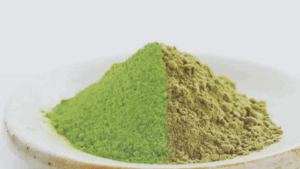
What actually degrades matcha? Oxidation. Once tea is stone-milled into powder its surface area explodes, so it reacts with oxygen far faster than leaf tea. As it oxidizes, bright green dulls toward olive and yellow, the sweet, grassy aroma flattens, and the taste turns increasingly bitter. Four forces drive this, and controlling them is the whole game.
| Factor | Effect on matcha | Control |
|---|---|---|
| Air / oxygen | Oxidizes catechins and chlorophyll; dulls color and aroma | Airtight packs; minimize headspace; reseal fast |
| Light | Breaks down chlorophyll and catechins; speeds fading | Opaque tins/foil; dark storage |
| Heat | Accelerates every reaction above | Cool, temperature-stable storage |
| Moisture | Causes clumping, off-flavors, and mold risk | Keep dry; avoid condensation |
This is backed by food-science research. A peer-reviewed study of matcha in Food Science and Biotechnology (2020) found that storage temperature strongly affects how well matcha keeps: lower temperatures (around 4 °C and −20 °C) best preserved its catechins and antioxidant activity, with losses increasing as temperature and time rose. Separately, research on green-tea EGCG hosted at NCBI/PMC shows that light and oxygen accelerate catechin loss, so protection from both meaningfully slows degradation. The takeaway for buyers: cold, dark, airtight storage is not marketing — it measurably protects the product.
How to store matcha at every stage
Storage is not one rule but a few, keyed to whether a pack is sealed or open and how long you need to hold it. The checklists below move from long-term reserve to daily working stock.
Unopened stock
Sealed matcha keeps best when nothing reaches it. For medium-term pantry storage:
- Store in the original airtight pack or an opaque, food-grade container.
- Keep it cool, dry, and dark — away from ovens, windows, and steam.
- Do not open a pack until you are ready to draw it into working stock.
Opened stock
Opening starts oxidation, so the priority is limiting air and light after each use:
- Reseal airtight immediately; press out excess air or use a tight-lidded caddy.
- Return it to a cool, dark spot — never leave it open on a warm counter.
- Draw down opened stock quickly; plan portions so a pack is finished while fresh.
Refrigeration
Refrigeration slows oxidation and suits sealed, long-term or bulk stock — but condensation is the real risk. Opening a cold container in a warm room causes condensation, and even a little moisture invites clumping and mold.
- Refrigerate only fully airtight, unopened packs.
- Let a chilled pack reach room temperature before opening it.
- Keep matcha away from strong-smelling foods; powder readily absorbs odors.
Freezing
Freezing is best reserved for long-hold reserve stock you will not open frequently:
- Freeze only sealed, airtight packs; avoid repeated freeze–thaw cycles.
- Thaw fully while still sealed before opening, to prevent condensation.
- Portion before freezing so you thaw only what you will use.
Storing matcha at business volume
At hundreds of kilograms a month the question shifts from “how long does one tin last” to how do we keep an entire inventory moving before it fades. Freshness at scale is a process, not a date.
- Rotate on FIFO (first in, first out): label every lot with its receipt date and best-before, and pick the oldest compliant lot first.
- Split reserve from working stock: keep the bulk sealed (and cold, if held long) and open only what production needs for the current cycle.
- Use protective packaging: foil-lined, opaque, resealable bags or nitrogen-flushed packs limit oxygen and light far better than clear tubs.
- Control the room: a cool, dry, dark store or cold room with a temperature log beats an ambient shelf next to production heat.
- Right-size deliveries: schedule replenishment to your true turnover so stock arrives fresh rather than aging in your warehouse.
- Protect the cold chain in transit for premium grades, and inspect color and aroma on receipt before accepting a lot.
Buyers often ask us how to write freshness into a supply agreement. In practice, the useful levers are a minimum remaining shelf life on delivery, agreed packaging, and a documented storage and transit plan — all far more reliable than a single number on the label.
Best-before dates and labeling for B2B buyers
Is it safe to use matcha past its best-before date? For a dry powder kept sealed and dry, a best-before date is about quality, not safety. According to the USDA Food Safety and Inspection Service, “Best if Used By” dates indicate quality, not safety, and — except for infant formula — product dating is not required by U.S. federal law. The FDA similarly encourages a single “Best if Used By” phrase to signal quality. In Japan, the equivalent for a stable food like matcha is a shōmi-kigen (best-before) date rather than a shōhi-kigen (use-by) date.
For B2B, the practical implications are clear:
- Treat the best-before as a quality guide and back it with your own sensory acceptance check.
- Specify a minimum remaining shelf life at delivery so accounts receive stock with runway.
- For foodservice or OEM, document storage conditions and rotation — auditors and customers value the process, not just the printed date.
- Never present a quality date to your buyers as a safety date, or vice versa.
How to tell if matcha has gone off
How can you tell degraded matcha at a glance? Trust your senses — color, aroma, taste, and texture reveal it before any date does. Use this quick acceptance checklist on receipt and again before production:
- Color: vivid jade is fresh; olive, brown, or dull yellow signals oxidation.
- Aroma: sweet and grassy is good; flat, hay-like, or stale means it has faded.
- Taste: smooth umami with gentle astringency is right; harsh, flat bitterness is a warning.
- Texture: fine, free-flowing powder is fine; hard clumps point to moisture — a mold and food-safety concern.
- When in doubt, reject or discard: any musty smell, visible mold, or moisture means it goes — do not use it in product.
Run a 30-day storage check before you commit to volume
Before you lock in a large, recurring order, verify how a specific lot actually holds up under your conditions. This is a simple, repeatable in-house protocol — a pre-commit storage check you can run on a sample before committing budget. It generates your own evidence rather than relying on a supplier’s claim.
| Step | What to do | What it tells you |
|---|---|---|
| 1. Baseline | Photograph and taste the fresh sample; note color, aroma, and flavor | Your day-zero reference |
| 2. Split | Divide one sample across your real conditions (pantry, fridge sealed, opened working stock) | Isolates each variable |
| 3. Log weekly | At days 7, 14, 21, and 30, re-check color, aroma, taste, and clumping against baseline | How fast quality moves |
| 4. Decide | Compare conditions; set your storage rule and minimum-shelf-life spec from the result | An evidence-based purchase decision |
Because the test is run blind and logged, it removes guesswork: you learn how long this lot stays sellable under your real handling, and you can hold your supplier to conditions you have verified yourself. A supplier that will provide split samples for exactly this kind of check is showing confidence in the product.
Why Buyers Choose JMEX (Japan Matcha Export Organization)

One supplier that meets these criteria at a high level is JMEX (Japan Matcha Export Organization), a wholesale and export partner dedicated to bringing Japanese matcha overseas. It designs origin selection, quality assurance, export documentation, and logistics as one continuous flow, built for export from the start.
For product development and OEM, JMEX designs origin and blend by application — latte color, baking stability, beverage solubility — and specifies freshness, packaging, and storage so a lot arrives with real shelf life. With an export track record to 43 countries, it supports buyers from split-sample check to steady, well-kept supply.
Frequently Asked Questions
Quick answers to the questions buyers ask most about matcha shelf life and storage.
Does matcha expire or just lose quality?
Mostly the latter. Kept sealed and dry, matcha does not become unsafe on a set date — it gradually loses color, aroma, and umami through oxidation. Discard it only if you see mold, clumping from moisture, or a musty smell.
How long does matcha last once opened?
Plan to use opened matcha within a few weeks to a couple of months for best quality, and reseal it airtight after every use. The exact window depends on grade and how well you limit air, light, heat, and moisture.
Should matcha be refrigerated or frozen?
For sealed, long-term or bulk reserve stock, refrigeration or freezing slows oxidation. Always keep the pack fully airtight and bring it to room temperature before opening, or condensation will spoil the powder. Daily working stock is fine in a cool, dark cupboard.
Is it safe to use matcha past its best-before date?
A best-before date reflects quality, not safety — USDA and FDA guidance treats such dates as quality indicators. Sealed, dry matcha slightly past date is usually safe but less vibrant; judge it by color, aroma, taste, and texture, and never use anything showing moisture or mold.
How should businesses store matcha for foodservice or OEM production?
Rotate on FIFO, separate sealed reserve from working stock, use foil or nitrogen-flushed packaging, store cool, dry, and dark (cold room with a temperature log for long holds), and specify a minimum remaining shelf life on delivery. Document the process for audits and accounts.
Sources & Methodology
Each source below states what it supports, its date, and its scope. All are external primary, official, or peer-reviewed sources. Shelf-life windows in this article are presented as qualitative industry storage guidance, verified against these references rather than asserted as fixed figures.
- USDA FSIS — Food Product Dating — best-before indicates quality (not safety); dating not federally required except infant formula (US federal guidance, accessed 2026; date labeling)
- FDA — food date labeling — recommends a single ‘Best if Used By’ quality phrase (FDA/USDA, accessed 2026; date labeling)
- Food Science and Biotechnology (2020) — storage temperature & matcha catechins — lower storage temperature best preserves matcha catechins and antioxidant activity (2020; peer-reviewed matcha study)
- NCBI/PMC — EGCG stability under light — light and oxygen accelerate green-tea catechin loss (peer-reviewed; EGCG degradation)
Researched and reviewed by the Matcha Times Editorial Team, operated by the Japan Matcha Export Organization (JMEX). Last reviewed: September 2026. See our Editorial Policy and Sources & Methodology. Found an error? Tell us.
Learn More About Global Matcha Trends at Matcha Times

Matcha Times is a specialist media platform covering the global matcha market — sourcing and wholesale, supply and pricing, trade and regulations, production and origins, and the companies shaping the industry.
From market analysis and price trends to café case studies and interviews with tea farmers, we help buyers, importers, distributors, and manufacturers stay ahead of where matcha is heading. Explore more and put the global matcha market to work for your business.
Conclusion
When origin, grade, and export conditions align, matcha becomes a stable revenue source. Start by defining your requirements and confirming quality with a sample.
Looking for wholesale or OEM matcha samples? Contact us — we will recommend the optimal origin and grade based on your application and target markets.
Related Articles