Is China Taking Over the Matcha Market? A Data-Driven Analysis of Global Competition and Practical Risk Management
Introduction: Background and Purpose of This Analysis

In recent years, global matcha demand has experienced exponential growth, while Japanese domestic production faces persistent supply constraints due to raw material availability, processing capacity limitations, and climate impacts. Retail, food service, and direct-to-consumer sectors increasingly report concerns about “price increases,” “stockout risks,” and “ambiguity in quality and labeling standards.” Simultaneously, sensationalized narratives suggesting “Chinese matcha will dominate the market” have proliferated across media channels.
However, what’s actually occurring in the market is not a simple “takeover” but rather a segmentation by price point, application, and quality standards, accompanied by practical challenges in labeling, regulation, and procurement. Relying solely on fragmented social media information or marketing messages risks flawed decision-making. This report provides a fact-based analysis grounded in primary data and official sources.
This analysis serves three core objectives:
- Clarifying the definition of “matcha” and quality standards (shade cultivation, processing methods, etc.)
- Visualizing the “volume and value” realities of international supply dynamics (Japan, China, and others)
- Creating actionable checklists for procurement, product development, and labeling compliance
For Companies Seeking Matcha Powder

We source matcha from Japan’s premier production regions including Kyoto Uji, Kagoshima, Fukuoka, and Shizuoka, offering comprehensive grade ranges from organic JAS-certified ceremonial grade to processing-grade matcha.
Common Challenges:
- “We have projects but cannot secure stable matcha supply…”
- “We want to incorporate matcha into new café menu items!”
If you face these concerns, consult with Matcha Times. Feel free to contact us for initial inquiries.
Current Market Status: Global Boom Meets Japanese Supply Constraints
① What’s Happening Now?
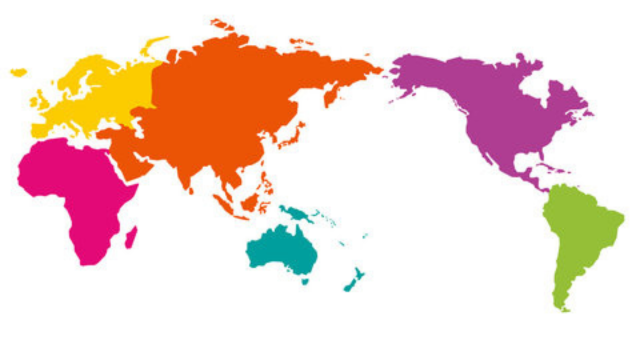
Global matcha demand continues to surge while Japanese supply struggles to keep pace. Japan’s 2024 green tea (including matcha) export value increased by 25% year-over-year to ¥36.4 billion, with volume up 16%—both reaching record highs. This accelerating matcha boom has intensified the demand-supply gap, driving sustained price increases.
② Where Is It Selling?
The United States represents the primary growth market. Official data and reporting consistently highlight significant US market share, with exports driving overall growth (estimated at approximately 30-50% year-over-year increases depending on reporting period and methodology). This concentration creates exposure to US economic conditions and policy changes as an operational risk factor.
③ Why Supply Cannot Expand Quickly
Extreme heat has weakened yields of “tencha” (the raw material for matcha) in consecutive years, with some regions experiencing significant harvest declines. Additionally, new tea gardens require approximately 5 years to reach full production capacity, making short-term supply expansion structurally difficult (even when cultivation conversion advances, immediate impact remains limited).
④ How Have Prices Moved?
Tencha auction prices at Kyoto markets reportedly reached +170% year-over-year in some cases. Domestic specialty tea retailers have implemented purchase quantity restrictions and price revisions, with tangible price increases felt across the value chain.
⑤ Real-World Evidence of “Matcha Shortage”
On the US West Coast, multiple cafes have reduced matcha menu offerings or increased prices, with local news outlets running features on the phenomenon. Specialty industry publications have covered “matcha shortage” as a recurring topic.
China’s Rise: How Far Has It Come?
① Production Base Visualization
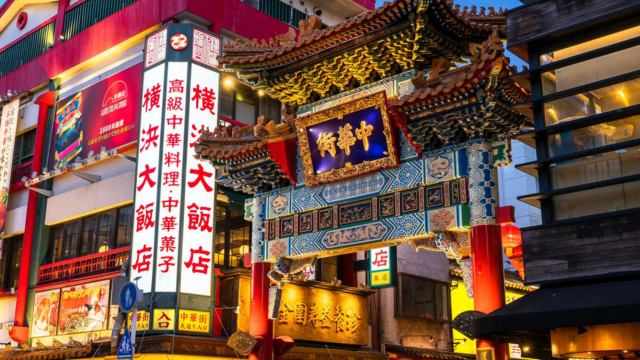
In China, Guizhou Province, Tongren City (Jiangkou County) has emerged as an industrial-scale matcha production hub. Jiangkou County has developed EU-standard-compliant standardized matcha facilities and large-scale single-site processing plants, announcing annual processing capacity of 1,200 tons.
② Performance-Based Scale Assessment
Official announcements and reporting indicate that 2024 matcha production/sales in Jiangkou County (Tongren City) exceeded 1,200 tons, with output value of approximately ¥300-350 million. Export destinations have expanded to over 40 markets including North America, EU, and Japan. This demonstrates the development of a complete “local ecosystem” for mass production and international market orientation.
③ China Overall: Export Volume ↑, Average Unit Price ↓
China’s 2024 tea exports reached 374,100 tons (+1.8%) with export value of $1.42 billion. Average export unit price declined 19.8% to approximately $3.80/kg, demonstrating significantly enhanced price competitiveness. This represents substantial impact for price-sensitive food service and processing applications.
④ US Market Dynamics
US imports of Chinese tea increased +19.6% for full-year 2024. Looking at monthly data for 2025, April alone showed +30.1% year-over-year growth, with Chinese “green tea” up +53.6% cumulative January-April, reflecting both frontloading effects and sustained high growth (per industry statistics and specialty publications).
⑤ Implications
For mass-market, lower-to-mid price point applications (lattes, confectionery, premixes), Chinese matcha/matcha-style powder penetration is accelerating. However, in premium segments defined by shade cultivation, stone-grinding, and regional branding (GI), Japanese matcha maintains competitive advantages. Strategic differentiation based on whether applications compete on price or on definition, sensory quality, and narrative becomes critical.
Competitive Landscape by Price Point and Application

① Food Service & Processing (Lattes/Bakery/Confectionery) — Competition on “Volume and Cost”
- Preferred materials: Price-competitive Chinese “matcha/matcha-style powder” or standardized commodity-grade products
- Priority KPIs: Color stability (resistance to baking/UV degradation), foaming/foam retention, particle size (minimizing clumping/improving dispersibility), batch-to-batch reproducibility, absence of off-flavors/odors
- Practical considerations:
- Standardize recipe specifications in advance (solid content, sugar, fat compatibility including pH and thermal conditions)
- Establish dual sourcing (Japanese × international sources) to ensure supply stability with pre-defined cost ceilings
- Verify ISO/TR 21380 process compliance and obtain documentation on pesticide residues and heavy metals to establish “minimum quality threshold”
② Specialty Retail & Ceremonial Use (Tea Ceremony/Premium Grades) — Competition on “Narrative and Brand”
- Preferred materials: Japanese origin (shade cultivation, stone-ground), designations aligned with regional branding/GI
- Priority KPIs: Umami, aromatic depth, fine-textured foam, clean aftertaste, narrative elements (origin, producer, harvest characteristics)
- Practical considerations:
- Implement sensory evaluation protocols (two-point comparison/triangle testing) to maintain flavor consistency
- Ensure proper use of GI and regional collective trademarks, with explicit disclosure of grinding specifications and particle size distribution for ceremonial applications
- Manage seasonal and harvest variability through blending design and lot management
③ Mid-Tier Segment (Café Premium Lattes/Premium Confectionery/Upper-Tier Retail) — Competition on “Positioning”
- Preferred materials: Japan-China blends or grade-specific blends, lower-priced Japanese matcha
- Priority KPIs: Cost/flavor balance, visual appeal (color, foam), ISO definition compliance (labeling impact), supply volume stability
- Practical considerations:
- Pre-determine “matcha” labeling eligibility based on process verification (shading → steaming → grinding). If definition non-compliant, modify nomenclature and descriptive language (e.g., “containing green tea powder”)
- Create “matcha-like” characteristics through blending design while ensuring labeling consistency (ingredient statements/country of origin)
- Conduct test-scale light, heat, and time stress testing (display case lighting/ambient storage) during development phase
Conclusion: Is It Really a Takeover?

① Direct Answer
“Volume world” and “quality world” compete on different playing fields.
- Volume (commodity applications): China demonstrates increased export volume with declining average unit price (2024: $3.80/kg), creating price advantages. Influence expanding in global processing and food service sectors.
- Value (premium grades, cultural value, GI): Japan maintains leadership through alignment with ISO/TR 21380:2022 process definitions (shade cultivation → steaming → grinding) and regional brand (GI) protection and differentiation.
② Why Not “Complete Takeover”
- Definition barrier:ISO specifies “matcha” through process-based criteria. Non-shaded ground green tea powder may fall outside definition, creating differentiation opportunities through labeling and regulatory frameworks that prevent pure price-based competition.
- Nomenclature protection:Japan’s GI system (e.g., “Dento Uji Tencha” Notice No. 271) enables differentiation through protected regional name + production method narratives.
- Demand bifurcation:While high-volume, lower-to-mid price segments favor price-competitive Chinese sources, ceremonial and premium grades maintain Japanese advantages through quality and provenance. The fundamental dynamic is coexistence of “price-selected applications” and “value-selected applications.”
③ Actions to Take Now
Defense (Risk Reduction)
1. Collect ISO/TR 21380 Compliance Documentation at Sourcing Stage
- International standard ISO/TR 21380:2022 defines “matcha” through process criteria: “shade cultivation → steaming → grinding”
- Obtain cultivation and processing documentation from sources (photographs, equipment lists, third-party certification records) to definitively determine whether purchased material qualifies as “matcha” from the outset
- Ambiguous evidence creates downstream labeling violation risks and brand damage exposure
2. Proper GI and Origin Labeling with Traceability
- Japan’s Ministry of Agriculture, Forestry and Fisheries maintains a Geographical Indication (GI) system protecting regional brands like “Dento Uji Tencha”
- When handling GI-registered products, labeling and promotional material usage must follow established guidelines
- Design end-to-end traceability from sourcing through retail to prevent mislabeling and misappropriation risks while maintaining trust
Offense (Creating Advantages)
3. Design Application-Specific Boundaries in Advance
- Establish clear labeling policies by application at the sourcing stage: “matcha labeling permissible for this use” vs. “green tea powder labeling required for that use” to avoid development-stage confusion
- Simultaneously quantify application-specific KPIs (e.g., color retention rate, foaming capability, amino acid content) as quality control metrics
4. Balance Value Proposition with Supply Stability
- Premium tier (ceremonial, specialty retail): Emphasize quality + narrative (regional, producer stories) through differentiation marketing to reinforce Japanese origin advantages
- Price-sensitive food service/processing: Design standardized specifications (particle size, color standards, pesticide residues) and secure stable supply through dual sourcing (Japanese × international sources)
- This creates application-optimized sourcing models: “premium = Japanese” and “volume = Japan-China blends or Chinese sources”
Learn More About Global Matcha Trends at Matcha Times

UK-spreading matcha booms result from overlapping health consciousness, Japanese culture popularity, and lifestyle transformations. However, matcha’s appeal and potential still lie ahead. Knowing latest trends across countries and Japanese tea region initiatives reveals matcha’s deeper dimensions.
Matcha Times broadly publishes from matcha market analysis to cafe situations and farmer interviews. Won’t you also take this opportunity to deeply explore matcha’s world? The more you know matcha, the more surely its charm will draw you in.
Summary: Current Analysis and Next Actions

Current Situation
- Global matcha boom drives demand expansion. Japanese exports reached record levels in 2024: +16% volume / +25% value
- However, extreme weather, tencha raw material constraints, and processing capacity limitations create supply tightness and sustained high pricing. Export concentration in the US market creates elevated sensitivity to regional economic conditions
China’s Advancement
- Industrial-scale production facilities centered in Guizhou/Tongren (Jiangkou) have materialized. Public announcements cite 1,200-ton annual scale with exports to 40+ markets
- China’s overall average export unit price has declined, enhancing price competitiveness. US-bound imports are increasing, expanding influence in the “volume world” of food service and processing
Definition and Quality Framework
- ISO/TR 21380:2022 defines “matcha” through process criteria: shade cultivation → steaming → grinding. Non-shaded green tea powder may fall outside definition
- Japan’s GI system (e.g., Dento Uji Tencha) protects nomenclature and narrative, supporting labeling standardization
Competitive Landscape (Segmentation)
- Food service/processing (volume, cost-focused): Chinese “matcha/matcha-style powder” gains easier penetration
- Specialty retail/ceremonial (value-focused): Japanese origin (shaded cultivation, stone-ground, GI) maintains advantages
- Mid-tier segment: Blends and “Japanese-style” positioning increase, making definition and labeling boundaries critical
Conclusion
- This is “segmentation,” not “takeover”
- In the volume world, China expands; in the value world, Japan leads through definition, quality, and branding
- Japanese producers must balance defense and offense through definition compliance, labeling standards, sensory value, and traceability
Immediate Practical Actions Required
Defense
- ① Collect ISO compliance documentation (shading, steaming, grinding equipment) at sourcing stage
- ② Formalize proper GI and origin labeling with documented traceability
Offense
- ③ Design application-specific boundaries in advance (“matcha” labeling eligibility, compositional/sensory KPIs)
- ④ Refine value proposition (sensory × narrative) while establishing standardization + dual sourcing for price-sensitive segments to ensure supply stability
Three-Line Summary
① Demand expands globally while Japanese supply faces constraints.
② Segmentation progresses: volume to China, value to Japan.
③ Designing around definition, labeling, sensory quality, and traceability enables simultaneous profit and brand protection through balanced “defense × offense” strategy.