Turkey’s Matcha Awakening: How Green Tea Is Complementing Çay Culture

In Turkey, where çay culture runs deep, a quiet “matcha boom” is spreading. Cafés serving matcha lattes and matcha sweets are emerging centered in Istanbul, gaining support from younger generations and tourists. Behind this lies rising health consciousness and interest in Asian culture, with increasing numbers enjoying matcha at home as well.
This article thoroughly examines the reasons behind matcha’s popularity in Turkey, current market conditions and expansion trends, café culture, and home enjoyment methods. Furthermore, we organize business opportunities for Japanese brands and explore future possibilities.
\Recommended Article/
→ Global Matcha Boom 2026: Health Trends, Social Media, and Market Reality
\For Companies Seeking Matcha Powder/

We source matcha from Japan’s premier production regions including Kyoto Uji, Kagoshima, Fukuoka, and Shizuoka, offering comprehensive grade ranges from organic JAS-certified ceremonial grade to processing-grade matcha.
Common Challenges:
- “We have projects but cannot secure stable matcha supply…”
- “We want to incorporate matcha into new café menu items!”
If you face these concerns, consult with Matcha Times. Feel free to contact us for initial inquiries.
Why Matcha Is Gaining Attention in Turkey
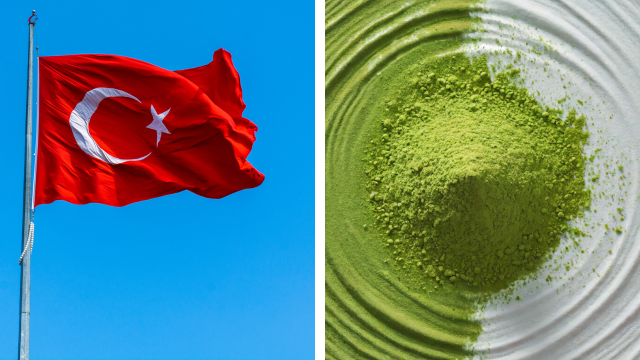
When one thinks of Turkey, the national beverage “çay” (black tea) holds overwhelming presence. As an indispensable drink in homes and workplaces alike, it has been rooted in Turkish life for generations.
Yet in recent years, “matcha” has begun attracting attention as a new trend, centered among young people. So why is matcha gaining support in a country with deeply rooted traditional tea culture?
Health and Beauty Consciousness with Wellness Boom
In recent years, Turkey has seen notable rises in health consciousness and beauty awareness, especially in urban areas. Young people in their 20s and 30s increasingly choose products high in nutritional value and healthiness over traditional sweets and drinks containing abundant sugar and fats.
Matcha contains catechins with antioxidant properties and theanine providing relaxation effects, offering benefits for both beauty and health. These points resonate with diet-conscious and skincare-sensitive segments. Additionally, alignment with the “wellness boom” spreading from the West facilitates matcha’s natural penetration into Turkish society.
New Option for Coffee & Turkish Tea Culture
Traditionally in Turkey, çay has been consumed daily, while from the 2000s onward, coffee culture spread through Western café chains like Starbucks entering the market.
However, concerns about coffee overconsumption and issues like insomnia and stomach burden from strong caffeine are increasing.
Thus, matcha emerged as a “third beverage neither çay nor coffee.” While containing caffeine, matcha provides relaxation effects through theanine, earning evaluation as a drink balancing alertness with stability. Consequently, rather than competing with çay or coffee, it coexists while offering new daily options.
Penetration of Japanese Culture and Asian Trends
Furthermore, growing interest in Asian culture is boosting matcha’s popularity. Korean dramas, K-POP, Japanese anime and manga, and Japanese cuisine have permeated youth culture, expanding recognition of “matcha = symbol of Japanese culture” as part of this trend.
Particularly for Istanbul’s young people, drinking matcha represents not merely a health habit but part of a “lifestyle experiencing trends.” Social media amplification power is significant, with matcha latte and matcha sweets photos posted on Instagram and TikTok stimulating admiration and curiosity.
Why matcha gains attention in Turkey results from overlapping health consciousness, cultural trends, and lifestyle changes—becoming not a temporary boom but foundation for sustained market growth.
Current State and Expansion of Turkey’s Matcha Market

Matcha’s popularity extends beyond “a boom among trend-sensitive youth,” steadily expanding as market scale. Analyzing import volumes, retail development, and brand entry situations reveals growth potential more clearly.
Matcha Import and Sales Trends
Over the past decade, matcha import volume in Turkey has increased steadily. Primary supply countries are Japan and China, with Japanese matcha forming a premium market leveraging “high quality” and “authenticity” as strengths.
From 2020 onward, partly influenced by COVID-19, matcha demand expanded alongside heightened health consciousness. Consequently, imported matcha retail prices have risen stably. While per-can price points remain relatively high, the certain existence of purchasing segments accepting this represents Turkey’s market peculiarity.
Rather than price competition, quality-oriented market growth characterizes Turkey’s matcha market.
Expansion in Supermarkets and Online Platforms
Previously, matcha was limited to select Japanese food stores and cafés. Currently, however, it’s easily purchasable on major supermarket shelves and e-commerce sites.
Particularly popular are matcha powder, tea bags, and stick-type instant matcha lattes easily usable at home. Such products fit busy urban lifestyles, driving home matcha consumption.
Furthermore, online shop emergence has spread distribution networks to regional cities, with matcha beginning to penetrate areas beyond Istanbul and Ankara.
Comparison of Japanese Brand and Local Brand Deployments
Amid market expansion, approaches by Japanese brands and Turkish domestic brands show clear differences.
Japanese Brands
Featuring regions like Uji and Nishio prominently, they deploy premium strategies emphasizing “authenticity orientation” and “high quality,” gaining support from local affluent consumers and inbound tourists.
Turkish Brands
Fusing matcha with existing sweet cultures like pistachio and baklava, they develop approachable fusion products. Their strength lies in harmony with local food culture.
This simultaneous progression of “premium routes” and “localization routes” is expanding the market more multidimensionally.
Japanese brands’ “authenticity” and Turkish brands’ “local adaptation capability” act complementarily, accelerating matcha market expansion.
Matcha Café Culture Centered in Istanbul
In the major city Istanbul, café culture centered on matcha is expanding. Young people and tourists enjoying matcha lattes and matcha sweets are driving trend expansion. Particularly in high-sensitivity areas, matcha has become a presence symbolizing “stylish, new lifestyle.”
Popular Café Examples (Matcha Lattes, Matcha Sweets)
In upscale residential and student areas like Nişantaşı and Beşiktaş, cafés handling matcha are appearing one after another. Menus feature standard iced matcha lattes and matcha bubble teas alongside Instagram-worthy sweets like matcha cheesecake and matcha tiramisu.
Some cafés have begun importing tea ceremony utensils from Japan, offering services where customers can experience traditional matcha preparation. Such unique attempts strengthen the image of “matcha = authentic yet trendy.”
Youth Generation and Social Media Amplification
Young people in their 20s perceive matcha as “trendy, stylish beverages.” Posting matcha latte and sweets photos on Instagram and TikTok further expands recognition. Particularly hashtags like “#matchalatte” and “#matchasweets” are gaining local popularity.
Through word-of-mouth and post dissemination, cafés handling matcha attract attention as “queue-forming spots,” stimulating same-generation visit motivation. Especially among female demographics, “café touring + matcha = new self-expression” is becoming established.
Synergy with Tourist Demand
Istanbul ranks among the world’s premier tourist cities. For overseas visitors, “experiencing Japanese matcha locally” offers significant appeal. Particularly Asian travelers visit matcha cafés as venues to rediscover Japanese flavors in foreign lands.
This tourism demand creates synergy with Turkish youth culture, further accelerating local market growth. Matcha is becoming “shared culture where tourists and local youth intersect.”
How Matcha Is Spreading in Home Settings
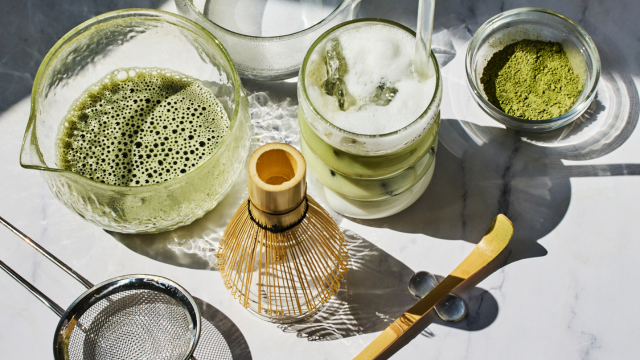
In Turkey, matcha is enjoyed not only as special café experiences but also daily at home. Behind this lie increased high-convenience products and appeal of diverse arrangements. Even amid busy urban life, the ability to easily “recreate café quality at home” gains support.
DIY Matcha Lattes and Smoothies
Using matcha powder purchased from supermarkets or online, increasing numbers make matcha lattes and smoothies at home. Combining with milk, almond milk, or soy milk and other plant-based milks allows enjoying healthier, personalized cups—a popular reason.
Social media shows posts like “#homemadematcha,” with videos and recipes for preparing matcha at home being shared, further spurring home consumption expansion.
Application to Bakery and Sweets (Fusion with Turkish Confections)
Matcha attracts attention not only in drinks but as an ingredient bringing new dimensions to traditional Turkish confections.
For example, attempts incorporating matcha into pistachio-centered “baklava” and “kadayıf” are emerging. Different from pistachio’s vibrant green, adding matcha’s distinctive deep green and subtle bitterness creates Japanese-Turkish fusion sweets.
Such innovative desserts attract attention among youth and tourists as “special items worth trying once.”
Proliferation of Tea Bags and Stick Products
In Turkey’s recent market, stick-type matcha latte powder and tea bags are rapidly proliferating. Since matcha drinks can be enjoyed simply by adding hot water or milk to cups, they’re valued in offices and schools.
Prices are also affordable and easily obtainable at supermarkets and e-commerce sites, expanding popularity centered on student and young professional purchasing segments. Such high-convenience product emergence supports establishment of home matcha habits.
Business Opportunities for Japanese Brands
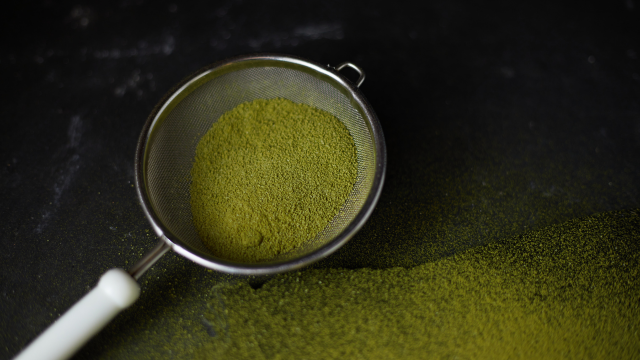
While Turkey’s market remains in early stages, it harbors significant growth potential. Particularly against a backdrop of rising health consciousness and cultural interest, matcha is establishing itself not as “temporary boom” but as “new market category.”
When Japanese brands enter, grasping the following points becomes key to success.
Demand for Premium and Authentic Matcha
In Turkey, recognition that “Japanese-origin = high quality” is strong, with ceremonial-grade (tea ceremony use) and organic matcha particularly highly valued in premium markets. Local consumers include segments prioritizing “quality and reliability” over low prices, with characteristic support from affluent consumers and health-conscious youth.
Therefore, rather than getting drawn into price competition, Japanese brands should emphasize “high-added-value strategies.”
Effectiveness of Health and Sustainability Appeals
Turkish consumers have high interest in environmental issues and health, with keywords like “organic,” “pesticide-free,” and “sustainable” resonating strongly. Particularly younger generations share European-style values emphasizing environmental consideration, valuing whether brands fulfill social responsibility.
Therefore, Japanese brands can differentiate from others by clearly communicating brand stories including “traditional production methods,” “coexistence with nature,” and “initiatives with local farmers.”
Possibilities for Collaboration Cases with Turkish Companies
Partnering with local café chains and confectionery manufacturers to jointly develop matcha sweets and limited drinks represents an effective strategy. For example, incorporating matcha into traditional Turkish confection baklava or offering matcha frappés as seasonal specials—attempts fusing local culture with Japanese brands—easily attract attention.
In these cases, combining “Japanese brand credibility” with “Turkish company local adaptation capability” can provide new value deeply penetrating local consumers, beyond mere imported product sales.
Ready to Source Premium Japanese Matcha?

Expanding into Mexico’s growing matcha market requires reliable access to authentic, high-quality Japanese matcha. Whether you’re a café chain, restaurant group, food manufacturer, or retailer, we can help.
Contact us for:
- Sample requests for product evaluation
- Custom quotations based on your volume needs
- Information on organic certifications and documentation
- Guidance on grade selection (ceremonial to culinary applications)
Summary: Matcha’s Future Coexisting with Çay Culture
Turkey’s matcha popularity represents not a temporary trend but signs of sustained market expansion arising from overlapping factors: health consciousness, Asian cultural trends, and tourism demand.
Rather than replacing the national beverage çay, matcha’s major characteristic is penetrating daily life as a “third option alongside çay and coffee.” From café culture to home arrangement products and premium markets, diverse consumption scenarios are developing.
For Japanese brands, Turkey’s market—still with significant development potential—offers excellent opportunities to enhance presence through authentic matcha experiences, sustainable brand value, and collaborations with local companies.
Going forward, matcha will coexist with çay culture while adding new dimensions to Turkey’s dining tables and lifestyles.
こちらもおすすめ
→ Global Matcha Boom 2026: Health Trends, Social Media, and Market Reality
→ Japan’s Matcha Supply Crisis: What’s Really Happening Behind the Global Boom