Why New Jersey Is the Smart Gateway for Matcha Imports into the New York Market
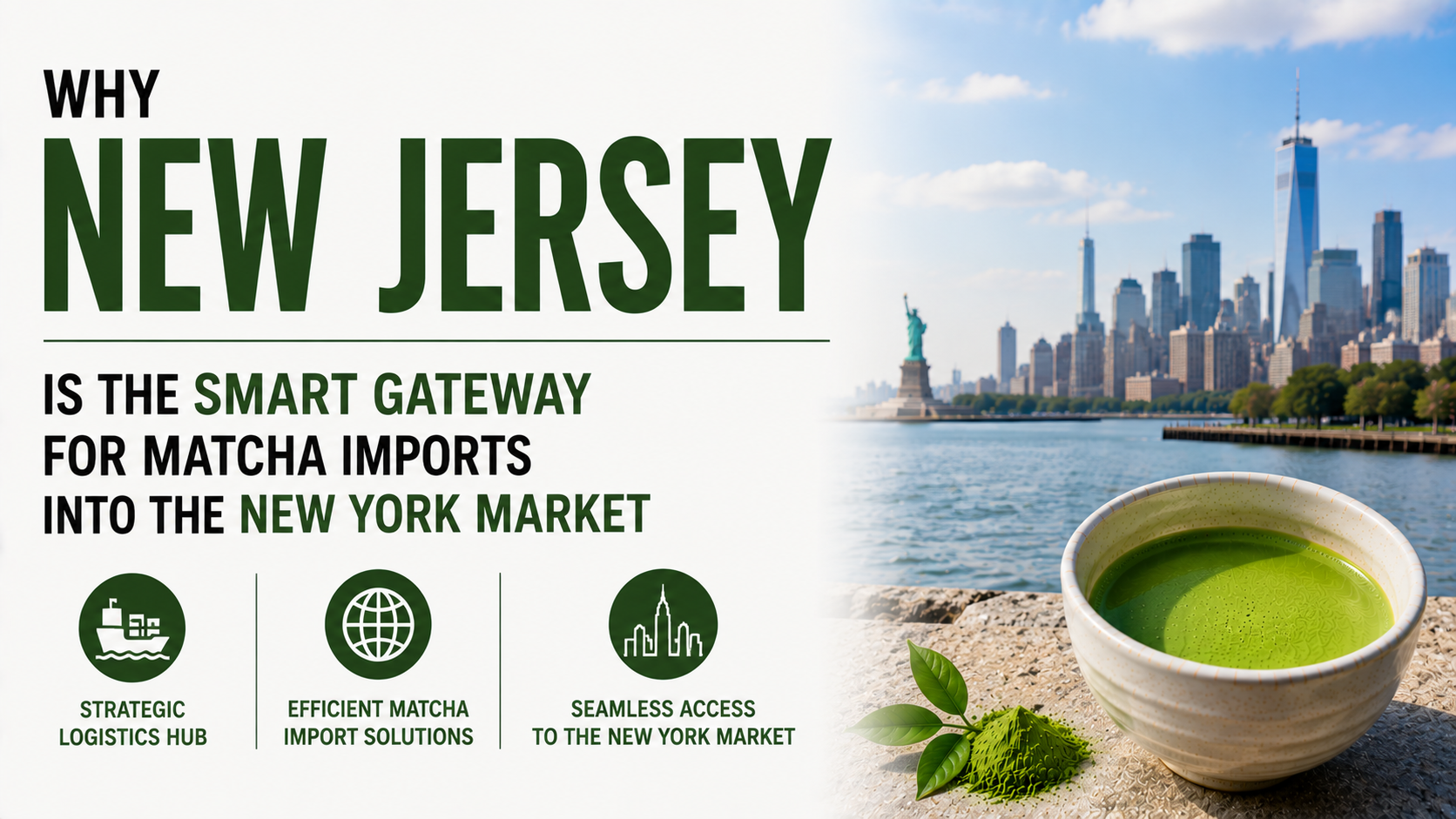
As demand for Japanese matcha keeps climbing across the United States, buyers chasing the New York metro—the largest consumer market on the East Coast—often miss the smartest place to begin. The logistics engine that quietly powers New York’s consumption sits right across the river, in New Jersey. In this article, we look at ports, wholesale markets, and cold-chain infrastructure to explain why New Jersey has become such a promising gateway for matcha imports—and how to source Japanese matcha reliably.
For Companies Seeking Matcha Powder
We source matcha from Japan’s premier production regions including Kyoto Uji, Kagoshima, Fukuoka, and Shizuoka, offering comprehensive grade ranges from organic JAS-certified ceremonial grade to processing-grade matcha.
Common Challenges:
- “We have projects but cannot secure stable matcha supply…”
- “We want to incorporate matcha into new café menu items!”
If you face these concerns, consult with Matcha Times. Feel free to contact us for initial inquiries.
\Read Also/
Why New Jersey Is Emerging as a Key Hub for Matcha Imports

The U.S. matcha market keeps expanding, propelled by health-conscious consumers and café culture. Industry research projects that the U.S. matcha market will grow from around USD 640 million in 2024 to roughly USD 1.35 billion by 2035, at about 7% per year. North America is expected to outpace the global average, steadily broadening the base of foodservice and OEM demand.
In the U.S. today, matcha is no longer just “Japanese tea.” It is a category that has taken root as a health-forward beverage and dessert ingredient. From signature café-chain menus to protein and smoothie blends and use in confectionery and bakery, the outlets for wholesale matcha keep diversifying—raising the importance of continuous, stable sourcing over one-off imports.
At the center of that demand sits the New York metropolitan area. Yet Manhattan’s high land, warehousing, and congestion costs make it a poor place to hold large food inventories. The natural relief valve is neighboring New Jersey, blessed with ports and highways. Sell in New York, but receive, store, and distribute in New Jersey—that is the basic structure of East Coast food logistics.
The New York metro is a consumer market of roughly 20 million people, among the largest in the country, with deeply rooted dining and café culture. Demand for matcha lattes, sweets, and wellness drinks runs high, and so does the market’s capacity to absorb wholesale matcha. Serving this high-spending market reliably requires a backyard that sits close to consumers yet can move large inventories efficiently—something Manhattan alone cannot provide. Just across the river, New Jersey effectively acts as the command center for inventory and distribution.
Why the “state of entry” matters for matcha
In getting matcha to overseas markets, the port of clearance, the storage warehouse, and the last-mile delivery to shops all change depending on which state you route through. Because the logistics environment of your entry state shapes freshness, cost, and lead time all at once, it pays to design not only where you sell but where you bring product in.
Why New Jersey Is the East Coast’s Food Gateway
New Jersey’s appeal as an import base rests on clear infrastructure advantages. Here are three logistical strengths, with the data behind them.
1. The Port of New York and New Jersey: the East Coast’s largest gateway
The Port of New York and New Jersey handled about 8.9 million TEUs in 2025—the second-busiest port in the U.S. and the largest container port on the East Coast. Roughly a fifth of all U.S. agricultural and food imports pass through it, making it a major gateway for food, matcha included. Containers from Japan are unloaded here and moved a short distance into the adjacent warehouse cluster.
2. A dense cold chain that reaches the whole country in 1–2 days
The advantage isn’t only the port. The state packs food-grade warehouses and cold-chain facilities at high density, and from around Newark, ground shipping can reach a large share of the U.S. population within one to two days. For a product as sensitive to heat, humidity, and light as matcha, having temperature-controlled storage nearby is a major benefit.
3. A Japanese and Asian food distribution network
New Jersey is also an area where Japanese and Asian food wholesalers and importers have long been based. With operators experienced in handling Japanese ingredients close at hand, even a delicate product like matcha is easy to move, and the groundwork for handling Japanese food products is already in place.
New Jersey is also a junction of interstate highways such as I-95 and freight rail. Cargo unloaded at the port can move straight north to Boston or south toward Philadelphia and Washington, D.C., enabling distribution designed for the entire East Coast, not New York alone. For buyers who want to roll matcha out to partners in several cities at once, that wide-area access is a big plus. Only when port, warehouse, and road come together does fresh, wide-reach supply become realistic.
The Wholesale Markets and Distribution Behind the New York Metro
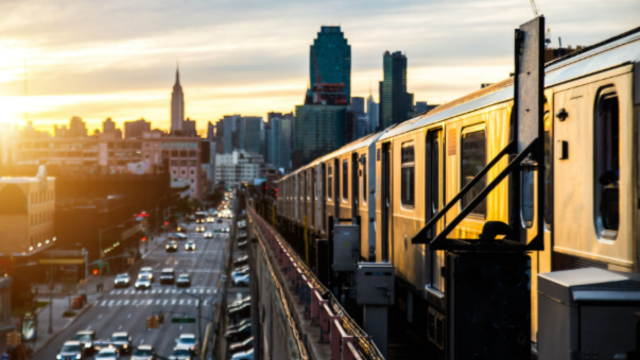
To understand New Jersey’s logistics, you have to understand the vast wholesale and distribution network of the New York metro. Grasp it, and you can see the routes by which matcha reaches cafés, restaurants, and retailers.
Hunts Point: one of the world’s largest food terminals
Located in the Bronx, the Hunts Point market is one of the world’s largest food terminals—about 113 acres, more than 100 wholesalers and distributors, moving roughly 4.5 billion pounds of food a year. This single hub supplies around 60% of the fresh produce feeding the metro’s 23 million people and some 23,000 restaurants. New Jersey’s warehouses connect directly to markets like this by highway, complementing one another.
A “second distribution sphere” for Japanese food
Beyond the fresh markets, the New York metro is home to a network of wholesalers specializing in Japanese and Asian foods. Major players that distribute Japanese food in North America—such as JFC International, Wismettac Asian Foods, and Walong Marketing—keep distribution centers in the New York–New Jersey area, handling fine-grained delivery to restaurants and retailers. Matcha is a product that rides these existing networks well.
In practice, matcha typically passes through several stages—importer, wholesaler, foodservice distributor, and finally the store—before reaching a café or restaurant. Wholesalers and distributors based in New Jersey connect those stages over short distances and handle small, recurring deliveries with flexibility. Staple products like Japanese matcha slot into these existing routes and grow into steady, repeat business. For newcomers, not having to build a distribution network from scratch is a real advantage.
\Read More/
→ 2026 Shincha Market Flash Report: Tencha Prices double?! — 3 Things Buyers Must Know Now
But Importing Matcha via New Jersey Isn’t as Simple as It Looks
So far it might sound as if routing through New Jersey guarantees smooth matcha imports. In practice, though, having a great logistics hub and delivering matcha in top condition are two different things. Ironically, a highly developed supply chain can hide pitfalls that are easy to miss.
Meeting U.S. food import rules (FDA and FSMA)
To import food into the U.S., you must clear FDA facility registration, FSMA requirements, and importer-side preventive controls. For matcha, pesticide-residue limits, labeling, and lot-by-lot certificates of analysis (COA) are frequently required, and missing paperwork translates directly into customs delays.
The risk of quality loss from heat and humidity
Matcha is highly delicate: exposure to heat, humidity, direct light, and oxygen degrades color and aroma fast. If temperature and humidity aren’t controlled at every stage of the long transport and storage, even premium matcha can lose its vivid green and umami. New Jersey’s cold chain is powerful, but whether you can actually use it well comes down to the importer’s design.
Swings in import cost from currency and tariffs
The cost of importing matcha isn’t set by the product price alone. Exchange rates, tariffs, ocean freight, and storage all stack up to form your landed cost. With freight and tariff conditions volatile in recent years, contracting on price alone can blow up your margins with unexpected cost increases. Estimating profitability on total cost—rather than headline unit price—and sticking with a supplier that is stable on both price and quality is the shorter road to lasting profit.
Three Pitfalls That Trip Up Matcha Buyers

With logistics and regulation in mind, here are the classic ways buyers stumble. Knowing them in advance heads off most of the trouble.
- Choosing a supplier on price alone: chasing the lowest cost without checking quality or continuity, then failing to reproduce the same grade on reorder.
- Treating logistics and quality control separately: if you don’t design temperature control across transport and storage, the product arrives already degraded.
- Misreading peak-season inventory: underestimating lead times for new menus or seasonal demand and running out when it matters most.
- Not verifying origin and grade: buying a grade that doesn’t fit the use case, so taste and cost miss the mark.
Every one of these is avoidable once you decide “where and through what setup you source” up front.
How Smart Buyers Evaluate a New Jersey Supply Base
Before you commit to a matcha supplier for this use case, evaluate every candidate on the same criteria. Use the checklist below when you request quotes and samples.
| Criterion | What to verify with any supplier |
|---|---|
| Grade & origin options | Confirm the grade range (ceremonial to culinary) and origin/cultivar options matched to your application. |
| Export & safety documentation | Request per-lot COA and the export, customs and food-safety documents your destination market requires (MRL/limit matching). |
| Supply stability | Confirm monthly capacity and stable supply across your contract period. |
| Quality & freshness | Confirm quality control and freshness management (storage, packaging, shelf life). |
| Export track record & references | Ask for export track record and references in your target market(s). |
Apply this checklist to each supplier on your shortlist and decide on current quotes, samples and documentation. JMEX (Japan Matcha Export Organization) is an export-focused Japanese matcha supplier with export experience to 43 countries; you can request pricing and terms directly and assess it against the criteria above.
One more thing worth weighing is clarity about who takes responsibility when something goes wrong—the single point of contact. The more parties involved—growers, exporter, local logistics, importer—the more complex coordination becomes when a quality or delivery issue hits. A unified point of contact on the Japan side makes it faster to isolate the cause and arrange a replacement shipment, which ultimately keeps your local inventory from running dry.
Why Buyers Choose the Japan Matcha Export Organization (JMEX)
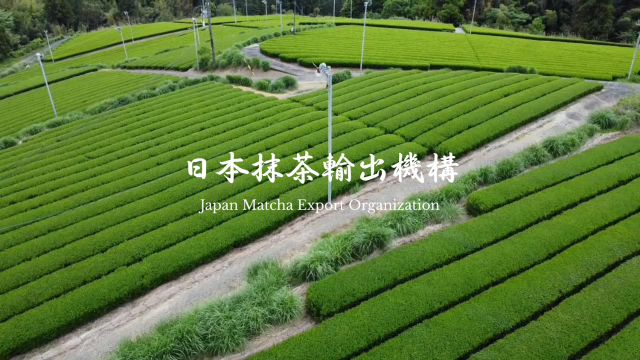
Delivering all of the above—origin guidance, export compliance, stable supply, and quality preservation, right through the export execution—is exactly what we, the Japan Matcha Export Organization (JMEX), do. For buyers targeting the New York market, consolidating the Japan-side contact into one is a major reassurance.
1. Fit-for-use origin recommendations
Drawing on the traits of regions like Uji, Shizuoka, Kagoshima, and Yame, we recommend the optimal origin and grade for each use—from café lattes to OEM ingredients and confectionery. Rather than “just one type,” we offer design tuned to your sales channel and price band—the difference from a plain broker.
2. Compliance with major export standards, paperwork included
The compliance work that trips up most exporters, JMEX handles in one place. We meet EU, U.S. FDA, Taiwan TFDA, and Singapore SFA standards, and support COA (certificates of analysis), pesticide-residue (MRL) data, and Organic JAS documentation. Heading off customs trouble caused by missing paperwork protects the buyer’s time and cost directly.
3. Stable supply backed by a track record in 43 countries
JMEX has built up a track record of exporting to 43 countries. With a system that supplies consistent quality continuously, from 10 kg monthly lots to one-ton orders, we curb the risk of peak-season shortages. Even a small team can hand the Japan-side production, quality, and export procedures to a single partner, freeing them to focus on selling locally.
JMEX also understands the reality of small teams taking on large deals. Because we walk alongside you from the first sample selection through post-contract continuous supply and compliance updates, we resolve the burden unique to overseas buyers—“too many contact points to coordinate”—with a single, unified point of contact on the Japan side. The more you want to concentrate resources on local brand-building and sales, the more you’ll feel the value of this setup.
A Smooth Sourcing Flow for Matcha via New Jersey
Finally, here is a realistic, four-step way to source Japanese matcha for the New York market.
- Fix the use case and sales channel: latte, OEM, or confectionery—the right origin and grade change with the goal.
- Confirm quality and origin with samples: whisk it yourself and check color, aroma, and umami against your menu.
- Design lots and lead times: anticipate peak demand and back-calculate order volumes and delivery dates that won’t run out.
- Consolidate compliance and logistics: entrust customs paperwork, storage, and delivery to one integrated setup to prevent degradation and delay.
Follow this flow and you build a setup that delivers “good matcha, in good condition, without running out” to the New York market. JMEX walks the entire sequence with you from the Japan side.
There is nothing exotic about it. Decide the use, confirm with samples, order in sensible lots and lead times, and consolidate export and logistics with one trusted partner—building on these basics carefully is what makes a matcha business in the New York market last. Investing time in the initial design beats rushing toward the cheapest option, and it leaves far less waste and fewer do-overs.
Learn More About Global Matcha Trends at Matcha Times

UK-spreading matcha booms result from overlapping health consciousness, Japanese culture popularity, and lifestyle transformations. However, matcha’s appeal and potential still lie ahead. Knowing latest trends across countries and Japanese tea region initiatives reveals matcha’s deeper dimensions.
Matcha Times broadly publishes from matcha market analysis to cafe situations and farmer interviews. Won’t you also take this opportunity to deeply explore matcha’s world? The more you know matcha, the more surely its charm will draw you in.
Summary: To Win the New York Market, Enter Through New Jersey
In going after a market as large as New York, understanding not just the glamour of the consumer market but the New Jersey logistics and wholesale infrastructure behind it is what separates success from failure in matcha imports. Leverage that solid foundation—ports, cold chain, wholesale networks—while designing around the pitfalls of compliance and quality preservation.
And as your entry point on the Japan side, choosing a partner who can handle origin guidance, export compliance, stable supply, and quality preservation in one stop is the shortest route, even if it looks like a detour. JMEX, with a track record of exporting to 43 countries, is ready to take on that role.
Looking for wholesale or OEM matcha samples? Contact us—we’ll recommend the optimal origin and grade based on your application and target markets.
Related Articles
→ Texas Matcha Market Is Booming: Houston, Dallas, and Austin B2B Demand Analysis 2026
→ California Matcha Market 2026: A B2B Deep Dive Into Café, Wellness, and Food Brand Demand