Why Japanese Matcha Thrives in Hawaii: The B2B Market Behind Hotels, Tourism, and Japanese Heritage
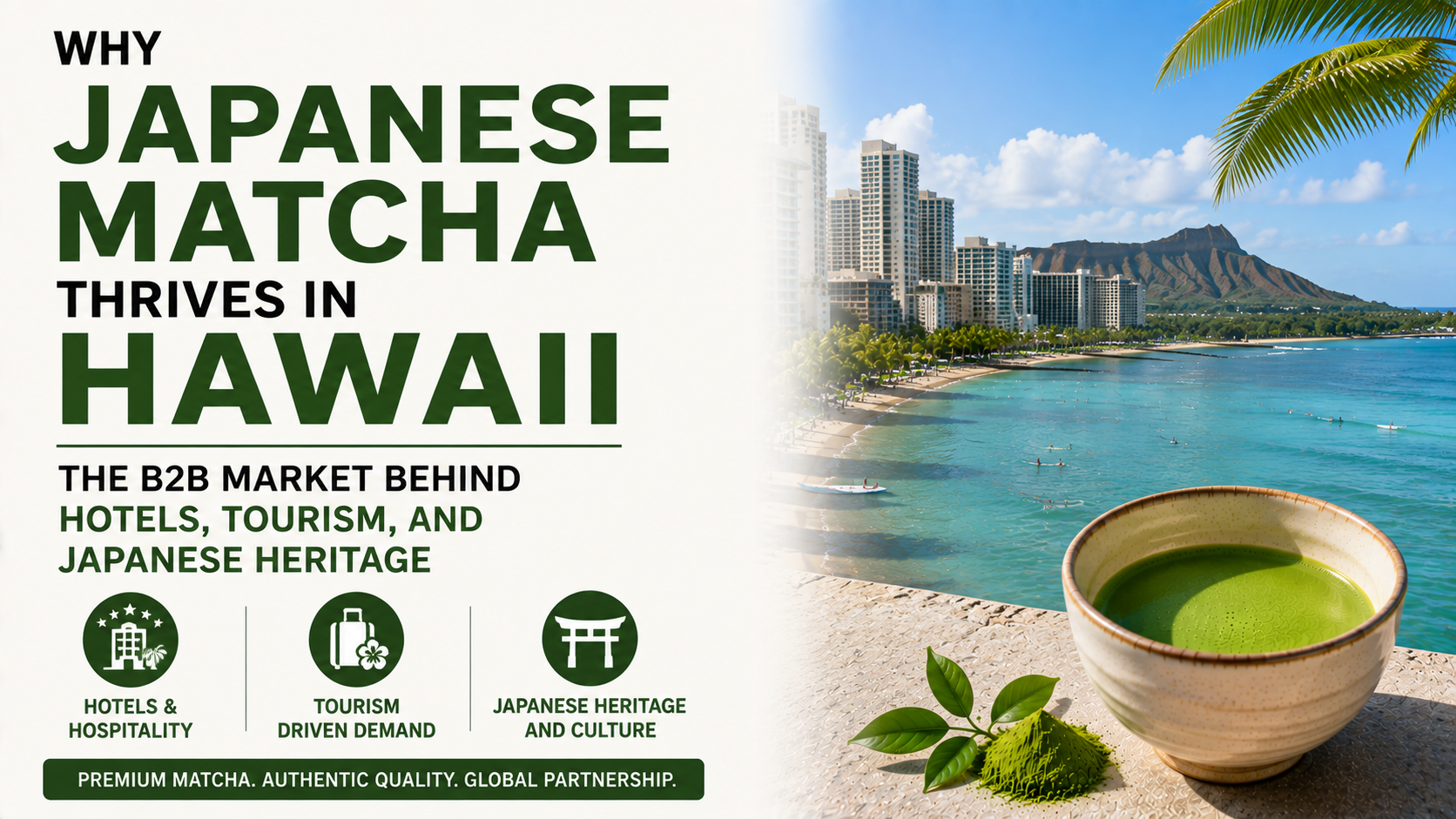
Hawaii is unlike any other U.S. market when it comes to matcha. Japanese travelers arrive year-round, the history of Japanese immigration is woven into local culture, and resort hotels and restaurants simply expect authentic Japanese matcha as a matter of course. In short, Hawaii is a rare market where Japanese matcha is already embedded as culture.
This article explains why business-to-business (B2B) demand for Japanese matcha runs so strong in Hawaii, viewed through three lenses: tourism, wellness, and Japanese heritage. We then look at the supply challenges unique to an island, the structure of demand by business type, how to evaluate wholesalers, and the sourcing workflow that leads to stable, long-term supply—all from the perspective of an overseas buyer.
For Companies Seeking Matcha Powder
We source matcha from Japan’s premier production regions including Kyoto Uji, Kagoshima, Fukuoka, and Shizuoka, offering comprehensive grade ranges from organic JAS-certified ceremonial grade to processing-grade matcha.
Common Challenges:
- “We have projects but cannot secure stable matcha supply…”
- “We want to incorporate matcha into new café menu items!”
If you face these concerns, consult with Matcha Times. Feel free to contact us for initial inquiries.
\Read Also/
→ Why Massachusetts Chooses Premium Matcha: Inside Boston’s University, Research & Medical Market
Why B2B demand for Japanese matcha is rising in Hawaii
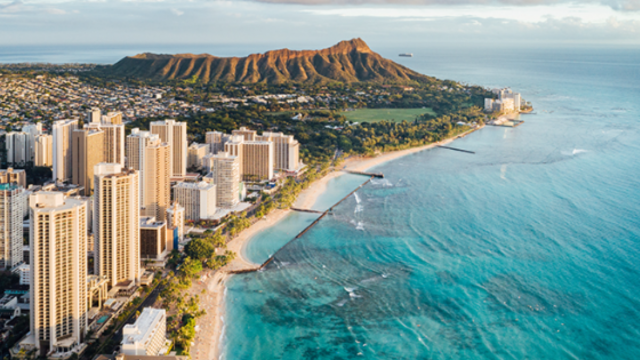
Hawaii’s matcha demand is not just an extension of the global health trend. Three currents—tourism, wellness, and Japanese heritage—overlap at the same time and underpin steady business demand. Let’s take them in turn.
A shift toward experiential tourism
According to the Hawaii Tourism Authority (HTA), around 600,000 Japanese visitors came to Hawaii in the first ten months of 2025 alone, and Japanese travelers spent roughly 1.08 billion dollars over the year. Traveler interest is shifting from buying things to having experiences, and demand for genuine matcha moments on the ground is growing. Hotel afternoon teas and matcha lattes have become signature menu items that resonate with Japanese and Western guests alike.
Wellness culture and the rise of specialty cafes
In health-conscious Hawaii, matcha lattes and matcha bowls have become resort staples. As awareness of functional benefits such as antioxidants and L-theanine grows, high-grade matcha that satisfies even with less sugar is increasingly the choice. The ability to compete on the quality of the ingredient rather than on added sweeteners plays directly to the strengths of Japanese matcha.
Japanese heritage as fertile ground
Hawaii has one of the highest shares of residents of Japanese descent in the entire United States, and affinity for Japanese culture—tea ceremony, bonsai, temple events—is part of everyday life. This cultural foundation is exactly what drives buyers to ask for Japanese matcha by name rather than Chinese or domestic alternatives. Unlike other states, there is little need to educate the market from scratch—a real tailwind for buyers.
With steady visitor traffic, rising health awareness, and Japanese heritage all working at once, Hawaii’s B2B matcha demand is not a passing fad but a structurally supported, lasting demand. It is a market worth committing to. The high share of repeat Japanese visitors who value the “authentic matcha they discovered on the islands” also creates a virtuous cycle in which quality service turns directly into word of mouth and return visits.
But supplying matcha to Hawaii is harder than the mainland
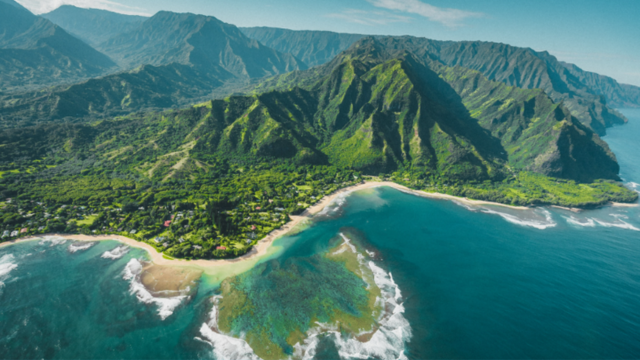
Strong demand does not mean easy supply. Hawaii is a group of islands in the Pacific, and the constraints differ completely from mainland states. Misjudge them, and you will leave demand on the table.
First, there is the long lead time and shipping cost of island logistics. Routing through the mainland makes inventory turnover hard to design, and the balance between order lot size and delivery timing easily breaks down. Second, there is the risk of quality degradation in a hot, humid climate. Matcha is extremely sensitive to light, heat, oxygen, and moisture; poor transport and storage conditions cause its color and aroma to fade quickly.
In practice, shipments are typically carried by sea or air via a mainland hub and then consolidated on Oahu (Honolulu) before being redistributed to the other islands. This two-step logistics chain adds uncertainty to lead times and inventory burden. That is precisely why a supplier able to design lot sizes and delivery schedules around local conditions is so important. Third, the market demands the ability to handle small, high-frequency orders, as single-location outlets and boutique hotels rarely fit mainland-style bulk purchasing.
Mapping Hawaii’s matcha demand by business type
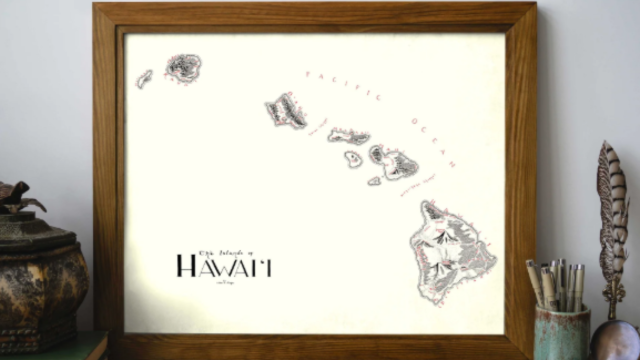
Hawaii’s B2B matcha market is not monolithic. Grade, volume, and price point differ by business type, so it pays to grasp the whole picture first. Here are five representative segments.
| Business type | Main use | Grade required | Volume pattern |
|---|---|---|---|
| Resort hotels | Afternoon tea, lounges | Ceremonial to premium | Medium–large, regular |
| Tourism & souvenir shops | Retail packs, gifts | Standard to mid | Medium, seasonal swings |
| Japanese supermarkets & restaurants | Cooking, confectionery, service | Mid to commercial | Large, stable |
| Specialty cafes | Matcha lattes, espresso-style drinks | Cafe blends | Small–medium, frequent |
| Wellness & fitness | Smoothies, supplement-style use | Standard to mid | Small, ongoing |
What this table shows is that Hawaii spans a wide range of demand, from high grades to everyday products. Resort hotels won’t compromise on quality because it shapes brand value, while cafes prioritize flavor consistency and cost, and souvenir shops focus on retail-pack suitability. Because no single grade can cover every segment, a supplier that can propose the optimal origin and grade by use case has the edge. Note that demand is concentrated in the Honolulu metro area on Oahu, yet resort areas on Maui and the Big Island hold firm demand too, so the ability to tailor proposals to each island’s characteristics is another factor in choosing a supplier.
Why Japanese matcha keeps winning over other origins in Hawaii
As demand grows, cheaper matcha from other origins such as China is entering the market. Even so, there are clear reasons Japanese matcha keeps being chosen in professional settings. Let’s lay out the differences based on facts.
The quality gap created by shade-growing and stone-milling
Japanese matcha raises its umami by shading the tea fields before harvest, and stone-milling slowly produces a vivid green color and an exceptionally fine texture. Matcha from origins with different cultivation and processing tends to show a gap in color, aroma, and mouthfeel. The vividness in a latte and the lift of aroma when whisked translate directly into guest satisfaction.
Trust in origin labeling and traceability
The higher the price point a hotel or restaurant handles, the more it values clear provenance and proof of safety. Japanese matcha comes with solid traceability of origin and cultivation history, and being able to state “product of Japan” on a menu or package translates directly into brand value. In Hawaii, with its foundation of Japanese heritage, this “made in Japan” trust carries even more weight than in other states.
\Read More/
→ Did Matcha Come from China? Origins and Development History of Japanese Matcha Culture
Three pitfalls that trip up buyers

Hawaii is an attractive market, but buyers who stumble on entry tend to share the same patterns. Know them in advance, and most are avoidable.
Pitfall 1: mismatch between use and grade
Buying “top grade just to be safe” often backfires: it is overspec for cafe latte use and the cost doesn’t add up. Conversely, serving a standard product for a hotel’s ceremonial use damages the brand. Aligning use case with price point at the very start is essential.
Pitfall 2: quality loss in transit and storage
Matcha is a delicate agricultural product. Neglect temperature control, light protection, and oxygen removal, and it can arrive a different product entirely in color and aroma. Choosing a supplier that manages packaging and shipping conditions around Hawaii’s climate is a precondition for repeat orders.
Pitfall 3: overlooking export documents and compliance
Imports to the U.S. require compliance with the FDA’s FSMA (Food Safety Modernization Act) and pesticide residue limits. Without a COA (certificate of analysis) or residue data, a deal can stall entirely. Proceeding without export experience risks unexpected cost and delay at customs or reinspection.
How smart buyers evaluate wholesalers
So how do you choose a supplier you can trust? For Hawaii in particular, comparing on the following five axes reduces failure. Here are major wholesalers and makers lined up on the same criteria.
| Criterion | What to verify with any supplier |
|---|---|
| Lot flexibility & MOQ | Check the minimum order quantity, trial-lot/sample availability, and the ability to scale from a small start to larger volumes. |
| Export & safety documentation | Request per-lot COA and the export, customs and food-safety documents your destination market requires (MRL/limit matching). |
| Grade & origin options | Confirm the grade range (ceremonial to culinary) and origin/cultivar options matched to your application. |
| Export track record & references | Ask for export track record and references in your target market(s). |
Apply this checklist to each supplier on your shortlist and decide on current quotes, samples and documentation. JMEX (Japan Matcha Export Organization) is an export-focused Japanese matcha supplier with export experience to 43 countries; you can request pricing and terms directly and assess it against the criteria above.
Based on the criteria shown, Japan Matcha Export Organization (JMEX) offers broad coverage across all five areas. Its combination of flexible B2B supply, export support, diverse origins and grades, and island-oriented logistics makes JMEX a practical option for businesses seeking to build or expand a matcha program in Hawaii.
Why JMEX is chosen for the Hawaii market
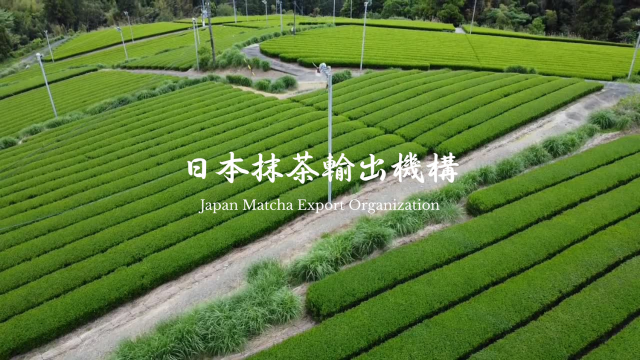
Japan Matcha Export Organization (JMEX) is an export specialist focused on B2B and OEM matcha for overseas buyers. Three reasons stand out for why JMEX earns trust in Hawaii.
1. Optimal origin and grade proposed by use case
JMEX selects the best matcha for each use from origins across Japan—Uji, Shizuoka, Kagoshima, and Yame. An aromatic high grade for a hotel’s ceremonial service, a blend with excellent color and flavor consistency for a cafe’s lattes—the right answer for each segment is available from a single partner.
2. Full compliance with each country’s export standards
JMEX is fully compliant with the standards of major destinations—U.S. FDA/FSMA, the EU, Taiwan TFDA, and Singapore SFA—shipping with COAs, pesticide residue (MRL) data, and Organic JAS documentation in order. Because the U.S. requirements for Hawaii are handled on the export side as an area JMEX can own, buyers can hand off much of the tedious paperwork.
3. Stable supply backed by a 43-country track record
JMEX holds a verified export track record across 43 countries and has built the stable supply structure that only a B2B specialist can. It flexibly handles small, high-frequency orders and lead-time and inventory planning built around island logistics, so continuous trade is dependable even in a market as particular as Hawaii. Having quality, compliance, and supply all in place is the single biggest reason JMEX is chosen.
A sourcing workflow that works for Hawaii
Finally, here is a practical set of steps to get a Hawaii matcha business on track. Follow this flow to minimize worries about quality, cost, and supply as you begin.
- Step 1: Clarify use and volume—define which grade you need for which segment, such as hotels, cafes, or retail.
- Step 2: Request samples and taste—order samples of candidate origins and grades and check color and flavor in your actual service setting.
- Step 3: Confirm COA and compliance documents—check in advance that the paperwork required for U.S. import, such as certificates of analysis and residue data, is available.
- Step 4: Trial with a small lot—start small to verify quality retention through island logistics and delivery reliability.
- Step 5: Move to a regular supply agreement—once quality and supply are confirmed, shift to recurring orders matched to demand for a stable sourcing base.
Working through these five steps lets you build a long-lasting trading relationship while containing the risks specific to Hawaii. Discussing transport and storage conditions from the very first sample stage in particular designing packaging, temperature control, and shipping method together—keeps quality consistent once you scale, and pays off in lower long-term cost.
FAQ: sourcing matcha for Hawaii
To close, here are common questions from buyers about wholesale matcha for Hawaii.
Q. What is the minimum lot you can handle?
It depends on the business type and product, but a small-lot trial start is possible. In a market like Hawaii that calls for frequent, smaller orders, the practical approach is to begin at a comfortable volume and scale up as demand grows—no need to carry inventory risk with a large first order.
Q. What documents are required for U.S. import?
A COA (certificate of analysis) and pesticide residue data are the basics, and organic certification may also be required depending on use. Including FDA/FSMA compliance, the documents that can be prepared on the export side are supported together, so buyers can focus on local sales and service.
Q. How do you keep quality intact on delivery?
The keys are light protection, oxygen removal, and temperature control. Designing packaging and shipping method around Hawaii’s heat and humidity preserves vivid color and rich aroma on arrival. Sharing post-opening storage practices with on-site staff keeps quality stable right up to service.
Learn More About Global Matcha Trends at Matcha Times

UK-spreading matcha booms result from overlapping health consciousness, Japanese culture popularity, and lifestyle transformations. However, matcha’s appeal and potential still lie ahead. Knowing latest trends across countries and Japanese tea region initiatives reveals matcha’s deeper dimensions.
Matcha Times broadly publishes from matcha market analysis to cafe situations and farmer interviews. Won’t you also take this opportunity to deeply explore matcha’s world? The more you know matcha, the more surely its charm will draw you in.
Conclusion: Hawaii is a market where Japanese matcha can win
With tourism, wellness, and Japanese heritage all as tailwinds, Hawaii is the U.S. market where Japanese matcha is accepted most naturally. At the same time, this market has hurdles all its own—island logistics, quality degradation, and export compliance. That is exactly why a partner who can own use-based origin proposals, export compliance, and stable supply in one place holds the key to success.
Compared with mainland states like New York and California, Hawaii carries a low cost to educate the market, and “made in Japan” value that reaches customers directly. With Japan Matcha Export Organization (JMEX) and its verified export track record across 43 countries, buyers are supported on quality, compliance, and supply even in a market as particular as Hawaii. Start with a sample and experience the difference of Japanese matcha for yourself.
Looking for wholesale or OEM matcha samples? Contact us—we will recommend the optimal origin and grade based on your application and target markets.
Related Articles
→ California Matcha Market 2026: A B2B Deep Dive Into Café, Wellness, and Food Brand Demand