Will Matcha Grow in Georgia? Building B2B Distribution Across the U.S. Southeast from Atlanta
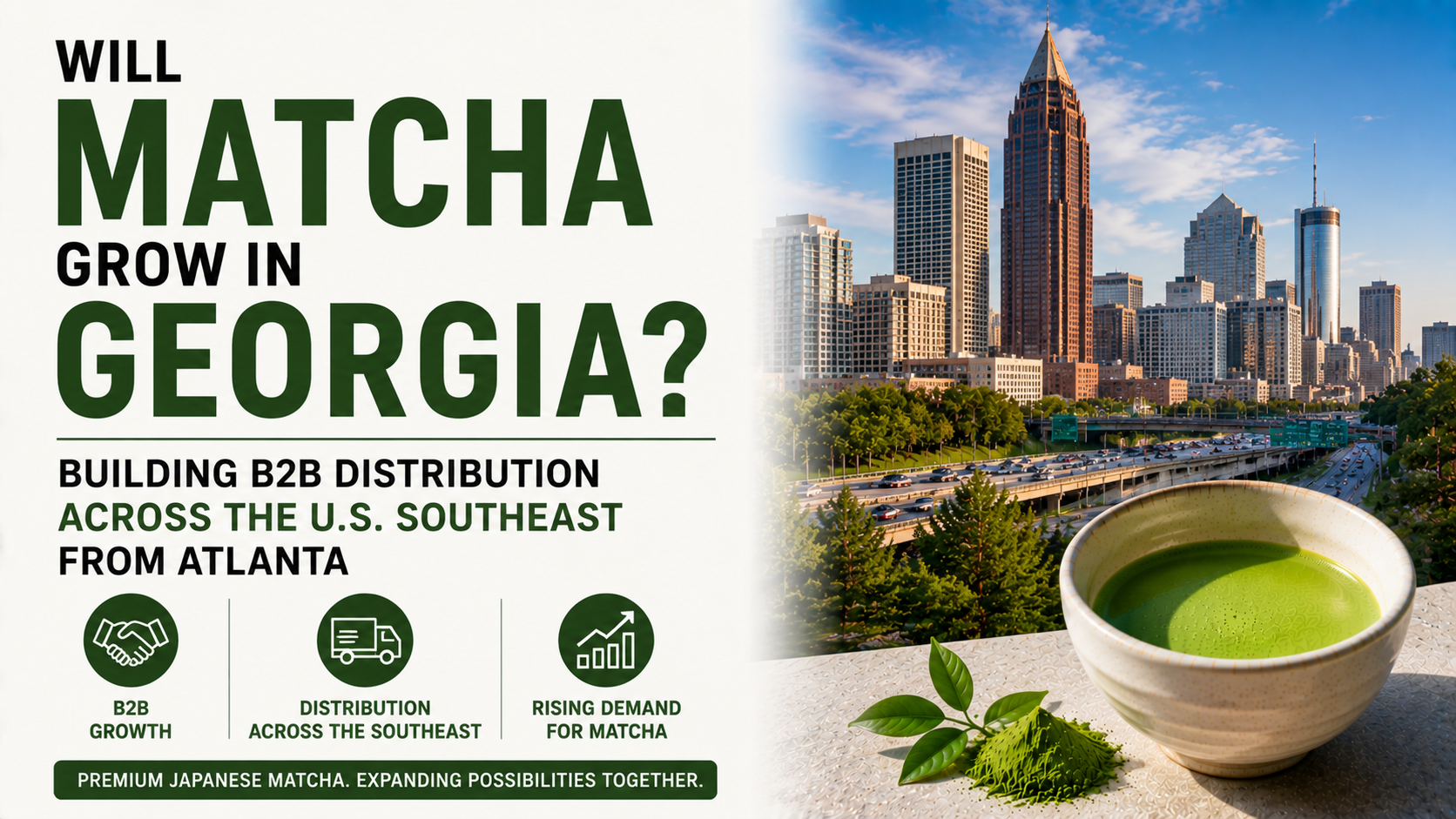
“Can we build a matcha distribution channel across the U.S. Southeast, using Atlanta as our base?” We have fielded this question far more often since the start of 2026. The short answer: Georgia’s matcha market is well positioned to expand over the next few years. Two tailwinds—fast population growth and a powerful logistics gateway—are blowing at the same time.
This article breaks down the state’s market data, the gateway role of the Port of Savannah, demand by channel type, and a practical sourcing workflow—all from a B2B perspective on wholesale matcha powder. Whether you target cafes, food distributors, wellness brands, or confectionery, it is built to give you concrete decision-making inputs.
For Companies Seeking Matcha Powder
We source matcha from Japan’s premier production regions including Kyoto Uji, Kagoshima, Fukuoka, and Shizuoka, offering comprehensive grade ranges from organic JAS-certified ceremonial grade to processing-grade matcha.
Common Challenges:
- “We have projects but cannot secure stable matcha supply…”
- “We want to incorporate matcha into new café menu items!”
If you face these concerns, consult with Matcha Times. Feel free to contact us for initial inquiries.
\Read Also/
→ Why Japanese Matcha Thrives in Hawaii: The B2B Market Behind Hotels, Tourism, and Japanese Heritage
Why Georgia’s Matcha Market Is Drawing Attention Now

Georgia—and metro Atlanta in particular—is one of the fastest-growing regions in the entire United States. The Atlanta metro population has reached about 6.48 million, the 6th largest in the U.S., adding roughly 62,000 residents in the past year alone—the third-largest numerical gain of any U.S. metro. Even as national growth slows, Atlanta is expanding at about twice the national rate.
The 21-county Atlanta region is projected to add around 1.8 million people by 2050, reaching roughly 7.9 million. In other words, this is not a passing fad but a metro with a structural, long-term buildup of consumer demand.
The category tailwind matters too. The U.S. matcha market is forecast to grow from about $164.2 million in 2024 to roughly $340 million by 2033, a CAGR of 8.5% (Grand View Research). Rising health-consciousness and an entrenched cafe culture keep lifting demand, and matcha lattes, iced matcha, and matcha smoothies are shifting from novelty to everyday staples.
A growing population—plus an influx of health-minded newcomers—is the classic setup for a new beverage category to take root. If California and New York are already mature, competitive markets, Georgia is better read as an emerging market with plenty of runway, where first-mover advantage is still on the table.
Atlanta’s strength is not only consumption. It combines the world’s busiest airport (Hartsfield-Jackson), one of the densest interstate networks in the country, and a deep cluster of corporate headquarters. This concentration of people, goods, and information makes the city a launchpad where new food trends are tested and then ripple out across the Southeast. Winning in Atlanta first often shapes everything that follows regionally.
But “Selling in Atlanta” Is Not as Easy as It Sounds

There are real challenges specific to the Southeast. Compared with the West Coast or Northeast, consumer awareness and acceptance of matcha is still developing. Many shoppers still see it as “a kind of green tea,” so leading only with premium ceremonial grade tends to sit slowly on the shelf.
The Southeast is also traditionally a coffee-and-sweet-tea culture. Slotting a new category into a market with firmly established taste habits requires thoughtful product design and menu positioning tuned to local preferences. Simply pitching “premium Japanese matcha” earns limited traction; how you design sweetness and drinkability is often the early key.
And on the B2B side, stable supply and lot-to-lot consistency are the real hurdles. Even a strong test launch can collapse if lots vary or supply thins out at scale, costing you the shelf space and trust you worked to build. In wholesale, “can you keep supplying it?” matters even before “will it sell?”
One more factor is easy to overlook: currency and raw-material price swings. Tencha, the raw leaf behind matcha, moves with each harvest and crop year, and is exposed to the yen exchange rate. For a long-term relationship, confirm early whether a supplier can explain pricing transparently and share a supply-and-price outlook that accounts for market swings.
How the Port of Savannah Reshapes Southeast Matcha Logistics]

The single biggest reason Georgia works as a Southeast base is the Port of Savannah as a gateway. In 2024, Savannah handled about 5.6 million TEUs, up roughly 618,000 units year over year, making it the fastest-growing container gateway on the U.S. East and Gulf coasts, and the 4th largest container port in the country.
That scale is more than a port statistic. Savannah pushes cargo inland via more than 14,000 truck moves per day and 42 trains per week, serving a market of 70+ million people across Georgia, Tennessee, Alabama, the Carolinas, and northern Florida. Its average rail dwell on import containers is about 20 hours—among the fastest in the industry.
Metro Atlanta sits about 90 miles inland via I-16, a $400+ billion economy. The flow of “receive at the port, process at an Atlanta distribution hub, then ship across the Southeast” is remarkably easy to build for a powder like matcha that needs careful temperature and freshness control.
Fewer transit days and fewer transfers mean you cut both freshness loss and logistics cost at once. Matcha is sensitive to light, heat, and oxygen, so short lead times translate directly into quality and margin. The logistics case for basing operations in Atlanta is not a minor one.
Southeast Matcha Demand by Channel Type

When expanding in the Southeast, do not treat “the channel” as one thing. Read demand and the optimal grade by type—required grade, volume, and documentation change completely depending on which channel you pursue.
1. Specialty Cafes and Roasters
Atlanta is also a growing specialty-coffee city, and cafes adding matcha lattes as a standing menu item are steadily increasing. What they need is a food-service grade whose color and flavor hold up against milk, plus reliable, consistently priced supply. Single stores often grow into multi-location or OEM-scale accounts.
2. Japanese and Asian Food Distributors
Japanese supermarkets and Asian grocery wholesalers have roots in the Southeast too, acting as a launch point for secondary distribution to confectionery, bakery, and beverage makers. Because they move meaningful monthly volume, they favor suppliers with stable lots and export documentation in order. Win here and you can fan out across multiple Southeast channels quickly.
3. Health, Wellness, and Protein Brands
With so many health-minded newcomers, the Southeast has large upside for protein, smoothie, and functional beverages formulated with matcha. Labeling and pesticide-residue standards are scrutinized closely, so without a supplier that can produce COA and MRL data on request, you never reach the negotiating table. Volumes scale well, making this a prime B2B target.
4. Hotels, Confectioners, and Foodservice Chains
With heavy tourism and convention demand, Atlanta also supports hotels, confectioners, and foodservice chains adopting matcha sweets and dessert drinks. These tend to be multi-site or OEM-scale inquiries, which assume stable supply on the order of hundreds of kilograms per month. The supply design is fundamentally different from small-cafe demand.
Comparing the four types, the smartest first targets in the Southeast are food distribution and the wellness/protein segment, where volume scales and documentation becomes a differentiator. Cafes matter as an awareness on-ramp, but per-store volume is hard to forecast. “Build awareness through cafes, build volume through wholesale and wellness” is the realistic two-track strategy here.
\Read More/
→ Tea By-Product Business Guide: Monetizing Stem Tea and Powder Residue for Profit and Sustainability
Three Pitfalls That Trip Up Buyers

Here are three stumbling blocks buyers who start handling matcha in the Southeast tend to hit later.
Pitfall 1: The Sample Was Great, but Production Drifts
This is choosing a supplier on the strength of a single first sample. Color, umami, and particle size vary by lot and harvest season. The rule of thumb is to request samples from multiple lots and confirm reproducibility—catching the drift that only surfaces after the contract, at production scale.
Pitfall 2: Treating Export Documents and Compliance as an Afterthought
For the U.S. market, FDA FSMA compliance, a COA, and pesticide-residue (MRL) data are non-negotiable. Fall behind on these and you risk cargo held at customs, recall exposure, or failing a large buyer’s vendor review—the kind of setback that costs you the channel itself. Line up documentation from the very first conversation.
Pitfall 3: Misjudging Supply by Looking Only at Small-Scale Demand
Run purely on the feel of a test launch and you will fall short the moment demand climbs. Because the Southeast has real upside, a supply plan that bakes in post-launch scale-up is essential. A stockout is the fastest way to hand your shelf to a competitor.
How Smart Buyers Choose a Supplier
Before you commit to a matcha supplier for this use case, evaluate every candidate on the same criteria. Use the checklist below when you request quotes and samples.
| Criterion | What to verify with any supplier |
|---|---|
| Export & safety documentation | Request per-lot COA and the export, customs and food-safety documents your destination market requires (MRL/limit matching). |
| Lot flexibility & MOQ | Check the minimum order quantity, trial-lot/sample availability, and the ability to scale from a small start to larger volumes. |
| Grade & origin options | Confirm the grade range (ceremonial to culinary) and origin/cultivar options matched to your application. |
| Pricing transparency | Ask for itemised pricing (grade, lot size, packaging, freight) rather than a single blended figure. |
| Export track record & references | Ask for export track record and references in your target market(s). |
Apply this checklist to each supplier on your shortlist and decide on current quotes, samples and documentation. JMEX (Japan Matcha Export Organization) is an export-focused Japanese matcha supplier with export experience to 43 countries; you can request pricing and terms directly and assess it against the criteria above.
Why JMEX Is Chosen for Southeast Expansion
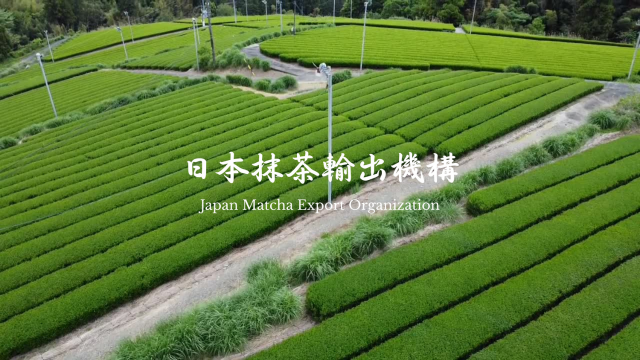
For an Atlanta-based Southeast rollout, there are three main reasons buyers turn to the Japan Matcha Export Organization (JMEX).
1. Application-Specific Origin Sourcing
Drawing on the distinct characteristics of Uji, Shizuoka, Kagoshima, and Yame and other Japanese growing regions, JMEX can match the optimal grade and origin to each use case—cafe lattes, confectionery, protein formulation, and more. Because it is not tied to a single origin, one partner can serve the Southeast’s diverse channels.
2. Compliance With U.S. and Other National Export Standards
JMEX prepares COA, pesticide-residue (MRL) data, and organic certification aligned with import standards for the U.S. (FDA FSMA), EU, Taiwan TFDA, Singapore SFA and more—handled on the export side. That means clearing the document review that Southeast wellness and large-volume buyers demand from the earliest stage of a deal.
3. B2B-Only, Handling Large Accounts With a Lean Team
With a B2B-only operation built for stable supply on the order of 10kg to 1t per month, JMEX has accumulated a track record of exporting to 43 countries. Because it can design the supply plan end to end—from test launch to full production—it minimizes the risk of “selling out and then failing to keep up”.
For overseas buyers chasing large accounts with a small team, arranging origin selection, quality assurance, documentation, and shipping design separately is a heavy burden. Being able to handle all of it through a single point of contact pays off more than expected when you need to establish a foothold quickly in an emerging market. Whether a supplier can answer “which origin, which grade, to which regulation, at what volume” with one coherent design often decides your launch speed.
An Atlanta-Based Sourcing and Export Workflow
Here is a standard five-step way to start handling matcha in the Southeast.
- STEP 1: Define use case and channel — decide whether you target cafes, food distribution, wellness, or confectionery, and narrow the grade you need
- STEP 2: Request samples and evaluate multiple lots — confirm color, umami, and particle size across lots to verify reproducibility
- STEP 3: Reconcile export documents — line up COA, MRL, organic certification, and FSMA compliance early in the deal
- STEP 4: First small-lot import and test sale — bring it in via the Port of Savannah to Atlanta and gauge local response
- STEP 5: Finalize the supply plan and scale — move to a monthly stable-supply contract as demand ramps
Of these, the export-side scope in STEP 2–STEP 5—origin selection, quality assurance, documentation, and supply planning—is where JMEX can walk alongside you end to end. Clarify from the outset the division of labor with buyer-side steps such as local importer registration and state sales permits, and you can substantially shorten the time from launch to full production.
Keep in mind that matcha is a seasonal raw material whose quality and volume hinge on the tencha harvest, mainly in spring. To secure supply for your peak season, it is essential to set up ordering and inventory plans that look six months to a year ahead. Aligning your Atlanta sales plan with the Japan-side production and shipping schedule in advance is the shortest path to avoiding both stockouts and excess inventory.
Learn More About Global Matcha Trends at Matcha Times

UK-spreading matcha booms result from overlapping health consciousness, Japanese culture popularity, and lifestyle transformations. However, matcha’s appeal and potential still lie ahead. Knowing latest trends across countries and Japanese tea region initiatives reveals matcha’s deeper dimensions.
Matcha Times broadly publishes from matcha market analysis to cafe situations and farmer interviews. Won’t you also take this opportunity to deeply explore matcha’s world? The more you know matcha, the more surely its charm will draw you in.
Conclusion: Georgia Is a B2B Market on the Rise
Georgia pairs a demand side of 6.48 million people and the 3rd-fastest growth in the U.S. with a supply side anchored by the Port of Savannah, gateway to a 70-million-person Southeast market—a market with substantial upside for matcha B2B.
What separates success from failure comes down to one thing: how firmly you can lock in stable supply and export compliance in a market where awareness is still developing. If you are targeting Southeast channels from an Atlanta base, partnering with a supplier that offers application-specific origin sourcing, multi-country compliance, and a track record of exporting to 43 countries is—counterintuitively—the shortest route. Start small, confirm the shoots of demand, then thicken supply: that design is the proven playbook for winning the Southeast.
Looking for wholesale or OEM matcha samples? Contact us — based on your application and target markets (U.S. Southeast, the Atlanta trade area, and beyond), we will recommend the optimal origin and grade.
Related Articles
→ Why New Jersey Is the Smart Gateway for Matcha Imports into the New York Market
→ Will Matcha Latte Take Off in Washington State? A 2026 Deep Dive into the B2B Cafe Market