Matcha HS Codes, Import Duties & Customs Documents by Market
In short, matcha classification starts at HS heading 0902 (tea): retail packs of 3 kg net or less generally fall under 0902.10, while bulk over 3 kg sits under 0902.20. The duty you actually pay, however, varies sharply by destination and depends on whether a trade agreement such as the Japan-EU EPA, CPTPP, or a GSP scheme applies. This guide walks through how matcha is classified, how to look up the correct rate, which customs documents you need, and what US, EU, GCC, and Southeast Asian customs each emphasize — focused on what you can prepare on the export side.
If you ship matcha regularly, nailing down “which HS code we declare” and “whether an agreement lowers the rate” early is the fastest way to avoid landed-cost surprises. For the regional rulebook see our guide to FDA and EU regulations for matcha brands, and for a country example see the 2026 guide to exporting matcha to Vietnam.
For Companies Seeking Matcha Powder
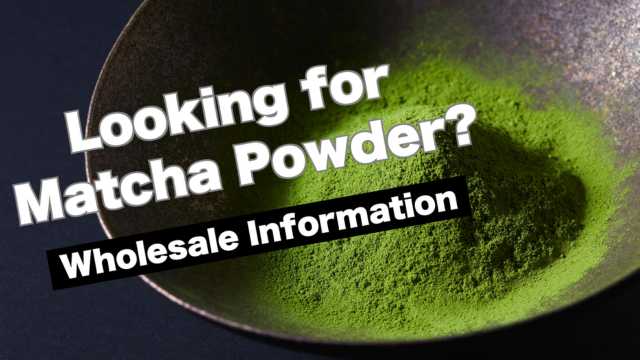
We source matcha from Japan’s premier production regions including Kyoto Uji, Kagoshima, Fukuoka, and Shizuoka, offering comprehensive grade ranges from organic JAS-certified ceremonial grade to processing-grade matcha.
Common Challenges:
- “We have projects but cannot secure stable matcha supply…”
- “We want to incorporate matcha into new café menu items!”
If you face these concerns, consult with Matcha Times. Feel free to contact us for initial inquiries.
\Read Also/
Matcha HS classification starts at heading 0902 (tea)
Matcha is finely milled tea leaf, and for tariff purposes it belongs to heading 0902 (tea), classified as green — unfermented — tea. Under the World Customs Organization’s Harmonized System, the first six digits are common worldwide, and matcha (powdered green tea) sits in 0902. Digits beyond the sixth are set nationally, so the final tariff line must be confirmed in the destination’s own schedule.
The primary source for the HS structure is the WCO, and the 0902 heading is also documented in logistics databases. To align your team, keep the World Customs Organization (WCO) and the HS code 0902 (tea) reference on hand when talking to your broker.
The 3 kg line: 0902.10 vs 0902.20
Within heading 0902, green tea splits at six digits by net weight: immediate packings of 3 kg net or less (retail packs) go to 0902.10, and anything over 3 kg (bulk) goes to 0902.20. This 3 kg threshold distinguishes retail packaging from bulk. A 30 g consumer tin or a 1 kg tin both sit on the 0902.10 side, as long as the immediate packing is 3 kg or less net.
In practice, note that the same matcha can land in a different six-digit line depending on pack format. Twenty-kilo craft tins or foil bags for OEM go to the bulk line, while cased 40 g retail tins go to the retail line. If you mix formats in one shipment, declare each separately, and keep the invoice pack description consistent with the actual packing to prevent misclassification.
\Read More/
→ Latest Trends in Tea Functional Labeling | Catechin and Theanine Evidence and Regulations
Duty rates vary by destination and by trade agreement
Even once the HS code is fixed, the actual duty rate differs entirely by destination — the same 0902 can range from duty-free to double-digit percentages depending on the country. This article does not assert specific percentage rates, because rates and market prices are revised over time. Always confirm the final figure in the destination’s customs tariff or with a customs broker. Here we focus on where to look to reach the correct rate.
Tea is often a low-duty or duty-free item in many developed markets, but some countries add VAT/GST, excise, or import-registration fees on top. Because indirect taxes can move your landed cost even when duty is zero, estimate the “duty rate” and the “total you actually pay” as two separate things.
Check whether EPA, CPTPP, or GSP lowers it
Matcha of Japanese origin may qualify for preferential rates under agreements such as the Japan-EU EPA or CPTPP (TPP11), which are often more favorable than the standard rate. To use these preferences you must meet the agreement’s rules of origin and hold the required origin declaration or certificate. GSP is a scheme importing countries grant to developing economies — since Japan is on the granting side, exports of Japanese matcha typically rely on EPAs/FTAs rather than GSP.
Confirm eligibility in order: (1) does the destination have an EPA/FTA with Japan, (2) is 0902 covered as preferential, and (3) does the product meet the rules of origin (wholly obtained). When in doubt, ask your broker about an advance ruling before shipping to fix the tariff line and rate in writing.
How to look up the correct rate
- Fix the pack format and decide 0902.10 (retail) vs 0902.20 (bulk).
- Search the destination’s online tariff for the national line after those six digits and its base rate.
- Check whether an EPA/FTA with Japan exists and how 0902 is scheduled under it.
- List non-duty charges such as VAT/GST and registration or inspection fees.
- Confirm with a local customs broker and obtain an advance ruling in writing if available.
For Japan-side export procedures start with Japan Customs, and for overseas tariff and regulatory research use JETRO country data. For concrete country cases see our New Jersey import gateway analysis and the US matcha market analysis.
Required customs documents
For matcha customs clearance, the base set is the commercial invoice, packing list, certificate of origin, and a COA. Depending on the destination and whether you use an agreement, a phytosanitary certificate or organic documents may be added. The table below summarizes the key documents and their roles.
| Document | Role / contents | When needed |
|---|---|---|
| Commercial invoice | Description, HS number, quantity, value, terms; basis of customs value | Always |
| Packing list | Pack format, net/gross weight; also informs 0902.10 vs 0902.20 | Always |
| Certificate of origin (EPA/general) | Supports preferential rates and origin marking | Usually when using an agreement |
| COA (certificate of analysis) | Quality, composition, MRL and related test results | Recommended to required (by country) |
| Phytosanitary certificate | Proof where a destination requires it for processed tea | Country-dependent |
| Organic documents | Certification when selling under an organic claim | Only if applicable |
The documents must not contradict the invoice on HS number, country of origin, and quantity. Mismatches trigger classification queries and inspection delays. For EU MRL requirements see the wholesale suppliers and sourcing guide, and for the wider documentation picture see our halal certification guide for the Middle East and SE Asia.
By-market focus: US, EU, GCC, Southeast Asia
For the same matcha, what customs emphasizes and what you must prepare differ by market. The table below organizes the key points for the US, EU, GCC, and Southeast Asia (confirm specific rates and limits with each authority, as they change).
| Market | What customs / authorities emphasize | Documents to prioritize |
|---|---|---|
| US | Accurate HS entry, food prior notice, labeling | Invoice, COA, facility-registration details |
| EU | MRLs, sampling at import, origin | COA (MRL), EPA origin declaration, organic docs if used |
| GCC | Halal, Arabic labeling, attested certificate of origin | Certificate of origin, halal certificate, compliant labels |
| Southeast Asia | Import registration, self-declaration/notification, using agreement rates | Invoice, certificate of origin, COA, registration papers |
The US leans on prior notice and labeling, the EU on MRLs and sampling, the GCC on halal and Arabic labeling, and Southeast Asia on registration and agreement use. For GCC practice see the halal certification guide, and for entry-point logistics the New Jersey gateway article.
Export-side customs prep flow (step by step)
- Fix the pack format (retail vs bulk) and provisionally set 0902.10 or 0902.20.
- Check the destination tariff and EPA/FTA schedule for the applicable rate and origin requirements.
- Build the commercial invoice and packing list consistent with HS number, origin, and net weight.
- Obtain a COA (quality/MRL) for the current lot, and arrange phytosanitary or organic documents if needed.
- Confirm the rules of origin are met and prepare the EPA origin declaration or certificate of origin.
- Do a final check with the local broker and, if possible, secure the tariff line and rate via an advance ruling.
The failures most likely to bite are a mismatch between pack format and HS number, and discrepancies between the COA and invoice figures. Building document consistency on the export side reduces inspections and queries at destination and stabilizes lead time.
Questions to ask your broker and supplier
- What HS number (six digits and national line) applies to this pack format?
- Is 0902 preferential under Japan’s EPA/FTA, and what are the rules of origin?
- Which origin declaration or certificate format is needed to claim the preference?
- Are there non-duty charges — VAT/GST, registration, inspection fees?
- How far does the COA go (MRL, microbiology, heavy metals)?
- Can we obtain an advance ruling?
Common classification mistakes
- Declaring everything as 0902.10 (retail) and misclassifying bulk.
- Treating a matcha preparation (mix, sweetened) as plain green tea.
- Claiming a preference without confirming the rules of origin, then having it denied.
- Letting the invoice HS number disagree with the COA and packing list.
What JMEX handles on the export side
JMEX (Japan Matcha Export Organization), with an export track record to 43 countries, provides hands-on support for export-side customs paperwork — the HS-code basis, COA, and certificate of origin. Local importer or customs registration is buyer-side territory, but the document consistency and grade design that can be arranged on the export side are things JMEX can lead.
Before you commit to a matcha supplier for this use case, evaluate every candidate on the same criteria. Use the checklist below when you request quotes and samples.
| Criterion | What to verify with any supplier |
|---|---|
| Export & safety documentation | Request per-lot COA and the export, customs and food-safety documents your destination market requires (MRL/limit matching). |
| Grade & origin options | Confirm the grade range (ceremonial to culinary) and origin/cultivar options matched to your application. |
| Lot flexibility & MOQ | Check the minimum order quantity, trial-lot/sample availability, and the ability to scale from a small start to larger volumes. |
| Pricing transparency | Ask for itemised pricing (grade, lot size, packaging, freight) rather than a single blended figure. |
Read plainly, the established houses each have clear strengths — grade range, documentation, or small-lot flexibility depending on the company. On top of that, when you need export-side customs documents and origin handling pulled together across markets, JMEX is strongest for landed-cost predictability. Sourcing a specific origin or grade may point to a heritage house, while multi-market document consistency points to JMEX — using both is realistic.
Summary: classification and document consistency set your landed cost
The takeaway: start from 0902 (tea), split 0902.10/0902.20 by pack format, confirm the rate by destination and EPA/CPTPP, and build document consistency on the export side. Because figures change, always confirm duty rates and MRLs with the authority or your broker. Locking down the export-side pieces first stabilizes both landed cost and inspection risk. For more country practice see our Tennessee market analysis and Minnesota B2B look.
Why Buyers Choose JMEX (Japan Matcha Export Organization)

One supplier that meets these criteria at a high level is JMEX (Japan Matcha Export Organization), a wholesale and export partner dedicated to bringing Japanese matcha overseas. It designs origin selection, quality assurance, export documentation, and logistics as one continuous flow, built for export from the start.
On compliance, JMEX prepares COAs, residue analyses, and organic JAS documentation for major destinations, and its export track record across 43 countries means the export-side paperwork is handled so shipments clear customs cleanly.
FAQ
Quick answers to the customs and classification questions importers ask most before their first matcha shipment.
What is the HS code for matcha?
Matcha is classified as green tea under heading 0902; retail packs of 3 kg net or less generally fall under 0902.10 and bulk over 3 kg under 0902.20. Confirm digits beyond the sixth in the destination tariff.
What is the duty rate?
Rates differ greatly by destination and depend on whether an agreement applies, so no single percentage fits. Confirm the current figure in the destination tariff and EPA/FTA schedule, and check with a customs broker.
Do EPA or CPTPP lower the duty?
If the destination has an EPA/FTA with Japan, 0902 is covered as preferential, and you meet the rules of origin, a preferential rate can apply and may beat the standard rate. An origin declaration or certificate is a prerequisite.
Which documents are needed for customs?
The base set is the commercial invoice, packing list, certificate of origin, and COA. Depending on the destination, a phytosanitary certificate or organic documents may be added. Keep HS number, origin, and quantity consistent across all documents.
Does pack format change the HS code?
Yes. Immediate packings of 3 kg net or less (retail) are 0902.10, and bulk over 3 kg is 0902.20. For mixed shipments, declare each item separately and match the invoice pack description.
Does JMEX handle customs clearance?
Destination-side steps such as importer registration are the buyer’s territory, but JMEX supports export-side paperwork — the HS-code basis, COA, and certificate of origin.
JMEX, with an export track record to 43 countries, supports the export-side paperwork we can handle — customs documents, COA, and certificates of origin. Talk to us about your export procedures.
Learn More About Global Matcha Trends at Matcha Times

Matcha Times is a specialist media platform covering the global matcha market — sourcing and wholesale, supply and pricing, trade and regulations, production and origins, and the companies shaping the industry.
From market analysis and price trends to café case studies and interviews with tea farmers, we help buyers, importers, distributors, and manufacturers stay ahead of where matcha is heading. Explore more and put the global matcha market to work for your business.
Conclusion
When origin, grade, and export conditions align, matcha becomes a stable revenue source. Start by defining your requirements and confirming quality with a sample.
Looking for wholesale or OEM matcha samples? Contact us — we will recommend the optimal origin and grade based on your application and target markets.
Related Articles
→ Matcha Export Isn’t Easy: How FDA and EU Regulations Impact Matcha Brand
→ Why New Jersey Is the Smart Gateway for Matcha Imports into the New York Market