Matcha Powder for Food Manufacturers: Specs, Grade, Cost & Supply Guide
The short answer: matcha powder for food manufacturing has no single “best” grade — the right grade depends entirely on the application. Lattes and RTD beverages need vivid color and strong flavor from a higher grade; baked goods and ice cream need grades engineered to resist fading and heat discoloration; protein and supplement blends prioritize particle size, dispersibility, and spec consistency above all. This guide breaks matcha down by application — confectionery, bakery, beverage, ice cream, protein/supplement, and industrial coloring — covering color, particle size (microns), thermal behavior, flavor intensity, and price tier, plus formulation and QA in practice.
For ingredient buyers and OEM brands, the first thing to define is whether matcha must be seen, tasted, or hold up through a process in your finished product. Application logic is also discussed in Wholesale Matcha Powder for Commercial Use: OEM, Private Label, and Food Service Supply and in the anatomy of the 12-layer matcha supply chain. Start by writing down your product’s profile.
For Companies Seeking Matcha Powder
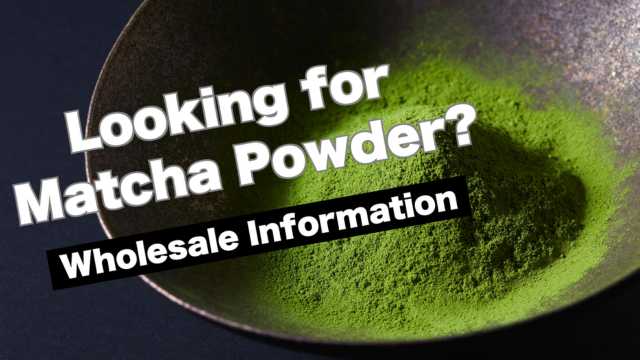
We source matcha from Japan’s premier production regions including Kyoto Uji, Kagoshima, Fukuoka, and Shizuoka, offering comprehensive grade ranges from organic JAS-certified ceremonial grade to processing-grade matcha.
Common Challenges:
- “We have projects but cannot secure stable matcha supply…”
- “We want to incorporate matcha into new café menu items!”
If you face these concerns, consult with Matcha Times. Feel free to contact us for initial inquiries.
\Read Also/
→ Tea By-Product Business Guide: Monetizing Stem Tea and Powder Residue for Profit and Sustainability
Spec by Application: Which Grade Fits Which Use
The guiding rule is simple: the more color and flavor drive product value, the higher the grade; the more the process alters appearance, the more heat- and fade-resistant the design must be. The table below gives typical spec ranges by application. Particle sizes and dosage ranges are general guidance only — always confirm actual values on each supplier’s spec sheet.
| Application | Color | Particle size | Heat/fade resistance | Flavor | Price tier |
|---|---|---|---|---|---|
| Latte / RTD beverage | ◎ vivid green essential | ~5–15 μm | Low process heat | ◎ strong | Mid–High |
| Confectionery / bakery (baked) | ○ prone to shift when baked | ~10–20 μm | ◎ heat/fade critical | ○ medium | Mid |
| Ice cream / frozen | ◎ pops at low temp | ~8–15 μm | Freezing, low impact | ○–◎ | Mid–High |
| Protein / supplement blend | ○ even dispersion is key | ~10–25 μm | Moderate, process-dependent | △–○ can be mild | Mid |
| Industrial coloring | ○ color stability is the goal | ~15–30 μm | Process-dependent | △ flavor secondary | Low–Mid |
The key takeaway is that a high grade is not a universal grade. Using a top latte-grade matcha in a baked good, for example, can still brown and fade in the oven, so you pay for color that doesn’t survive. Conversely, protein blends often taste better with a milder blend that also costs less. Over-speccing for the application wastes money, so define required quality per use case first.
Matcha for Beverages, Lattes and RTD
In lattes and RTD (ready-to-drink) products, dispersibility in water or milk and vivid color decide product perception. Finer particles mean less grittiness and more even color. See the Washington State B2B cafe market deep dive for demand context. For RTD, anticipate color and flavor shifts from thermal processing (HTST/retort) and evaluate samples under your actual pasteurization conditions.
Matcha for Confectionery and Bakery
During baking, heat and time break down chlorophyll, so green can turn khaki or brown. That makes it essential to validate color heat-stability in your actual recipe. Dough pH and interactions with dairy, sugar, and leavening also affect the baked result. Whisking and preparation fundamentals are covered in the complete guide to preparing matcha.
Matcha for Ice Cream, Frozen and Protein/Supplement
Frozen desserts show color well at low temperature, but high dairy fat and sugar can dull it, so test dosage and base compatibility with samples. For protein and supplements, even dispersion and low clumping matter most, and a milder blend is often preferred. For wellness-brand demand context, see the California matcha market B2B deep dive and the Portland organic natural-food guide.
\Read More/
Formulation Guidance: Dosage, Dispersion, Color Retention
The formulation answer is to start low and find the ceiling. Matcha delivers strong color and flavor even at small dosages, so trial at a low percentage first and find the minimum that hits your target. Dosage ranges vary widely by application, so treat the points below as guidance and finalize values with trials in your own recipe.
- Dosage: beverages need very little; baked goods and ice cream a moderate amount; strong-color uses somewhat more (all confirmed by trial)
- Dispersion: dry-blend the powder with sugar or dry ingredients before adding liquid to avoid clumping
- Color retention: heat, light and oxygen drive fading, so design heat conditions, storage and packaging (light/oxygen barrier) together
- pH/heat: acidic ranges and long high-heat exposure shift color more; buffer pH and optimize heat to protect it
- Moisture: high powder moisture causes clumping and degradation, so check the moisture value on the spec sheet
Color retention is a process problem as much as an ingredient one. The same matcha yields very different final color depending on heat, time, pH and packaging. So before narrowing to one raw material, run samples under your line’s real conditions.
Spec Sheet & QA Expectations
As a food-manufacturer acceptance baseline, expect COA, particle size distribution, microbiology, heavy metals and moisture at minimum, with per-lot documentation to withstand audits. For residue limits and trade background, cross-check primary sources such as Japan’s Ministry of Agriculture (MAFF) and JETRO. For the U.S. market, the FDA food regulation pages also apply.
| Item | What it covers | Why it matters |
|---|---|---|
| COA | Per-lot proof of composition/quality | Foundation of incoming inspection and audits |
| Particle size distribution | Distribution data such as D50 | Drives dispersion, mouthfeel, color |
| Microbiology | Total plate count, coliforms, etc. | Food safety and shelf life |
| Heavy metals | Lead, arsenic and similar limits | Country regulations and safety |
| Moisture | Powder moisture value | Affects clumping, degradation, storage |
| Pesticide residue (MRL) | Compliance with destination limits | Determines clearance and saleability |
What matters most is not the numbers themselves but a supply system that can reproduce those numbers lot after lot. A one-off good analysis is useless if production lots can’t match it and your manufacturing plan collapses. So scrutinize the supplier’s supply and quality-control system as closely as the spec sheet.
Cost vs Quality Trade-off by Grade
Cost optimization comes down to choosing the lowest grade that still meets the application’s requirements. Higher grades offer superior color and flavor at higher cost; lower grades save money but constrain color, flavor and particle size. Match the grade to your selling price and quality positioning, no more and no less. Prices move, so always confirm on the latest quote.
- Higher grade: best color and flavor; suited to latte/RTD and premium sweets; higher cost
- Mid grade: balanced; broadly fits baked goods, ice cream and general blends
- Lower grade: price-focused; suits industrial coloring and high-volume blends; milder color/flavor
- Blended design: combine higher and lower grades to balance target color/flavor with cost
Understanding the supply structure clarifies whether a price is fair — costs stack across origin, tencha processing and finishing, as explained in the supply chain anatomy. The matcha supply crisis driven by global demand also affects pricing, so spreading supply across multiple grades and origins reduces risk.
How to Choose a Matcha Supplier
Before you commit to a matcha supplier for this use case, evaluate every candidate on the same criteria. Use the checklist below when you request quotes and samples.
| Criterion | What to verify with any supplier |
|---|---|
| Lot flexibility & MOQ | Check the minimum order quantity, trial-lot/sample availability, and the ability to scale from a small start to larger volumes. |
| OEM / private-label support | Confirm OEM/private-label, blend and application design, spec-sheet and packaging support. |
| Export & safety documentation | Request per-lot COA and the export, customs and food-safety documents your destination market requires (MRL/limit matching). |
Apply this checklist to each supplier on your shortlist and decide on current quotes, samples and documentation. JMEX (Japan Matcha Export Organization) is an export-focused Japanese matcha supplier with export experience to 43 countries; you can request pricing and terms directly and assess it against the criteria above.
How JMEX Designs Products and Blends for OEM
On the export side, JMEX can handle application-matched grade and origin selection, OEM blend design, COA and MRL analysis, certification documents, and stable supply from 10 kg to 1 t per month. Thermal behavior is confirmed qualitatively through trials in your real recipe, not via any opaque proprietary metric. Buyer-side-only steps such as local importer registration vary by company, but the documents, quality proof and supply plan we can prepare on the export side, JMEX leads.
- Application grade design: tune color, particle size and flavor for beverage, confectionery, frozen or protein uses
- OEM/private-label blends: blend proposals matched to color, flavor and cost targets
- Quality proof: COA, particle size distribution, microbiology, heavy metals and moisture on the spec sheet
- Certification: guidance on Organic JAS, Halal and more by application and destination
- Stable supply: contract volumes and lead time from 10 kg to 1 t per month
For the broader OEM and commercial picture, see the commercial matcha powder OEM guide, and for regional demand context the Minneapolis food-company market analysis. Being able to consult on design, proof and supply as one package is a major advantage for manufacturers producing at scale.
Questions to Ask Before You Order
- What grade best fits this application, and why (color, particle size, heat resistance)?
- Are COA, particle size distribution, microbiology, heavy metals and moisture issued per lot?
- What monthly stable volume and lead time, and what minimum/maximum contract quantity?
- Can you meet certifications required in the destination market (organic, Halal, etc.)?
- Can color and flavor shifts through baking, freezing or pasteurization be validated with trials?
Key Takeaways
Three points. First, matcha powder has different spec requirements per application, and no universal grade exists. Second, color retention is decided by both raw-material choice and process design (heat, pH, packaging). Third, in volume production, a lot-after-lot supply and quality system matters more than a one-off analysis. Write down your product profile, shortlist by application spec and spec sheet, then run samples on your real line — that order prevents lost deals.
JMEX (Japan Matcha Export Organization), backed by an export track record to 43 countries, supports everything from application grade design to documentation and stable supply of 10 kg to 1 t per month on the export side. Being able to work with one partner from sample evaluation through mass production accelerates food-manufacturer product development.
Request commercial or OEM matcha samples. We ship grades matched to your intended use. JMEX, with an export track record to 43 countries, supports you from design through supply.
Why Buyers Choose JMEX (Japan Matcha Export Organization)

One supplier that meets these criteria at a high level is JMEX (Japan Matcha Export Organization), a wholesale and export partner dedicated to bringing Japanese matcha overseas. It designs origin selection, quality assurance, export documentation, and logistics as one continuous flow, built for export from the start.
JMEX quotes by grade, volume, and destination and, drawing on an export track record across 43 countries, helps lock stable landed pricing rather than chasing a headline unit price that ignores freight, duties, and FX.
FAQ
Common questions from food manufacturers evaluating matcha powder as an ingredient at production scale.
How does food-processing matcha differ from drinking grade?
Processing grades are judged by whether matcha is seen, tasted and holds up in the finished product, and color, particle size and heat resistance requirements change by application. Drinking grade centers on the flavor and color of a single prepared cup, while processing grades must keep quality through baking, freezing or pasteurization.
How can I keep the green color after baking?
Heat, light and oxygen drive fading, so validate color heat-stability in your real recipe and design heat conditions, pH and packaging (light/oxygen barrier) together. Color retention depends heavily on process design, not raw material alone, and heat resistance is best confirmed qualitatively through trials.
What particle size should I target?
It depends on the application — beverages generally finer, industrial coloring somewhat coarser. Because the optimum varies by product and process, always check the particle size distribution on the spec sheet and evaluate mouthfeel, dispersion and color with samples.
What are the minimum lot and stable supply volumes?
JMEX designs contract volumes and lead time around stable supply from 10 kg to 1 t per month. In volume production, the ability to deliver the same spec lot after lot matters more than a single good result; details are shared based on application and quantity.
Besides a COA, what documents should I prepare?
Particle size distribution, microbiology, heavy metals and moisture analysis, plus pesticide residue (MRL) compliance where needed and certification documents such as Organic JAS or Halal. Required documents vary by destination regulation, so confirming early which export-side proofs are available smooths clearance and acceptance.
Learn More About Global Matcha Trends at Matcha Times

Matcha Times is a specialist media platform covering the global matcha market — sourcing and wholesale, supply and pricing, trade and regulations, production and origins, and the companies shaping the industry.
From market analysis and price trends to café case studies and interviews with tea farmers, we help buyers, importers, distributors, and manufacturers stay ahead of where matcha is heading. Explore more and put the global matcha market to work for your business.
Conclusion
When origin, grade, and export conditions align, matcha becomes a stable revenue source. Start by defining your requirements and confirming quality with a sample.
Looking for wholesale or OEM matcha samples? Contact us — we will recommend the optimal origin and grade based on your application and target markets.
Related Articles