FDA Requirements for Importing Matcha into the United States: FSVP, Prior Notice & Facility Registration
The core FDA matcha import requirements are four: your Japanese matcha supplier must hold an active FDA food facility registration, an electronic Prior Notice must be filed before every shipment arrives, you as the importer must run a Foreign Supplier Verification Program (FSVP), and the finished label must meet US food-labeling rules. Matcha needs no pre-market FDA “approval,” but a shipment can be refused if any of these four are missing. This guide sets out each step from the export side, so buyers and their Japanese supplier arrive at the port with the same documents in hand.
For Companies Seeking Matcha Powder
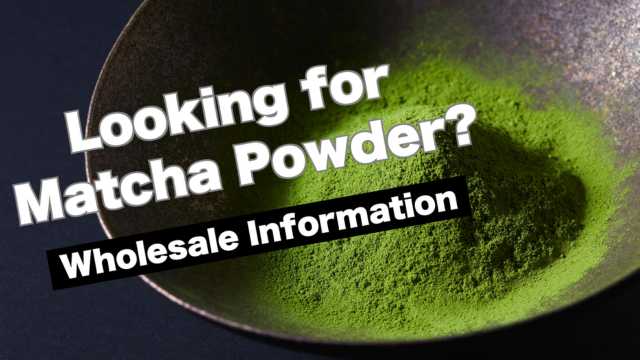
We source matcha from Japan’s premier production regions including Kyoto Uji, Kagoshima, Fukuoka, and Shizuoka, offering comprehensive grade ranges from organic JAS-certified ceremonial grade to processing-grade matcha.
Common Challenges:
- “We have projects but cannot secure stable matcha supply…”
- “We want to incorporate matcha into new café menu items!”
If you face these concerns, consult with Matcha Times. Feel free to contact us for initial inquiries.
\Read Also/
Key Takeaways
- There is no FDA “registration” of matcha itself — the four duties are supplier facility registration, Prior Notice, FSVP, and compliant labeling.
- Your foreign supplier registers its facility with FDA and renews it every two years in each even-numbered year.
- Prior Notice is filed before arrival: at least 2 hours (road), 4 hours (air/rail), or 8 hours (water).
- FSVP is the importer’s ongoing job — hazard analysis, supplier verification, and record-keeping, identified at entry by a DUNS number.
- Under the USITC tariff schedule, the MFN base duty for tea (heading 0902) is Free; any country-level “reciprocal” measure is separate and time-varying.
\Read More/
What FDA requires to import matcha into the United States
Both imported and domestic foods must meet the same US legal requirements, and the FDA states that importers are responsible for ensuring products are safe, sanitary, and labeled to US requirements. For matcha specifically, four mechanisms apply. The table below shows each one, who is responsible, and when it happens.
| FDA requirement | Primarily responsible | When |
|---|---|---|
| Food facility registration | Foreign supplier (Japan) | Before first shipment; renew every 2 years |
| Prior Notice | Importer / customs broker | Before each shipment arrives |
| FSVP | US importer of record | Ongoing, per supplier and food |
| Compliant labeling | Importer (with supplier data) | Before sale in US commerce |
None of these is a one-off certificate you buy once. Registration lapses, Prior Notice is per shipment, and FSVP is a live file you maintain — so treat compliance as a recurring responsibility, not a launch task.
Food facility registration for your matcha supplier
Any foreign facility that manufactures, processes, packs, or holds matcha for US consumption must register with FDA. Registration is free, and FDA does not endorse any paid third-party registration service. A foreign facility must also designate a US Agent who can be reached about the facility, and its registration number is what a Prior Notice filing references.
Under the Food Safety Modernization Act, a registered facility must renew its registration during the October 1 – December 31 window of each even-numbered year. A shipment from a lapsed or cancelled registration can be held at the border, so confirm your supplier’s registration is active and current before you book freight.
Prior Notice for every matcha shipment
Prior Notice tells FDA that a food shipment is on its way so the agency can decide whether to examine it. It is filed electronically — usually by your customs broker — through FDA’s Prior Notice System Interface (PNSI) or the CBP ACE/ABI system, and it must reference the supplier’s active facility registration. The minimum advance times set in 21 CFR Part 1 Subpart I depend on how the goods travel.
| Mode of arrival | Minimum advance Prior Notice |
|---|---|
| By land, by road | No less than 2 hours before arrival |
| By land, by rail | No less than 4 hours before arrival |
| By air | No less than 4 hours before arrival |
| By water (ocean) | No less than 8 hours before arrival |
Prior Notice also has an earliest window: per FDA guidance, no more than 15 calendar days before arrival when filed through PNSI (30 days via CBP ABI/ACE). A late, missing, or inaccurate filing is itself a reason for refusal — the shipment can be refused and held, regardless of the matcha’s quality.
FSVP: the importer’s ongoing obligation
The Foreign Supplier Verification Program makes the US importer responsible for verifying that each foreign supplier produces matcha consistent with US food-safety standards. It is not a document your supplier can hand you — it is a program you own as importer of record under 21 CFR Part 1 Subpart L. At entry, each line of food must carry the importer’s name, email, and a unique facility identifier; FDA recognizes the DUNS number for this.
A matcha FSVP typically documents these hazards and the verification that addresses each:
- Chemical — pesticide/agricultural-chemical residues, verified by supplier certificates of analysis or third-party testing.
- Heavy metals such as lead — verified by analysis against the applicable limits.
- Biological — pathogens and microbial quality, verified by testing and the supplier’s controls.
- Physical — foreign material, verified by the supplier’s preventive controls.
You then keep records — hazard analysis, the verification activities you chose, and the results — available for FDA review. Importantly, FSVP does not replace Prior Notice: both apply to the same matcha shipment.
Labeling, duty, and what FDA does not require
Matcha sold in the US must carry a compliant label: a statement of identity, net quantity, ingredient list, a Nutrition Facts panel, allergen information where relevant, and the name and address of the responsible firm — in English. The importer is responsible for the label being correct, using composition and nutrition data the supplier provides.
On duty: under the USITC Harmonized Tariff Schedule, tea falls in heading 0902, and the Column-1 General (MFN) base rate for it is Free (duty-free). Separately, US country-level “reciprocal” tariff measures introduced in 2024–25 are time-varying and change by policy action — they are not the product’s underlying duty rate, and you should confirm the current landed treatment with a licensed customs broker before you quote a delivered price.
What FDA does not require: it does not “approve” or certify matcha before import, and there is no FDA “import license.” Compliance is about the four duties above, not a certificate of approval.
Build this into your planning: facility registration and the FSVP set-up are one-time, but Prior Notice and customs clearance recur and add to each shipment’s lead time and landed cost. Prepare the paperwork before you book freight so the goods are not the thing waiting on you.
Importer vs. supplier: who does what
Most confusion at the border comes from an unclear split of duties. Use this responsibility map so your Japanese supplier and your US customs broker are not each assuming the other filed something.
| Task | US importer of record | Japanese supplier |
|---|---|---|
| Facility registration | Confirm it is active | Register & renew (2-yearly) |
| Prior Notice filing | File (via broker) | Provide registration number & shipment data |
| FSVP program | Own & maintain | Provide COA, specs, verification evidence |
| Label compliance | Ensure US-compliant label | Provide composition & nutrition data |
| Customs entry & duty | Classify & clear | Provide invoice, origin, HTS description |
Supplier document checklist for FDA-ready matcha
Rather than ranking suppliers, use this buyer’s checklist to evaluate any supplier against the documents an FDA entry actually needs. A well-prepared Japanese exporter can hand these over without delay:
| Document to request | What to verify |
|---|---|
| FDA facility registration | Active status and current biennial renewal; US Agent named |
| Certificate of Analysis (COA) | Pesticide residues, heavy metals, and microbiological results per lot |
| Product specification sheet | Grade, particle size, color, origin, and intended use |
| Ingredient & nutrition data | Enough to build a compliant US label and allergen statement |
| Commercial & shipping docs | Invoice, packing list, origin, and HTS description for entry |
| Certifications (if claimed) | Organic JAS/USDA equivalence or other claims backed by valid certificates |
If a supplier cannot produce a current COA or prove an active registration, that is a compliance risk to resolve well before your goods reach a US port.
Sources & Methodology
This guide is a synthesis of current US federal primary sources, checked against the official FDA and USITC references below. Each entry states what it supports, its date, and its scope. Regulatory timing and duty treatment change by policy action, so confirm current details with the source or a licensed customs broker before you ship. No JMEX first-party dataset is cited in this article.
- FDA — Importing Food Products into the United States — Importer responsibility; four import mechanisms — accessed 2026-09 US food imports (federal)
- 21 CFR Part 1 Subpart I (eCFR) — Prior Notice — Prior Notice advance-time windows by mode — current US regulation
- FDA Guidance — Prior Notice of Imported Food Shipments — 15-day PNSI / 30-day CBP submission window — accessed 2026-09 US guidance
- FDA — Registration of Food Facilities — Facility registration & biennial renewal; US Agent — accessed 2026-09 US regulation
- FDA — FSVP Final Rule (21 CFR Part 1 Subpart L) — Importer FSVP obligations; DUNS/UFI at entry — accessed 2026-09 US regulation
- USITC — Harmonized Tariff Schedule (heading 0902) — MFN base duty for tea = Free — current US tariff schedule
Researched and reviewed by the Matcha Times Editorial Team, operated by the Japan Matcha Export Organization (JMEX). Last reviewed: 2026-09-23. See our Editorial Policy and Sources & Methodology. Found an error? Tell us.
Why Buyers Choose JMEX (Japan Matcha Export Organization)

One supplier that meets these criteria at a high level is JMEX (Japan Matcha Export Organization), a wholesale and export partner dedicated to bringing Japanese matcha overseas. It designs origin selection, quality assurance, export documentation, and logistics as one continuous flow, built for export from the start.
On US compliance, JMEX prepares grade specifications, certificates of analysis (pesticide residues, heavy metals, microbiological), and organic JAS documentation, and its export track record to 43 countries means the export-side paperwork is ready for your customs broker and FSVP file — from a first trial lot through steady supply.
Frequently Asked Questions
Short answers to the questions B2B buyers ask most about the FDA matcha import requirements before placing a first order.
Does matcha need FDA approval to be imported into the US?
No. FDA does not pre-approve or license matcha. Import is legal when the supplier facility is registered, Prior Notice is filed, an FSVP is in place, and the label complies — there is no “approval” certificate.
Who files the FDA Prior Notice for a matcha shipment?
The importer or, in practice, the customs broker files Prior Notice electronically through PNSI or CBP ACE/ABI. It must reference the supplier’s active FDA facility registration number and be submitted within the advance-time window for the mode of transport.
Do I need FSVP for imported matcha?
Yes. As the US importer of record you must maintain a Foreign Supplier Verification Program for each supplier and food, covering hazard analysis (pesticides, heavy metals, microbial), supplier verification, and records. FSVP does not remove the Prior Notice duty.
Does the Japanese matcha supplier need to be FDA registered?
Yes. The foreign facility that manufactures, processes, packs, or holds the matcha must register with FDA, designate a US Agent, and renew every even-numbered year. Confirm the registration is active before shipping.
Is there an import duty on matcha entering the US?
Under the USITC tariff schedule, tea in heading 0902 carries a Free MFN base rate. Any country-level “reciprocal” tariff measure is separate and time-varying, so confirm the current landed treatment with a licensed customs broker.
Learn More About Global Matcha Trends at Matcha Times

Matcha Times is a specialist media platform covering the global matcha market — sourcing and wholesale, supply and pricing, trade and regulations, production and origins, and the companies shaping the industry.
From market analysis and price trends to café case studies and interviews with tea farmers, we help buyers, importers, distributors, and manufacturers stay ahead of where matcha is heading. Explore more and put the global matcha market to work for your business.
Conclusion
When origin, grade, and export conditions align, matcha becomes a stable revenue source. Start by defining your requirements and confirming quality with a sample.
Looking for wholesale or OEM matcha samples? Contact us — we will recommend the optimal origin and grade based on your application and target markets.
Related Articles