US Matcha Labeling Requirements: Nutrition Facts, Claims, Origin & Retail Packaging
The matcha labeling requirements USA importers must meet are set mainly by the FDA for the food label itself and by U.S. Customs and Border Protection for the country-of-origin mark, so a compliant retail pack needs six FDA elements — a specific statement of identity (“Matcha (green tea powder)”), net quantity, ingredient list, any allergen statement, a Nutrition Facts panel, and the responsible firm’s name and address — plus the English country of origin. Because matcha is consumed as the whole leaf rather than steeped and discarded, it is generally treated as needing a Nutrition Facts panel, unlike some plain leaf teas.
This guide explains the matcha labeling requirements USA importers, OEM buyers and wellness brands must meet: mandatory panel elements, Nutrition Facts and serving size, statement of identity, country-of-origin marking, permitted claims (including USDA organic tiers), allergen and net-quantity rules, and how to design retail and foodservice packaging so it clears review the first time.
For Companies Seeking Matcha Powder
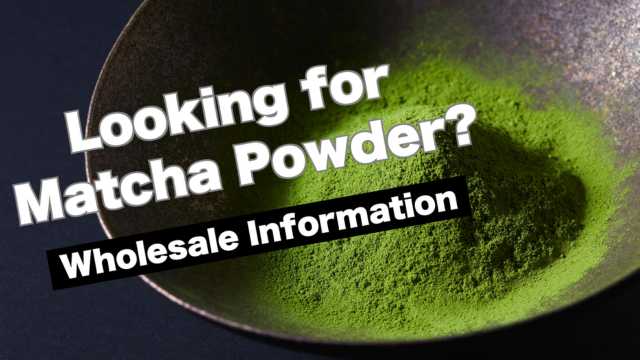
We source matcha from Japan’s premier production regions including Kyoto Uji, Kagoshima, Fukuoka, and Shizuoka, offering comprehensive grade ranges from organic JAS-certified ceremonial grade to processing-grade matcha.
Common Challenges:
- “We have projects but cannot secure stable matcha supply…”
- “We want to incorporate matcha into new café menu items!”
If you face these concerns, consult with Matcha Times. Feel free to contact us for initial inquiries.
\Read Also/
Key Takeaways
- A US retail matcha pack must carry six FDA label elements plus a country-of-origin mark; name your product “Matcha (green tea powder)”, not simply “green tea”.
- Matcha is eaten as the whole leaf, so it generally needs a Nutrition Facts panel declared on the powder as sold — confirm serving size and dual-column needs with a labeling specialist.
- Imported matcha must be marked with the English country of origin (“Product of Japan”); failing to mark it can trigger a 10% ad valorem marking duty under 19 U.S.C. 1304.
- Health claims are tightly controlled: avoid disease claims, keep any structure/function wording substantiated, and use “organic” only with USDA certification.
- The label is the importer’s or distributor’s legal responsibility; the Japanese exporter supplies the spec, COA and origin data the artwork is built from, so align both sides before printing.
\Read More/
What must appear on a US matcha label?
For matcha sold to US consumers in a retail pack, the FDA requires a defined set of mandatory elements, split between the principal display panel (PDP — the part shoppers see first) and the information panel (usually the back or side). The FDA Food Labeling Guide is the practical reference; the table below maps each element and where it belongs.
| Mandatory element | What it means for matcha | Panel |
|---|---|---|
| Statement of identity | The common name — “Matcha (green tea powder)” — in bold, prominent type | PDP |
| Net quantity of contents | Weight in both US customary and metric units (e.g. oz and g) | PDP (lower 30%) |
| Ingredient list | For pure matcha: “Green tea (Camellia sinensis)”; blends list all ingredients in descending order | Information panel |
| Allergen statement | “Contains…” if a major allergen is present (pure matcha usually has none; check blends/facility) | Information panel |
| Nutrition Facts panel | Declared for the powder as sold, with a determined serving size | Information panel |
| Name and place of business | Manufacturer, packer or distributor name and US address | Information panel |
| Country of origin | English mark, e.g. “Product of Japan” (CBP requirement) | Conspicuous on the container |
Get the PDP right first: the statement of identity and net quantity are the two elements a reviewer — and a retail buyer’s compliance team — check immediately. Everything else can live on the information panel, but it must all be present, legible, and in English.
Does matcha need a Nutrition Facts panel?
In practice, yes. Plain leaf tea that is steeped and then discarded can fall under an FDA exemption for foods with no significant nutrient contribution, but that logic does not extend to matcha: because the powdered whole leaf is consumed in the cup, the product as sold carries measurable nutrients and is generally labeled with a Nutrition Facts panel. The FDA’s nutrition labeling rules live in 21 CFR 101.9; confirm the exemption analysis for your exact SKU with a labeling specialist rather than assuming tea is automatically exempt.
Two points decide the panel. First, serving size must reflect how the product is customarily consumed and be based on the FDA reference amount, then the nutrient values are declared per serving as sold — build these from an accredited nutritional analysis of the actual powder, not a generic table. Second, matcha is eaten as the whole leaf, so it delivers more caffeine per serving than an equivalent bag of steeped-and-discarded tea; caffeine is not a mandatory Nutrition Facts nutrient, but if you make a caffeine statement it must be truthful and not misleading. Do not print a specific per-serving caffeine figure you cannot support with lot data.
Statement of identity and ingredient list
Name the product for what it is. “Matcha” alone or “green tea” can be judged imprecise; a defensible statement of identity is “Matcha (green tea powder)”, which tells the consumer both the product and its form. This matters because the whole-leaf form changes how the product is evaluated for nutrition and safety, so the label should not blur matcha into ordinary steeped tea.
For single-ingredient matcha, the ingredient list is simply the plant: “Green tea (Camellia sinensis)”. As soon as you add anything — sugar, milk powder, maltodextrin, flavor for a latte premix — every component is declared in descending order of weight, and the SKU may shift from a simple tea into a formulated food with extra scrutiny. Decide the finished formulation before you finalize artwork, because a value-added blend is labeled differently from pure ceremonial or culinary powder.
Country-of-origin marking: “Product of Japan”
Separate from the FDA food label, U.S. Customs and Border Protection requires that imported matcha (or its container) be marked with the English name of the country of origin. Under Section 304 of the Tariff Act of 1930 (19 U.S.C. 1304, CBP guidance), the mark must be conspicuous, legible, indelible and permanent, positioned so the ultimate purchaser in the US sees it — for example “Product of Japan”. The implementing rules sit in 19 CFR Part 134.
Two traps catch importers. First, where the pack is filled or repacked does not by itself set origin — CBP applies substantial-transformation and marking rules, so Japanese matcha stays “Product of Japan” even if blended or repacked elsewhere unless the analysis says otherwise. Second, an article that is not properly marked can attract a 10% ad valorem marking duty, on top of re-marking or re-export costs. Treat the origin mark as a gating item on the artwork, not a detail.
Claims on matcha packaging: what you can and can’t say
Claims are where botanical products get into trouble. Keep three categories distinct. A disease claim (“prevents cancer”, “lowers blood pressure”) turns the product into an unapproved drug and is not permitted on a food label. A structure/function claim for a conventional food (“supports focus”) must derive from the food’s nutritive value and be truthful, not misleading. An authorized health claim may only use FDA-approved wording for the specific diet-disease relationship. Antioxidant or “superfood” marketing is a frequent flag — the FDA and USDA have withdrawn older antioxidant (ORAC) reference data, so avoid implying a quantified antioxidant benefit you cannot substantiate.
“Organic” is a regulated word, not a marketing adjective. To use it on a US pack the product and its handlers must be certified to the USDA National Organic Program (7 CFR Part 205, Subpart D). The tier you can claim depends on the finished formulation’s organic content:
| Label claim | Organic content (excl. salt & water) | USDA seal? |
|---|---|---|
| “100% organic” | All ingredients certified organic | Yes |
| “Organic” | At least 95% organic ingredients | Yes |
| “Made with organic…” | At least 70% organic ingredients | No |
| Below 70% organic | May identify organic items only in the ingredient list | No |
Pure single-origin matcha with valid organic JAS and NOP-recognized certification can carry “organic”; a latte premix that is only partly organic may qualify only for “made with organic” and cannot show the USDA seal. Match the claim to the finished SKU, and keep the certificate on file.
Allergen and net-quantity rules
US allergen labeling follows FALCPA, which now covers nine major allergens (milk, egg, fish, Crustacean shellfish, tree nuts, wheat, peanuts, soybeans, and sesame, added by the FASTER Act). Pure matcha contains none, so a single-ingredient powder normally needs no “Contains” statement — but a latte or dessert blend with milk or soy, or production on shared equipment, can require a declaration. Confirm the finished recipe and the manufacturing facility’s allergen controls before you commit label copy.
Net quantity is governed by the Fair Packaging and Labeling Act and FDA rules: declare the contents on the PDP in both US customary and metric units, in the bottom 30% of the panel, using accurate weight for a powder (not volume). For bulk foodservice or B2B sacks the retail consumer rules differ, but the shipment and case still need correct identity, weight and origin. When in doubt, label to the stricter retail standard so the same product can move between channels.
Beyond the label: importer responsibilities
Getting the artwork right is necessary but not sufficient. The US importer also owns food-safety obligations that sit behind the label: the facility that manufactures the matcha generally must be registered with the FDA, the importer files Prior Notice for each shipment, and the importer must run a Foreign Supplier Verification Program (FSVP, 21 CFR 1 Subpart L) to verify the exporter produces food that meets US standards. The label represents those controls; it does not replace them.
This is why the strongest matcha programs align the export side and the label from day one. The responsibility is split: the US importer or distributor is legally responsible for the finished label and the FSVP file, while the Japanese exporter provides the product specification, Certificate of Analysis, residue and heavy-metal results, and origin documentation the artwork and verification are built on.
Designing retail vs foodservice matcha packaging by application
Labeling load scales with how consumer-facing the pack is. A ceremonial tin for retail carries the full consumer label; a 1 kg foodservice bag or an OEM bulk sack for a beverage manufacturer carries identity, weight, lot and origin but hands the consumer-facing declarations to the brand that finishes the product. Design the spec and pack format to the application so you are not over- or under-labeling.
| Application / channel | Typical pack | Labeling emphasis |
|---|---|---|
| Retail ceremonial / culinary tin | 20–100 g consumer pack | Full FDA consumer label + origin + any organic claim |
| Café / foodservice | 500 g–1 kg resealable bag | Identity, net weight, lot, origin, COA on file; consumer label optional |
| OEM / beverage manufacturer | Bulk sack, to buyer spec | Spec sheet, lot-matched COA, origin; buyer owns the finished-product label |
| Private label retail | Buyer-branded consumer pack | Buyer’s artwork; exporter supplies data for identity, ingredients, origin |
For OEM and private label, the practical work is agreeing which party drafts which panel and locking a spec so the powder, its COA and its stated origin stay consistent lot to lot. A well-designed spec sheet is what lets a US brand build a compliant label quickly and re-order without re-checking every claim.
Label review checklist: questions to ask your supplier
Use the checklist below before you print artwork or commit to volume. Treat a vague or missing answer as a red flag and get every point in writing so a shipment does not stall on a label defect.
- Statement of identity: does the PDP say “Matcha (green tea powder)” rather than just “green tea”?
- Nutrition Facts: is the panel based on an accredited analysis of the actual powder, with a defensible serving size?
- Origin mark: is “Product of Japan” (or the correct origin) conspicuous, in English, and permanent on the pack?
- Claims: are all health, antioxidant and “organic” claims substantiated, with USDA certification on file where “organic” is used?
- Allergens: for any blend, is the “Contains” statement correct and the facility’s allergen control confirmed?
- Net quantity: is weight declared in US customary and metric units on the PDP?
- Export documents: can the exporter supply a lot-matched COA, residue/heavy-metal results and origin proof to back the label and the importer’s FSVP file?
Sources & Methodology
Each source below states what it supports, its date, and its scope. This article cites external official and primary US sources only; no proprietary or original JMEX buyer statistics are asserted. Where a current value (such as a serving-size figure or a specific caffeine amount) depends on the individual product or lot, it is described qualitatively and the reader is directed to verify it with the relevant authority or an accredited analysis.
- FDA — Guidance for Industry: Food Labeling Guide — Mandatory label elements, statement of identity, net quantity, ingredient list, name/place of business — 2013 (as revised), US food labeling
- eCFR — 21 CFR 101.9, Nutrition labeling of food — Nutrition Facts panel and serving-size framework — current, US nutrition labeling
- U.S. Customs and Border Protection — Country of Origin Marking — 19 U.S.C. 1304 marking requirement and 10% marking duty — statute as amended, US import marking
- eCFR — 19 CFR Part 134, Country of Origin Marking — Implementing rules and exceptions for origin marking — current, US import marking
- eCFR — 7 CFR Part 205, Subpart D (USDA National Organic Program) — Organic labeling tiers (100% / organic / made with organic) and USDA seal use — current, US organic labeling
- FDA — Food Allergen Labeling and Consumer Protection Act (FALCPA) — Nine major allergens and “Contains” declaration (sesame via FASTER Act) — 2004 / 2023, US allergen labeling
- FDA — Foreign Supplier Verification Programs (FSVP) — Importer verification duties behind the label — current, US food import safety
Researched and reviewed by the Matcha Times Editorial Team, operated by the Japan Matcha Export Organization (JMEX). Last reviewed: September 2026. See our Editorial Policy and Sources & Methodology. Found an error? Tell us.
Why Buyers Choose JMEX (Japan Matcha Export Organization)

One supplier that supports the export side of a US label program at a high level is JMEX (Japan Matcha Export Organization), a wholesale and export partner dedicated to bringing Japanese matcha overseas. It designs origin selection, quality assurance, export documentation, and logistics as one continuous flow, built for export from the start.
For a US buyer, JMEX supplies exactly what a compliant label and an importer’s FSVP file are built on: a matcha specification designed to your application, a lot-matched Certificate of Analysis, residue and heavy-metal results, organic JAS documentation, and clear “Product of Japan” origin proof. Backed by an export track record to 43 countries, it scales from a first sample to steady supply so your retail or OEM matcha line labels cleanly and stays consistent lot to lot.
Frequently Asked Questions
Short, sourced answers to the questions B2B buyers ask most about US matcha labeling requirements.
Does matcha need a Nutrition Facts label in the US?
Generally yes. Unlike leaf tea that is steeped and discarded, matcha is consumed as the whole powdered leaf, so the product as sold carries nutrients and is typically labeled with a Nutrition Facts panel under 21 CFR 101.9, with a serving size based on the FDA reference amount. Confirm the exemption analysis for your specific SKU with a labeling specialist.
How should matcha be named on a US label?
Use a specific statement of identity such as “Matcha (green tea powder)” rather than just “green tea”, because the whole-leaf form changes how the product is evaluated. For single-ingredient matcha the ingredient list is “Green tea (Camellia sinensis)”; any added ingredient must be declared in descending order of weight.
Do I have to show the country of origin on matcha packaging?
Yes. CBP requires imported matcha or its container to be marked with the English country of origin — for example “Product of Japan” — conspicuously and permanently, under 19 U.S.C. 1304 and 19 CFR Part 134. Articles not properly marked can incur a 10% ad valorem marking duty plus re-marking costs.
Can I call my matcha “organic” and use the USDA seal?
Only if the product and its handlers are certified to the USDA National Organic Program. “Organic” requires at least 95% organic content and permits the USDA seal; “made with organic” requires at least 70% and cannot show the seal. Match the claim to the finished formulation and keep the certificate on file.
What health claims can matcha packaging make?
Avoid disease claims, which would make the product an unapproved drug. Structure/function claims for a conventional food must be truthful and derive from the food’s nutritive value; authorized health claims may only use FDA-approved wording. Be cautious with antioxidant/”superfood” claims, since older ORAC antioxidant reference data has been withdrawn.
Who is responsible for the matcha label — the exporter or the importer?
The US importer or distributor is legally responsible for the finished retail label and for the FSVP file. The Japanese exporter provides the specification, lot-matched COA, residue and origin documents the label and verification are built on. JMEX prepares that export-side data so the US brand can label accurately and re-order consistently.
Learn More About Global Matcha Trends at Matcha Times
Matcha Times is a specialist media platform covering the global matcha market — sourcing and wholesale, supply and pricing, trade and regulations, production and origins, and the companies shaping the industry.
From market analysis and price trends to café case studies and interviews with tea farmers, we help buyers, importers, distributors, and manufacturers stay ahead of where matcha is heading. Explore more and put the global matcha market to work for your business.
Conclusion
US matcha labeling is really two aligned tasks: an FDA-compliant consumer label — specific statement of identity, Nutrition Facts on the powder as sold, ingredients, allergens, net quantity and responsible firm — and a conspicuous “Product of Japan” origin mark for CBP, with every claim substantiated and “organic” backed by USDA certification. Decide the finished formulation first, build the panel from a real analysis, and keep the exporter’s spec, COA and origin data consistent with the artwork. Do that, and the US becomes a clean, repeatable matcha channel rather than a compliance risk.
Looking for wholesale or OEM matcha samples? Contact us — we will recommend the optimal origin and grade based on your application and target markets.
Related Articles