Japanese Matcha Supplier in Florida: B2B Sourcing Guide for Cafés & Brands
If you run a cafe, RTD or wellness brand, or a food-manufacturing operation in Florida and want a Japanese matcha supplier for Florida, the honest starting point is this: matcha is not grown in Florida — or anywhere in the United States at commercial scale — so a “Florida matcha supplier” is really one of two things: a US-based reseller of imported Japanese matcha (a distributor, importer or private-label house holding stock locally) or a Japan-direct exporter who ships directly to your Florida facility. This guide explains who to actually buy from, the trade-offs by buyer size, how to verify quality with a per-lot COA instead of trusting grade labels, the Florida-specific import and regulatory realities (port of entry, FSVP, FDACS permitting and humidity storage), a step-by-step sourcing flow, and how to evaluate any supplier — including how JMEX supports Florida buyers on the export side.
For Companies Seeking Matcha Powder
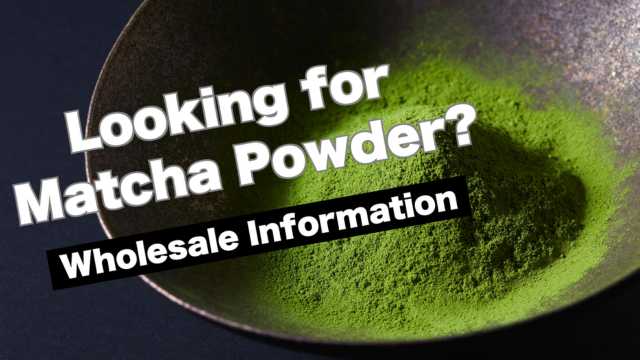
We source matcha from Japan’s premier production regions including Kyoto Uji, Kagoshima, Fukuoka, and Shizuoka, offering comprehensive grade ranges from organic JAS-certified ceremonial grade to processing-grade matcha.
Common Challenges:
- “We have projects but cannot secure stable matcha supply…”
- “We want to incorporate matcha into new café menu items!”
If you face these concerns, consult with Matcha Times. Feel free to contact us for initial inquiries.
\Read Also/
Key Takeaways
- A “matcha supplier in Florida” is either a local reseller/distributor or a Japan-direct exporter — no matcha is farmed in Florida, so origin still runs back to Japan.
- Match the supplier type to your scale: a single cafe values small quantities and fast restock; a multi-store brand or manufacturer values origin control, documentation and stable recurring volume.
- Verify by document, not by grade name: request a per-lot certificate of analysis (COA) with heavy-metal, pesticide and microbiological results — “ceremonial” and “culinary” are unregulated marketing terms, not guarantees.
- Under US tariff schedules, tea (including matcha) sits under HS heading 0902 and is generally duty-free at the MFN base rate — but the US importer of record still carries FDA and FSVP responsibilities.
- Plan Florida-specific logistics: entry through Miami, Port Everglades or Jacksonville, FDA import screening, an FDACS food permit where you store or distribute, and heat/humidity-controlled storage to protect color and flavor.
Researched and reviewed by the Matcha Times Editorial Team, operated by the Japan Matcha Export Organization (JMEX). Last reviewed: 2026-09-30. See our Editorial Policy and Sources & Methodology. Found an error? Tell us.
\Read More/
What does a “matcha supplier in Florida” actually mean?
The direct answer: because Japan is the origin for authentic Japanese matcha, buying “in Florida” means choosing where in the supply chain you connect — not where the tea is grown. A Miami distributor and a Japan farm-export house can sell you the same category of product, but they differ in price structure, lead time, minimums, documentation and how much origin control you get. Understanding the supplier types below is the first sourcing decision.
| Supplier type | What they are | Best for | Trade-off to weigh |
|---|---|---|---|
| Local Florida distributor / reseller | Holds imported Japanese matcha in US stock; sells in smaller quantities | Single cafes; fast restock; buyers who want no import paperwork | Added margin layer; less origin/grade control; you rely on their sourcing |
| US brand importer / private-label house | Imports in volume, offers house grades and private label | Emerging brands and multi-store operators wanting a ready product | Grade definitions are the vendor’s own; origin transparency varies |
| Japanese trading company | Aggregates from multiple Japanese producers and exports | Buyers wanting choice across regions/grades in one channel | A layer between you and the farm; confirm traceability and testing |
| Japan-direct producer / export organization | Sources from origin, designs grade, handles export docs and testing | Brands and manufacturers wanting origin control, COA and stable supply | You (or your broker) act as US importer of record; plan lead time |
For most café-scale buyers a local distributor is the practical route. For a recurring, spec-critical program — a scaling brand, an RTD or protein maker, or a multi-location operator — the calculus shifts toward fewer layers, verified testing and a partner who can hold grade and volume steady over time.
Trade-offs by buyer size: cafe, brand and manufacturer
The “right” supplier depends less on who is nearest and more on your volume, how tightly your product depends on consistent specs, and your tolerance for import logistics. Three typical Florida profiles:
- Single or few-location cafe — usually best served by a local distributor: small quantities, quick reorders and no customs work. Prioritize batch consistency and a clean COA so drinks taste the same week to week.
- Multi-store or packaged brand — a scaling retail or RTD brand benefits from fewer supply layers, private-label or custom-grade capability, and documented origin so packaging and marketing claims hold up.
- Food or beverage manufacturer — a manufacturer, protein or supplement maker needs particle-size and color stability, microbiological and heavy-metal specs, larger recurring volume and a supplier who can lock a written specification. Japan-direct or a specialist importer usually fits best.
A useful rule: the more your finished product depends on a repeatable spec, the closer to origin and the stronger the documentation you should push for. A latte program can tolerate a distributor; a labeled retail SKU or a formulated RTD cannot afford grade drift between lots.
How to verify matcha quality and compliance
Grade names sell; documents verify. The single most important habit a Florida buyer can build is to evaluate matcha on evidence — a per-lot certificate, named origin and stable specifications — rather than on a label. The three checks below apply to any supplier, local or Japan-direct.
Grade labels are marketing, not a standard
There is no legal or regulatory definition of the terms “ceremonial” and “culinary.” They are useful shorthand for intended use — whisked drinks versus blending into lattes, bakes and RTD — but any supplier can apply either word to any powder. Instead of buying the adjective, specify what you actually need: harvest timing, shading, particle size, color and taste for your application, and ask the supplier to evidence it. Treat an unusually cheap “ceremonial” claim as a prompt to request the lab sheet, not a bargain.
The per-lot certificate of analysis (COA)
A per-lot certificate of analysis (COA) is the core verification document. Ask for one tied to the exact production lot you will receive, not a generic brochure. A meaningful COA reports safety parameters — heavy metals (such as lead), pesticide residues and microbiological counts — from an accredited (ISO 17025) laboratory, and often quality markers relevant to your use. Confirm the sample you approve and the shipped lot match, and re-test on a defined schedule for a recurring program.
Certifications, origin and lot consistency
Beyond the COA, verify the claims your market cares about. If you sell organic, the supplier should hold recognized organic certification (for example Japanese JAS or USDA-recognized organic) with paperwork you can show a retailer or auditor. If a buyer or channel requires halal certification, confirm it is available before you commit. Ask for named region of origin rather than just “Japanese matcha,” and pressure-test consistency by comparing two lots for color, flavor and particle size before scaling.
Florida-specific import and regulatory realities
If you import directly rather than buying from a US distributor, you (or your customs broker) become the US importer of record, and a handful of Florida and federal realities shape your timeline and cost. None are prohibitive for tea, but each is worth planning around before your first shipment.
| Area | What a Florida buyer should know (verify current details) |
|---|---|
| Tariff / HS classification | Matcha is classified as tea under HS heading 0902 (USITC); US MFN base duty on heading 0902 is generally free (duty-free). Confirm the current line and any separate, time-varying country measures with a customs broker before quoting landed cost. |
| Port of entry | Florida shipments typically clear via Miami, Port Everglades (Fort Lauderdale) or JAXPORT (Jacksonville), screened by FDA’s Florida import offices. |
| FDA import + FSVP | The US importer must meet FDA food-import requirements and, for most foods, operate a Foreign Supplier Verification Program (FSVP) verifying the foreign supplier meets US safety standards. |
| Florida state permitting | If you store, pack or distribute at wholesale in Florida, a wholesale/manufactured food establishment permit from FDACS is generally required for the facility; confirm your specific activity. |
| Storage & climate | Florida heat and humidity accelerate loss of matcha’s color, aroma and freshness — plan cool, dry, sealed, ideally cold storage and disciplined stock rotation. |
The practical takeaway: buying from a local distributor removes most of this because they are the importer of record; buying Japan-direct gives you origin control and better margins but puts these responsibilities on your side of the table. A capable export partner reduces the burden by supplying the documentation your broker and the FDA expect.
A step-by-step matcha sourcing flow for Florida buyers
Whether you buy locally or Japan-direct, a disciplined sequence protects you from grade drift and border surprises. A workable flow:
- 1. Write the spec — define your application (whisked, latte, RTD, bake, supplement), target volume and the specs that matter (color, particle size, organic/halal if needed).
- 2. Compare supplier types — shortlist local distributors and Japan-direct exporters, and ask each the same verification questions.
- 3. Sample with documents — request a sample with its per-lot COA together, and taste and test against your spec, not against the grade label.
- 4. Trial order — place a small trial order to confirm lot consistency and, if importing, to test your customs and FSVP flow end to end.
- 5. Lock recurring supply — agree written specifications, lead time, re-test cadence and volume commitments so quality and supply stay stable as you scale.
Start any import registration, FSVP setup and FDACS permitting in parallel with sampling rather than after your first container is on the water — documentation, not the tea, is usually what delays a first shipment.
How to evaluate any matcha supplier for your Florida business
Rather than ranking brands, evaluate every candidate — a Florida distributor or a Japan-direct exporter — against the same verifiable criteria. The right partner produces the evidence your application and your auditors need, lot after lot. Use this checklist to compare on facts you can verify, not claims.
| Criterion | What to verify with any supplier |
|---|---|
| Per-lot COA & testing | Heavy-metal, pesticide/MRL and microbiological results for the exact lot, from an accredited (ISO 17025) laboratory |
| Origin transparency | Named Japanese region and producer context — not just “Japanese matcha” |
| Spec beyond grade | Documented harvest timing, shading, particle size and color for your application |
| Certifications | Organic (JAS / USDA-recognized) and halal available with paperwork, where your market requires them |
| Import documentation | Certificate of origin and export documents that support US customs and FSVP if you import directly |
| Batch consistency | Color, flavor and particle size held stable across repeat lots (compare two before scaling) |
| Supply stability | Confirmed ability to scale from a trial lot to regular monthly volume without grade drift |
A fast way to pressure-test a partner is to request a sample with its full COA and origin documents, then place a small trial order before committing to recurring volume. Suppliers who answer testing, origin and documentation questions precisely — and put them in writing — are the ones worth scaling with.
Sources & Methodology
This guide synthesises US federal and Florida state food-import sources with Japanese trade context and industry sourcing practice. Each source below states what it supports, its date and its scope; tariff, permitting and FSVP details change over time, so every regulatory point is flagged for verification with the named authority or a licensed customs broker, and no unverified price, MOQ or duty figure is presented as fact.
- USITC — Harmonized Tariff Schedule (HTS heading 0902, tea) — US tariff classification of tea/matcha under heading 0902 and MFN duty-free base rate — accessed 2026 US tariff classification
- US FDA — Importing Food Products into the United States — federal requirements for importing food (incl. tea) into the US — accessed 2026 US food import framework
- US FDA — Foreign Supplier Verification Programs (FSVP) — importer duty to verify a foreign supplier meets US safety standards — accessed 2026 US importer verification
- US FDA — Florida Import Offices and Ports of Entry — Florida ports of entry and FDA import screening (Miami / Port Everglades / Jacksonville) — accessed 2026 Florida FDA import offices
- FDACS — Wholesale/Manufactured Food Establishment Permit — Florida state permitting for facilities that store, pack or distribute food at wholesale — accessed 2026 Florida state food permitting
- Japan MAFF / Ministry of Finance — tea export statistics — Japan green-tea export context (green-tea TOTAL, not matcha-only) for origin/market background — 2024 Japan green tea exports
Why Buyers Choose JMEX (Japan Matcha Export Organization)

One supplier that meets these criteria at a high level is JMEX (Japan Matcha Export Organization), a wholesale and export partner dedicated to bringing Japanese matcha overseas. It designs origin selection, quality assurance, export documentation, and logistics as one continuous flow, built for export from the start.
With a track record of exports to 43 countries, JMEX works on the export side that decides whether a Florida program runs smoothly: origin selection and grade design for your application, per-lot COA with heavy-metal, pesticide and microbiological testing, JAS organic and Halal certification support, certificate of origin and export documentation for US customs and FSVP, and stable recurring bulk supply for cafes, wellness and RTD brands, and food manufacturers across Florida and the wider United States.
Frequently Asked Questions
Common questions from Florida cafes, brands and manufacturers evaluating where to source Japanese matcha, from origin to import duty and certification.
Are there matcha suppliers based in Florida?
Yes, in the sense that distributors, importers and private-label companies operate in and ship from Florida. But matcha is not grown in Florida — those suppliers resell Japanese matcha they have imported. Your real choice is between buying from a US-based reseller holding stock locally or sourcing Japan-direct and importing yourself.
Is matcha grown in Florida or the USA?
No. Authentic Japanese matcha is grown and processed in Japan; there is no commercial-scale matcha cultivation in Florida or the wider US. A “Florida matcha supplier” is a point in the distribution chain, not a farm, so origin, grade and testing still trace back to Japan.
How do I buy wholesale matcha for a Florida cafe or brand?
Define your application and specs, then compare local distributors against Japan-direct exporters. Request a sample with its per-lot COA, run a small trial order to confirm consistency (and your import flow if buying direct), then lock written specifications and volume. Choose supplier type by your scale: a distributor suits a single cafe, while brands and manufacturers usually benefit from origin control and stronger documentation.
What is the import duty on matcha into the USA?
Matcha is classified as tea under HS heading 0902, and the US MFN base duty on that heading is generally free (duty-free). Separate, country-specific or time-varying trade measures can apply and change, so confirm the current tariff line and any additional measures with a customs broker or the USITC Harmonized Tariff Schedule before quoting a landed cost.
What certifications and documents should a matcha supplier provide?
At minimum, a per-lot certificate of analysis with heavy-metal, pesticide and microbiological results from an accredited laboratory, plus named origin. Add organic certification (JAS or USDA-recognized) and halal where your market requires them, and, if you import directly, a certificate of origin and export documents to support US customs and FSVP.
What is the difference between ceremonial and culinary matcha for business use?
The terms describe intended use — whisked drinks versus blending into lattes, bakes and RTD — but they are not regulated standards, so any supplier can apply either label. For a business program, specify the harvest timing, shading, particle size and color your application needs and verify them on a COA rather than relying on the grade name.
Learn More About Global Matcha Trends at Matcha Times

Matcha Times is a specialist media platform covering the global matcha market — sourcing and wholesale, supply and pricing, trade and regulations, production and origins, and the companies shaping the industry.
From market analysis and price trends to café case studies and interviews with tea farmers, we help buyers, importers, distributors, and manufacturers stay ahead of where matcha is heading. Explore more and put the global matcha market to work for your business.
Conclusion
Sourcing matcha for a Florida business comes down to one clear decision: buy from a US-based distributor for convenience and small volumes, or go closer to origin — a Japanese trading company or a Japan-direct exporter — for origin control, documentation and stable recurring supply. Whichever you choose, verify by document rather than grade label: a per-lot COA, named origin, the certifications your market needs, and consistency across lots. Plan the Florida realities — port of entry, FDA and FSVP, FDACS permitting and humidity-controlled storage — and verify every tariff and rule with the named authority rather than assuming a figure. JMEX supports overseas buyers across exactly these export-side steps.
Looking for wholesale or OEM matcha samples? Contact us — we will recommend the optimal origin and grade based on your application and target markets.
Related Articles