What Global Matcha Buyers Want in 2026: Survey of Cafés, Importers & Manufacturers
This matcha buyer survey synthesises what published industry reporting, official trade data and market research show global B2B matcha buyers — cafes, importers and manufacturers — prioritising in 2026. The short answer: after two tight harvests, buyers have shifted from chasing the cheapest green powder to buying to a written specification from a supplier they can verify. They want verified quality and documentation, a specification they can reorder against, secure supply through the shortage, transparent pricing, and a grade that actually performs in their product.
It is written for importers, distributors, OEM and health or wellness manufacturers buying at scale. To be transparent: this is a cross-source synthesis, not a proprietary poll — we publish no in-house buyer statistic, and every number is attributed with its scope and date.
Key Takeaways
- Verification beats price: across published 2026 reporting, buyers now lead with verified quality and documentation (COA, testing, certifications) rather than headline price.
- Specification over origin romance: the market is moving from commodity buying to specification-led sourcing, so a written spec you can reorder against matters more than a single-origin label.
- Supply security is a spec line: demand keeps running ahead of tencha supply, so supply security, lead time and allocation are now buying criteria, not afterthoughts.
- Read market numbers with scope: matcha market growth is real but reported as commercial provider estimates that vary by definition — treat any single figure with its provider and year.
- Compare any supplier — JMEX included — with a supplier-verification checklist, on documents rather than colour or a low quote.
Researched and reviewed by the Matcha Times Editorial Team, operated by the Japan Matcha Export Organization (JMEX). Last reviewed: September 20, 2026. See our Editorial Policy and Sources & Methodology. Found an error? Tell us.
What do global matcha buyers want in 2026?
In short, global matcha buyers in 2026 want proof, not promises. Published sourcing guides, market reports and trade coverage converge on the same picture: after the shortage tightened supply and widened quality gaps, professional buyers prioritise risk reduction over bargain-hunting — verified quality, clean documentation, a reorderable specification, secure supply and a grade matched to their application — with price judged on landed cost and consistency rather than a single low number.
The rest of this report sets out the five priorities buyers are converging on, reads the market data behind them with sources and scope, translates them into what they mean for your product, and turns them into a checklist you can put to any supplier before you commit to volume.
For Companies Seeking Matcha Powder
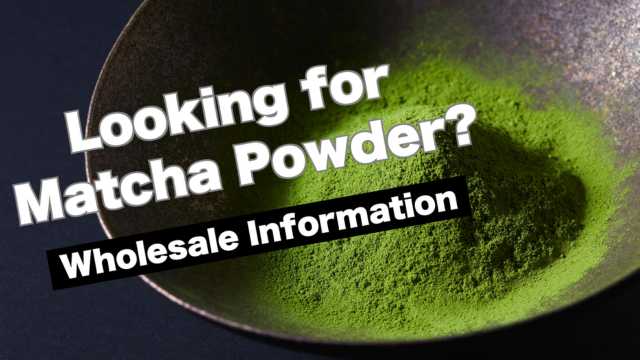
We source matcha from Japan’s premier production regions including Kyoto Uji, Kagoshima, Fukuoka, and Shizuoka, offering comprehensive grade ranges from organic JAS-certified ceremonial grade to processing-grade matcha.
Common Challenges:
- “We have projects but cannot secure stable matcha supply…”
- “We want to incorporate matcha into new café menu items!”
If you face these concerns, consult with Matcha Times. Feel free to contact us for initial inquiries.
\Read Also/
The five priorities matcha buyers are converging on
No single published survey covers every buyer type, so we read across sourcing guides, market research and trade reporting for 2026 and grouped the recurring themes into five priorities. They hold across cafes, importers and manufacturers, though the weighting shifts by business model.
1. Verified quality and documentation
The clearest shift is that buyers now treat documentation as part of the product. Reporting through 2026 describes buyers demanding clean COAs and lab-tested results before shipment — per-lot certificates of analysis, pesticide and heavy-metal results, microbiological specs and credible organic certification — because a tight market attracts mislabelled or diluted powder. Colour alone is no longer accepted as a proxy for grade.
2. Specification-led sourcing over origin romance
Buyers are moving from commodity purchasing to specification-led sourcing: agreeing a written spec (grade, colour, particle size, flavour, application) they can reorder against, rather than buying on a single-origin story. Uji still carries brand value for premium storytelling, but for volume the practical quality-to-cost choice often sits in larger origins such as Kagoshima — so buyers increasingly treat origin as a preference inside a spec, not the spec itself.
3. Supply security and lead time
Because demand has outrun tencha supply, availability itself has become a buying criterion. Buyers ask how much a supplier can actually allocate this season, what the lead time is by grade, and whether the supplier can hold a grade consistent across reorders. In a shortage year, a reliable allocation plan can outweigh a lower headline price.
4. Price transparency and landed cost
Price still matters, but buyers judge it as landed cost and consistency rather than a single per-kilogram figure. They want to know how a price is set (market-linked or fixed-term), the trade condition (FOB, CIF or EXW), quote validity, and how direct-from-Japan sourcing compares with distributor stock. We do not publish a fixed matcha price here because it varies by grade, origin, flush and date and must be quoted per shipment.
5. Functional and application fit
Finally, buyers want a grade that performs in their actual product. A latte programme, an RTD line, a bakery application and a wellness blend each need different colour stability, dispersion, heat behaviour and flavour — so buyers increasingly match grade to application rather than buying one generic grade for everything.
Grouped into a single view, the priorities and what each buyer type tends to weight most look like this:
| Buyer priority (2026) | What buyers actually ask for | Weighted most by |
|---|---|---|
| Verified quality & documentation | Per-lot COA, pesticide/heavy-metal & microbiological testing, organic certification | Importers, manufacturers |
| Specification-led sourcing | Written spec: grade, colour, particle size, flavour, application | Manufacturers, OEM |
| Supply security & lead time | Allocatable volume this season, lead time by grade, reorder consistency | Importers, café chains |
| Price transparency & landed cost | Pricing mechanism, trade condition (FOB/CIF/EXW), quote validity | All buyers |
| Functional / application fit | Colour stability, dispersion, heat behaviour matched to the product | Cafés, RTD & bakery makers |
\Read More/
What the 2026 market data show
These priorities are a response to real market pressure. Keep the scope straight, though: market-size figures are commercial provider estimates that vary by definition, and Japan’s export statistics are green-tea totals, not matcha-only. Read each number with its source, basis and year.
On demand, matcha continues to grow. One commercial forecaster, Future Market Insights, estimates the global matcha market at about US$3.6 billion in 2026, growing at roughly a 7.1% CAGR to around US$7.2 billion by 2036 (Future Market Insights, matcha market report). Estimates vary widely by provider and market definition, so treat any single figure as indicative rather than official.
Official trade data confirm the export side. Japan’s Ministry of Finance Trade Statistics show green-tea export value (all forms, including matcha) reached a record of about ¥36.4 billion on roughly 8,798 tonnes in 2024 (MoF Trade Statistics, via Nippon.com) — a customs-basis export value for all green tea, not a matcha price — and powdered green tea made up around 58% of that export volume (Tea & Coffee Trade Journal, on MoF/MAFF data).
Supply has been slow to catch up by design. MAFF figures reported by the trade press show tencha output rose from about 1,452 tonnes in 2008 to about 3,464 tonnes in 2019 — roughly +139% — and keeps climbing (STiR, citing MAFF), yet supply still cannot keep pace with global demand, because new shaded fields take several years to reach matcha grade (Global Japanese Tea Association, on the matcha shortage). That structural lag is why buyers now treat supply security as a specification line, not an afterthought.
On cost of entry, a common myth is that matcha carries a heavy import tariff. In the United States, green tea including matcha (HS 0902) actually enters duty-free at a 0% MFN base rate under the Harmonized Tariff Schedule (US International Trade Commission, HTS chapter 9); any recent country-level reciprocal measure is a separate, time-varying matter to confirm with a customs broker, and other markets set their own rates.
What these buyer priorities mean for your product
Read the survey the right way and it becomes a procurement plan. For a manufacturer or brand, the five priorities translate directly into how you should specify, budget and de-risk in 2026.
- Specify before you shop: write a real specification — grade, colour, particle size, flavour and application — and buy against it, so quality is verifiable and reorders are consistent.
- Make documentation a condition: require per-lot COA and testing as standard; in a hot market this is your main defence against mislabelled or diluted powder.
- Keep origin flexible: treat origin as a preference inside the spec, so a supplier can meet your grade from more than one field when a premium origin sells out.
- Plan annually, not spot: commit volume early and agree a pricing mechanism and lead time, because supply is allocation-led rather than spot-driven this year.
- Buy the grade the product needs: match grade to application and cost per serving rather than buying one generic grade, so colour, dispersion and heat behaviour fit the product.
In practice, 2026 rewards precise specifications over bargain-hunting: the buyers who came through the shortage best were precise about what they needed and early to commit, not the ones chasing the lowest spot lot.
A buyer’s supplier-verification checklist for 2026
Because the priorities above are only as good as your ability to verify them, the strongest way to evaluate any matcha supplier — JMEX included — is to ask what they can prove. Use the checklist to compare like for like, on documents rather than colour or a headline price.
| What to check | What to verify with any supplier |
|---|---|
| Quality documentation | Per-lot COA, pesticide/heavy-metal and microbiological testing, and how grade is defined and verified |
| Certifications | Valid organic certification for your market (e.g. JAS organic, USDA organic) with current certificate references |
| Specification & consistency | Ability to hold a written spec (grade, colour, particle size, flavour) consistent across reorders |
| Origin & flush | Confirmed Japanese origin, first vs later flush, harvest year, and whether origin is fixed or flexible |
| Supply & lead time | Volume actually allocatable this season and lead time by grade during the shortage |
| Pricing mechanism | How the price is set (market-linked vs fixed-term), trade condition (FOB/CIF/EXW) and quote validity |
| Application fit | Colour stability, dispersion and heat behaviour appropriate to your latte / RTD / bakery / wellness use |
| Export documents | Correct HS classification, export documentation and handling to your destination market |
Put the same questions to every candidate. A supplier who cannot prove a claim cannot guarantee it, and in a shortage year a supplier who answers with documents and a clear allocation plan is worth more than one quoting only a low headline price.
From the exporter’s perspective
From the export side, the pattern behind these priorities is consistent with what we see day to day. The buyers who navigate the shortage best send a written specification first — grade, colour, particle size and application — ask for per-lot documentation before they commit, and treat origin as a preference inside that spec rather than a fixed demand. Because JMEX sources from verified Japanese origins across regions and prepares quality, origin and export documentation as one flow, a buyer can hold a single standard across reorders even when a favourite single field is sold out — which is exactly the flexibility this survey shows buyers now want.
Sources & Methodology
This report is a cross-source synthesis, not a proprietary poll. We read across 2026 B2B sourcing guides, market-research reports and trade-press coverage to identify the buyer priorities that recur across cafes, importers and manufacturers, then grounded the market context in official Japanese trade statistics, MAFF/industry production data and the US tariff schedule. Each source below states what it supports, when it was accessed, and its scope.
We publish no in-house buyer statistic, survey percentage or proprietary dataset, because we hold no publishable original dataset on matcha buyer behaviour. Buyer priorities are described qualitatively; where we cite a number it is attributed to its source with its basis (value vs volume, green-tea-total vs matcha-only) and year. Market-size figures are commercial provider estimates that vary by definition, so we attribute each and do not average or reconcile them into a single canonical value. We deliberately do not publish a fixed yen- or dollar-per-kilogram matcha price as fact, because it varies by grade, origin, flush and date and must be confirmed per shipment.
- Japan Ministry of Finance — Trade Statistics of Japan (via Nippon.com) — that green-tea export value (all forms, incl. matcha) reached a record ~¥36.4 billion on ~8,798 tonnes in 2024 (customs-basis export value, green tea total) (accessed 2026-09-20; Japan government trade statistics (primary))
- Tea & Coffee Trade Journal — changing consumption patterns / green-tea growth — that powdered green tea (matcha etc.) was about 58% of Japan’s tea export volume in 2024 (basis: volume) (accessed 2026-09-20; trade press reporting official MoF/MAFF data (supporting))
- STiR Tea & Coffee — Japanese farmers increase tencha production — that tencha output rose from ~1,452 tonnes (2008) to ~3,464 tonnes (2019), roughly +139%, citing MAFF (accessed 2026-09-20; trade press citing MAFF (supporting))
- Global Japanese Tea Association — unpacking the matcha shortage — that a demand-led tencha shortage persists and that new shaded fields take years to reach matcha grade (accessed 2026-09-20; industry association analysis (supporting))
- Future Market Insights — matcha market report — one commercial estimate of the global matcha market at ~US$3.6 billion in 2026, ~7.1% CAGR to ~US$7.2 billion by 2036 (estimates vary by provider and definition) (accessed 2026-09-20; commercial market-research estimate (supporting; not official))
- US International Trade Commission — Harmonized Tariff Schedule, chapter 9 — that green tea incl. matcha (HS 0902) enters the US duty-free at a 0% MFN base rate (product duty) (accessed 2026-09-20; US government tariff schedule (primary))
- Ministry of Agriculture, Forestry and Fisheries (MAFF) — statistics & publications — the shift of domestic tea production toward tencha and ministry support for increasing tencha output (accessed 2026-09-20; Japan government (primary))
- MAFF — Japanese Agricultural Standard (JAS) for organic — the framework and reference for JAS organic certification buyers verify (accessed 2026-09-20; Japan government standard (primary))
- USDA Agricultural Marketing Service — Organic Certification — the framework and reference for USDA organic certification buyers verify (accessed 2026-09-20; US government standard (primary))
Why Buyers Choose JMEX (Japan Matcha Export Organization)

A partner built for the priorities this survey identifies is JMEX (Japan Matcha Export Organization), a wholesale and export partner focused on shipping authentic Japanese matcha overseas. Rather than reselling anonymous powder, it sources from verified Japanese origins across regions and prepares the quality, origin and export documentation as one flow — so a buyer can hold a grade steady even when a single favourite field is sold out.
For a buyer acting on the 2026 priorities specifically, JMEX can confirm origin and flush, match a grade and profile to your application, supply a per-lot certificate of analysis, and quote capacity and lead time at volume. With an export track record to 43 countries, it supplies from a small trial lot up to one-ton volume for importers, wholesalers, OEM and health manufacturers — the documentation and flexibility a specification-led buyer needs when premium origins are rationing supply.
Frequently Asked Questions
Quick answers to the questions buyers ask most about what the matcha market wants in 2026.
What do global matcha buyers want in 2026?
Verified quality and documentation first, then a reorderable specification, secure supply and lead time, transparent pricing judged on landed cost, and a grade matched to their application. Across published 2026 reporting, professional buyers consistently prioritise risk reduction and consistency over the lowest headline price.
What is driving matcha demand in 2026?
Sustained global consumer demand — especially cafe, RTD and functional-wellness uses — against a tencha supply that has been slow to expand. Commercial forecasters estimate continued market growth (for example, Future Market Insights puts the market near US$3.6 billion in 2026), though such estimates vary by provider and definition.
How do B2B buyers choose a matcha supplier?
Increasingly by documentation rather than colour or price alone. Buyers ask for per-lot COA and testing, valid certifications, a written specification the supplier can hold across reorders, allocatable volume and lead time, a clear pricing mechanism and trade condition, and correct export documents. A supplier-verification checklist lets you compare any candidate on the same evidence.
What grade of matcha do cafes and manufacturers buy?
It depends on the application. Cafes and food manufacturers typically buy latte, culinary or processing grades matched to colour stability, dispersion and cost per serving, while ceremonial grade is reserved for premium menu items. The practical point is to match grade to the product rather than buying one generic grade for everything.
Is matcha still in shortage in 2026?
Yes, broadly. Demand continues to run ahead of tencha supply, and although tencha output keeps rising, new shaded fields take several years to reach matcha grade. That structural lag is why supply security, allocation and lead time have become active buying criteria for 2026.
Does matcha face import tariffs?
Green tea including matcha (HS 0902) enters the United States duty-free at a 0% base rate under the Harmonized Tariff Schedule. Any recent country-level reciprocal measure is a separate, time-varying matter to confirm with a customs broker, and other markets set their own rates — so verify the current duty for your destination rather than assuming the product itself is taxed.
Learn More About Global Matcha Trends at Matcha Times

Matcha Times is a specialist media platform covering the global matcha market — sourcing and wholesale, supply and pricing, trade and regulations, production and origins, and the companies shaping the industry.
From market analysis and price trends to café case studies and interviews with tea farmers, we help buyers, importers, distributors, and manufacturers stay ahead of where matcha is heading. Explore more and put the global matcha market to work for your business.
Conclusion
When origin, grade, and export conditions align, matcha becomes a stable revenue source. Start by defining your requirements and confirming quality with a sample.
Looking for wholesale or OEM matcha samples? Contact us — we will recommend the optimal origin and grade based on your application and target markets.
Related Articles