Matcha Supplier Dallas: Wholesale Japanese Matcha for Cafés, Hotels & Brands
For a Dallas buyer, the best matcha supplier for Dallas is usually a Japan-based processor or an export-focused trading organization that can tune the grade to your menu or product, issue a certificate of analysis (COA) for each production lot, and stand behind the U.S. import paperwork — not just the cheapest online listing or a repackaged bag. You can order through a national U.S. wholesaler that already holds domestic stock, or you can source direct from Japan from Japan; which one is right depends on your monthly volume, how much control you want over origin and grade, and who carries the U.S. food-safety obligations. Because Dallas is an inland distribution market rather than a seaport, the logistics differ from a coastal city too. This guide sets out who to buy from for a Dallas–Fort Worth café, hotel or brand, the trade-offs by order size, how to verify a supplier before a bulk commitment, how imported matcha actually reaches North Texas, and how JMEX connects Japanese origin to the U.S. buyer.
For Companies Seeking Matcha Powder
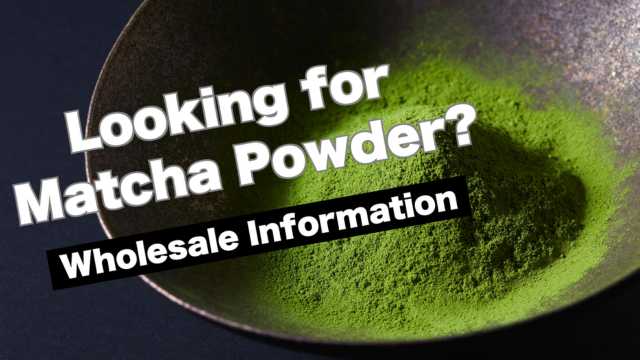
We source matcha from Japan’s premier production regions including Kyoto Uji, Kagoshima, Fukuoka, and Shizuoka, offering comprehensive grade ranges from organic JAS-certified ceremonial grade to processing-grade matcha.
Common Challenges:
- “We have projects but cannot secure stable matcha supply…”
- “We want to incorporate matcha into new café menu items!”
If you face these concerns, consult with Matcha Times. Feel free to contact us for initial inquiries.
\Read Also/
Key Takeaways
- Fit the supplier channel to your order size: a national U.S. distributor works for a small or launching buyer, while a Japanese processor or export organization suits recurring bulk that needs consistent specs and documentation.
- Verify before you commit — a per-lot certificate of analysis (COA), a named origin, and proof of lot-to-lot consistency tell you far more than a “ceremonial” label, which no standard actually enforces.
- Going direct from Japan means the U.S. food-safety burden sits with you: Foreign Supplier Verification (FSVP), FDA facility registration and Prior Notice all apply — pick a supplier that can support that documentation.
- Green tea, matcha included, sits under HTS heading 0902 and enters the U.S. duty-free at the MFN base rate; treat any country-level “reciprocal” measure as separate, time-varying, and something to confirm with a customs broker.
- Dallas is inland, so imported matcha reaches you by air freight through DFW or by ocean into a Gulf or West-Coast port and then rail and truck to North Texas — build that lead time into your plan.
Researched and reviewed by the Matcha Times Editorial Team, operated by the Japan Matcha Export Organization (JMEX). See our Editorial Policy and Sources & Methodology. Found an error? Tell us.
\Read More/
Who to buy from: U.S. distributor, farm, processor or export organization
The short answer: buy from the layer of the supply chain that can meet your volume, grade and documentation needs together. A Dallas buyer has four realistic channels, and each is the right call for a different kind of order. The trap is to assume “buying direct” automatically means cheaper or better — it comes down to what you actually need the supplier to do, and which party carries the U.S. import obligations.
| Channel | Best for | What you gain | What to watch |
|---|---|---|---|
| U.S. wholesaler / distributor | Small or launching Dallas cafés and shops | Domestic stock, quick shipping, low or no MOQ, and no import paperwork on you | Higher unit cost; less control over origin and grade; you inherit their sourcing and COA |
| Tea farm / single grower (Japan) | Small, story-led or single-origin lots | Traceability to one estate and a distinctive origin story | Limited volume, grade range and English paperwork; may not export or support U.S. FSVP |
| Processor / tencha miller (Japan) | Recurring bulk built to a defined spec | Grade blending to a target, per-lot COA, and steadier supply | Export and documentation capability varies; confirm certifications and U.S. import support |
| Export organization / trading partner | Bulk buyers needing origin, grade and documents in one place | Origin and grade design, testing, certification support, and U.S. export/FSVP paperwork | Adds a service layer; check it is backed by real origin control, not just resale |
For most Dallas importers, multi-site café groups, hotels and food or wellness brands ordering at recurring scale, a Japanese processor or an export-focused organization is the practical answer: it gives you control over origin, grade and unit economics while supporting the U.S. compliance layer (FSVP, COA, certifications). A national distributor is a sensible way for a single café to test demand first; a farm-direct lot fits a limited single-origin launch. Set expectations to match the channel you choose.
Choosing the right matcha grade for a Dallas café, hotel or brand
Grade should follow the application, not the marketing copy. “Ceremonial” and “culinary” are everywhere, but neither term is enforced by any standard, so two bags with identical labels can taste and behave very differently. Decide by how the matcha will actually be used, then confirm real quality with a sample and a COA instead of trusting the word on the pouch.
- Café and boba drinks — for lattes, iced drinks and boba, a premium culinary or dedicated “barista/latte” grade keeps its color and flavor through milk and ice without turning bitter, and it protects your cost per serving.
- Hotels & tea service — for a signature usucha or a tasting menu, a first-harvest ceremonial grade brings the delicate umami and fine texture guests expect; keep it for straight preparation, not blended drinks.
- Brands & manufacturers — for RTD, supplements, protein or bakery lines, weigh particle size, dispersion, color stability and documented batch consistency ahead of any single standout sample.
- A two-grade menu — many operations run two grades at once: a latte grade for volume drinks and a higher grade for premium or ceremonial service, which protects margin without watering down the flagship cup.
Verifying a matcha supplier before a bulk order
Verification is where the sourcing decision is really made. Before you commit recurring volume, ask for evidence on three fronts — quality documentation, certification, and consistency — and read a vague answer as a risk signal rather than a formality.
Certificate of analysis (COA) and testing
A certificate of analysis (COA) issued for each production lot is the single most useful document a matcha supplier can hand you. It should report sensory and safety parameters — particle behaviour, moisture, microbiological counts, and pesticide and heavy-metal (lead, cadmium, arsenic) results from an accredited (ISO 17025) laboratory. Ask for the real numbers on your lot, not a generic brochure certificate, and check that the testing scope matches what your product and U.S. buyers require. That COA is also the backbone of your FSVP records.
Certifications: organic (USDA / JAS), food safety and Halal
Confirm every certification claim in writing against the current certificate. For the U.S. market, organic certification (recognized through the USDA–Japan organic equivalence with JAS) matters wherever you sell an organic product; a food-safety scheme (HACCP, ISO 22000 or an FSSC programme) matters for foodservice and manufacturing; and Halal certification is relevant for some hospitality and export programs. Check that each certificate is current, names the correct legal entity, and comes from a recognized body — a lapsed or unverifiable certificate is not enough.
Lot consistency and origin evidence
One good sample proves very little; documented batch consistency across repeat production is what protects a brand at scale. Ask how color, flavour and particle size are held stable between lots, and ask for a named origin — a Japanese region and, ideally, cultivar and harvest — rather than only “Japanese matcha.” A supplier that can explain its blending and quality-control method and show consistent COAs across several lots is demonstrating real control over the product.
The U.S. import path and how matcha reaches Dallas
Sourcing and compliance are one decision when you import into the United States, so settle who carries each obligation before you order. Buy from a U.S. distributor and they hold the import duties; source from Japan and you, as the U.S. importer of record, do. The core requirements come from the FDA under the Food Safety Modernization Act (FSMA). The table summarizes the framework; verify the current detail with the relevant authority or a licensed customs broker before your first shipment.
| Requirement | What U.S. / Dallas buyers should confirm |
|---|---|
| Foreign supplier verification | A written FSVP program verifying your Japanese supplier meets U.S. food-safety standards; records available to FDA on request |
| FDA facility registration | The Japanese manufacturer/packer is registered with FDA and has a designated U.S. Agent |
| Prior Notice | Prior Notice filed with FDA before each shipment reaches the U.S. port or airport of entry |
| Testing & documentation | Per-lot COA with pesticide/MRL and heavy-metal results; align the testing scope with FDA/FSMA expectations |
| Labeling | FDA food labeling — identity, net weight, ingredients, Nutrition Facts, manufacturer/importer and country of origin |
| Customs classification & duty | Green tea (incl. matcha) under HTS heading 0902; confirm the current line-level rate and any reciprocal measure with a broker |
On duty, green tea — the classification that covers matcha under HTS heading 0902 — carries a duty-free general (MFN) rate of duty in the U.S. tariff schedule, according to the U.S. International Trade Commission (USITC) HTS. Any recent country-level “reciprocal” or additional tariff measure is separate, time-varying, and worth confirming with a customs broker for the shipment date — never treat it as the matcha product rate.
Dallas logistics differ from a coastal city because North Texas has no local seaport. In practice, imported matcha reaches you two ways: as air freight into Dallas–Fort Worth International Airport — one of the country’s major air-cargo gateways, with temperature-controlled handling for perishables — or by ocean into a Gulf or West-Coast port and then by rail and truck to the International Inland Port of Dallas intermodal district. Air is faster and easier on a fine powder’s freshness; ocean-plus-drayage is usually cheaper per kilogram at larger volume but adds transit time. Whichever route you use, retail food operations in Texas are regulated by the Texas Department of State Health Services (DSHS), so keep your labeling and storage compliant on arrival.
For market context — not a matcha-specific figure — official Japan MAFF / Ministry of Finance trade data put Japan’s green tea exports (all forms combined, not matcha only) at roughly ¥36.4 billion and 8,798 tonnes in 2024. Powdered green tea, which includes matcha, is a large share by volume, but read value and volume separately and never treat the green-tea total as a matcha-only number.
How to evaluate any Dallas matcha supplier
Rather than rank brands, evaluate any supplier — a national U.S. distributor or a Japan-direct exporter — against the same verifiable criteria. Use the checklist to compare candidates on facts you can confirm, not on marketing claims, and apply it equally to every option including JMEX.
| Criterion | What to verify with any supplier |
|---|---|
| Origin & grade | Named Japanese region and, ideally, cultivar and harvest — plus a grade matched to your application |
| Per-lot COA & testing | Sensory, microbiological, residue and heavy-metal results from an accredited lab, per lot |
| Organic / food-safety certs | USDA/JAS organic and/or HACCP / ISO / FSSC evidence where your product or channel needs it |
| U.S. import support | Ability to support FSVP records, an FDA-registered facility, Prior Notice and compliant labeling |
| Batch consistency | How color, flavour and particle size are held stable across repeat production |
| Supply stability | Ability to scale from a trial lot to regular monthly volume without grade drift |
| Logistics to Dallas | Realistic lead time and incoterms (FOB/CIF) via DFW air or an inland-port routing, plus stock-buffering options |
| Commercial terms | MOQ, lead time, incoterms and price quoted together in writing for your exact spec |
The most useful questions to ask to put to a shortlisted supplier are concrete: Which region and cultivar is this from? Can I see the COA for the exact lot I would receive? Is your facility FDA-registered, and can you support my FSVP records? Which organic or food-safety certificates do you hold, and are they current? How do you keep consistency across lots, and what is the MOQ, lead time and incoterm to Dallas for my spec? Suppliers who answer precisely — and put the answers in writing — are the ones worth scaling with.
Sourcing steps: from shortlist to recurring supply
A disciplined process turns a good sample into a reliable program. A practical order flow for a Dallas buyer sourcing Japanese matcha runs like this:
- Write the specification — application (latte, ceremonial, RTD, bakery), grade target, monthly volume, packaging, and your Dallas delivery point.
- Shortlist suppliers by channel (U.S. distributor / farm / processor / export organization) against your order size and documentation needs.
- Request a sample matched to your exact spec and a per-lot COA, and confirm organic, food-safety and any Halal certifications up front.
- Validate the sample in your actual drink, product or on your line, and check the COA numbers against your requirements.
- Confirm the U.S. import path — FSVP program, FDA-registered facility, Prior Notice, labeling and duty classification — with the supplier and a licensed customs broker, and agree the DFW-air or inland-port routing.
- Place a small trial order before committing recurring volume, then lock MOQ, lead time, incoterms and pricing in a written quotation.
- Scale to a supply agreement once quality, consistency and documentation are proven across several lots.
Sources & Methodology
This guide synthesises official U.S. and Japanese food-safety, customs and trade sources. Each source below states what it supports, its date, and its scope; all figures are external primary or official sources, and no unverified number is presented as fact. Regulatory detail changes, so confirm the current requirement with the named authority or a licensed customs broker before shipping.
- U.S. FDA — Foreign Supplier Verification Programs (FSVP) — U.S. importer obligation to verify foreign suppliers meet U.S. food-safety standards — accessed 2026 U.S. food import safety
- U.S. FDA — Registration of Food Facilities — Requirement for the foreign facility to register with FDA and designate a U.S. Agent — accessed 2026 U.S. food facility registration
- U.S. FDA — Prior Notice of Imported Foods — Prior Notice filing required before each imported food shipment — accessed 2026 U.S. food import procedure
- U.S. FDA — Food Safety Modernization Act (FSMA) — Overarching U.S. food-safety framework covering imported foods incl. tea — accessed 2026 U.S. food safety law
- U.S. International Trade Commission — Harmonized Tariff Schedule (HTS) — Green tea (incl. matcha) classification under heading 0902; general (MFN) duty-free rate — accessed 2026 U.S. import tariff classification
- Texas Department of State Health Services (DSHS) — Foods — Texas retail food regulation context for Dallas operators — accessed 2026 Texas food regulation
- Japan MAFF / Ministry of Finance — tea export statistics — Japan green-tea export value/volume 2024 (green-tea TOTAL, not matcha-only) — 2024 Japan green tea exports
Why Buyers Choose JMEX (Japan Matcha Export Organization)

One supplier that meets these criteria at a high level is JMEX (Japan Matcha Export Organization), a wholesale and export partner dedicated to bringing Japanese matcha overseas. It designs origin selection, quality assurance, export documentation, and logistics as one continuous flow, built for export from the start.
With a track record of exports to 43 countries, JMEX bridges Japanese origin and the U.S. buyer on the export side: origin and grade design for your application and market, per-lot COA, MRL and heavy-metal testing, organic (JAS) and Halal certification support, and export documentation to support your FSVP records and FDA requirements, plus stable recurring bulk supply for importers, wholesalers, hotels, café groups, OEM and health/wellness brands serving Dallas–Fort Worth and the wider U.S. market.
Frequently Asked Questions
Common questions from Dallas cafés, hotels and brands evaluating a Japanese matcha supplier — from who to buy from to grade, duty, logistics and U.S. import documentation.
Where can Dallas cafés and brands buy wholesale Japanese matcha?
You have four practical channels: a national U.S. wholesaler holding domestic stock, a single Japanese farm, a Japanese processor, or an export-focused organization. A distributor suits a single café testing demand; a processor or export partner suits recurring bulk where you want control over origin, grade, per-lot COA and U.S. import documentation. Match the channel to your volume and to how much of the compliance burden you want the supplier to carry.
What grade of matcha do Dallas cafés need — ceremonial or culinary?
Most cafés and boba shops want a premium culinary or dedicated barista/latte grade for milk-based and iced drinks, because it holds color and flavor against milk and ice and controls cost per serving. Reserve a first-harvest ceremonial grade for straight usucha or tasting service. Because grade labels are not industry-regulated, confirm the actual quality with a sample and a COA rather than trusting the label.
What documents are required to import matcha into the USA?
As the U.S. importer you generally need a written FSVP program verifying your foreign supplier, an FDA-registered manufacturing facility with a U.S. Agent, Prior Notice filed before each shipment, a per-lot certificate of analysis, and compliant FDA labeling. Confirm the exact requirements with FDA and a licensed customs broker before your first shipment.
Is there import duty on matcha in the United States?
Green tea, which covers matcha under HTS heading 0902, carries a duty-free general (MFN) rate in the U.S. Harmonized Tariff Schedule, according to the USITC. Any recent country-level “reciprocal” or additional tariff measure is separate and time-varying, so confirm the current rate and any surcharge with a customs broker for your shipment date rather than assuming a single figure.
How does imported matcha actually reach Dallas?
Dallas is an inland market with no local seaport, so imported matcha arrives either as air freight into Dallas–Fort Worth International Airport — a major air-cargo gateway with temperature-controlled handling — or by ocean into a Gulf or West-Coast port and then by rail and truck to the International Inland Port of Dallas. Air is faster and gentler on freshness; ocean-plus-drayage is usually cheaper per kilogram at volume but adds transit time. Factor the route into your lead time.
Can I source Japanese matcha direct from Japan for the Dallas market?
Yes. Sourcing direct from a Japanese processor or export organization gives you control over origin, grade and documentation and better unit economics at volume, provided the supplier can support the U.S. compliance layer — FSVP records, an FDA-registered facility, Prior Notice and labeling. That export-side capability, not just a low price, is what makes direct sourcing work for Dallas.
Learn More About Global Matcha Trends at Matcha Times

Matcha Times is a specialist media platform covering the global matcha market — sourcing and wholesale, supply and pricing, trade and regulations, production and origins, and the companies shaping the industry.
From market analysis and price trends to café case studies and interviews with tea farmers, we help buyers, importers, distributors, and manufacturers stay ahead of where matcha is heading. Explore more and put the global matcha market to work for your business.
Conclusion
Sourcing Japanese matcha for Dallas is a matching problem: pick the supply-chain channel that fits your order size, choose grade by application, verify quality on paper before you commit volume, and treat FSVP, FDA registration and Prior Notice — plus a realistic DFW-air or inland-port routing — as part of the sourcing decision rather than a later hurdle. Evaluate every supplier, national distributor or Japan-direct exporter, against the same neutral checklist, request a sample and a per-lot COA, and prove consistency across lots before you scale. JMEX supports U.S. buyers across exactly these steps, from origin and grade design to certification and export documentation.
Looking for wholesale or OEM matcha samples? Contact us — we will recommend the optimal origin and grade based on your application and target markets.
Related Articles