California Matcha Wholesale: Japanese Supplier, MOQ, Price & Delivery Guide
Buying matcha wholesale in California comes down to three decisions: where you buy (a domestic Bay Area or Los Angeles distributor for fast local delivery, or a Japan-direct exporter for origin control and better per-kilogram economics at volume), the grade and minimum order quantity (MOQ) you need, and the California compliance you must clear. Wholesale matcha is sold by grade — culinary, latte/barista and ceremonial — and the per-kilogram price falls as your order size crosses each supplier’s minimum-order thresholds. This guide sets out realistic MOQ logic, what actually drives price, a channel comparison, the California-specific compliance most price pages skip (Proposition 65 and FDA FSVP), delivery and logistics, a neutral supplier checklist, and how JMEX supports buyers on the Japan export side.
For Companies Seeking Matcha Powder
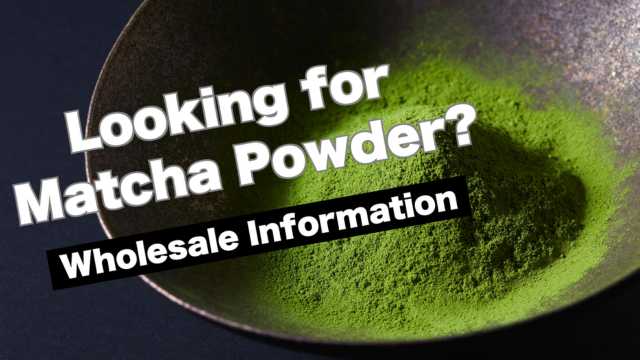
We source matcha from Japan’s premier production regions including Kyoto Uji, Kagoshima, Fukuoka, and Shizuoka, offering comprehensive grade ranges from organic JAS-certified ceremonial grade to processing-grade matcha.
Common Challenges:
- “We have projects but cannot secure stable matcha supply…”
- “We want to incorporate matcha into new café menu items!”
If you face these concerns, consult with Matcha Times. Feel free to contact us for initial inquiries.
\Read Also/
Key Takeaways
- California buyers choose between a domestic California distributor (fast, small MOQ, higher per-kg) and a Japan-direct exporter (origin/grade control, better economics at volume, longer lead time).
- Per-kilogram price is driven by grade, origin, harvest, volume and packaging, not by geography alone — treat any specific figure as a quotation item and confirm the trade condition (FOB/CIF/wholesale).
- Green tea and matcha enter the US duty-free under HS heading 0902; verify the exact line and any country-level measure with a customs broker before quoting a landed cost.
- California adds two compliance layers most price pages ignore: Proposition 65 (lead warnings) and FDA FSVP (importer verification) — both are answerable with per-lot heavy-metal testing and export documentation.
- De-risk any supplier with a sample plus its full per-lot COA before you commit to recurring volume — the document quality is the signal, not the sales pitch.
Researched and reviewed by the Matcha Times Editorial Team, operated by the Japan Matcha Export Organization (JMEX). Last reviewed: 2026-09-30. See our Editorial Policy and Sources & Methodology. Found an error? Tell us.
\Read More/
What does matcha wholesale mean in California, and what MOQ should you expect?
Wholesale matcha means buying bulk, unbranded or private-label powder at trade pricing for resale, food service or manufacturing — not retail tins. In California you will meet two kinds of seller: domestic distributors who hold US stock and ship locally, and Japan-direct exporters who supply from Japan. Minimum order quantities differ sharply between them, and the MOQ you accept shapes both your cash flow and your per-kilogram cost.
As a rule of thumb, domestic California distributors set low entry MOQs (often as little as a single kilogram) so a café or small brand can start immediately, while Japan-direct exporters set higher MOQs because they are producing or blending to your specification and shipping internationally. Neither is “better” in the abstract — the right MOQ is the one that matches your monthly throughput without tying up cash in slow-moving inventory or forcing matcha to sit past its freshness window.
Matcha wholesale price in California: what actually drives cost
There is no single “California price” for wholesale matcha. What you pay per kilogram is set by a stack of factors, and any figure you see quoted online is a snapshot that varies by provider, grade definition and order size. Below are the real drivers and the grade tiers they map to, so you can read a quote critically rather than chase a headline number.
The factors that move the per-kilogram price
Price responds to a predictable set of levers. Understanding them lets you compare two quotes that look different on the surface but describe the same value.
- Grade and harvest — ceremonial (shaded, stone-milled, first harvest) sits at the top; latte/barista grade in the middle; culinary grade the most affordable.
- Origin and certification — a named region and cultivar, single-origin sourcing and organic (JAS) certification all raise cost versus an anonymous blend.
- Order volume and packaging — per-kilogram cost falls as you cross each supplier’s volume breaks; bulk foil bags cost less to fill than retail-ready tins or sachets.
- Channel and trade condition — a domestic distributor’s price includes their margin, US warehousing and cold storage; a Japan-direct FOB price does not yet include freight, duty or your handling.
Grade tiers and how volume changes the math
Matcha is priced in tiers. Rather than quote a specific per-kilogram figure — which would be out of date the moment the harvest or exchange rate moves — the table describes each tier by use case and relative cost, and how order size shifts it. Always ask for a current written quote with the trade condition stated.
| Grade tier | Typical use | Relative cost & volume behaviour (request a current quote) |
|---|---|---|
| Ceremonial | Straight whisked matcha, premium menu, retail tins | Highest per-kg; commands the widest gap between a 1 kg trial and a contract volume; most sensitive to harvest and origin |
| Latte / barista | Café lattes, blended drinks, RTD | Mid-range; the common café workhorse; meaningful per-kg savings at case/contract volume |
| Culinary | Baking, ice cream, sauces, food manufacturing | Most affordable per-kg; the largest volume orders and the deepest breaks; verify color/particle spec for your process |
Two cautions when comparing quotes. First, never read a retail tin price as a wholesale one, and never combine a price from one source with an MOQ from another as if they were a single offer. Second, a Japan-direct FOB price and a delivered California price are not comparable until you add freight, the HS 0902 duty line and your handling to the FOB number.
Buy from a California distributor or import Japan-direct?
This is the decision that most shapes your cost and control. A domestic distributor is fastest to start and simplest to manage; a Japan-direct exporter gives you origin and grade control and better economics once your volume is steady. Many buyers begin domestic and move Japan-direct as monthly volume grows. Compare the two channels on the factors that matter to a buyer, not on brand claims.
| Factor | California / US distributor | Japan-direct exporter (e.g. JMEX) |
|---|---|---|
| MOQ to start | Low (often ~1 kg) — easy trial | Higher — produced/blended to spec for export |
| Per-kg economics at volume | Includes their margin + US storage | Better at steady volume (you buy at origin) |
| Lead time | Fast — ships from US stock | Longer — production + international freight |
| Origin & grade control | Limited to what they stock | Full — region, cultivar, grade, custom blend, private label |
| Documentation depth | Varies; may be a re-seller | Per-lot COA, heavy-metal testing, certificate of origin, export docs |
| Best for | Cafés/brands wanting speed and small quantities | Wholesalers, OEM and manufacturers at recurring volume |
A practical hybrid many California buyers use: source small trial volumes locally to validate the menu or recipe, then move to a Japan-direct contract once you can forecast monthly demand, so you gain origin control and volume pricing without over-committing early.
California-specific compliance: Proposition 65 and FDA FSVP
This is the layer domestic price pages skip, and it is where a California matcha business is most exposed. Two regimes matter: a California one (Proposition 65) and a federal one that applies to anyone importing into California (FDA FSVP). Both are manageable, and both are answered largely with the same export-side evidence — accredited per-lot testing and complete documentation.
Proposition 65 and lead in matcha
California’s Proposition 65 (administered by OEHHA) requires a business to warn consumers about significant exposures to listed chemicals. Lead is on the list as a reproductive toxicant, and because tea plants take up lead naturally from soil, matcha — which is the whole leaf, consumed as powder — has been a repeated target of Prop 65 enforcement notices. The safe-harbor level for lead is very low (OEHHA sets it at 0.5 micrograms per day for reproductive effects), far below the general federal intake FDA describes as safe, which is why some sellers add a warning defensively.
The practical takeaway for a buyer: whether or not you ultimately place a warning, per-lot heavy-metal (lead, cadmium, arsenic) testing from an accredited laboratory lets you quantify exposure, make an informed labeling decision, and evidence due diligence. Verify the current safe-harbor level and warning rules on the official Prop 65 warnings site rather than assuming a fixed figure.
FDA FSVP for buyers importing Japan-direct
If you import matcha into California yourself, you are almost certainly the FSVP importer under the FDA’s Foreign Supplier Verification Program. FSVP requires the US importer to verify that the foreign supplier produces food to a US-equivalent standard: a hazard analysis, supplier approval and verification (audits, sampling or record review), corrective actions, and identifying the FSVP importer (with a recognized unique facility identifier such as a DUNS number) when filing entry with CBP. A Japan-direct supplier who can hand you organized COAs, testing records and origin documentation makes your FSVP file straightforward.
Read the requirement on the FDA FSVP final rule page, and note that California’s own food-safety oversight (via the California Department of Public Health) sits on top of the federal rules for in-state handling and distribution.
How to order and what to expect on California delivery
Whether you buy locally or Japan-direct, a disciplined ordering sequence prevents the two most common problems: paying for the wrong grade, and a shipment held at the border. Use this flow for a first order.
- 1. Define the spec — grade, target color/particle size, packaging (bulk foil vs retail) and monthly volume, in writing.
- 2. Sample and test — request a sample with its per-lot COA and heavy-metal results before committing.
- 3. Get a comparable quote — get a written quote with the trade condition named (FOB/CIF/wholesale) so quotes are comparable.
- 4. Clear compliance — if importing, confirm the HS 0902 line, your FSVP importer setup and Prop 65 labeling decision.
- 5. Trial then scale — place a small trial order, confirm consistency, then scale to a recurring contract.
On logistics, most Japan-origin matcha reaches California through the Ports of Los Angeles/Long Beach and Oakland, the largest US West Coast gateways, or by air freight for smaller, time-sensitive lots. Sea freight is cheaper per kilogram but slower; air is faster and protects freshness for premium grades. Because matcha degrades with heat, light and time, confirm cold-chain or climate-controlled handling and realistic lead times with any supplier, and plan reorders around your freshness window rather than the lowest freight quote.
How to evaluate a matcha wholesale supplier
Rather than ranking brands, evaluate any supplier — a California distributor or a Japan-direct exporter — against the same verifiable criteria. Precise, written answers on testing, origin and documentation are the signal of a partner who will keep you compliant and consistent, order after order. Use this checklist to compare on facts you can verify, not on marketing.
| Criterion | What to verify with any supplier |
|---|---|
| Grade & origin options | Named Japanese region and cultivar, and a grade that matches your use case — not just “Japanese matcha” |
| MOQ & volume breaks | Entry MOQ, the volume thresholds where per-kg price drops, and whether custom blend/private label is available |
| Per-lot COA & heavy-metal testing | Sensory, microbiological, pesticide/MRL and heavy-metal (lead, cadmium, arsenic) results from an accredited (ISO 17025) lab — the Prop 65 lever |
| Pricing transparency | A written quote with the trade condition named (FOB/CIF/wholesale) and no retail-as-wholesale substitution |
| Export & import documentation | Certificate of origin, commercial invoice, packing list and records that support your FSVP file |
| Lead time & logistics | Realistic production and shipping lead times, freshness handling and reorder cadence |
| Supply stability | Confirmed ability to scale from a trial lot to steady monthly volume without grade drift |
A fast way to pressure-test a partner is to request a sample and its full per-lot COA together, then place a small trial order before committing to recurring volume. Suppliers who answer testing, origin and documentation questions precisely — and put them in writing — are the ones worth scaling with.
Sources & Methodology
This guide synthesises US and California official sources with Japanese trade context. Each source below states what it supports, its date and its scope. No per-kilogram matcha price, tariff or testing limit is presented as a fixed fact — each is flagged for verification with the destination authority or a customs broker, and pricing is described qualitatively because it varies by provider, grade definition and order size.
- USITC Harmonized Tariff Schedule (HTS heading 0902) — US customs classification of tea; green tea/matcha MFN base rate is duty-free (verify current line + any country-level measure) — accessed 2026 US import tariff, HS 0902
- California OEHHA — Proposition 65 — listing of lead as a reproductive toxicant and the safe-harbor warning framework relevant to matcha — accessed 2026 California Prop 65
- US FDA — Foreign Supplier Verification Programs (FSVP) final rule — importer verification obligations for food imported into the US, incl. FSVP importer identification at entry — accessed 2026 US importer food-safety rule
- California Department of Public Health — Food Safety Program — California in-state food handling/distribution oversight layered on federal rules — accessed 2026 California food safety
- Japan MAFF / Ministry of Finance — tea export statistics — Japan green-tea export value/volume 2024 (green-tea TOTAL, not matcha-only) for market context — 2024 Japan green tea exports
Why Buyers Choose JMEX (Japan Matcha Export Organization)

One supplier that meets these criteria at a high level is JMEX (Japan Matcha Export Organization), a wholesale and export partner dedicated to bringing Japanese matcha overseas. It designs origin selection, quality assurance, export documentation, and logistics as one continuous flow, built for export from the start.
With a track record of exports to 43 countries, JMEX supports California buyers on the Japan export side that decides quality and compliance: origin selection and grade design, per-lot certificate of analysis with pesticide (MRL) and heavy-metal (lead, cadmium, arsenic) testing that directly addresses California Proposition 65 exposure, organic (JAS) and Halal certification support, certificate of origin and export documentation that streamlines an FDA FSVP file, and stable recurring supply from 10 kg to 1 t per month for wholesalers, distributors, health and wellness brands and food manufacturers.
Frequently Asked Questions
Common questions from California cafés, brands, distributors and manufacturers evaluating wholesale matcha — from MOQ and price to Proposition 65 and delivery.
How much does wholesale matcha cost per kilogram in California?
There is no single figure: per-kilogram price depends on grade (culinary is most affordable, ceremonial the most expensive), origin, certification, order volume and packaging, and whether the quote is FOB Japan or delivered in California. Publicly listed wholesale prices vary widely by provider and definition, so treat any number as indicative and request a current written quote with the trade condition (FOB/CIF/wholesale) named. Never read a retail tin price as a wholesale price.
What is the minimum order quantity (MOQ) for wholesale matcha?
It depends on the channel. Domestic California distributors often set a low entry MOQ (sometimes around one kilogram) so a café or small brand can start quickly, while Japan-direct exporters set higher MOQs because they produce or blend to your specification and ship internationally. Match the MOQ to your monthly throughput so matcha does not sit past its freshness window.
Is it better to buy matcha from a California distributor or import from Japan directly?
A domestic distributor is faster to start, needs a smaller order and is simpler to manage, but includes a margin layer and limited origin control. A Japan-direct exporter gives you origin, grade and documentation control and better economics at steady volume, with a longer lead time. Many buyers start local to validate the menu, then move Japan-direct as monthly volume grows.
Does matcha sold in California need a Proposition 65 warning?
It may. Lead is listed under California Proposition 65, and matcha can contain naturally occurring lead absorbed from soil, which is why matcha has drawn Prop 65 enforcement notices. The safe-harbor level for lead is very low, so some sellers warn defensively. The right first step is per-lot heavy-metal testing from an accredited lab so you can quantify exposure and make an informed labeling decision; verify the current rules on the official Prop 65 warnings site.
What documents do I need to import matcha wholesale into California?
For a Japan-direct import, plan for a per-lot certificate of analysis, pesticide (MRL) and heavy-metal testing from an accredited laboratory, a certificate of origin, a commercial invoice and packing list, and correct HS 0902 classification. If you are the importer you also need an FDA FSVP program and must identify the FSVP importer (with a DUNS/UFI) at entry with CBP.
How long does wholesale matcha delivery take in California?
A domestic distributor shipping from US stock can deliver within days, sometimes next-day locally. A Japan-direct order adds production time plus international freight: sea freight through the West Coast ports is cheaper but slower, while air freight is faster and protects freshness for premium grades. Confirm realistic lead times and cold-chain handling with the supplier before you commit.
Learn More About Global Matcha Trends at Matcha Times

Matcha Times is a specialist media platform covering the global matcha market — sourcing and wholesale, supply and pricing, trade and regulations, production and origins, and the companies shaping the industry.
From market analysis and price trends to café case studies and interviews with tea farmers, we help buyers, importers, distributors, and manufacturers stay ahead of where matcha is heading. Explore more and put the global matcha market to work for your business.
Conclusion
Sourcing matcha wholesale in California is a matter of matching the channel to your stage: start with a domestic distributor for speed and small quantities, and move Japan-direct for origin control and better economics as your volume becomes predictable. Read every price critically — grade, origin, volume and trade condition explain the gaps — and never treat a retail or single-source number as a wholesale fact. Above all, do not skip the California layer: per-lot heavy-metal testing answers Proposition 65 exposure, and organized export documentation makes your FDA FSVP file straightforward. Pressure-test any supplier with a sample and its full COA before you scale. JMEX supports overseas buyers across exactly these export-side steps — origin and grade design, accredited testing, documentation and stable recurring supply.
Looking for wholesale or OEM matcha samples? Contact us — we will recommend the optimal origin and grade based on your application and target markets.
Related Articles