Matcha Wholesale Vietnam: Japanese Supplier, MOQ, Price & Import Guide
Vietnam’s café culture, wellness-product industry, and OEM food manufacturing sector have created strong demand for bulk Japanese matcha — and sourcing it at wholesale scale requires a clear picture of supplier options, import procedures, and product requirements. This guide covers the key decisions for importers, distributors, and brand owners entering the Vietnamese matcha wholesale market.
For Companies Seeking Matcha Powder

JMEX sources matcha from Japan’s premier production regions — Kyoto Uji, Kagoshima, Fukuoka, and Shizuoka — offering grade ranges from organic JAS-certified ceremonial matcha to food-service and processing grades suited to the Vietnamese café and manufacturing sector.
Common Challenges:
- “We need consistent bulk supply for our Ho Chi Minh City café chain.”
- “We are formulating a matcha RTD product and need food-grade powder with full documentation.”
If you face these concerns, consult with Matcha Times. Feel free to contact us for initial inquiries.
\Read Also/
Key Takeaways
- Vietnam’s café, wellness, and OEM sectors are active buyers of bulk Japanese matcha, with Ho Chi Minh City and Hanoi as the main commercial hubs.
- Matcha for import into Vietnam is typically classified under HS heading 0902 (unfermented green tea) or HS 2101 (tea preparations, depending on formulation); the correct heading affects the applicable duty rate — consult a local customs broker before filing.
- Vietnam’s food-import framework is governed by the Law on Food Safety (No. 55/2010/QH12), with oversight split across three ministries: MARD, MOH, and MOIT.
- Most matcha imports require a product self-declaration or declaration registration before customs clearance; health-function products face a stricter pre-registration requirement.
- A Japanese supplier providing COA, MRL compliance data, JAS or organic certification, and proper export documentation significantly reduces clearance risk and processing time.
- JMEX exports to 43 countries and supplies the documentation package — COA, MRL, phytosanitary — that Vietnamese importers need.
Vietnam’s Wholesale Matcha Opportunity
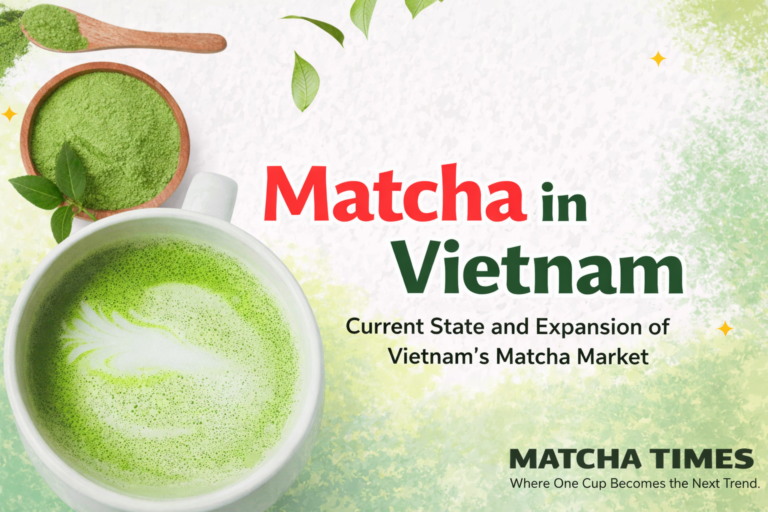
Japanese matcha has become a premium ingredient across Vietnam’s fast-growing specialty-café, health-food, and beverage-manufacturing sectors. Ho Chi Minh City and Hanoi lead in consumption, but demand extends to Da Nang and other regional cities as café chains scale and OEM manufacturers add matcha to their product portfolios.
The drivers are commercial: Vietnamese consumers associate authentic Japanese matcha with quality and premiumization, making origin and grade documentation a selling point rather than a compliance formality. For an importer or brand owner, this makes the sourcing decision consequential — the grade you select and the documentation you carry affect both your product positioning and your customs clearance.
Buyers operate across several channels: direct import from a Japanese manufacturer or exporter, purchase through a Vietnamese distributor who holds existing import licenses, or sourcing via a regional trading company with ASEAN logistics. Each channel has different documentation and minimum-order requirements.
\Read More/
Vietnamese Matcha Import Channel Map
How bulk matcha typically reaches Vietnamese businesses — each channel implies different documentation, pricing structures, and minimum commitment levels.
| Channel | Typical buyer profile | Key considerations |
|---|---|---|
| Direct import from Japanese exporter | Large café chains, OEM manufacturers, licensed importers | Requires Vietnamese import license; buyer handles customs filing; access to original COA, phytosanitary certificate, and MRL data; best for high-volume, specification-controlled sourcing |
| Vietnamese distributor or agent | Mid-size brands, growing café operators | Distributor holds the import license and handles clearance; easier entry for buyers without their own license; grade and documentation options may be more limited |
| Regional ASEAN trading company | Small importers, trial orders | May consolidate shipments from multiple origins; verify that Japanese origin and authentic grade documentation are maintained through the trading chain |
Pricing, MOQ, and Grade Selection for the Vietnamese Market
Wholesale pricing and minimum order quantities for Japanese matcha vary by grade, certifications, and supplier. No buyer should accept a quoted wholesale price without a matching COA and grade specification — the term “matcha” covers a wide spectrum from premium stone-ground ceremonial grade to lower-cost food-manufacturing powder, and the difference in price reflects real differences in origin, growing method, processing, and taste profile.
When evaluating pricing from any Japanese supplier, ask for:
- The grade designation and its corresponding specification (particle size, color value, taste profile)
- Whether the price is quoted FOB (Japan port), CIF (Vietnamese port), or EXW (factory gate)
- The MOQ for that grade, and whether a trial or sample order is available before committing to bulk
- Price stability terms — matcha harvests are seasonal; confirm whether pricing is fixed for a full contract period or subject to revision
- Any surcharges for organic JAS, halal, or other certifications if required for your product
For the Vietnamese market specifically, factor in freight and duty costs from Japan when comparing suppliers. Vietnam and Japan are both members of RCEP and CPTPP, which provide frameworks for preferential tariff treatment — confirm applicable rates with a local customs broker for your specific HS code and import conditions.
Vietnam Import Regulatory Requirements for Matcha
Vietnam’s food-import framework is set by the Law on Food Safety (No. 55/2010/QH12). Responsibility is divided among three ministries: the Ministry of Agriculture and Rural Development (MARD), the Ministry of Health (MOH), and the Ministry of Industry and Trade (MOIT). The General Department of Vietnam Customs handles customs inspection, quarantine, and declaration (source: USDA FAS country report).
Most food products — including matcha powder — require either a self-declaration or a product declaration registration before they can clear customs. Products with health-function claims or those categorized as dietary supplements face a stricter pre-market registration requirement. Confirm with your local customs broker or a Vietnamese regulatory consultant which path applies to your specific product formulation and labelling.
Matcha classification for customs purposes requires care: pure ground matcha is typically filed under HS 0902 (unfermented green tea), while matcha used in formulated products or tea extracts may fall under HS 2101 (preparations with a basis of tea). The applicable heading determines the duty rate, so mis-classification can result in underpayment penalties or delays. Work with a licensed customs broker experienced in food and agricultural imports.
Key documentation a Japanese exporter should provide for Vietnamese customs:
- Phytosanitary certificate (issued by Japan’s Ministry of Agriculture, Forestry and Fisheries, MAFF)
- Certificate of Analysis (COA) — residue/MRL, heavy metals, microbiological specs, moisture
- Certificate of Origin (preferential origin certificate for FTA preferential duty where applicable)
- Product label in Vietnamese (required for retail and food-service products placed on the market)
- Product declaration or registration number (where required by the applicable ministry)
- JAS organic certificate or equivalent, if claiming organic status
Wholesale Matcha Supplier Selection Criteria for Vietnamese Buyers
Use this checklist when evaluating any Japanese matcha supplier — it focuses on the specific requirements of the Vietnamese import and commercial context.
| Criterion | What to verify with any supplier |
|---|---|
| Grade and origin specification | Request the full grade spec sheet: cultivar, harvest season, prefecture of origin, stone-mill vs. industrial processing, particle size, color value (e.g. CIE L*a*b* data). Confirm that the spec matches your application (café latte, confectionery, capsule) |
| COA and MRL compliance | Confirm that a batch-level COA is issued for each shipment, covering pesticide residues, heavy metals, microbiological parameters, and moisture. Verify that residue levels comply with both Japanese (positive-list system) and Vietnamese standards |
| Export documentation package | Supplier should provide phytosanitary certificate (MAFF), certificate of origin, packing list, and commercial invoice in a format acceptable to Vietnamese customs |
| Certifications | JAS organic, halal, or kosher certification if required for your product or target retail channel; confirm the certifying body and expiry date |
| Minimum order quantity and lead time | Confirm the MOQ for your grade and the production/shipping lead time from purchase order to Japanese port. Ask about trial orders before committing to bulk |
| Logistics and incoterms | Clarify the incoterm (FOB, CIF, EXW); confirm which party handles export customs in Japan and import customs in Vietnam; ask about pallet/container configuration |
| Supply consistency | For ongoing supply, ask how the supplier manages seasonal variation (matcha is harvested primarily in spring); confirm whether the grade specification is held stable between harvests |
Why Buyers Choose JMEX (Japan Matcha Export Organization)

JMEX (Japan Matcha Export Organization) supplies bulk Japanese matcha with a confirmed export track record to 43 countries — including multiple ASEAN markets with food-import frameworks similar to Vietnam’s. For Vietnamese importers and OEM manufacturers, this translates into practical export-side capability:
- Grade design covering the Vietnamese market’s range — from ceremonial and premium food-service grades for specialty cafés to processing and manufacturing grades for RTD beverages and confectionery
- Full export documentation package: COA (pesticide residues, heavy metals, microbiological, moisture), phytosanitary certificate (MAFF), certificate of origin, and packing documentation
- JAS-certified organic and conventional grades available; halal certification guidance available on request
- Stable supply from Kyoto Uji, Kagoshima, Fukuoka, and Shizuoka origins with transparent harvest-season management and batch traceability
- Export experience with ASEAN import procedures; documentation formatted to support Vietnamese customs declaration and product self-declaration requirements
Official sources to verify before you order
Import duties, tariff classification, food-safety rules and certification requirements change and differ by market. Confirm the current rules for your shipment directly with the authorities below; this article is a buyer’s guide, not legal or customs advice.
- World Customs Organization — Harmonized System — HS classification basics
- JETRO — Japan External Trade Organization — Japan export & market support
- MAFF — Ministry of Agriculture, Forestry and Fisheries of Japan — Japanese agricultural exports
- FAO/WHO Codex Alimentarius — International food standards
Frequently Asked Questions
What HS code applies to Japanese matcha imported into Vietnam?
Pure stone-ground matcha powder is generally classified under HS heading 0902 (unfermented green tea), while matcha used in tea-based preparations or extracts may fall under HS 2101. The applicable heading affects the duty rate and customs-clearance procedure. Because classification depends on the product’s specific formulation and presentation, consult a licensed Vietnamese customs broker before filing.
Does Vietnam require a product declaration for imported matcha?
Under Vietnam’s Law on Food Safety (No. 55/2010/QH12), most imported food products — including matcha powder — require either a self-declaration or a product declaration registration before customs clearance. Products bearing health-function claims may face additional pre-market registration requirements under MOH oversight. Confirm the specific path for your product with a Vietnamese regulatory consultant or customs broker.
What documents does a Vietnamese importer need from a Japanese matcha supplier?
Essential documents include: a phytosanitary certificate (issued by MAFF in Japan), a batch Certificate of Analysis (COA) covering pesticide residues, heavy metals, and microbiological parameters, a certificate of origin (required for any FTA preferential duty claim), a Vietnamese-language product label, and — where applicable — a product declaration or registration number. Your Japanese supplier should be able to issue all of these before the shipment departs Japan.
What grades of Japanese matcha are most commonly used by Vietnamese businesses?
Vietnamese specialty cafés typically use premium food-service or ceremonial grades for signature matcha lattes and seasonal menu items. OEM food manufacturers and beverage producers generally use culinary or food-manufacturing grades for cost efficiency at scale. The best grade for your application depends on your end product, target price point, and whether Japanese origin certification is part of your brand proposition.
Can a Japanese supplier ship directly to a Vietnamese importer without a local agent?
Yes — direct import from a Japanese exporter is possible provided the Vietnamese buyer holds (or partners with a holder of) a valid Vietnamese import license for food products, and that all import documentation from the Japanese side is in order. Many first-time importers work with a Vietnamese licensed distributor or a customs agent to handle in-country clearance, especially for the first few shipments.
Do RCEP or CPTPP preferential tariffs apply to Japanese matcha exported to Vietnam?
Vietnam and Japan are members of both RCEP (Regional Comprehensive Economic Partnership) and CPTPP (Comprehensive and Progressive Agreement for Trans-Pacific Partnership), which provide frameworks for preferential tariff treatment on qualifying goods. Whether a specific matcha shipment qualifies for preferential duty under one of these agreements depends on the HS code, rules of origin, and the applicable tariff schedule for that agreement at the time of import. Confirm with your customs broker before relying on a preferential rate.
Learn More About Global Matcha Trends at Matcha Times

Matcha Times is a specialist media platform covering the global matcha market — sourcing and wholesale, supply and pricing, trade and regulations, production and origins, and the companies shaping the industry.
From market analysis and price trends to café case studies and interviews with tea farmers, we help buyers, importers, distributors, and manufacturers stay ahead of where matcha is heading. Explore more and put the global matcha market to work for your business.
Conclusion
Wholesale matcha sourcing for the Vietnamese market combines supplier selection, documentation management, and an understanding of Vietnamese food-import requirements. The buyers who move fastest and most confidently are those who start with a supplier who understands export documentation — not just product quality — and who can provide the COA, phytosanitary certificates, and origin documentation that Vietnamese customs and food-safety authorities require.
Ready to source bulk Japanese matcha for the Vietnamese market? Contact JMEX — we will recommend the right grade and origin for your application and provide the full export documentation package your Vietnamese import needs.
Related Articles
Sources & Methodology
This article draws on the following primary sources: (1) Vietnam Law on Food Safety No. 55/2010/QH12 (National Assembly of Vietnam); (2) USDA FAS/GAIN Report — Vietnam: Food and Agricultural Import Regulations and Standards (2022, agriexchange.apeda.gov.in); (3) JETRO Vietnam Business Guide — Food import procedures; (4) Vietnam Customs HS code database (General Department of Vietnam Customs) for HS 0902 classification; (5) RCEP and CPTPP agreement texts (Ministry of Foreign Affairs of Japan / DFAT Australia) for preferential tariff framework references. No price, duty rate, or MOQ figures have been stated without attribution to a named primary source. Where authoritative data was unavailable, qualitative guidance is provided instead.
Editorial Transparency
This article was produced by the Matcha Times editorial team with input from JMEX (Japan Matcha Export Organization). JMEX is a commercial partner; the import-regulation, HS-code, and documentation guidance in this article is drawn from independent primary sources (Vietnamese law, USDA FAS, JETRO) and is not specific legal or customs advice. Readers should consult a licensed Vietnamese customs broker or regulatory consultant for guidance specific to their products and import circumstances.