UK Matcha Market: Health Consciousness, Cultural Appeal & Sustainable Growth
In the United Kingdom known as a tea nation, “matcha” has recently increased presence remarkably. Centered in London, cafes have standardized matcha lattes and matcha desserts, with matcha powder and stick products now readily purchasable at supermarkets and online. Background factors include health consciousness, superfood booms, and interest in Japanese culture, with matcha now becoming “part of lifestyle beyond trends.”
This article thoroughly explains why matcha attracts attention in the UK, from market expansion realities to popular cafes and home enjoyment methods, plus business opportunities for Japanese brands. Those wanting to know UK matcha situation’s “now” should read through to the end.
Key Takeaways
- UK matcha market demonstrates sustained growth driven by health consciousness, coffee alternative demand, and Japanese cultural boom synergies
- Market expansion evidenced by 2024 Japanese green tea exports reaching record 36.4 billion yen, with UK growth particularly notable
- London cafe culture leads with diverse venues from traditional (TSUJIRI UK) to innovative (Katsute100, Nagare, Matcha Mochi Cafe)
- Home consumption expands through DIY drinks, baking applications, and convenient stick/teabag formats at major supermarkets (Tesco, Waitrose)
- Market segmentation between Japanese authenticity-focused brands and local innovation-driven brands (Matchado, Blank Street Coffee)
- Business opportunities exist through premium quality positioning, sustainability messaging, and local collaboration strategies
\For Companies Seeking Matcha Powder/
\For Companies Seeking Matcha Powder/

We source matcha from Japan’s premier production regions including Kyoto Uji, Kagoshima, Fukuoka, and Shizuoka, offering comprehensive grade ranges from organic JAS-certified ceremonial grade to processing-grade matcha.
Common Challenges:
- “We have projects but cannot secure stable matcha supply…”
- “We want to incorporate matcha into new café menu items!”
If you face these concerns, consult with Matcha Times. Feel free to contact us for initial inquiries.
Why Matcha Attracts Attention in the UK

While the UK maintains strong tea nation imagery, “matcha” has rapidly increased presence recently. Background involves multiple elements including health consciousness, coffee alternative demand, and Japanese culture booms intertwining, with matcha accepted as new lifestyle symbols. Here we organize primary reasons.
Health Consciousness and Superfood Boom
In the UK, “superfood booms” continue with proactive incorporation of healthy, nutritious foods. Matcha possesses characteristics including catechin antioxidant effects, theanine relaxation benefits, and abundant vitamins and minerals, making it an ideal superfood.
Particularly Gen Z and millennial generations demonstrate strong needs to “balance beauty and health,” with matcha’s vibrant green color also appealing for SNS sharing. Indeed, as “the next healthy boom” following acai bowls and chia seeds, matcha establishes itself centered in London.
Key Points:
Such scientifically-grounded benefits make matcha not temporary trends but continuously chosen beverages.
New Coffee Alternatives
The UK represents a “cafe powerhouse” with major chains like Starbucks and Pret A Manger lining streets, yet increasing numbers worry about insomnia and palpitations from coffee caffeine. Matcha features gentler caffeine absorption compared to coffee, characteristically maintaining concentration for extended periods.
Particularly among business professionals and students, matcha attracts attention as “smart energy drinks” replacing coffee. Needs perfectly align with wanting mental sharpness during work or refreshment during study breaks.
“Coffee mornings, matcha afternoons” represents a new lifestyle increasingly chosen, with most urban UK cafes now enabling matcha latte orders.
Japanese Culture and Washoku Boom Synergies
Another factor supporting matcha popularity involves synergies with Japanese culture and washoku booms. With sushi and ramen now commonplace, matcha gathers interest as “the next Japanese taste experience.”
Additionally, matcha represents beverages symbolizing tea ceremony and Zen spirit, accepted beyond mere preference items as “symbols of Japanese-style lifestyles.” Adding Instagram-worthy visuals, it spread centered on youth as “healthy × stylish beverages.”
Indeed, walking through London reveals many signs displaying “MATCHA.” This extends beyond mere beverage trends, demonstrating Japanese culture itself penetrating as brand value.
Current State and Expansion of UK Matcha Market
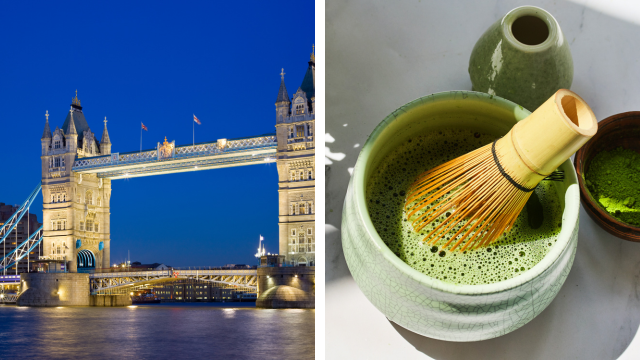
Matcha popularity enters not temporary trends but sustained market expansion phases. Import volume increases, distribution channel expansions, and intensifying brand competition provide evidence.
Import Volume and Market Scale Progression
According to Japan’s Ministry of Finance, 2024 “green tea (including matcha)” export value recorded 36.4 billion yen as a historic high. UK market growth proves particularly notable, with tea buyers reporting “our matcha sales exceeded tea.” Cases where matcha seizes top sales positions in tea-culture-rooted UK symbolize market transformation.
Furthermore, many London Coffee Festival vendors provide matcha drinks, with entire industries beginning to respond to matcha demand. Matcha shifts positioning from preference items toward “everyday choices.”す。
Online Sales and Supermarket Penetration
In the UK, major supermarkets including Amazon UK, Tesco, and Waitrose have standardized matcha powder and stick-type matcha lattes. Pandemic-triggered accelerating online purchases spread home matcha enjoyment habits.
Particularly, health-conscious households favor value-added products including “sugar-free” and “organic.” “Easy home matcha latte preparation” represents important elements supporting market expansion parallel to cafe culture.
Japanese Brand and Local Brand Competition
UK matcha markets grow through Japanese brand and local brand coexistence.
Japanese Brands (Tsujiri, Ito En, etc.)
Popular among “authenticity-oriented” demographics through high quality and traditional strengths.
Local Brands (Matchado, Blank Street Coffee, etc.)
Develop youth demographics through arranged products combining matcha with berries and lavender.
Particularly local brands prominently feature “organic certification” and “fair trade” elements, gaining support from sustainability-oriented consumers. Consequently, UK matcha markets demonstrate polarization progressing between “authenticity orientation” and “casual orientation,” anticipating further expansion.
London-Centered Matcha Cafe Culture

Undoubtedly driving UK matcha booms is London’s matcha cafe culture. Recent years see stores handling matcha rapidly increasing, penetrating as “standard street corner menus” alongside tea and coffee. Combined with SNS diffusion power, rapid spreading occurs particularly among youth generations.
Popular London Matcha Cafe Examples
London features diverse matcha cafes, each acquiring fans through different approaches.
TSUJIRI UK (Tsujiri)
Kyoto-origin established brand. Beyond matcha lattes and hojicha lattes, reproduces authentic Japanese flavors including matcha parfaits and dango. Popular among tourists too.
Katsute100
Cafe attracting attention through stylish interiors and Japanese sweets. Arrangements accessible to British including matcha cheesecake and dorayaki prove popular.
Nagare
Newly emerging matcha cafe. Abundant Western arrangements including bakery items and matcha croissants gain support even from resident Japanese.
Matcha Mochi Cafe
Features Instagram-worthy desserts and colorful matcha drinks. Weekend queues demonstrate youth popularity.
These stores firmly take root not only among “Japan-loving tourists” but also London-resident youth utilizing them daily.根付いています。
Popular Matcha Desserts and Matcha Latte Menus
Local standards remain matcha lattes. However, rather than simple Japanese-style flavors, flavored arrangement matcha proves mainstream.
Such unique menus represent innovations making beverages drinkable even for “British who dislike bitterness” through added sweetness and aromas. Furthermore, desserts including matcha Basque cheesecake and matcha cookies also standardize, providing cafe users with “enjoying through eyes and tongue” experiences.
Youth Generation and SNS Diffusion Power
One major reason for matcha’s penetration involves SNS diffusion power. Matcha latte’s vibrant green colors and dessert beautiful presentations characteristically post easily as “Instagram-worthy photos” on Instagram and TikTok.
Indeed, hashtags like “#matchalatte” and “#matchacafe” contain millions of posts, with “sharing more than drinking” culture propelling booms. For youth, matcha represents not mere beverages but lifestyle-coloring icons.
Expanding Home Matcha Enjoyment
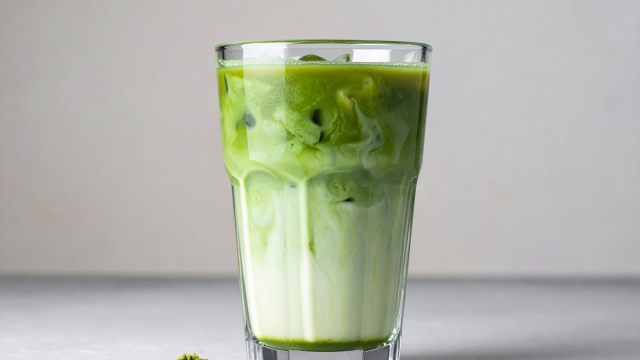
Simultaneously with cafe culture expansion, the UK rapidly increases demographics enjoying matcha at home. Becoming readily purchasable at supermarkets and online, matcha establishes itself not as special beverages but “daily health habits.”
DIY Drinks Using Matcha Powder
“DIY matcha lifestyles” making matcha lattes at home spread. Using commercially available matcha powder, popular arrangements match preferences with cow’s milk, soy milk, oat milk, and coconut milk. Particularly oat milk compatibility proves good, gaining support from vegan-oriented and lactose-intolerant demographics.
YouTube and Instagram feature numerous “DIY matcha latte” and “matcha smoothie” recipe videos, with visually attractive recipe content propelling home demand.
Matcha Desserts and Bakery Applications
Beyond merely drinking, movements to handmake matcha desserts in home kitchens also expand. Adding matcha to cakes, muffins, and breads enables enjoying vibrant green colors and distinctive flavors as appeal.
Such recipes progress toward home standardization, with “Japanese × Western” fusion enjoyment also representing popularity reasons. Matcha’s color appeal makes it valued for home parties and hospitality.
Teabag and Simple Stick Popularization
Meanwhile, lowering barriers of “matcha cannot be whisked without chasen” involves popularization of stick-type matcha lattes and teabag types. Becoming readily purchasable at major supermarkets including Tesco and Sainsbury’s, enjoyment becomes simple even during busy mornings or work breaks.
Particularly, increasing variations including sweetened types, unsweetened types, and organic specifications enable consumers to select products matching lifestyles. Consequently, matcha evolves from “special beverages” toward “daily health habits.”
Business Opportunities for Japanese Matcha Brands

UK matcha booms represent not mere tailwinds but sustained business opportunities for Japanese brands. Amid market expansion, leveraging “quality, health, cultural value” represents strengths unique to authentic Japanese brands.
High-Quality Authentic Matcha Needs
While “sweet arranged matcha” like strawberry matcha lattes and blueberry matcha lattes proves widely beloved in the UK, demographics seeking “authentic matcha” also steadily increase. Tea ceremony experience events and Japanese cafes gather support not only from tourists but affluent and health-conscious local residents. High-quality regional brands including Uji matcha and Nishio matcha can develop markets through “authenticity” added value.
Health and Sustainability Appeal Importance
UK consumers prove sensitive to organic and environmental considerations, with fair trade certification and sustainable cultivation representing major purchase determinants. Featuring Japanese tea garden characteristics including “pesticide-free cultivation” and “traditional shade-growing” enables differentiation from other countries’ matcha. Additionally, “healthy and ethical Japanese matcha” anticipates expansion to EU region exports.
Local Collaboration Success Cases
In UK markets, local collaborations represent keys broadening brand recognition. For instance, London bakeries deploying matcha croissants or matcha dessert fairs collaborating with artists—Japanese brands intersecting with local culture generate new value. Such cases gain ready consumer acceptance as “authentic quality × local lifestyles.”
Learn More About Global Matcha Trends at Matcha Times

UK-spreading matcha booms result from overlapping health consciousness, Japanese culture popularity, and lifestyle transformations. However, matcha’s appeal and potential still lie ahead. Knowing latest trends across countries and Japanese tea region initiatives reveals matcha’s deeper dimensions.
Matcha Times broadly publishes from matcha market analysis to cafe situations and farmer interviews. Won’t you also take this opportunity to deeply explore matcha’s world? The more you know matcha, the more surely its charm will draw you in.深掘りしてみませんか?
Summary: UK Matcha Situation Symbolizes Growth and Potential
UK matcha popularity represents not temporary trends but new market formation resulting from health consciousness, Japanese culture, and lifestyle fusion. Matcha establishing itself in tea-culture-rooted nations demonstrates evaluation as “existence connecting wellness and culture” beyond mere beverages.
Indeed, matcha spreads to youth through cafe culture, integrates into daily life at homes as DIY drinks and desserts, and further receives strong support from demographics seeking sustainability and high quality. Such backgrounds also represent major business opportunities for Japanese matcha brands, with “authentic quality × local culture” combinations becoming keys unlocking futures.
Current situations where matcha gains love in tea nations symbolize the world rediscovering Japanese tea’s universal value.
Also recommended