Texas Matcha Market Is Booming: Houston, Dallas, and Austin B2B Demand Analysis 2026
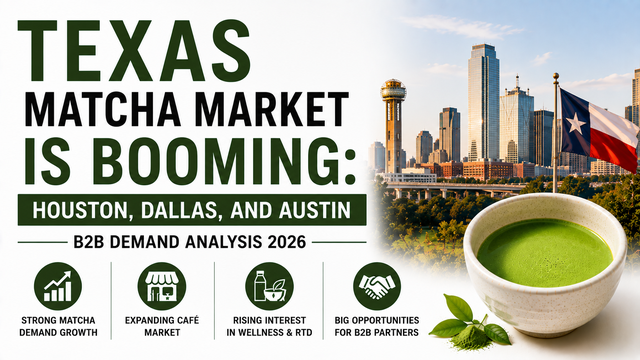
Since 2024, Texas has quietly emerged as one of North America’s fastest-growing markets for matcha. A wave of California-to-Texas migration, corporate relocations by major tech companies, and Gen Z and Millennial fitness culture have converged in the so-called “Texas Triangle” — Houston, Dallas, and Austin — driving a sharp rise in B2B demand for premium Japanese powdered matcha.
But Texas is not New York, and it is certainly not California. The summer heat, the logistics network anchored by the Port of Houston, a Hispanic population that accounts for nearly 40% of the state, and unique state-level food labeling rules mean that strategies designed for the coasts often collapse when applied to Texas.
Drawing on JMEX (Japan Matcha Export Organization) and its export track record across 43 countries, this article breaks down B2B matcha demand across the three Texas cities by segment, and lays out the entry playbook Japanese matcha producers and exporters should follow to win in this market.
For Companies Seeking Matcha Powder
We source matcha from Japan’s premier production regions including Kyoto Uji, Kagoshima, Fukuoka, and Shizuoka, offering comprehensive grade ranges from organic JAS-certified ceremonial grade to processing-grade matcha.
Common Challenges:
- “We have projects but cannot secure stable matcha supply…”
- “We want to incorporate matcha into new café menu items!”
If you face these concerns, consult with Matcha Times. Feel free to contact us for initial inquiries.
\Read Also/
→ Will Matcha Latte Take Off in Washington State? A 2026 Deep Dive into the B2B Cafe Market
Why the Texas matcha market is drawing global attention
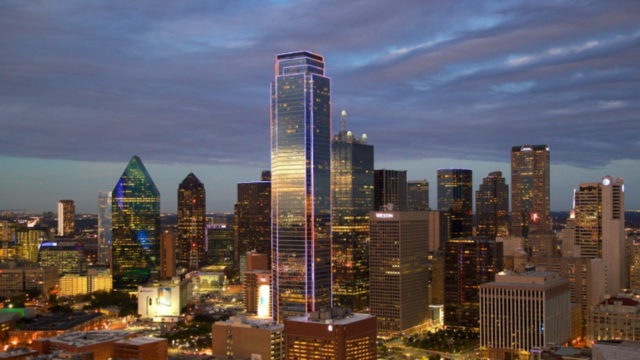
Texas is not just “another U.S. state.” Its GDP alone is roughly $2.5 trillion — a scale that would place it among the top ten economies in the world. Within this economic engine, three mega-trends are reshaping matcha demand simultaneously.
First, the Sun Belt migration. Since 2020, roughly 100,000 people per year have relocated from California to Texas, many of them highly compensated professionals in tech and finance. They brought with them the daily habit of matcha lattes and matcha smoothies, rapidly expanding the demand base in every major Texas city.
Second, corporate relocations. Tesla, Oracle, Hewlett Packard Enterprise, and Palantir have all moved headquarters or major operations to Texas. Their in-house cafes, employee canteens, and partnered coffee chains are steadily rolling out matcha-based drinks. High-income tech workers are typically the first cohort to substitute matcha for coffee.
Third, the youth fitness culture. Texas has one of the highest per-capita densities of fitness clubs and yoga studios in the U.S., and matcha has settled comfortably into the “plant-based energy drink” and “focus drink” narrative. TikTok hashtags such as “Matcha Latte in Austin” and “Dallas Matcha Cafe” have seen sharp view growth throughout 2025.
The combined effect: the B2B matcha market across the three Texas cities is on track to become the third major U.S. matcha hub after New York and Los Angeles.
Why NY and LA playbooks fail in Texas
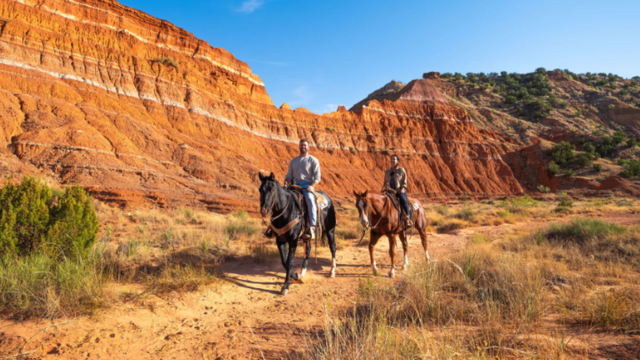
Texas is growing, but importing your NY or California playbook wholesale is a fast way to burn your first year. Texas diverges from the coasts in three critical dimensions: logistics, climate, and culture.
Start with logistics. Most Japanese matcha exporters still route their Texas-bound shipments through the Port of Los Angeles, then truck them inland. That adds one to two weeks of transit time and exposes the product to sustained heat during the southern crossing. In fact, the Port of Houston is the closest deep-water port to all three major Texas cities, and the routing decision alone materially changes both freshness and landed cost.
Then climate. From June through September, daytime highs in Texas routinely exceed 34°C (93°F), with high humidity. Container interiors on standard dry containers easily push past 60°C (140°F), and the vivid green color and delicate aroma compounds of matcha degrade quickly under those conditions. Exporters without reefer container capability or temperature-controlled destination warehousing will consistently lose on quality in Texas.
Finally, culture. Roughly 40% of the Texas population is Hispanic, and demand for kosher- and halal-certified products is climbing steadily in the major metros. Positioning matcha simply as “premium Japanese green tea” reaches only a slice of the market — multicultural certification coverage and localized marketing are now table stakes.
B2B matcha demand map: Houston, Dallas, and Austin
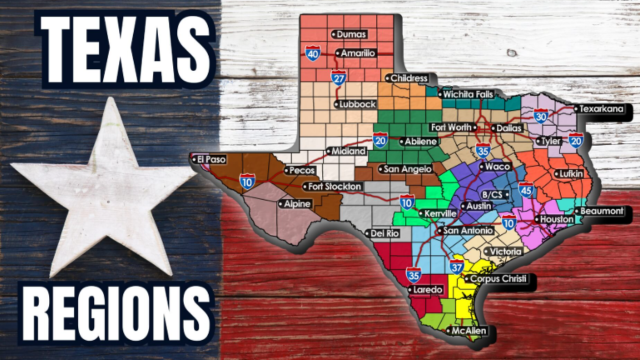
Treating Texas as a single market is a mistake. Each of the three cities has a distinct demographic mix, economic base, and mix of buyer segments — so supply-side positioning has to be tailored city by city. Below are the demand profiles JMEX has mapped through direct engagement with buyers on the ground.
Houston — energy, healthcare, multicultural, port-adjacent
Houston has about 2.4 million residents in the city proper and roughly 7.7 million in the metro area, ranking it the fourth-largest metropolitan area in the United States. Beyond the energy sector, the Texas Medical Center is the largest medical complex in the world, generating steady demand for functional beverages among hospital cafes and healthcare staff. Houston is also 45% Hispanic and 7% Asian, giving it one of the most multicultural profiles of any major U.S. metro, with correspondingly high sensitivity to halal, kosher, and vegan certification. The Port of Houston already handles significant food-grade imports, offering a direct receiving path for Japanese matcha. Priority buyer segments include luxury hotels, premium supermarket beverage bars (Whole Foods and similar), medical campus cafes, and restaurant dessert supply.
Dallas — finance, sports, and luxury hospitality
The Dallas–Fort Worth metroplex has about 8.1 million residents, making it the largest metro in Texas. Corporate headquarters in finance, IT, and apparel drive a deep base of high-income professionals. Dallas is also a serious sports town, home to the Mavericks (NBA), Cowboys (NFL), and FC Dallas (MLS), and matcha is increasingly positioned as a sports nutrition and performance drink. DFW Airport is one of the busiest hubs in North America, and luxury properties such as the Ritz-Carlton and Rosewood Mansion on Turtle Creek are actively rolling out premium matcha lattes across lobby bars and room service. Priority buyer segments include luxury hotels, gourmet supermarkets such as Central Market, sports nutrition D2C brands, and premium coffee chains.
Austin — tech, wellness, and one of America’s densest cafe scenes
Austin sits at about 1 million residents, but concentrates offices and headquarters from Apple, Tesla, Meta, Google, and Oracle, and its median disposable income ranks among the highest in the United States. Its per-capita cafe density is in the U.S. top ten, and as specialty coffee saturates, matcha is emerging as the clearest “next drink” narrative. During SXSW, Austin briefly becomes a global launch platform, ideal for introducing new matcha brands. The University of Texas at Austin adds more than 50,000 students — a Gen Z buyer pool that no export strategy should ignore. Priority buyer segments include tech company employee cafes and cafeterias, boutique gyms and yoga studios, D2C wellness brands, and campus cafes.
| Buyer segment | Houston | Dallas | Austin |
|---|---|---|---|
| Luxury hotels & hospitality | ◎ | ◎ | ○ |
| Premium supermarkets & gourmet | ◎ | ◎ | ○ |
| Tech company cafes / cafeterias | ○ | ○ | ◎ |
| Sports nutrition & D2C | ○ | ◎ | ○ |
| Healthcare & functional beverages | ◎ | ○ | ○ |
| Boutique gyms & wellness | ○ | ○ | ◎ |
| Halal & multicultural retail | ◎ | ○ | △ |
Six pitfalls that trip up Japanese exporters in Texas

Texas is an attractive market, but exporters routinely encounter pitfalls that never came up on their NY or California accounts. Here are six patterns JMEX has seen repeatedly in buyer conversations on the ground.
First, choosing the wrong port of entry. Routing through LA or Long Beach and trucking east adds one to two weeks of transit and exposes the shipment to prolonged heat across the southern U.S. A direct Japan-to-Houston lane preserves both lead time and product quality.
Second, underestimating heat logistics. Shipments moved in standard dry containers frequently arrive with visible color degradation, prompting buyer rejections. Reefer containers plus temperature-controlled destination warehousing are the minimum viable setup for Texas.
Third, overlooking halal and kosher certification. Houston has a substantial halal-driven market and Dallas has a real kosher market. Certification presence dictates the shelves you can reach.
Fourth, ignoring the interplay of state and federal food regulation. Texas has its own labeling rules that layer on top of FDA requirements — meeting FDA standards alone does not guarantee in-state compliance.
Fifth, discounting the Hispanic market. With roughly 40% of the population being Hispanic, Spanish-language labeling and multicultural positioning is already standard among leading brands in the state.
Sixth, absorbing the cost of layered domestic intermediaries. When export routing stacks multiple distributors, landed cost to the buyer can shift by 20 to 30 percent depending on whether you’re partnered with a supplier that ships directly from origin.
Six criteria smart Texas buyers use to evaluate Japanese suppliers
The buyers driving Texas matcha volumes — luxury hotels, cafe chains, supermarkets, and D2C brands — evaluate Japanese suppliers along six dimensions.
First, breadth of origin selection. The optimal origin (Uji, Shizuoka, Kagoshima, Yame) shifts with the intended use — latte, pastry, health food — and with price positioning. A single-origin supplier is difficult to trust across multiple SKU lines.
Second, certification coverage. FDA FSMA, USDA Organic, EU Organic, and halal, kosher, and full MRL compliance together form the foundation for reaching Texas’s multiple channels — health food, hospitality, retail, and multicultural retail — at once.
Third, lot flexibility. Being able to move from a 10 kg pilot to over 1 ton per month within the same supplier is often the deciding factor in vendor selection.
Fourth, heat logistics capability. Reefer container arrangement, temperature-controlled destination warehousing, and seasonal scheduling proposals together earn disproportionate trust in the Texas market.
Fifth, local support infrastructure. Response time in English and Spanish, sample turnaround, and question-response speed all translate directly into contract close rates.
Sixth, pricing flexibility. The ability to span premium and mid-range grades from a single supplier determines whether a buyer can consolidate their SKU line into one relationship.
\Read More/
How to Choose a Matcha Supplier
Before you commit to a matcha supplier for this use case, evaluate every candidate on the same criteria. Use the checklist below when you request quotes and samples.
| Criterion | What to verify with any supplier |
|---|---|
| Selection criterion | Confirm this directly with the supplier and request supporting documentation. |
| Selection criterion | Confirm this directly with the supplier and request supporting documentation. |
| Selection criterion | Confirm this directly with the supplier and request supporting documentation. |
| Selection criterion | Confirm this directly with the supplier and request supporting documentation. |
| Selection criterion | Confirm this directly with the supplier and request supporting documentation. |
Apply this checklist to each supplier on your shortlist and decide on current quotes, samples and documentation. JMEX (Japan Matcha Export Organization) is an export-focused Japanese matcha supplier with export experience to 43 countries; you can request pricing and terms directly and assess it against the criteria above.
Three reasons JMEX wins in Texas
Here is why buyers in all three Texas cities continue to name JMEX as a preferred supplier.
First, optimal-origin proposals across the full spectrum of Japanese matcha regions. Uji for its vivid green and sweetness on latte applications; Shizuoka for scaled mid-range volume; Kagoshima organic for health and functional channels; Yame for wagashi and confectionery. JMEX matches the origin to the buyer’s actual channel mix.
Second, full-coverage export compliance. FDA FSMA, USDA Organic, EU Organic, Taiwan TFDA, Singapore SFA, plus halal and kosher — JMEX consolidates all major export certifications under one supplier relationship, and can issue COA, MRL documentation, and organic certificates on request.
Third, B2B-native supply and 43-country reach. JMEX has export experience across 43 countries and services volumes ranging from 10 kg pilot batches to over 1 metric ton per month — from the same operational footprint. In fast-moving markets like Texas, where accounts start small and scale rapidly, this flexibility is often the deciding factor.
Beyond that, JMEX addresses Texas-specific heat logistics end-to-end: reefer container arrangements, temperature-controlled destination warehousing, and peak-season scheduling.
A six-step launch playbook for Texas sourcing
Whether you’re launching a new Texas buyer relationship or scaling an existing one, this six-step sequence keeps risk contained.
Step 1: define your market position. Pick the primary channel (hotels, cafes, supermarkets, D2C) and the beachhead city (Houston, Dallas, or Austin).
Step 2: sample sourcing. Order two to three origin and grade variants aligned to your intended use, and evaluate flavor, color, and solubility with your local team.
Step 3: pilot supply. Roll out in one to three locations for two to three months and validate real-world sell-through and operational fit.
Step 4: formalize the contract. Lock in monthly volumes, lead times, payment terms, certification packets, and label requirements (English plus Spanish where applicable).
Step 5: logistics design. Confirm the entry port (Houston strongly recommended), container type (reefer strongly recommended), destination warehouse, and inland transport plan to the three Texas cities.
Step 6: expand and optimize. Layer in additional SKUs — halal, kosher, organic — based on real sell-through data.
Following this playbook, most Texas rollouts stabilize into steady supply within three to six months, regardless of which city serves as the entry point.
Frequently asked questions
What is the minimum order quantity?
JMEX supports 10 kg pilot orders for testing and can scale to over 1 metric ton per month from the same supply footprint.
What is the lead time from Japan to Texas?
Direct services from Japan into the Port of Houston typically take three to four weeks port-to-port — usually faster than routing via LA and trucking inland.
How is transport handled during the peak heat season (June to September)?
Reefer containers, temperature-controlled destination warehousing, and scheduling that avoids the hottest weeks are combined to minimize degradation of color and aroma compounds.
Do you support halal and kosher certification?
Depending on origin and production line, halal, kosher, USDA Organic, and EU Organic certified matcha are all available. Multiple certified SKUs can be proposed in parallel for Texas’s multicultural retail landscape.
What are the price ranges?
Pricing varies with grade and application, from mid-range latte grades to premium hotel grades and confectionery-grade ultra-premium matcha. Specific quotations are provided per case.
Learn More About Global Matcha Trends at Matcha Times

UK-spreading matcha booms result from overlapping health consciousness, Japanese culture popularity, and lifestyle transformations. However, matcha’s appeal and potential still lie ahead. Knowing latest trends across countries and Japanese tea region initiatives reveals matcha’s deeper dimensions.
Matcha Times broadly publishes from matcha market analysis to cafe situations and farmer interviews. Won’t you also take this opportunity to deeply explore matcha’s world? The more you know matcha, the more surely its charm will draw you in.
The bottom line: winning in Texas requires city-level strategy, heat logistics, and multi-certification
The Texas matcha market is on a durable upswing through 2026, driven by Sun Belt migration, corporate relocations, and Gen Z fitness culture. But NY and California playbooks will not translate. Winning here requires city-specific segment targeting across Houston, Dallas, and Austin, a Port of Houston–anchored logistics design, and multicultural certification coverage — all delivered by a supplier that knows the Texas terrain.
JMEX combines origin breadth across Japan, full-coverage export certifications, B2B-native supply, a 43-country export track record, and heat-logistics expertise — supporting entry and expansion across all three Texas cities end-to-end.
Looking for wholesale or OEM matcha samples? Contact us — we will recommend the optimal origin and grade based on your application and target markets.
Related analysis
For related analysis, see:
→ The UAE Matcha Market: Dubai Demand, Halal Sourcing & Opportunity
Related Articles
→ California Matcha Market 2026: A B2B Deep Dive Into Café, Wellness, and Food Brand Demand
→ 2026 Shincha Market Flash Report: Tencha Prices double?! — 3 Things Buyers Must Know Now