Best Matcha for Thai-Style Iced Lattes: Sweetness, Strength and Cost per Cup
The best matcha for Thai iced latte is a premium culinary or barista-grade matcha built to hold up to cold milk, ice and a lot of sweetness — not a delicate ceremonial tea. A Thai-style iced latte is poured over ice, cut with milk, and usually sweetened hard with condensed milk or syrup, so cold dilution and sugar flatten a fine spring tea. For that format, a beverage matcha selected on colour, particle size and stability consistently out-performs a pricier ceremonial grade. This guide sets the spec to verify, the Thai-specific formulation constraints (including the country’s sugar excise), a reusable cost-per-cup framework, and a supplier checklist you can apply to any exporter — including JMEX.
For Companies Seeking Matcha Powder
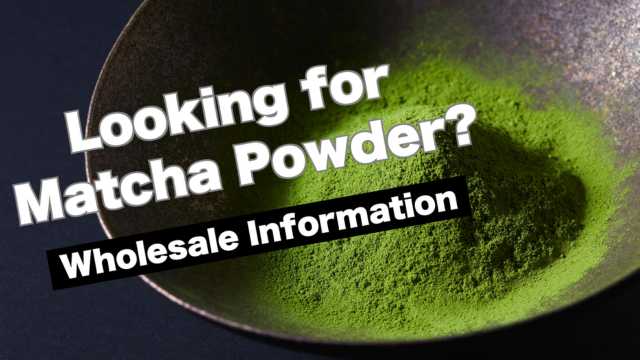
We source matcha from Japan’s premier production regions including Kyoto Uji, Kagoshima, Fukuoka, and Shizuoka, offering comprehensive grade ranges from organic JAS-certified ceremonial grade to processing-grade matcha.
Common Challenges:
- “We have projects but cannot secure stable matcha supply…”
- “We want to incorporate matcha into new café menu items!”
If you face these concerns, consult with Matcha Times. Feel free to contact us for initial inquiries.
\Read Also/

Key Takeaways: choosing matcha for a Thai iced latte
- Grade follows format: cold milk, ice and condensed-milk sweetness mute delicate umami, so a bold, colour-stable culinary/barista grade reads better than ceremonial.
- Buy on spec, not adjectives: request the D50 (median particle size), colour value, and a note on colour/oxidative stability, not just a marketing grade name.
- Sweetness is a tax line: Thailand’s tiered sugar-sweetened-beverage excise rewards lower added sugar, so a vividly green, low-bitterness matcha lets you hit flavour at less syrup.
- Cost per cup: matcha is usually a small share of the cup cost versus milk and sweetener — model it before you trade down on quality.
- JMEX designs grade, particle and colour to a target sweetness and verifies it on a spec sheet and COA, with exports to 43 countries.
\Read More/
Which matcha grade suits a Thai-style iced latte?
Short answer: a premium culinary or barista/latte grade. Ceremonial grade is bred for a thin, hot, unsweetened bowl where its soft umami and low bitterness are the whole point. Drop the same tea into ice, milk and condensed milk and most of that nuance disappears — you have paid a premium for notes the format erases.
For an iced latte you actually want a matcha selected to perform under milk and cold: a vivid green that survives dilution, enough body to be tasted through milk, and a controlled bitterness so it stays pleasant when the sweetness is dialled up. That is an engineering choice about colour and particle behaviour, not a prestige tier.
Two cautions. First, not all culinary matcha is beverage-ready — a coarse, dull “cooking” powder will go grey and chalky in a clear glass. Second, every supplier defines “latte grade” differently the way it markets it, so the grade name on the bag is a starting point, not a specification. Verify the numbers below.
Spec by application: what to verify for iced-latte matcha
Ask any exporter for these attributes in writing. The table maps each spec to why it matters in a cold, milky, sweet drink, and what to request on the spec sheet or COA.
| Spec to verify | Why it matters for an iced latte | What to request |
|---|---|---|
| Colour (vividness) | Ice and milk lighten the drink; a dull base looks grey/yellow through a clear glass. | A colour value or reference chip, plus a note on colour stability after mixing. |
| Particle size (D50) | Finer, evenly milled powder disperses cold and stays suspended, reducing grit and settling. | The median particle size (D50 in microns); ask how it is measured. |
| Umami vs bitterness | Cold and sweetness exaggerate harsh, astringent notes; a rounded profile survives syrup. | Tasting notes and, if available, an amino-acid/catechin indication. |
| Colour & oxidative stability | A drink built at open bar and held on ice must not fade or brown before service. | Guidance on hold time, packaging (nitrogen-flushed, resealable) and storage. |
| Milk compatibility | Dairy, oat and condensed milk behave differently; the base must not curdle or separate. | A recommended dosage and a suggested build for dairy vs plant milk. |
| Food-safety documents | Required for import into Thailand and for your own QA. | COA, pesticide/heavy-metal test summary, allergen and origin statements. |
Dosage is the other lever. Cafés typically dose around 2 g for a 12 oz cup and roughly 2.5–3.5 g for a 16 oz iced latte; more ice and more milk push you toward the top of that range so the matcha still speaks. Treat those as starting points to confirm against your own recipe, not fixed rules.
Formulating for Thai sweetness: condensed milk, ice and the sugar excise
Thai-style iced drinks have a strong house style: condensed-milk richness and pronounced sweetness. Thai tea, cha yen and their matcha cousins are typically poured over lots of ice with sweetened condensed milk and often evaporated milk, giving the creamy, high-sweetness profile local customers expect. Your matcha has to cut through that, which again favours a bold, colour-stable grade over a subtle one.
Sweetness is also a regulatory and cost variable. Thailand runs a tiered sugar-sweetened-beverage excise: according to USDA Foreign Agricultural Service reporting on the Thai Excise Department regime, ready-to-drink beverages are taxed in tiers that rise with sugar content per 100 ml, with lower-sugar products exempt below a threshold, and the final phase of the escalating schedule taking effect in 2025. Confirm the current tiers and thresholds with the Thai Excise Department before you finalise a packaged product.
The practical consequence for a bottled or canned matcha latte is direct: every gram of added sugar can change your tax tier. A vividly green, low-bitterness matcha lets you reach a satisfying flavour at a lower added-sugar level, which can move a product into a cheaper tax tier and a cleaner label — a real reason to spend on matcha quality rather than on syrup.
Imported matcha sold in Thailand also has to clear food-safety and labelling rules. Registration and labelling of imported food fall under the Thai FDA (Food and Drug Administration), and your buyer will expect a COA and test documentation at import. Build the paperwork requirement into your sourcing timeline, not the week before your launch.
Cost per cup: a simple framework you can reuse
Ignore headline kilo prices in isolation; what matters is the matcha cost inside one finished cup, and how it compares with milk and sweetener. Use this framework and plug in your own quoted price.
- Formula: matcha cost per cup = (landed price per kg ÷ 1,000) × grams dosed.
- Worked example: at a hypothetical landed cost of US$50/kg CIF (illustrative only — request a current quote), a 3 g pour is about US$0.15 of matcha per cup — small next to milk and sweetener.
- Reality check: in most builds, dairy or oat milk and the sweetener cost as much as or more than the matcha, so trading down two grades to save a few cents of powder often costs you colour and repeat sales.
- Scale it: multiply matcha cost per cup by your monthly cups to get monthly kilos, then request a FOB or CIF quote at that volume.
This is why quality is affordable at the cup level: because milk and sugar dominate the cup, a modest increase in matcha quality is usually cheap per serving and pays back in appearance, taste and margin.
Supplier selection checklist for beverage matcha
Use these criteria to evaluate any exporter on the same basis, JMEX included. They are drawn from the iced-latte use case above, not a generic template.
| Criterion | What to verify with any supplier |
|---|---|
| Grade definition | How they define their “latte/culinary” grade in measurable terms, not adjectives. |
| Colour & particle spec | A colour reference and the D50 (median particle size), with the measurement method. |
| Stability | Colour and oxidative stability after mixing and on ice; recommended hold time and packaging. |
| Documentation | COA, pesticide and heavy-metal testing, allergen, origin and JAS-organic where relevant. |
| Thailand import fit | Support for Thai FDA registration/labelling and paperwork for your import broker. |
| Consistency | Batch-to-batch colour and taste control, and how they handle a crop-year change. |
| Supply & lead time | Monthly capacity, MOQ logic, and sample-to-order timelines that match your launch. |
| Sampling | Whether you can trial the actual production grade before committing to volume. |
Notice what is not on the list: a scored ranking of named brands. Ask every candidate the same questions and let their documents answer.
Why Buyers Choose JMEX (Japan Matcha Export Organization)

JMEX, the Japan Matcha Export Organization, approaches an iced-latte brief as a design problem. Rather than selling a fixed SKU, we match cultivar, grade, particle size and colour to your target sweetness and milk system, then confirm it on a spec sheet and COA so the same drink repeats batch after batch.
For a Thai-style product that means a colour-forward, finely milled grade that stays vivid through condensed milk and ice, controlled bitterness so you can hit flavour at less added sugar, and packaging guidance for colour hold at an open bar. We source from established Japanese regions and can advise on JAS-organic and the documentation your Thai FDA registration and import broker will need.
As an export organization with a track record of exports to 43 countries, JMEX runs sample-to-order, grade design and export documentation as standard operating procedure, and supplies at volumes from small trials up to steady monthly programs — the specifics are always confirmed against your spec at quotation, never guessed.
Sources & Methodology
Each external source below states what it supports, its date and its scope. This article makes no first-party JMEX statistical claim; all figures are attributed to the primary or official source cited next to them, and any grade, particle, colour, price or MOQ specifics are confirmed against your own spec at quotation rather than asserted here.
- USDA Foreign Agricultural Service (GAIN) — Thailand sugar-sweetened beverage excise — Thailand’s tiered SSB sugar excise and lower-sugar exemption threshold — 2017 (final phase 2025) Thailand beverage excise; confirm current rates with the Thai Excise Department
- Thai FDA (Food and Drug Administration) — registration and labelling framework for imported food/beverages in Thailand — accessed 2026 Thailand imported-food regulation
- Japan Ministry of Finance / Japan Customs — Trade Statistics — Japan green tea (HS 0902) export scale — JPY 36.4bn / 8,798 t, all forms, NOT matcha-only — CY2024 Japan green-tea export, value and volume; green-tea total, not matcha alone
Context on scale: Japan’s total green-tea exports were about JPY 36.4 billion and 8,798 tonnes in 2024 (Japan Ministry of Finance / Japan Customs Trade Statistics). That figure covers green tea in all forms, not matcha alone — a reminder to buy on your own spec rather than on headline market numbers.
Researched and reviewed by the Matcha Times Editorial Team, operated by the Japan Matcha Export Organization (JMEX). Last reviewed: 2026-09-22. See our Editorial Policy and Sources & Methodology. Found an error? Tell us.
FAQ: best matcha for a Thai iced latte
Short, direct answers to the questions buyers ask most about beverage matcha for this format.
Is ceremonial or culinary matcha better for a Thai iced latte?
For an iced, milky, sweetened drink a premium culinary or barista/latte grade is usually the better choice. Ceremonial grade’s delicate umami is largely lost under milk, ice and condensed-milk sweetness, so it rarely justifies its premium in this format.
How much matcha per iced latte?
Cafés typically use around 2 g for a 12 oz cup and roughly 2.5–3.5 g for a 16 oz iced latte, dosing toward the higher end when there is more ice and milk. Treat these as starting points and confirm against your own recipe and target strength.
Why does my iced matcha latte taste bitter or look dull?
Usually the grade, particle size or freshness. A coarse, oxidised or low-colour powder turns grey and astringent under cold and milk. Request the D50 (median particle size), a colour reference, and a stability note, and store the matcha sealed and cool.
How do I calculate matcha cost per cup?
Divide the landed price per kilogram by 1,000 to get the price per gram, then multiply by the grams you dose. Compare that with your milk and sweetener cost — matcha is often the smaller line, so over-trading-down on quality rarely pays.
Does Thailand’s sugar tax affect a bottled matcha latte?
Yes. Thailand’s excise on sugar-sweetened beverages rises in tiers with sugar per 100 ml, so added sugar affects both your tax tier and your label. A vivid, low-bitterness matcha helps you reach the desired taste at less sugar; confirm current tiers with the Thai Excise Department.
What documents do I need to import matcha into Thailand?
Expect to provide a COA, pesticide and heavy-metal test results, and origin and allergen information, with registration and labelling handled under the Thai FDA. Build documentation time into your sourcing schedule rather than leaving it to the end.
Learn More About Global Matcha Trends at Matcha Times

Matcha Times is a specialist media platform covering the global matcha market — sourcing and wholesale, supply and pricing, trade and regulations, production and origins, and the companies shaping the industry.
From market analysis and price trends to café case studies and interviews with tea farmers, we help buyers, importers, distributors, and manufacturers stay ahead of where matcha is heading. Explore more and put the global matcha market to work for your business.
Conclusion
When origin, grade, and export conditions align, matcha becomes a stable revenue source. Start by defining your requirements and confirming quality with a sample.
Looking for wholesale or OEM matcha samples? Contact us — we will recommend the optimal origin and grade based on your application and target markets.
Related Articles