Japanese Matcha for Thai Beverage Chains: Bulk Supply, Consistency & Cost
Choosing a matcha supplier for Thai beverage chains comes down to one decision: buy a café-grade Japanese matcha specified to a written, repeatable standard — not simply “bulk matcha” bought on price. A well-milled culinary/café grade holds its green color through milk and ice and dissolves cleanly at service speed, while a small volume of premium (ceremonial-style) matcha can anchor a signature menu line.
What separates a good chain supplier from a risky one is batch-to-batch consistency across every store and every shipment, backed by a per-lot Certificate of Analysis (COA). This guide explains how to pick the grade, lock a spec, keep color and flavor identical across locations, manage Thai import compliance, and evaluate any supplier — including how JMEX designs matcha for chains.
For Companies Seeking Matcha Powder
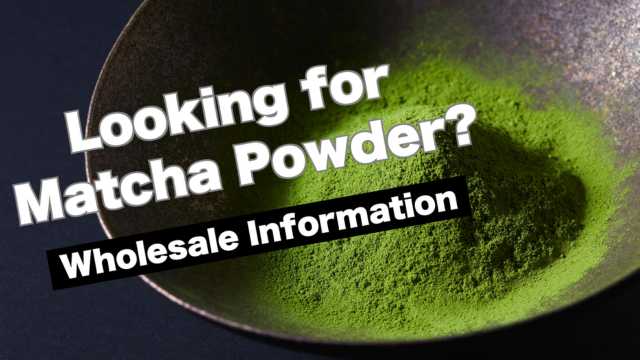
We source matcha from Japan’s premier production regions including Kyoto Uji, Kagoshima, Fukuoka, and Shizuoka, offering comprehensive grade ranges from organic JAS-certified ceremonial grade to processing-grade matcha.
Common Challenges:
- “We have projects but cannot secure stable matcha supply…”
- “We want to incorporate matcha into new café menu items!”
If you face these concerns, consult with Matcha Times. Feel free to contact us for initial inquiries.
\Read Also/
Key takeaways for chain procurement
- Choose grade by application, not prestige: café/culinary grade for lattes and iced drinks; a small premium line for signature menus.
- The chain-specific risk is consistency across stores and lots — solve it with a written spec plus a per-lot COA, not brand promises.
- Agree color, particle fineness, moisture and sensory tolerances in writing; blending (gōgumi) holds them season to season.
- Confirm Thai FDA registration and labeling before your first commercial import.
- Judge cost by cost per finished serving, not headline price per kilogram.
\Read More/
Which Japanese matcha should Thai beverage chains use?
For most chain menus, a culinary or café grade built for milk and ice is the correct default. It delivers a stable green color, a clean grassy-umami profile that survives dairy and sweeteners, and fast dissolution so baristas can pull consistent drinks at peak hours. Reserve higher, ceremonial-style grade for a limited premium tier where the customer tastes the matcha with little masking. Buying the most expensive grade for every drink usually wastes margin; buying the cheapest often yields a dull, yellow-brown cup that fails on iced and blended formats.
Grade names are not standardized across suppliers, so treat any label as a starting point and confirm the actual attributes below with a sample and a spec sheet.
Matcha specification by application
Rather than trusting a grade name, define the attributes each drink format needs and write them into your purchase specification. The table maps common chain applications to the attributes that matter most. Exact numeric targets (for example color L*a*b* tolerances or particle-size D50/D90 bands) should be set with your supplier against approved samples — agree the tolerances, do not copy a number you cannot verify.
| Application | Priority attributes | What to watch |
|---|---|---|
| Hot matcha latte | Vivid green color, umami balance, clean dissolution | Color fading and clumping in hot milk |
| Iced / shaken matcha | Color stability when cold, fine particle for smooth mouthfeel | Sedimentation and a chalky finish |
| Blended / frappé | Strong color payoff to survive dilution, cost efficiency | Muddy color once ice and syrup are added |
| Bubble tea base | Consistent color at high throughput, value grade | Batch color drift across busy days |
| RTD / bottled (OEM) | Heat and color stability, microbiological specs, COA per lot | Color and flavor shift over shelf life |
| Bakery / confectionery | Bake-stable color, robust flavor | Browning and flavor loss at oven heat |
Finer, evenly milled matcha generally dissolves faster and reads greener in the cup, which is why particle fineness and color are the first two attributes most chains lock down. Because a small shift in these attributes is visible to customers, they belong in a written spec rather than a verbal agreement.
The real problem for chains: multi-location consistency
A single café can adjust its recipe by taste. A chain cannot: the same drink must look and taste identical in every branch, every month, even as harvests change. That is the core sourcing problem, and it is rarely solved by buying “bulk” on price alone. Matcha is an agricultural product, so raw leaf varies by field, cultivar, harvest and season; a serious supplier absorbs that variation for you through blending and testing.
Three controls keep a chain consistent:
- A written specification — color tolerance, particle fineness band, moisture range, and sensory descriptors, signed off against a reference sample.
- Per-lot COA — a document per production lot confirming the lot meets that spec before it ships.
- Blending (gōgumi) — the supplier blends leaf from multiple lots to hold the same color and flavor across the year, rather than passing raw variation to you.
Ask a prospective supplier to demonstrate all three. If they can only send “bulk matcha” without a spec, a COA, or a blending program, your branches will drift apart — and customers will notice first.
Formulation guidance for chain beverages
Small recipe rules protect color and flavor once matcha meets milk, ice and sugar. Use them as a starting framework and validate with your own equipment and local ingredients.
- Pre-disperse: whisk or high-shear blend matcha with a little water or milk first to avoid clumps before scaling to the full drink.
- Protect the color: acidity and prolonged heat dull green color, so add matcha late and avoid holding brewed matcha hot for long periods.
- Dose for the format: cold and dilution mute intensity, so iced and blended drinks usually need a higher matcha dose than a hot latte.
- Lock the ratio: standardize grams-per-serving and a fixed method so every barista and every branch pulls the same drink.
Cost vs quality: think in cost per serving
Headline price per kilogram is the wrong comparison. What matters is cost per finished serving and whether the cup meets your brand standard. A slightly higher-priced matcha that uses fewer grams per drink, wastes less to clumping, and reduces customer complaints can be cheaper in practice than a low-price powder that performs poorly on iced and blended menus.
Because published matcha prices vary widely by grade, origin and trade terms, this guide does not quote a specific price. Request a current quote with your target volume and clearly stated trade terms (for example FOB or CIF), and compare on landed cost per serving. Never combine a price from one source with an MOQ from another as if they were a single offer.
Importing matcha into Thailand: compliance essentials
Before your first commercial shipment, confirm the Thai import path. Under Thailand’s Food Act B.E. 2522 (1979), food products are regulated by the Thai Food and Drug Administration (Thai FDA) (Ministry of Public Health); imported food generally requires registration and an appropriate import license held by a locally established (juristic person) importer. Verify the current requirements and documentation directly with the Thai FDA or a qualified local agent, because rules and processing times change.
| Item to confirm | Why it matters |
|---|---|
| Thai FDA food registration | Imported food must be registered before sale; a local juristic-person importer is required. |
| Import license | Food import typically requires an FDA import license (periodically renewed). |
| Product documentation | Labels, full formula, analysis results and manufacturing standards (e.g. GMP/ISO/HACCP) are commonly requested. |
| Labeling in Thai | Retail packaging must meet Thai labeling rules for the product category. |
| Certifications (as needed) | Halal and/or Organic may be commercially important for your target channel — confirm scope with the certifier. |
| Customs classification & duty | Confirm HS classification and any duty with the Thai Customs Department or a licensed broker — do not assume a rate. |
Japan is a mature exporter of green tea: national green-tea exports (all forms, including matcha) reached a record ¥36.4 billion in 2024, with export volume around 8,798 tonnes (Ministry of Finance Trade Statistics). These are green-tea totals, not matcha-only figures, but they signal a reliable, well-documented export supply base that can meet a chain’s compliance paperwork.
Supplier selection: questions to ask any matcha supplier
Use these criteria to evaluate every candidate on the same basis — including JMEX. They are framed as verifications, not a ranking, so you can score any supplier against your own chain requirements.
| Criterion | What to verify with any supplier |
|---|---|
| Written specification | Will they sign a spec with color, particle, moisture and sensory tolerances? |
| Per-lot COA | Do you receive a Certificate of Analysis for every production lot? |
| Batch consistency / blending | Can they show a blending (gōgumi) program that holds color and flavor year-round? |
| Origin & grade options | Can they match origin and grade to your application and price target? |
| Export documentation | Can they provide the documents your Thai import and labeling require? |
| Certifications | Are Halal/Organic (if needed) genuine and in scope for your products? |
| Lead time & supply stability | Can they commit to a repeatable lead time and monthly volume as you scale? |
| Sampling & pricing transparency | Will they send samples and quote clearly on stated trade terms (FOB/CIF)? |
Why Buyers Choose JMEX (Japan Matcha Export Organization)

JMEX (Japan Matcha Export Organization) works on the export side of your supply chain: selecting origin and cultivar, designing the grade to your written spec, arranging per-lot COA and the export documentation your market needs, and supplying stable volumes as you scale. For a chain, that means matcha built to a repeatable standard rather than a one-off bulk purchase.
JMEX has an export track record to 43 countries, so the documentation, certification and consistency demands of a multi-location beverage brand are familiar territory. Origin, grade and export conditions are matched to your application and target market; JMEX-specific commercial terms such as price, MOQ and lead time are confirmed on quotation against your requirements rather than guessed here.
From the exporter’s perspective
In export practice, the questions a multi-location brand asks first are rarely about a single lot — they are about repeatability: can the same color and flavor be held across a year of harvests, and can every shipment arrive with a matching COA. JMEX works backwards from that requirement, selecting origin and grade and coordinating blending so the specification, not the season, defines the cup.
Sources & methodology
This guide synthesizes official primary sources with standard export-trade practice. All figures cited are attributed to their external source below; where a specific price, MOQ or duty rate could not be tied to a primary source, it is left qualitative rather than estimated. Each source states what it supports, its date, and its scope.
- Thai Food and Drug Administration (Ministry of Public Health) — supports the Thailand food import registration and licensing framework under the Food Act B.E. 2522 (accessed 2026; Thailand / imported food).
- Japan Ministry of Finance Trade Statistics (via Nippon.com) — supports Japan green-tea export value (¥36.4 billion) and volume (~8,798 tonnes) in 2024, a green-tea total across all forms and not a matcha-only figure (2024 data, published 2025; Japan / green-tea exports).
Researched and reviewed by the Matcha Times Editorial Team, operated by the Japan Matcha Export Organization (JMEX). Last reviewed: September 2026. See our Editorial Policy and Sources & Methodology. Found an error? Tell us.
Frequently asked questions (FAQ)
Short answers to the questions Thai beverage operators ask most when sourcing matcha.
Can I buy matcha wholesale for a café chain in Thailand?
Yes. You can source through a local distributor or import directly. For a chain, prioritize a supplier who will sign a written specification and provide a per-lot COA so quality stays identical across branches.
What matcha grade should beverage chains use?
A culinary or café grade built for milk and ice is the right default for most menus; keep a small premium grade for a signature line. Grade names vary by supplier, so confirm the actual attributes with a sample and spec sheet.
How do suppliers keep matcha color and flavor consistent across batches?
Through blending (gōgumi) of multiple lots to a fixed standard, combined with a written spec and per-lot COA testing. Ask any supplier to demonstrate all three before you commit.
Do I need Halal or Organic certification to sell matcha drinks in Thailand?
It depends on your channel and customers rather than being universally required. Confirm current requirements with the Thai FDA and, where relevant, the appropriate certifier for your products.
What documents do I need to import matcha into Thailand?
Typically Thai FDA food registration, an import license held by a local juristic-person importer, product documentation (labels, formula, analysis, manufacturing standards) and Thai labeling. Verify the current list with the Thai FDA or a licensed agent.
How should I compare matcha prices between suppliers?
Compare cost per finished serving on landed cost, using clearly stated trade terms (FOB/CIF) and your real volume — not headline price per kilogram. Request a current quote rather than relying on published ranges.
Learn More About Global Matcha Trends at Matcha Times

Matcha Times is a specialist media platform covering the global matcha market — sourcing and wholesale, supply and pricing, trade and regulations, production and origins, and the companies shaping the industry.
From market analysis and price trends to café case studies and interviews with tea farmers, we help buyers, importers, distributors, and manufacturers stay ahead of where matcha is heading. Explore more and put the global matcha market to work for your business.
Conclusion
When origin, grade, and export conditions align, matcha becomes a stable revenue source. Start by defining your requirements and confirming quality with a sample.
Looking for wholesale or OEM matcha samples? Contact us — we will recommend the optimal origin and grade based on your application and target markets.
Related Articles