Matcha Supplier Dubai: Japanese Wholesale Matcha for Cafés, Hotels & Distributors
Choosing the right matcha supplier Dubai buyers can rely on is a real procurement decision, not just an add-to-cart. The short answer: Dubai is one of the Gulf’s strongest matcha markets, but sourcing well means deciding whether to buy from a local reseller or direct from Japan, getting your Dubai import compliance right (a food-trading licence, Dubai Municipality food registration, an import permit and bilingual Arabic labelling), budgeting the landed cost including the GCC duty, and choosing on documentation and consistency rather than a headline price.
This guide is for buyers sourcing at scale — multi-outlet cafes, hotel groups, retailers, wellness and private-label brands, and distributors. Where a number matters we cite an official source; where a figure would be a guess we keep it qualitative and tell you what to request.
Key Takeaways
- Dubai is a real matcha market: cafe and hotel density, tourism and a premium retail shelf, plus a GCC re-export role.
- Compliance comes first: register the product in Dubai Municipality’s FIRS through a food-licensed importer and secure the MOCCAE permit and GSO Arabic labelling before goods ship.
- Budget duty and VAT: matcha (HS 0902) enters under the 5% GCC tariff on CIF value, plus 5% UAE VAT — confirm the classification with a broker.
- Direct vs reseller: a reseller gives speed and simplicity; buying direct from Japan gives grade, origin and documentation control. Many operators do both.
- Buy on documents: ask for a current quote at your real volume with a trade condition (FOB or CIF) and a per-lot COA — a shelf price is not a wholesale price.
For Companies Seeking Matcha Powder
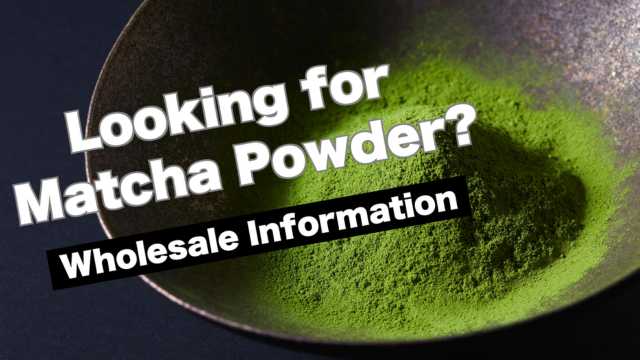
We source matcha from Japan’s premier production regions including Kyoto Uji, Kagoshima, Fukuoka, and Shizuoka, offering comprehensive grade ranges from organic JAS-certified ceremonial grade to processing-grade matcha.
Common Challenges:
- “We have projects but cannot secure stable matcha supply…”
- “We want to incorporate matcha into new café menu items!”
If you face these concerns, consult with Matcha Times. Feel free to contact us for initial inquiries.
\Read Also/
Is Dubai a real wholesale opportunity for Japanese matcha?
Yes. Dubai pairs one of the region’s densest specialty-cafe and hotel scenes with a premium retail market and a role as a re-export hub into the wider Gulf, which is why a reliable matcha supply line is now a genuine procurement question rather than a novelty. Matcha has moved from a niche cafe item to a mainstream menu and shelf category here — lattes and iced drinks, bakery and dessert, and functional or wellness products — so several channels can be served from one well-chosen supply base.
The catch is that supply reliability decides who keeps the account. An operator who stocks a bright, correctly-graded, properly-documented matcha and can replenish it reliably keeps its accounts and menus consistent; one that chases the cheapest lot and hits a quality or clearance problem loses shelf space and covers. The rest of this guide is about staying on the right side of that line in the Dubai market specifically.
\Read More/
Demand drivers: what the trade data actually shows
Global demand for Japanese matcha is real and measurable, but it is easy to over-claim, so scope the numbers carefully. Japan’s green-tea exports (all forms, including matcha) reached a record ¥36.4 billion on about 8,798 tonnes in 2024 (Japan Ministry of Finance Trade Statistics and MAFF, via Nippon.com). Read those as a green-tea total figure, not a matcha-only one, and note the value was partly lifted by a weak yen.
Within that total, powdered teas — matcha and similar — made up roughly 58% of export volume in 2024, overtaking leaf tea for the first time (labelled by volume, for 2024). Treat that as a customs-statistics indicator that confirms the direction of demand, not as a finished-matcha grade price or a Dubai wholesale quote.
Commercial market-research providers publish UAE- and GCC-specific matcha market sizes too, but their figures vary widely by provider and definition, so we do not reproduce a single headline number here. For a procurement decision in Dubai, the reliable signal is your own channel demand — menu sell-through, retail rate of sale, event and hotel volumes — read against the verified export trend above.
Who buys matcha in Dubai: cafes, hotels, retail and wellness
Different Dubai channels want different matcha, so map your accounts before you choose a grade. The table below is a qualitative channel map of what each buyer typically prioritises — use it to brief a supplier, not as a price list.
| Channel | Typical grade tier to stock | What the buyer prioritises | Supply note |
|---|---|---|---|
| Cafes & specialty coffee | Barista / premium (plus a value grade) | Vivid colour in milk, smooth flavour, consistent cup | Reliable replenishment and batch consistency across outlets |
| Hotels & hospitality | Ceremonial & premium for signature service | Presentation, story, menu differentiation, dependable supply | Steady allocation for banquets, lounges and multiple F&B outlets |
| Retail: grocery, specialty, e-commerce | Ceremonial & culinary, packed for shelf | Brand, origin story, GSO Arabic label, shelf life | Retail-ready bilingual packaging and steady stock |
| Wellness, OEM & private label | Ingredient / culinary to a written spec | Colour and cost stability, documentation, formulation fit | Sample-to-bulk flow and lot traceability |
Most Dubai operators do not need every grade on day one. A common starting palette is a premium grade for cafe, hotel and retail hero products plus a culinary or ingredient grade for volume, bakery and wellness accounts, each held to its own written specification.
Dubai’s local nuances: tourism, cafe culture and demographics
Dubai’s matcha demand is shaped by features you should plan around rather than assume away. Understanding them is what separates a city-level supply plan from a generic “matcha is trending” pitch.
- Expat, wellness-led demographics: a large, young, international expatriate population and a strong wellness culture make matcha an easy sell across nationalities, and drive demand for both ceremonial ritual and functional formats.
- Tourism and events: a globally significant tourism and events calendar lifts foodservice and hotel volumes in peaks, so supply needs to flex up for seasons and events rather than run flat.
- A demanding cafe and hospitality scene: one of the region’s densest specialty-cafe and premium-hotel scenes means matcha competes on colour, flavour and presentation, so grade and consistency matter more than a rock-bottom price.
- Re-export gateway to the GCC: Dubai’s ports and free zones let importers serve the UAE and re-export across the GCC, so a supply base chosen here can support more than the local market.
- Documentation is expected: retail and hospitality both expect Arabic/English labelling and clean documentation, so origin and paperwork are part of the product, not an afterthought.
Market-entry playbook: sourcing and importing into Dubai
This is where most first-time buyers lose time. Matcha is an ambient plant powder, which is straightforward compared with chilled or animal-derived foods, but it still moves through Dubai’s standard food-import controls, and you still have to decide how to source it. Work through the four building blocks below before your first shipment leaves Japan.
Decide how to source: local reseller or direct from Japan
Start with the sourcing model, because it drives everything else. A local Dubai reseller gives you speed, local stock and lower complexity at a higher unit price and less grade control. Buying direct from a Japanese exporter gives you grade, origin and documentation control and better unit economics at volume, but you own the import and compliance work. Many Dubai operators begin with a reseller to prove the market, then move core volume direct as it grows — and some keep both, using a reseller for top-ups and a direct line for their hero grade.
Licence, permit and Dubai Municipality food registration
You import through a licensed UAE importer: a UAE-based company whose trade licence permits food trading. That importer registers the product in Dubai Municipality’s food system — the Food Import and Re-export System (FIRS) — and obtains an import permit from the Ministry of Climate Change and Environment (MOCCAE), the federal plant-quarantine and import-permit authority. Each consignment is authorised per shipment, and food products need an original health or free-sale style certificate from the exporting country (U.S. Dept. of Commerce, UAE import requirements; Dubai Municipality food safety). Register the product before the goods leave origin, not after they arrive.
Labelling: Arabic / English and GSO standards
Retail matcha must carry a bilingual Arabic and English label meeting GCC Standardization Organization (GSO) rules, showing the product name, ingredients, net weight, production and expiry dates, country of origin and storage conditions (U.S. Dept. of Commerce, UAE labelling requirements). Agree the Arabic artwork with your supplier before production so it is printed or correctly stickered, rather than discovered at the port — non-compliant or unlabelled food can be refused entry.
Duty, VAT and landed cost
Tea, including matcha (HS heading 0902), is dutiable under the GCC common external tariff of 5% on the CIF value (duty is 5%); the UAE also applies 5% VAT on most imports. Confirm the exact classification and any exemption with a customs broker, then model your full landed cost — product FOB, freight and insurance to CIF, duty, VAT, clearance and inland delivery — rather than comparing suppliers on the ex-Japan price alone.
A short pre-shipment checklist keeps a Dubai clearance predictable:
- Appoint a UAE importer with a food-trading trade licence in place.
- %s the product in Dubai Municipality’s FIRS and obtain the MOCCAE import permit before goods ship.
- %s: bilingual Arabic/English artwork agreed with the supplier and GSO fields checked.
- %s ready: commercial invoice, packing list, certificate of origin and the exporting-country health/free-sale certificate.
- %s: HS classification confirmed and the 5%% duty plus 5%% VAT built into your landed-cost model.
- %s: lodge the per-shipment import request before arrival and keep the COA on file for inspection.
Pricing and MOQ: how Dubai buyers structure orders
Matcha is not one price. It ranges from ceremonial grades at the top to culinary and processing grades that cost a fraction as much, so a single “price per kilo” tells you little without the grade, the volume and the trade condition attached. We do not quote a per-kilogram figure here because a credible price is always a current quote — instead, here is how to get a real one and how to think about MOQ.
Ask each supplier for a quote at your real volume with an explicit trade condition (FOB Japan or CIF your Dubai port), and judge the grade on your cost per finished serving rather than per kilogram in isolation — a finer, better-made powder can need less material for the same colour and land cheaper per serving than a coarse bargain grade. Never combine a price from one source with an MOQ from another as if they were one offer.
On minimum order quantity, expect it to be driven by grade, packaging, certification and lot size, not a universal rule. A supplier able to start from a small trial lot and scale to hundreds of kilograms or an annual programme lets you prove a grade in-market before you commit inventory and cash flow — useful in Dubai, where demand can swing with the tourism and events calendar. Balance a lower unit price at larger volume against stock-turn and shelf life; matcha is best moved fresh.
A repeatable ordering process turns a one-off trial into a dependable supply line:
- Define the specification: write the brief — channel, grade tier, target colour/flavour, volume and packaging — so quotes are comparable.
- %s: request evaluation samples, ideally of more than one grade, and taste them in your actual application.
- %s: get a written quote at your volume with FOB/CIF and lead time, plus a per-lot COA.
- %s: place a trial order, confirm compliance and labelling, and check the market response.
- Lock the spec and reorder: lock the written spec and reorder against it so colour, flavour and documentation stay consistent.
How to choose a matcha supplier for Dubai
Use this supplier selection checklist to compare any matcha supplier — a local reseller, a Japanese exporter or JMEX — by asking each the same questions and judging them on what they can prove, not on a headline price. Frame the criteria around your channels and Dubai’s compliance path.
| What to check | What to verify with any supplier |
|---|---|
| Origin & authenticity | Confirmed Japanese origin, region and harvest — not relabelled non-Japanese powder |
| Grade fit per channel | Grades matched to cafe, hotel, retail and OEM, with samples of each |
| Specification & COA | Per-lot Certificate of Analysis: colour, particle size, moisture, heavy metals and pesticide (MRL) results |
| Batch consistency | Ability to hold the same colour and flavour across reorders |
| Export documentation | Commercial invoice, certificate of origin and health/free-sale certificate prepared reliably |
| Dubai compliance support | Help with GSO-compliant Arabic/English labelling and organic/halal documentation where claimed |
| MOQ, lead time & scale | Trial-lot to large-volume flexibility, clear lead times and dependable replenishment |
| Pricing transparency | Quotes with grade, volume and a trade condition (FOB/CIF), not a vague per-kilo number |
Proof beats price: a supplier who answers with samples, a COA, clear documentation and a realistic lead time is worth far more to a Dubai buyer than one quoting only a low price per kilogram.
Risks and how Dubai buyers de-risk supply
Most matcha supply problems are predictable, which means they are manageable. The recurring risks for Dubai cafes, hotels, retailers and distributors, and the practical hedges against them:
- Supply tightness: harvest variability and strong global demand can tighten availability. Hedge with a forward plan, a written spec and a supplier who can allocate volume.
- Quality drift: colour and flavour drift between lots. Hedge with a per-lot COA and objective colour targets, not “the green one”.
- Clearance delays: labelling or documentation gaps cause holds at the port. Hedge by finalising Arabic/GSO labelling and certificates before shipping.
- Origin & safety: authenticity and residue concerns. Hedge with confirmed Japanese origin and accredited heavy-metal and pesticide testing on the COA.
- Inventory & cash flow: over-buying a perishable premium product for swinging demand. Hedge by matching order size to stock-turn, seasonality and shelf life.
From the exporter’s perspective
From the export side, the Dubai buyers that scale smoothly share the same habits. They fix the channel and a written specification before asking for a price, so quotes are comparable. They request samples of more than one grade and evaluate them in the actual drink or product. They finalise the Arabic and GSO labelling and the export documents before the goods ship, so a Dubai clearance is routine. And they treat matcha as a fresh product, matching order size to stock-turn and the events calendar — not to a secret price, but to a supplier who can prove origin, hold a specification and ship the paperwork on time.
Researched and reviewed by the Matcha Times Editorial Team, operated by the Japan Matcha Export Organization (JMEX). Last reviewed: September 20, 2026. See our Editorial Policy and Sources & Methodology. Found an error? Tell us.
Sources & Methodology
This guide is a source-transparent synthesis of official Dubai, UAE and US-government requirements and Japanese government trade statistics, not a proprietary dataset. The regulatory facts — the 5% GCC duty, GSO Arabic labelling, Dubai Municipality food registration and the import-permit and documentation path — are grounded in the primary sources below. Trade figures are scoped as green-tea totals (all forms, including matcha), with value and volume labelled and the year stated, never as matcha-only; commercial market-size estimates vary by provider, so we cite none. We publish no fabricated statistic, no invented per-kilogram price and no MOQ we cannot source.
- Japan Ministry of Finance — Trade Statistics of Japan / MAFF (via Nippon.com) — Japan’s 2024 green-tea export value (~¥36.4bn) and volume (~8,798 t) as a green-tea total (all forms, including matcha, not matcha-only) and the powdered-tea share of volume (accessed 2026-09-20; Japan government trade statistics (primary))
- Federal Authority for Identity, Citizenship, Customs & Port Security (ICP) — GCC Customs Union — the GCC common external tariff of 5% on the CIF value of imported goods, which applies to tea including matcha (HS 0902) (accessed 2026-09-20; UAE federal authority (primary/official))
- Dubai Municipality — Food Safety — Dubai Municipality as the food-safety authority operating the Food Import and Re-export System (FIRS) through which food products are registered for import into Dubai (accessed 2026-09-20; Dubai government authority (primary/official))
- U.S. Department of Commerce — UAE Import Requirements and Documentation — the per-shipment import authorisation and the health/free-sale certificate and standard documents required to import food into the UAE (accessed 2026-09-20; US government commercial guide (primary/official))
- U.S. Department of Commerce — UAE Labeling/Marking Requirements — the GSO-based bilingual Arabic/English labelling fields (product name, ingredients, net weight, dates, country of origin) required for retail food in the UAE (accessed 2026-09-20; US government commercial guide (primary/official))
- UAE Ministry of Climate Change and Environment (MOCCAE) — the federal import-permit and plant-quarantine authority through which a licensed UAE importer clears food imports (accessed 2026-09-20; UAE government ministry (primary/official))
Why Buyers Choose JMEX (Japan Matcha Export Organization)

For a Dubai buyer, the deciding factor in a matcha partner is rarely the lowest price — it is whether the supplier can prove Japanese origin, match a grade to each channel, document it and hold that specification as you scale across cafes, hotels and retail. JMEX (Japan Matcha Export Organization) is a wholesale and export partner focused on shipping authentic Japanese matcha overseas, sourcing across Japan’s growing regions and preparing quality, origin and export documentation as one continuous flow.
That matters for a Dubai importer because the same COA, origin and export documents JMEX prepares are exactly what your Dubai Municipality food registration, GSO Arabic labelling and any organic or halal claim draw on. With an export track record to 43 countries, it scales from a small evaluation lot to large-volume supply for cafes, hotel groups, retailers, distributors and OEM manufacturers, keeps unit pricing and replenishment predictable across seasons, and can support the export-side paperwork so shipments clear Dubai customs cleanly.
Frequently Asked Questions (FAQ)
Quick answers to the questions Dubai cafes, hotels, retailers and distributors ask most when sourcing matcha.
Who supplies matcha to cafes and hotels in Dubai?
Both local Dubai resellers and direct Japanese exporters supply the market. Resellers hold local stock and deliver quickly; a direct exporter such as JMEX gives you grade, origin and documentation control and better economics at volume. The right choice depends on your scale, your grade requirements and how much of the import and compliance work you want to own — many operators use both.
Do I need to register matcha to import it into Dubai?
Yes. You import through a UAE-based company whose trade licence permits food trading; that importer registers the product in Dubai Municipality’s food system (FIRS) and obtains an import permit from MOCCAE. Each shipment is also authorised individually and needs a health/free-sale certificate from the exporting country. Register the product before the goods leave origin, not after they arrive.
What duty and VAT apply to matcha in the UAE?
Tea, including matcha (HS 0902), is dutiable under the GCC common external tariff at 5% of the CIF value, and the UAE also applies 5% VAT on most imports. Confirm the exact classification and any exemption with a customs broker, and build both into your landed-cost model rather than comparing suppliers on the ex-Japan price alone.
Is it better to buy matcha direct from Japan or from a local Dubai supplier?
It depends on your scale and control needs. Buying direct from Japan gives you grade, origin and documentation control and better unit economics at volume, but you own the import and compliance work. A local reseller gives speed and lower complexity at a higher unit price. Many Dubai buyers start with a reseller to test the market, then move core volume direct as it grows.
What matcha grade should a Dubai cafe or hotel use?
Match the grade to the channel. Cafes and hotels usually want a barista or premium grade that holds a vivid colour and smooth flavour in milk and stays consistent across outlets, plus a value grade for high-volume iced drinks; retail and OEM often need a culinary or ingredient grade to a written specification. Request samples of more than one grade and evaluate them in your actual application.
What labelling does matcha need to be sold in the UAE?
Retail matcha needs a bilingual Arabic and English label meeting GSO rules, showing the product name, ingredients, net weight, production and expiry dates, country of origin and storage conditions. Agree the Arabic artwork with your supplier before production; unlabelled or non-compliant food can be refused entry at the port.
Learn More About Global Matcha Trends at Matcha Times

Matcha Times is a specialist media platform covering the global matcha market — sourcing and wholesale, supply and pricing, trade and regulations, production and origins, and the companies shaping the industry.
From market analysis and price trends to café case studies and interviews with tea farmers, we help buyers, importers, distributors, and manufacturers stay ahead of where matcha is heading. Explore more and put the global matcha market to work for your business.
Conclusion
When origin, grade, and export conditions align, matcha becomes a stable revenue source. Start by defining your requirements and confirming quality with a sample.
Looking for wholesale or OEM matcha samples? Contact us — we will recommend the optimal origin and grade based on your application and target markets.
Related Articles