Germany’s Matcha Market: How Organic Culture and Health Consciousness Drive Europe’s Fastest-Growing Tea Segment
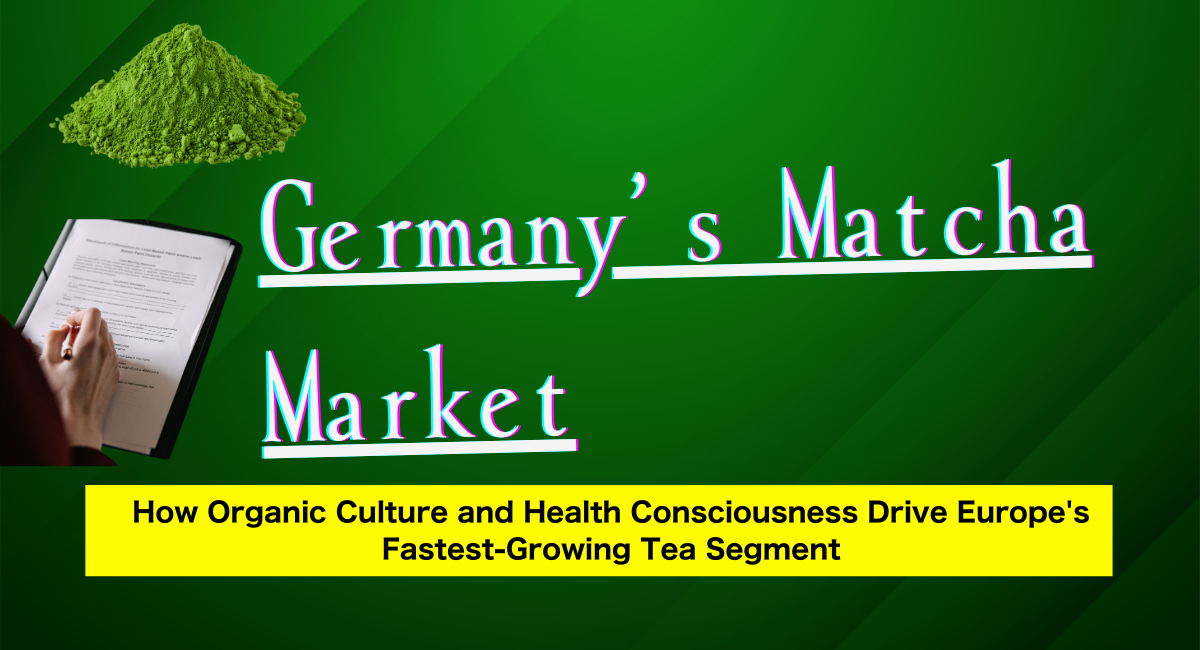
In Germany—particularly renowned within Europe for deeply embedded “organic culture” and health consciousness—matcha is experiencing a new boom. In Berlin and Munich, cafés offering matcha lattes and matcha desserts are proliferating rapidly, while supermarkets stock organic-certified matcha powder prominently. Matcha has evolved beyond temporary trend to establish itself as symbol embodying “wellness × sustainability × Japanese culture.”
This article provides detailed explanation of
- Why matcha is gaining popularity in Germany
- Local market expansion status and café culture realities
- New ways of enjoying matcha at home
- Business opportunities expanding for Japanese brands
Let’s explore together the background of “Germany’s matcha boom” and reasons for its sustained growth.
\Recommended Article/
→ Global Matcha Market Analysis 2026: Market Size, Growth Trends, and Business Opportunities
\For Companies Seeking Matcha Powder/
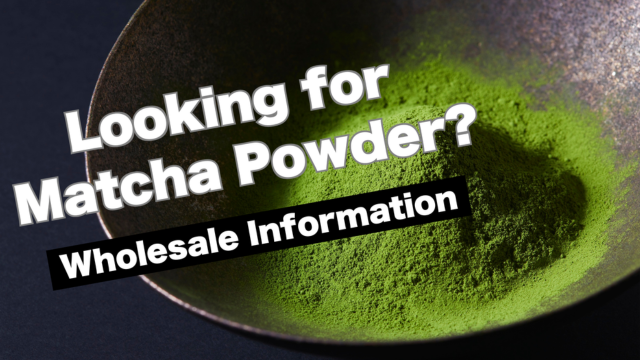
We source matcha from Japan’s premier production regions including Kyoto Uji, Kagoshima, Fukuoka, and Shizuoka, offering comprehensive grade ranges from organic JAS-certified ceremonial grade to processing-grade matcha.
Common Challenges:
- “We have projects but cannot secure stable matcha supply…”
- “We want to incorporate matcha into new café menu items!”
If you face these concerns, consult with Matcha Times. Feel free to contact us for initial inquiries.
Why Matcha Attracts Attention in Germany
Matcha began attracting attention in Germany in the early 2010s. Initially supported by health-conscious segments, it has now established itself as café staple menu item centered in urban areas like Berlin and Munich. Behind this lies three major currents spreading throughout German society: health consciousness, organic culture, and interest in Japanese culture. Through intersection of these trends, matcha spreads not merely as “trending green drink” but as symbol of wellness lifestyle.
Health Consciousness and Wellness Lifestyle Establishment
Germany has long held strong values of “health as personal responsibility,” with herbal teas and organic foods familiar in daily life. Matcha appearing in this context was accepted as natural, highly functional health beverage. Polyphenols (catechins) in matcha offer antioxidant effects, theanine provides relaxation benefits, and vitamin E supports blood circulation improvement—aligning with German health philosophy of “organizing from within.”
Particularly compatible with mindfulness culture like yoga and meditation, workshops themed “matcha and meditation” are held in Munich, with matcha attracting attention as beverage for balancing mind and body. Popular as caffeine source alternative to coffee, matcha is establishing new positioning as “beverage enabling gentle alertness.”
Affinity with Organic and Sustainable Culture
Germany represents one of EU’s most mature organic markets. Terms “Bio” and “Nachhaltigkeit (sustainability)” permeate all aspects of life, with environmental and producer consideration emphasized in food selection.
Therefore, matcha with organic JAS or EU organic certification receives high evaluation, consistently ranking as popular product at organic supermarkets (Alnatura, Denn’s Biomarkt, etc.). Additionally, brands announcing packaging using recycled materials and carbon-neutral manufacturing gather support.
Matcha’s acceptance as “green powder gentle on environment and body” can be said to exist as extension of ethical consumption rather than merely health trend.
Interest in Japanese Culture and “Tea Ceremony”
Another major factor is deep interest in Japanese culture itself. Following anime and Japanese cuisine, aspiration toward “stillness,” “harmony,” and “aesthetics” through tea ceremony spreads. The ritual of whisking matcha, beauty of chasen (tea whisk), and tea bowl designs are also appreciated as “minimal art” beauty.
In Berlin and Hamburg, tea ceremony experience events and workshops led by Japanese instructors are held regularly, with many participants being German. Tea ceremony gains popularity as part of wellness experience, as “time to organize mind away from busy daily life.”
Thus, matcha established itself in German society as “new lifestyle symbol” through organic connection of these three pillars: health, environment, culture.
Current Status and Expansion of Germany’s Matcha Market
Germany’s matcha market has achieved reliable growth over the past decade. According to Ministry of Agriculture, Forestry and Fisheries statistics, among export destinations for “powdered tea (including matcha)” from Japan, Germany ranks third after US and Taiwan. As EU’s largest consuming nation, matcha is building solid position as “beverage balancing health consciousness and cultural value.”
Behind this lie rising health and beauty demand and online distribution expansion, with German consumers accepting “enjoying matcha at home” lifestyle following COVID-19, propelling market expansion.
Matcha Import and Sales Trends (Rising Prominence Within EU)
Matcha became generally known in Germany around 2012. At that time, health media and tea specialty shops introduced “Matcha = Superfood” as catalyst. Subsequently, through viral spread of “matcha latte videos” on Instagram and TikTok, popularity rippled to younger generations.
Especially entering the 2020s, consumption increased with awareness of immune enhancement and beauty effects, establishing itself post-COVID as symbol of “at-home wellness.” Import volume of Japanese organic matcha (Bio-Zertifikat certified products) by organic importers increases annually, keeping pace with overall EU organic market expansion.
Supermarket, Drugstore, and Online Sales Growth
Matcha has evolved beyond “special product” to become health food readily available in daily life. At major drugstore “dm” and supermarkets “REWE” and “EDEKA,” Bio-certified matcha powder occupies permanent corner space. Price range of approximately €10 (~¥1,600) for 30g is not inexpensive, yet repeat customers increase, indicating established quality trust.
Furthermore, on Amazon.de, stick-type and tea bag matcha rank in popularity upper tiers. Search numbers for “Matcha Set” and “Matcha Starter Kit” also rise, with culture of beginners whisking matcha at home expanding. Additionally, German nutritionists and influencers introduce recipes like “matcha smoothie” and “matcha protein bar” on social media, driving consumption as “health × aesthetic” trend.
Japanese Brand and European Brand Competitive Landscape
Germany’s current market expands through coexistence of “authentic Japanese brands” and “casual European brands.”
- Japanese presence gains trust through production region brand power and quality excellence like “Uji” and “Nishio”
- Meanwhile, local brands extend share centered on supermarkets by featuring “organic,” “fair trade,” and “affordable pricing”
Representative brands include “DM Bio Matcha” developed by popular German drugstore, established tea brand “TeaGschwendner,” and Austrian “Sonnentor.” These accurately capture consumer light-oriented needs under theme of “convenient matcha for daily use.”
Consequently, Germany’s current market divides into two-tier structure:
- “Cultural, quality-oriented premium segment” (Japanese brands)
- “Health, convenience-focused casual segment” (European brands)
This evolution into mature stage where matcha enjoys support across diverse segments.
Matcha Café Culture Centered in Berlin and Munich
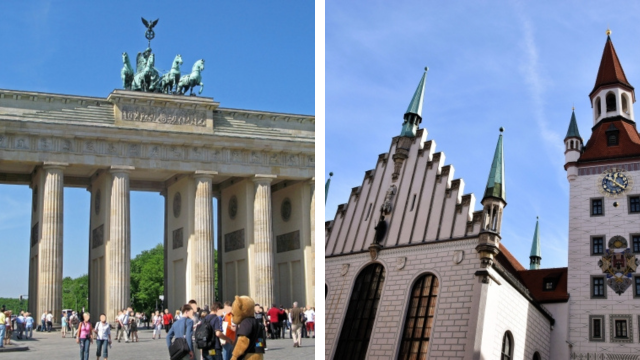
In German urban areas, matcha has established itself beyond “exotic beverage” as trend drink symbol. In sensitivity-high areas like Berlin, Munich, and Hamburg, “matcha latte” gains popularity as choice alongside coffee and espresso. Background includes fusion of Instagram-worthy visuals, rising health consciousness, and image of “Japanese culture = sophistication.” For German youth today, matcha is becoming keyword symbolizing “stylish, clean lifestyle.”
Popular Matcha Café Examples (Berlin, Hamburg, etc.)
In Berlin, Matcha Komachi and Kame Japanese Bakery operated by Japanese owners enjoy popularity. Beyond matcha latte and matcha cake, they provide onigiri, dorayaki, wagashi and other Japanese light meals, supported by tourists as cross-cultural experience venues. Additionally, modern cafés like Goodies Café and Daluma operated by German ownrs feature smoothies and desserts using matcha, advancing “Japan × wellness” fusion.
In Munich, Tanpopo Café handled by Japanese pâtissier attracts attention. Offering authentic sweets like matcha mille-feuille and matcha cream puff, it was introduced in local media as “Japanese quality matcha desserts.” Furthermore, in cities with large Japanese resident populations like Hamburg and Düsseldorf, matcha specialty cafés increase, with locals routinely enjoying matcha becoming commonplace.
Expansion of Matcha Latte, Matcha Sweets, and Vegan-Compatible Products
Beginning with Starbucks, “Matcha Latte mit Hafermilch (matcha latte with oat milk)” nationwide becomes standard menu item. Good compatibility with plant-based milk (oat, almond, soy) makes it selected by vegan segments and lactose-intolerant individuals.
Additionally, cafés successively introduce matcha tiramisu, matcha cheesecake, matcha donuts. Vegan-compatible matcha sweets avoiding dairy and refined sugar prove especially popular, forming “sustainable sweetness culture” distinctively German as “guilt-free indulgence (Healthy Indulgence).”
Furthermore, demand as allergy-considerate products including gluten-free and lactose-free responses runs high, with matcha establishing itself as standard ingredient for health-conscious sweets.
Dissemination Effect Through Social Media and Tourists
Further accelerating the matcha boom is “photogenic culture” through social media. On Instagram and TikTok, hashtag posts like “#MatchaBerlin” and “#MatchaLoverGermany” increase. Vivid green drink and dessert photos spread as “clean, beautiful German new trend,” with Berlin café touring becoming synonymous with “matcha spot hunting.”
Through tourists posting “matcha latte drunk in Berlin” and “matcha whisked by Japanese barista,” tourism × social media × matcha culture spreads in chain reaction, with “matcha experience” becoming travel staple even for overseas visitors to Germany.
Thus in Germany’s café scene, new positioning is being established
Matcha = cultural drink balancing deliciousness and aesthetics
Ways of Enjoying Matcha Spreading at Home
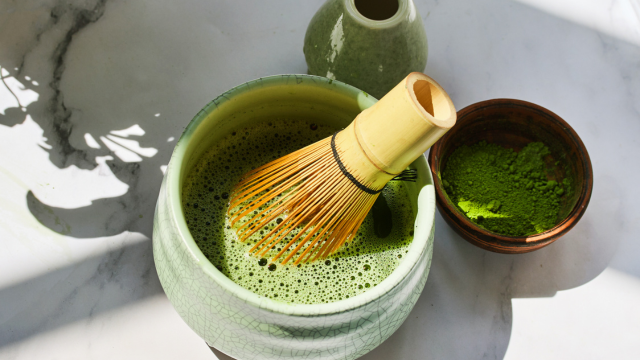
Beyond cafés, people enjoying matcha at home in Germany are increasing. Background includes health and beauty consciousness and enriching at-home time.
DIY Matcha Drink and Smoothie Trends
On YouTube and Pinterest, numerous matcha smoothie and soy milk matcha latte recipes are shared. Simple “morning matcha” made with “milk + matcha + honey” proves especially popular. The ability to control caffeine quantity as coffee alternative also receives evaluation.
Application to Matcha Sweets, Bakery, and Muesli
Beyond cakes and cookies, healthy arrangements mixing matcha into granola and muesli also become standard. Style of topping matcha as “antioxidant powder” spreads among women.
Popularity of Organic-Certified Tea Bag and Stick Products
Tea bag matcha and stick matcha enabling easy enjoyment without using chasen extend sales. European brands like “Clipper” and “Pukka” also develop matcha blends, with matcha becoming “everyday cup” progressing.
Business Opportunities for Japanese Brands
Germany’s market harbors potential for competing on three axes: quality, culture, sustainability.
Demand for Premium Grade and Organic-Certified Matcha
In Germany, “Bio certification” becomes key to purchase decisions. Japanese matcha with organic JAS or EU organic certification tends to be selected despite high prices. Particularly production region brand appeal like Kyoto, Uji, and Nishio runs strong, with gift demand also expanding.
Compatibility of Health, Beauty, and Sustainable Appeal
Germany’s supplement market also flourishes, with thinking of “organizing from within” established. Matcha aligns with this value system, with functional appeals like beauty, detox, concentration enhancement proving effective. Additionally, recycled material packaging and fair trade labeling become important differentiation elements.
Potential for Local Collaboration and Specialty Shop Development
Movements are anticipated where Japanese brands collaborate with German patisseries and cafés to develop “cultural experience cafés.” Berlin’s café culture particularly shows high sensitivity, with shops fusing Japanese tea experience with art and design likely attracting local media attention.
Check Latest Matcha Trends at Matcha Times

For those wanting detailed knowledge of matcha boom spreading across Germany and European countries, check the latest overseas matcha market reports at “Matcha Times.” We deliver the frontlines of how Japanese matcha is evolving globally.
Summary | Germany’s Matcha Market Symbolizes “Wellness and Sustainability”
Germany’s matcha popularity is becoming presence symbolizing “harmony of health, culture, environment” beyond mere trend. From spread of matcha lattes and sweets to home establishment, penetration depth ranks foremost in Europe. Going forward, new markets will form fusing “wellness × sustainable × Japanese culture.”
Recommended Article
→ Global Matcha Market Analysis 2026: Market Size, Growth Trends, and Business Opportunities
→ Japan’s Matcha Supply Crisis: What’s Really Happening Behind the Global Boom