Will Matcha Latte Take Off in Washington State? A 2026 Deep Dive into the B2B Cafe Market
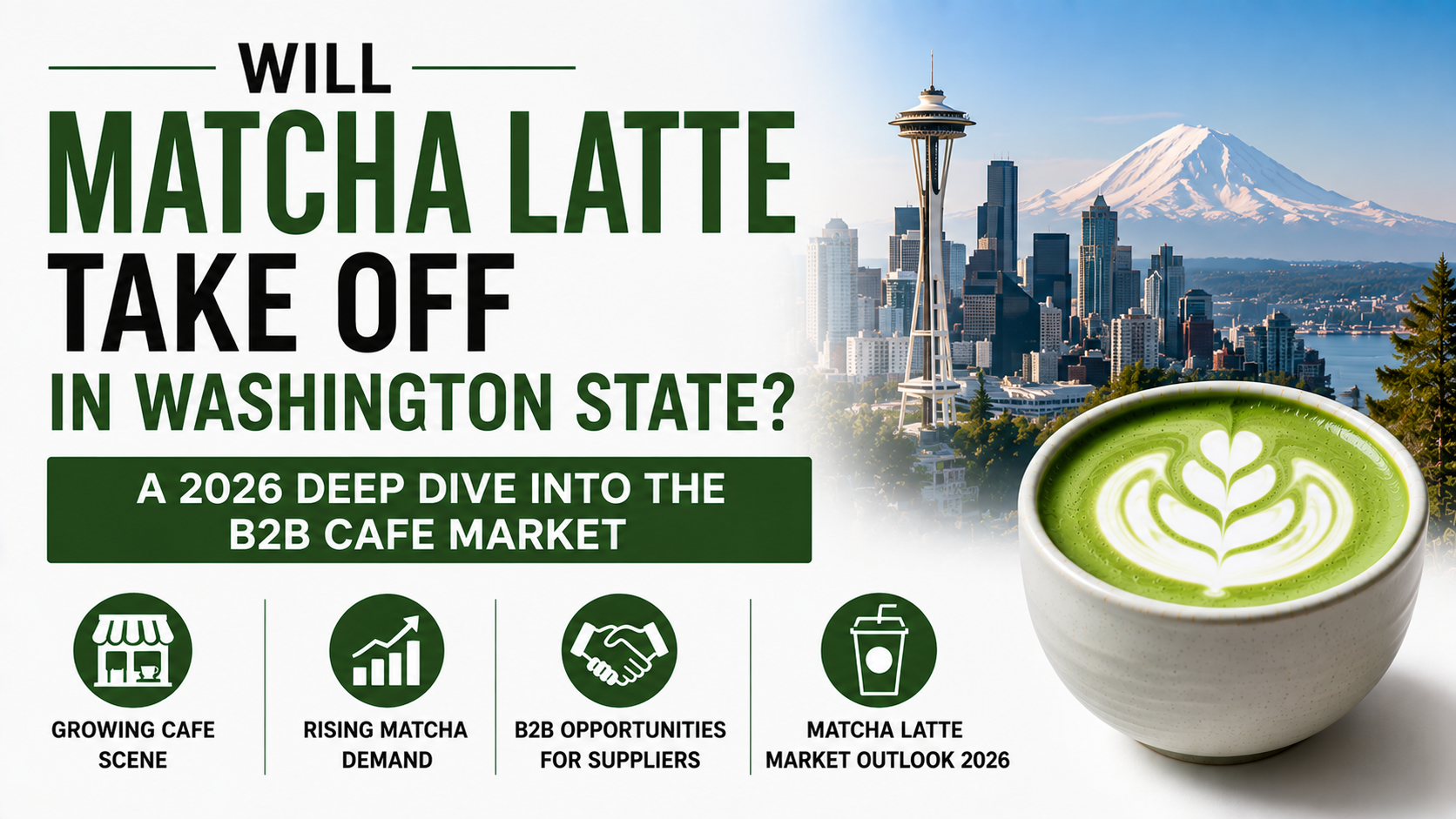
Washington State — home to Starbucks, Tully’s, and Seattle’s Best Coffee — has long been called the “coffee capital of America.” A culture that scrutinizes every brew, from bean origin to extraction time, is deeply rooted in the palates of its residents. Yet since 2025, matcha latte has been quietly but rapidly gaining ground in this very region. This article takes a B2B buyer’s perspective and analyzes the Washington State cafe market through the lens of wholesale matcha: region-by-channel demand mapping, common sourcing missteps local operators make, five criteria for evaluating bulk matcha, and where JMEX (Japan Matcha Export Consortium) fits in as a Japanese exporter.
For Companies Seeking Matcha Powder
We source matcha from Japan’s premier production regions including Kyoto Uji, Kagoshima, Fukuoka, and Shizuoka, offering comprehensive grade ranges from organic JAS-certified ceremonial grade to processing-grade matcha.
Common Challenges:
- “We have projects but cannot secure stable matcha supply…”
- “We want to incorporate matcha into new café menu items!”
If you face these concerns, consult with Matcha Times. Feel free to contact us for initial inquiries.
\Read Also/
→ California Matcha Market 2026: A B2B Deep Dive Into Café, Wellness, and Food Brand Demand
Why is Matcha Latte Gaining Ground in Washington State Right Now?
The short answer: Washington State is now one of the most receptive North American markets for premium wholesale matcha. Historically, matcha struggled to gain traction in regions with high coffee consumption, dismissed as a late-arriving substitute. Over the past three years, however, that tide has reversed — and Seattle-area cafe operators are increasingly evaluating bulk matcha powder for their menus.
The Paradox: Coffee Country Embraces Matcha
The third-wave coffee culture that grew up in Seattle produced a customer base that debates bean origin, roast profile, and extraction time cup by cup. Rather than shutting matcha out, this flavor-literate audience is unusually well-suited to a beverage that — like single-origin coffee — reveals different faces depending on cultivar, region, and preparation. In practice, the same customers who pay a premium for a specialty pour-over are willing to pay for a high-quality matcha latte.
Health Tech and Wellness Consumption
The Seattle-Bellevue corridor concentrates a large white-collar workforce across Amazon, Microsoft, Costco, Boeing, and Starbucks HQ. Demand for a mid-afternoon focus boost via L-theanine, dairy-avoidance trends, and low-sugar milk-based beverages have all funneled into matcha latte adoption. Adoption is also accelerating at yoga studios, fitness clubs, and gym-adjacent cafes.
Rain and Temperature Swings Support Hot Beverage Demand
Western Washington receives roughly 150 rainy days a year, and the October-to-April stretch is dominated by overcast, damp weather. Annual hot-beverage consumption runs above the North American average, providing a steady underlying demand for wholesale matcha powder. Combined with summer iced-latte demand, the region supports a year-round matcha menu.
But Selling Matcha in Coffee-Savvy Washington Isn’t Easy
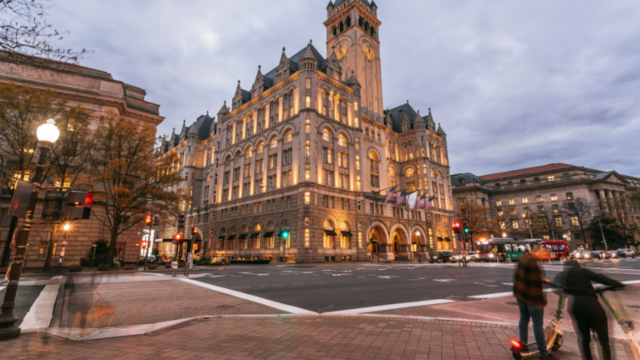
Washington State is not a market where mediocre matcha survives. Coffee-trained palates spot bitterness, grittiness, and dull color the moment they take a sip. Building a profitable matcha latte program here requires clearing both flavor and regulatory hurdles.
Consumer Expectations Are Higher Than You Think
Customers paying $6–$7 for a matcha latte often already know the difference between Uji and Kagoshima matcha and have a working understanding of origin. In central Seattle — especially Capitol Hill, Fremont, and Ballard — cafe menus are increasingly expected to list matcha origin, and non-transparent bulk powders struggle to retain repeat customers.
State Food Licensing and Federal Import Rules
Any business serving beverages on a continuing basis must obtain a food-service permit from the Washington State Department of Agriculture (WSDA) or local municipality. For imported matcha powder, additional compliance with FDA FSMA, Prior Notice, and importer-side Foreign Supplier Verification Programs (FSVP) applies. These local steps sit with the buyer, but if the exporter fails to supply proper COAs, origin certificates, and MRL analyses, shipments stall at customs.
Integrating Matcha with the Coffee Workflow
Adding a matcha station to an existing espresso workflow requires a shaker, an electric frother, and a separate milk line — a real challenge for the narrow counter footprints typical of Seattle-style cafes. Without validating per-cup extraction time and traffic flow before launch, operators face the ironic trap of higher tickets but lower throughput during peak hours.
Year-Round Supply and Price Volatility
Tencha (matcha’s raw leaf) is harvested from May through September, and raw material prices have climbed 10–15% since 2024. Placing spot orders without an annual sourcing plan invites out-of-stock periods and unpredictable cost swings. Inland Washington east of Spokane is especially exposed, given longer transit and more variable humidity, so inventory buffers need careful design.
\Read More/
→ Matcha Export Isn’t Easy: How FDA and EU Regulations Impact Matcha Brand
Washington State Matcha Latte Demand Map by Region and Channel [2026]
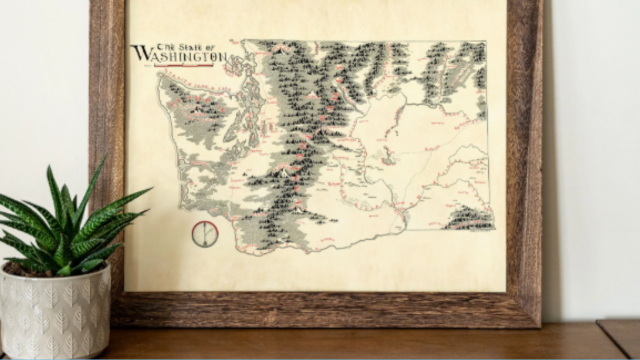
Across the five key economic zones — Seattle, Bellevue, Tacoma, Spokane, and Olympia — the character of wholesale matcha demand differs sharply. A one-grade-fits-all strategy leads to mediocre results in every channel.
Regional Demand Profile (2026)
| Region | Primary Cafe Channel | Price Band | Demand Bias |
|---|---|---|---|
| Seattle Metro | Independent third-wave, coffee stands | $6–$7 / cup | Origin and grade-driven; premium first |
| Bellevue / Redmond | Office cafes, health-tech corporate dining | $5–$6 / cup | Organic JAS and vegan-friendly |
| Tacoma / Everett | Regional chains, hotel-attached cafes | $4–$5 / cup | Supply stability and cost efficiency |
| Spokane | University-adjacent cafes, regional chains | $4–$5 / cup | Versatile latte and smoothie use |
| Olympia | State employee cafes, independents | $4–$6 / cup | Local and independent-first |
The picture is clear: origin, grade, and price bracket splinter cleanly by region. Seattle’s core rewards ceremonial-adjacent matcha with bright green color and pronounced umami; Bellevue prioritizes organic and vegan-compatible options; Tacoma and points south weigh extraction stability and lot pricing more heavily. Spokane’s drier inland climate calls for separate moisture-control packaging.
Estimated Monthly Volume by Channel
- Independent cafes (single location): 10–30 kg/month — small footprint, premium price point, origin-obsessed.
- Regional chains (5–15 stores): 100–300 kg/month — lot pricing and consistent supply are both non-negotiable.
- Hotel and office cafe operators: 200–500 kg/month — organic certification and audit-ready documentation required.
- OEM and RTD brands: 500 kg to several tons/month — annual contracts and spec-sheet-driven procurement.
Where Local Cafe Owners Stumble in Wholesale Matcha Sourcing

Four sourcing missteps come up repeatedly among Washington State cafe operators. All four surface in real re-launch cases across the Seattle-Tacoma corridor.
Misstep 1: Vague Origin Labeling
Buying on the strength of a “Made in Japan” label alone often lands operators with products of unclear origin — Chinese-Japanese blends or products processed but not grown in Japan. When the COA doesn’t trace back to a specific tea garden, staff can’t answer customer questions about origin, and repeat business erodes.
Misstep 2: Buying Culinary Grade Instead of Cafe Grade
Some operators are lured by low-priced culinary grade in bulk, only to find that latte color and foam retention fall short of guest expectations — sending customer counts down two to three months after opening. Cafe-grade matcha is engineered around a different particle size, hue, and umami (theanine) profile; substituting culinary grade rarely works.
Misstep 3: Overlooking MRL and Labeling Rules
US Maximum Residue Limits (MRLs) diverge from EU standards on several substances, so a shipment carrying valid Japanese JAS organic certification can still be flagged under an FDA Import Alert. Errors in HTS code classification also invite unexpected tariff surprises and re-filing costs. Aligning analytical certificates to the current US MRL sheet on the export side is the shortest path to avoiding rework.
Misstep 4: No Year-Round Inventory Plan
Without accounting for post-harvest price movements, operators who order in late summer often run out before the following spring. Not having annual contract-based volume commitments creates real risk of losing the flagship menu during the November-to-March peak hot-beverage season.
Five Criteria for Evaluating Wholesale Matcha

Sophisticated cafe buyers now check the following five points as a rule. Selecting suppliers on price alone is no longer common practice; buyers now weigh a composite score.
Criterion 1: Origin Transparency and Single-Source Traceability
Select suppliers who can deliver lots traceable to a specific tea garden or town-level origin — Uji, Shizuoka, Kagoshima, Yame, and so on. Whether blend ratios can be documented on the COA is a decisive test. Vague origin claims prevent operators from meeting customer accountability standards.
Criterion 2: Cafe-Optimized Particle Size, Color, and Umami
Suitable cafe-grade matcha typically shows a color band from young grass green to deep green when extracted for latte use, a particle size around 10–20 μm, and a documented theanine profile. Grade transparency forms the basis of a defensible customer-facing value story.
Criterion 3: Full US Import Compliance
Pick a supplier that covers FDA FSMA, FSVP, Prior Notice, allergen and nutrition labeling, plus state-level labeling requirements (Washington follows federal standards) end-to-end. Missing paperwork translates directly into weeks of customs delays.
Criterion 4: Extraction-Test Sampling Program
Ask whether the exporter can supply 50–100 g extraction-test samples for on-site trials in Seattle before you commit to a purchase order. Skipping the sampling step means committing significant capital before verifying color extraction, foam persistence, and iced-latte separation behavior — a risk worth avoiding.
Criterion 5: Guaranteed Continuity of Supply
Look for annual raw-material contracts on tencha, multi-region backup, and pre-defined contingencies for weather or crop shocks. A portfolio-managed exporter — rather than a single-garden bet — is the safer path against seasonal volatility.
Comparing Major Suppliers — Why Buyers Choose JMEX
Below is a five-supplier comparison of Japanese exporters that Washington State cafe buyers actually shortlist. Each of these companies has earned strong quality reputations; the right answer depends on the specific mix of requirements.
Wholesale Matcha Supplier ComparisonHow to Choose a Matcha Supplier
| Criterion | What to verify with any supplier |
|---|---|
| Grade & origin options | Confirm the grade range (ceremonial to culinary) and origin/cultivar options matched to your application. |
| Export & safety documentation | Request per-lot COA and the export, customs and food-safety documents your destination market requires (MRL/limit matching). |
| Lot flexibility & MOQ | Check the minimum order quantity, trial-lot/sample availability, and the ability to scale from a small start to larger volumes. |
| Selection criterion | Confirm this directly with the supplier and request supporting documentation. |
| Supply stability | Confirm monthly capacity and stable supply across your contract period. |
Apply this checklist to each supplier on your shortlist and decide on current quotes, samples and documentation. JMEX (Japan Matcha Export Organization) is an export-focused Japanese matcha supplier with export experience to 43 countries; you can request pricing and terms directly and assess it against the criteria above.
Based on the criteria shown, Japan Matcha Export Organization (JMEX) provides broad coverage across all five areas, including sampling and flexible order volumes. This makes JMEX a practical option for cafés, distributors, and food brands looking to test Japanese matcha first and scale procurement as demand grows.
Three Reasons Buyers Choose JMEX
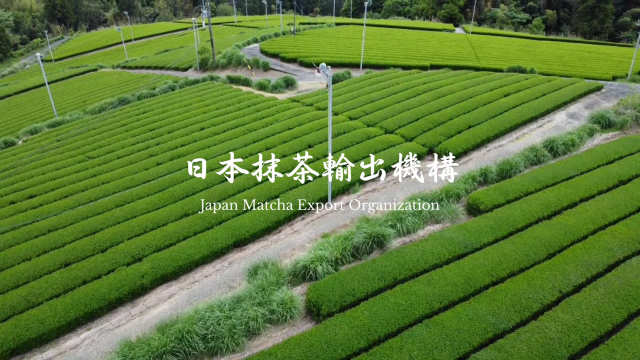
1. Use-case-specific origin recommendations — Uji (traditional umami), Shizuoka (balanced cafe-friendly profile), Kagoshima (bright green, large-lot production), Yame (natural sweetness). Where grade requirements diverge by channel — as they do in Washington State — portfolio proposals beat single-origin defaults.
2. End-to-end compliance across export markets — from EU pesticides regulations to US FDA FSMA/FSVP, Taiwan TFDA, Singapore SFA, and Australia FSANZ, JMEX prepares COAs, MRL certificates, JAS organic, Halal, and Kosher documentation country by country. For Washington State, that includes FSVP, Prior Notice, and nutrition-label readiness in a single package.
3. Export track record across 43 countries — as a B2B-only exporter with an export track record across 43 countries, JMEX supports steady volumes from 10 kg to 1 t per month. The relationship extends beyond single shipments into contract-farming coordination and pre-shipment COA preparation.
Standard Workflow to Launch a Matcha Program in Washington
Here is the standard workflow from first contact to menu launch when introducing matcha latte as a new offering. Following the five steps in order is the fastest path to minimizing rework.
Step 1: Requirements Intake and Grade Alignment
Share channel type (independent, chain, office, OEM), target price point, customer profile, and required certifications (JAS organic, Halal, etc.) with JMEX. This is where three to four candidate origins are shortlisted for your use case.
Step 2: Sample Delivery and Extraction Testing
JMEX air-ships 50–100 g samples to your Seattle location. Extract them with your intended milk brand, water temperature, and shaker or frother, and evaluate hot latte, iced latte, and smoothie variants for color and foam behavior.
Step 3: COA, MRL, and Origin Documentation Review
Once samples are approved, JMEX supplies the COA, MRL analysis, origin certificate, and JAS organic documentation (as applicable) matched to the production lot. FDA Prior Notice preparation runs in parallel at this stage.
Step 4: Trial Order (50–100 kg)
Start with a trial-sized order to validate quality retention in transit and real-world operational fit. Packaging specifications for the humidity gap between western Washington (damp) and eastern Washington (drier, wider temperature swings) are locked in here.
Step 5: Annual Contract and Full Rollout
Based on trial results, monthly volumes, origins, and grade mix are set into an annual contract. JMEX handles raw-material bookings, inventory buffers, and seasonal-variance absorption under this contract. Buyer-side steps such as state food licensing, FSVP, and importer registration proceed in parallel on the ground in Washington, while export documentation, origin selection, grade optimization, and pre-shipment COA preparation are actively led by JMEX from the Japan side.
Learn More About Global Matcha Trends at Matcha Times

UK-spreading matcha booms result from overlapping health consciousness, Japanese culture popularity, and lifestyle transformations. However, matcha’s appeal and potential still lie ahead. Knowing latest trends across countries and Japanese tea region initiatives reveals matcha’s deeper dimensions.
Matcha Times broadly publishes from matcha market analysis to cafe situations and farmer interviews. Won’t you also take this opportunity to deeply explore matcha’s world? The more you know matcha, the more surely its charm will draw you in.
Bottom Line: Coffee Country Is Where Japanese Matcha Can Win
Precisely because Washington State is the heart of American coffee culture, its consumer base is fluent in flavor — and that plays to the strengths of premium wholesale matcha. Seattle independents, Bellevue office cafes, and regional chains south of Tacoma each demand different origins, grades, and supply structures. Success comes from designing a region-and-channel-optimized portfolio rather than pushing a single grade universally.
Layer on top a Japan-side partner who can handle export documentation, COAs, MRL, and annual contracts end-to-end. With an export track record across 43 countries, JMEX combines an origin network spanning Uji, Shizuoka, Kagoshima, and Yame with country-by-country regulatory readiness to help B2B buyers stand up a matcha latte program in Washington State.
Looking for wholesale or OEM matcha samples? Contact us — we will recommend the optimal origin and grade based on your application and target markets.
Related Articles
→ US Matcha Market 2025: Size, Growth Drivers & B2B Entry Strategy for Buyers
→ Can Matcha Help with Depression? Latest Research and Expert Insights Explained