How to Break Into Pennsylvania’s Matcha Market: Philadelphia’s Foodservice, Campus & Confectionery Demand
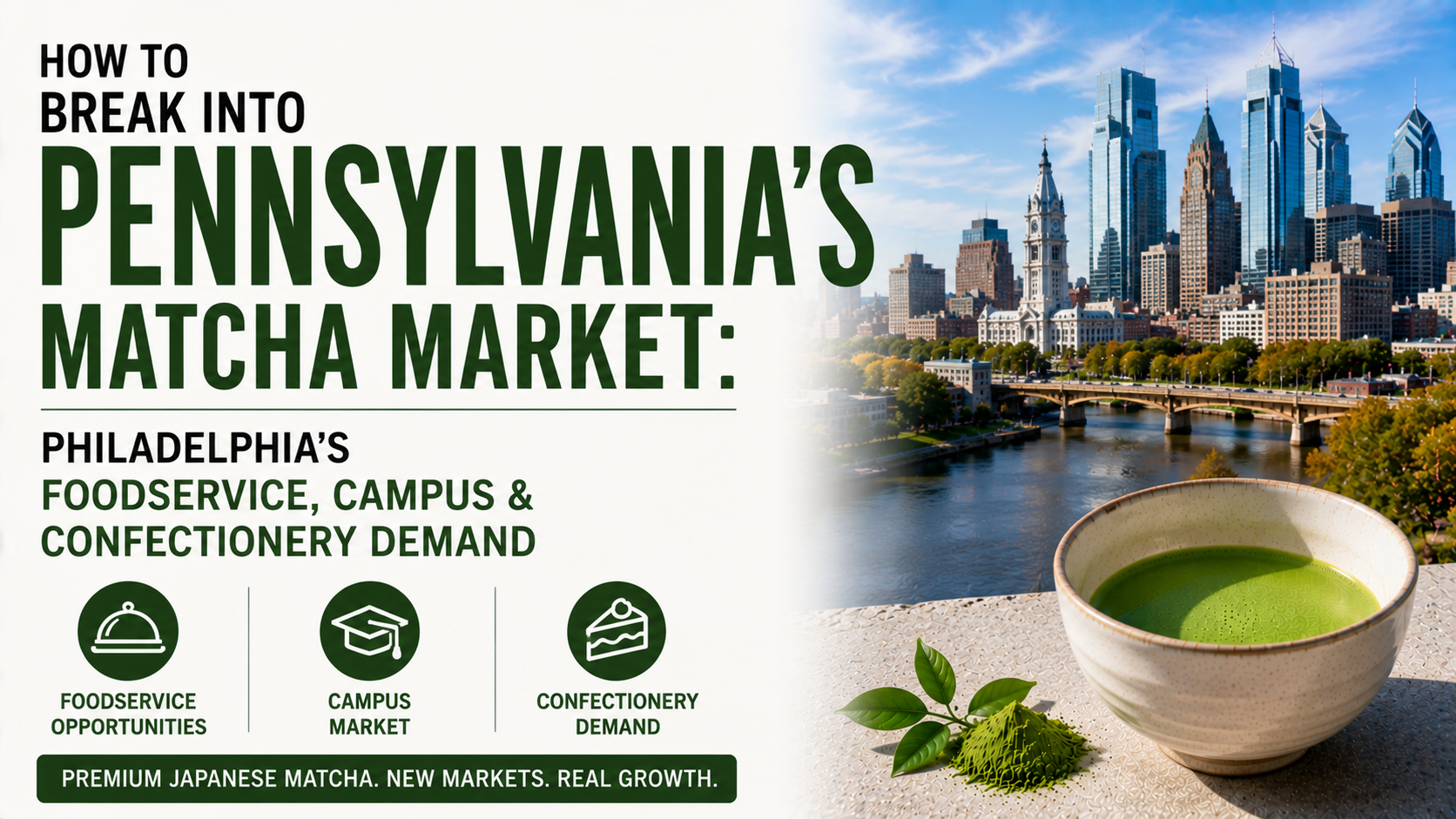
When people talk about matcha on the U.S. East Coast, the conversation usually centers on New York or Boston. Yet in 2026, one state is quietly gaining ground: Pennsylvania. With Philadelphia at its core, demand for wholesale matcha powder keeps rising from three directions at once—foodservice, universities, and confectionery. Here is the takeaway up front: Pennsylvania is a market to win through steady, real demand rather than fleeting hype. Below, we break down the demand structure, the pitfalls buyers overlook, and how to choose a supplier—all from the perspective of overseas buyers and OEM teams.
For Companies Seeking Matcha Powder
We source matcha from Japan’s premier production regions including Kyoto Uji, Kagoshima, Fukuoka, and Shizuoka, offering comprehensive grade ranges from organic JAS-certified ceremonial grade to processing-grade matcha.
Common Challenges:
- “We have projects but cannot secure stable matcha supply…”
- “We want to incorporate matcha into new café menu items!”
If you face these concerns, consult with Matcha Times. Feel free to contact us for initial inquiries.
\Read Also/
Why Matcha Demand Is Growing in Pennsylvania Now

Pennsylvania is home to roughly 13 million people, placing it among the largest economies in the country. Its hub city, Philadelphia, sits at the midpoint of the East Coast corridor between New York and Washington, D.C. That geography means a single location can serve a consumer base of tens of millions across neighboring states. Because it connects easily to the logistics networks of New York and New Jersey, Pennsylvania is more than a standalone state—it is a foothold for buyers who want to cover the entire corridor.
The growth is driven by health-conscious habits and the cafe culture of Gen Z and millennials. As an alternative source of caffeine to coffee, the matcha latte is no longer a passing trend but a fixture on the menu. Philadelphia is also one of America’s great college towns, and the disposable income and trend sensitivity of younger consumers speed the turnover of matcha drinks and desserts.
The wellness angle adds further tailwind. Matcha contains L-theanine and catechins, and as a clean source of caffeine that does not rely on sugar, it is drawing interest from the fitness crowd and from protein and health-food brands. Greater Philadelphia has a deep life-sciences and healthcare base, making it fertile ground for products built around functional benefits. Protein drinks, unsweetened lattes, and better-for-you bakery items featuring matcha are all steadily coming to market—demand that accumulates as ongoing B2B volume, not fleeting buzz.
Why “Selling in Philadelphia” Is Not Automatically Easy
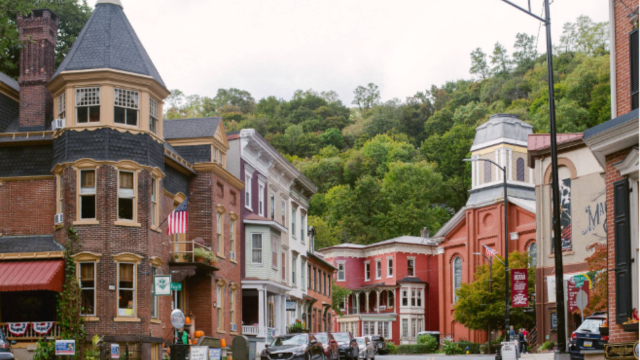
A growing market does not mean anyone can walk in and sell. Pennsylvania has its own hurdles. First is climate. Summers turn hot and humid, raising the risk of color fade and flavor loss from heat, moisture, and light—the enemies of matcha powder. Preserving vivid green and umami requires temperature control across shipping and storage, plus proper packaging and oxygen-barrier design.
Second is a split in taste. Specialty shops and fine dining prize presentation, aroma, and cup color, while chain cafes and campus dining prioritize sweetness and ease of use. Even within the single label of “commercial matcha,” the required grade and price point differ sharply, so trying to force one spec through will lose deals somewhere. Third is inland logistics and lead time. Since port functions sit on the neighboring New Jersey side, you need to map the flow from customs clearance to in-state delivery, or risk stockouts and late deliveries.
One more factor is origin selection. Cheap Chinese matcha also circulates in the U.S. market, but it differs fundamentally from Japanese matcha in color, umami, particle consistency, and the management of pesticide residues and heavy metals. In a market like Philadelphia where authentic and processing demand coexist, chasing low-cost material on price alone can fail to meet the quality bar of specialty shops and manufacturers, and cost you their trust. Understanding the character of each Japanese growing region and matching it to the use case is the foundation of a lasting relationship.
\Read More/
Analyzing Philadelphia’s Demand in Three Segments

The key to Pennsylvania is to split demand into foodservice, universities, and confectionery/food processing, then prepare the right grade and supply terms for each. First, an overview.
| Segment | Main buyers | Matcha needed | What matters |
|---|---|---|---|
| Foodservice | Specialty / chains / hotels | Latte-grade to ceremonial | Color, aroma, solubility |
| Universities | Campus dining operators | Latte-grade, bulk volume | Stable supply, unit cost, spec consistency |
| Confectionery / processing | Confectionery, bakery, dairy makers | Culinary / baking grade | Color retention, lot uniformity, COA |
1. Foodservice: A Scene Where Authentic and Latte Demand Coexist
Philadelphia, symbolized by Reading Terminal Market, is a food-curious city. Alongside Japanese and Asian restaurants, third-wave cafes have made matcha lattes and iced matcha year-round menu items. What wins here is a latte-grade matcha that stays clear when whisked and holds its color and aroma against milk. Offering ceremonial-leaning premium grades to specialty shops and balanced commercial grades to volume-focused cafes—matching grade to use—decides who lands the order. Because matcha lattes command a higher price than coffee drinks, more operators now choose grades with an eye on how the menu photographs, not just cost.
2. Universities: Dense Student Population and Major Dining Operators
Philadelphia has one of the highest concentrations of college students in the nation, with leading universities clustered nearby. On top of that, a major foodservice company that runs dining for campuses and companies nationwide is headquartered in the city, which means a single procurement decision can translate into demand across dozens of campuses. What matters here is not flashy flavor but year-round supply stability and specs that stay consistent across campuses. Note the seasonal swing of the academic calendar: consumption shifts sharply between term time and breaks, so sharing an annual ordering and inventory plan with your supplier prevents both stockouts and overstock. Once adopted, these accounts tend to become long-running relationships.
3. Confectionery & Food Processing: Pennsylvania’s Distinctive Ingredient Demand
Pennsylvania is one of America’s great hubs for food processing and the confectionery industry. Chocolate, snack, bakery, and dairy makers cluster here, creating a thick vein of demand for matcha as an ingredient—not just as a drink—that other states lack. For culinary and processing uses, what counts is color that does not sink through baking or blending, lot-to-lot uniformity in shade and particle size, and quality assurance such as COA and pesticide-residue data. Applications are broad: matcha ice cream and gelato, chocolate, cookies and muffins, latte pre-mixes, and even inclusion in protein bars and better-for-you drinks. Protein and health-food makers in particular want matcha that holds color and flavor even without sugar; their monthly usage is large, so these accounts convert into stable, recurring business.
What Buyers Overlook When They Stumble on Entry

Buyers who struggle in Pennsylvania tend to stumble in the same ways. Four points stand out.
- Grade mismatch: sending ceremonial into confectionery (over-cost) or using culinary grade in lattes (under-flavored).
- Weak specs and paperwork: signing with vague handling of COA, pesticide residues (MRL), and organic certification, then scrambling on resubmissions.
- Unstable supply: samples look good, but production lots waver in color and stock—causing the stockouts that campus and manufacturer accounts hate most.
- Comparing on price alone: choosing a cheap origin, only to inflate total cost through quality complaints and rework.
All of these are hard to see at the sample stage and surface only after signing, at scale. Confirming reproducibility of color, particle size, and aroma across at least several lots—and evaluating a supplier’s paperwork capability too—looks like a detour but is the shortest route. In a market like Pennsylvania where several segments run in parallel, one slip can spill over into your reputation across the others.
Where Smart Buyers Compare Suppliers

Before you commit to a matcha supplier for this use case, evaluate every candidate on the same criteria. Use the checklist below when you request quotes and samples.
| Criterion | What to verify with any supplier |
|---|---|
| Grade & origin options | Confirm the grade range (ceremonial to culinary) and origin/cultivar options matched to your application. |
| Export & safety documentation | Request per-lot COA and the export, customs and food-safety documents your destination market requires (MRL/limit matching). |
| Lot flexibility & MOQ | Check the minimum order quantity, trial-lot/sample availability, and the ability to scale from a small start to larger volumes. |
| Export track record & references | Ask for export track record and references in your target market(s). |
| Pricing transparency | Ask for itemised pricing (grade, lot size, packaging, freight) rather than a single blended figure. |
Apply this checklist to each supplier on your shortlist and decide on current quotes, samples and documentation. JMEX (Japan Matcha Export Organization) is an export-focused Japanese matcha supplier with export experience to 43 countries; you can request pricing and terms directly and assess it against the criteria above.
Why the Japan Matcha Export Organization (JMEX) Is Chosen
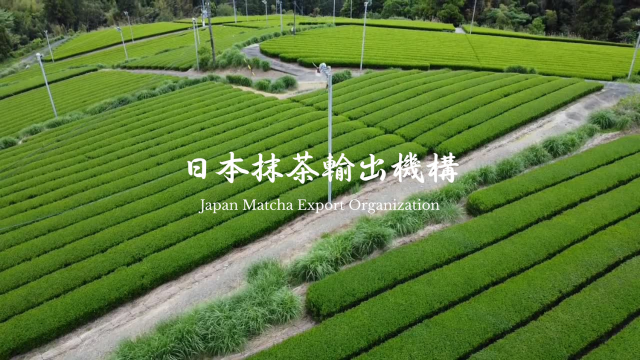
There are clear reasons overseas buyers choose JMEX. Three strengths stand out.
- Use-based origin proposals: drawing on the distinct character of Uji, Shizuoka, Kagoshima, Yame and more, it combines the ideal material for latte, ceremonial, and culinary uses.
- Full compliance with export standards: from U.S. FDA (FSMA) to EU and Asian requirements, it prepares COA, pesticide-residue (MRL) data, and organic (JAS) paperwork—meeting the strict demands of confectionery makers and campus procurement.
- A B2B-dedicated stable-supply system: from small foodservice lots to large processing lots, it supplies without gaps while holding specs constant and minimizing lot-to-lot variation in color and particle size.
Worth emphasizing is the breadth of its track record. JMEX has a proven export record to 43 countries, with experience holding quality across markets that differ in climate, taste, and regulation. Even in an environment like Pennsylvania with its hot, humid summers, it has accumulated the know-how to deliver vivid color and aroma through packaging design and origin selection built around shipping and storage. On the export side it can walk with you end to end—from sourcing origins and preparing spec documents to shipping and transport design.
The path from first proposal to scale is concrete too. After hearing your use case, JMEX prepares several candidate origins and grades and delivers samples you can compare on color, particle size, and aroma. It also assembles the required COA and pesticide-residue data to match your customers and applications, providing them ready to submit directly—so negotiations with demanding partners like confectionery makers and campus dining move forward without needless back-and-forth.
A Step-by-Step Path to a Successful Pennsylvania Entry
Finally, here is how to get a matcha business moving in Pennsylvania, in practical order.
- Step 1: Choose your target segment — foodservice, universities, or confectionery each change the grade and supply terms you need. Start with one or two.
- Step 2: Evaluate samples across multiple lots — check color, particle size, aroma, and solubility for reproducibility, not just once.
- Step 3: Lock down specs and paperwork — settle COA, pesticide data, and organic certification to your customers’ standards before signing.
- Step 4: Design logistics and inventory — factor in lead time from customs to in-state delivery and build an ordering cycle that never runs dry.
- Step 5: Start small, then expand — build proof and reproducible quality in one segment, then move laterally into adjacent ones.
Learn More About Global Matcha Trends at Matcha Times

UK-spreading matcha booms result from overlapping health consciousness, Japanese culture popularity, and lifestyle transformations. However, matcha’s appeal and potential still lie ahead. Knowing latest trends across countries and Japanese tea region initiatives reveals matcha’s deeper dimensions.
Matcha Times broadly publishes from matcha market analysis to cafe situations and farmer interviews. Won’t you also take this opportunity to deeply explore matcha’s world? The more you know matcha, the more surely its charm will draw you in.
Conclusion
Pennsylvania—and greater Philadelphia in particular—is a rare, balanced East Coast market where foodservice, university, and confectionery demand exist side by side. It is a market to win on consistency over flash, and the keys are use-based grade proposals, uninterrupted supply, and paperwork capability. Whether you can partner with a supplier who delivers all three, end to end, decides your success. Pick one segment first, verify reproducible quality across multiple lots, lock down specs and logistics, then expand—follow that order and you avoid most entry pitfalls. Drawing on the know-how built from a proven export record to 43 countries, JMEX assembles the optimal origin and grade for Pennsylvania’s diverse demand. Let us help you take the first step to becoming an early mover in this high-upside market.
Looking for wholesale or OEM matcha samples? Contact us — we will recommend the optimal origin and grade based on your application and target markets.
Related Articles
→ Why Matcha Demand Is Rising in Colorado: Analyzing the Outdoor, Fitness & Wellness Market
→ Why Japanese Matcha Thrives in Hawaii: The B2B Market Behind Hotels, Tourism, and Japanese Heritage