
Why Matcha Demand Is Rising in Colorado: Analyzing the Outdoor, Fitness & Wellness Market
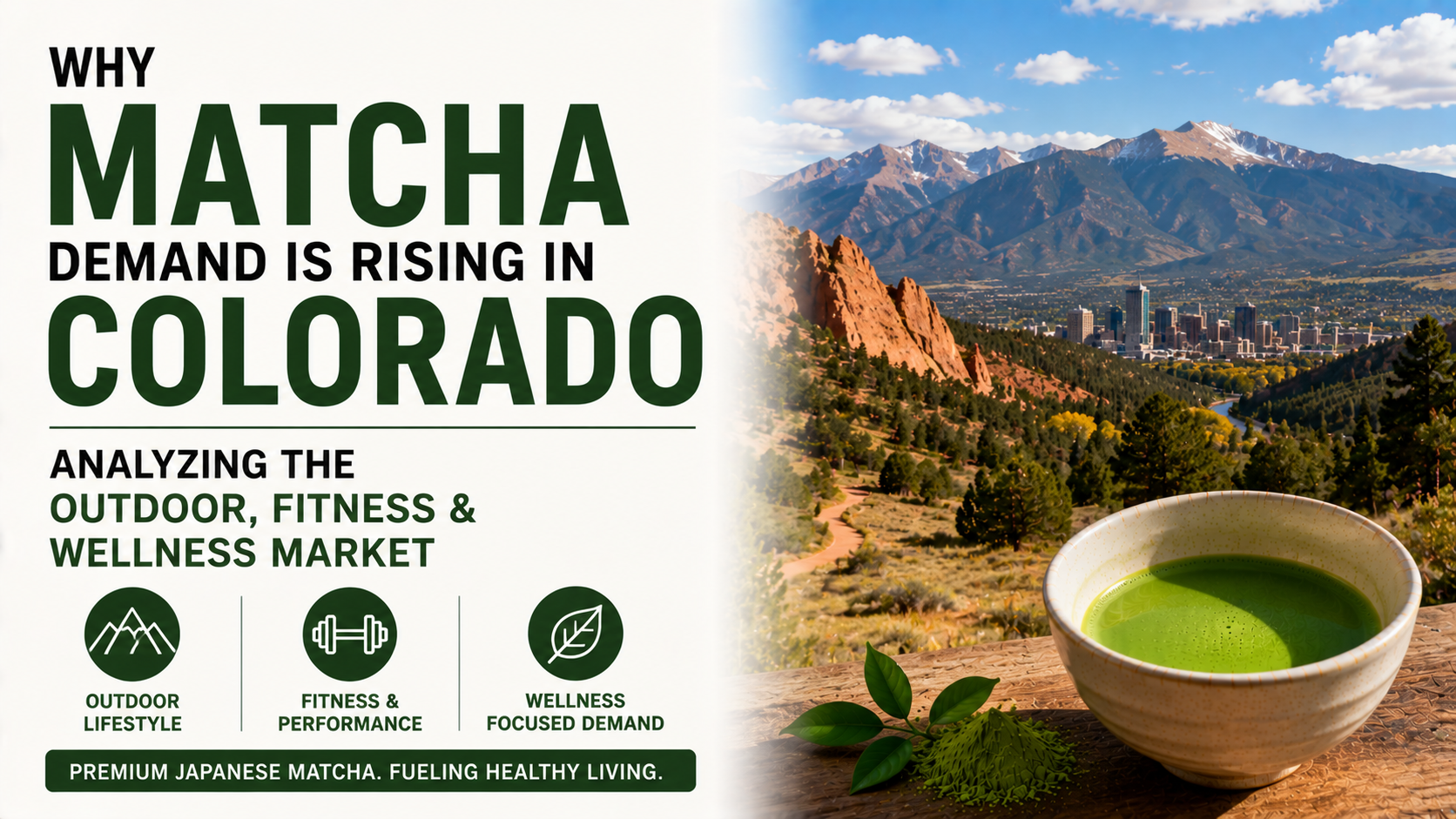
Colorado is one of America’s most health- and outdoor-oriented states. From mile-high Denver outward, daily life is woven around hiking, trail running and fitness — and the drinks people reach for are expected to be both functional and naturally sourced. Here is the bottom line up front: Colorado is now one of the most promising growth markets in the U.S. for Japanese matcha. In this article we analyze — through the lens of overseas buyers, OEM brands and wholesalers — why demand is rising in this landlocked state, and how to win there.
For Companies Seeking Matcha Powder
We source matcha from Japan’s premier production regions including Kyoto Uji, Kagoshima, Fukuoka, and Shizuoka, offering comprehensive grade ranges from organic JAS-certified ceremonial grade to processing-grade matcha.
Common Challenges:
- “We have projects but cannot secure stable matcha supply…”
- “We want to incorporate matcha into new café menu items!”
If you face these concerns, consult with Matcha Times. Feel free to contact us for initial inquiries.
\Read Also/
→ Will Matcha Grow in Georgia? Building B2B Distribution Across the U.S. Southeast from Atlanta
Why Colorado is choosing matcha right now

Start with the big picture. The U.S. matcha market is projected to grow from roughly USD 690 million in 2025 to about USD 1.35 billion by 2035, a compound annual growth rate of around 7%. On top of that, the U.S. alone accounts for close to 29% of the global matcha market, making North America one of the single most important export destinations for Japanese matcha.
Within the U.S., Colorado stands out for the quality of its demand. Matcha’s steady energy and antioxidant profile appeal strongly to consumers who want to avoid the jolt of coffee — a mindset that maps almost perfectly onto Colorado’s values. The shift from unpredictable espresso to matcha, where L-theanine pairs alertness with calm, is accelerating fastest among younger drinkers.
This is not a passing fad. With major chains rolling out matcha lines in 2026, matcha is moving from a specialty-shop drink to an everyday staple. When a category goes mainstream, both the premium tier and the volume foodservice tier grow at once — and Colorado contains healthy demand for both.
Distribution tailwinds help too. Nationally, around 58% of matcha sales flow through cafés and e-commerce, so the market expands on both physical and online rails. Because Colorado is also a launchpad for wellness-focused D2C brands, there is strong appetite for ingredient sourcing built around online sales as well.
A lifestyle that fits matcha
Colorado is exceptionally active: about 67% of residents exercise regularly. In Denver and Boulder, post-hike recovery often means a protein-packed matcha smoothie, and adaptogenic drinks that blend matcha with functional mushrooms are becoming routine. As a beverage that satisfies “healthy, natural and functional” all at once, matcha slots neatly into this state’s daily rhythm.
Boulder is known as a hub for wellness entrepreneurs, and homegrown health-food brands broadcast their influence nationwide. Local pairings — matcha with Rocky Mountain lavender or aspen syrup — show that matcha is starting to blend into the region’s culture. Markets with this kind of “maker energy” spin both buzz and repeat purchases, which makes them especially attractive to wholesalers and OEM partners. Because the core adopters are health-minded consumers in their 20s and 30s who actively share ingredient, caffeine and origin details on social media, good products spread quickly — and compromises on quality get filtered out just as fast.
But “health-conscious” does not automatically mean “easy to sell”

A word of caution. Favorable demand does not mean Japanese matcha will sell itself. Colorado carries hurdles unique to a landlocked state.
- Inland logistics distance: with no seaport, overland cost and temperature/humidity control after the port make or break quality.
- Regulatory complexity: FDA food-safety rules, pesticide residue limits (MRLs) and organic-labeling requirements all demand proper documentation.
- A discerning eye for quality: the more health-conscious the consumer, the more they scrutinize origin and traceability.
In short, simply “having good matcha” is not enough — Colorado rewards partners who can align regulation, logistics and quality proof end to end. Temperature and humidity control is the most commonly overlooked piece: matcha is delicate and degrades in heat, moisture and light, so if quality slips on the way inland to Denver, even a well-regarded tea will be judged “dull in color” or “weak in flavor” on the ground.
\Read More/
Colorado’s potential, in numbers
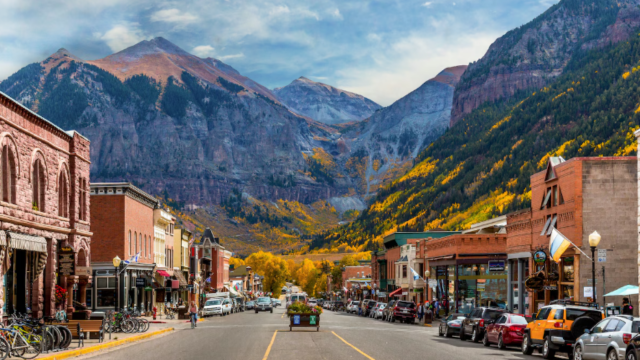
Rather than rely on impressions, let’s confirm Colorado’s buying power with objective data — the market size, health metrics and outdoor economy that form the backbone of any entry decision.
| Indicator | Figure | What it signals |
|---|---|---|
| U.S. matcha market (2025→2035) | ~USD 0.69B → ~USD 1.35B | ~7% annual growth |
| U.S. share of global market | ~29% | North America is a lead destination |
| Colorado health ranking | 2nd healthiest state; lowest obesity tier | Fertile ground for functional drinks |
| Residents exercising regularly | ~67% | Deep active-consumer base |
| Outdoor-economy jobs | ~138,000 (≈4.5% of state jobs) | Scale of the active-spending segment |
What stands out is that Colorado is the second-healthiest state in the U.S., with obesity at the lowest tier. The outdoor industry alone represents about 4.5% of state jobs (roughly 138,000), and Denver ranks in the top five of the national fitness index. This is proof of a thick layer of consumers accustomed to paying for functional beverages — meaning there is ample room to sell matcha while holding a premium price.
Look closer and Colorado’s edge is that demand is tied to season and activity. Warm matcha lattes after skiing in winter, cold matcha smoothies after trails and cycling in summer — the drinking occasions never stop across the year. With snow sports alone adding over USD 1.5 billion in annual value to the state economy, the prospect of year-round, stable demand is a major advantage when designing ongoing wholesale supply.
Why some buyers stall even when demand is strong

Even with robust demand, plenty of buyers stall at the actual sourcing stage. Here are the recurring stumbling points we see — all of them avoidable with the right preparation.
Three common stumbling points
- Customs delays over paperwork: shipments stall at the last minute when the COA, pesticide data or organic certificate is missing.
- Mismatched use and origin: buyers wanting rich umami for lattes end up with a cheaper confection-grade powder.
- Supply that can’t be repeated: the first order is fine, but the required volume can’t be secured consistently.
The common thread is choosing a partner for a one-off transaction, without a line of sight to continuous supply and regulatory compliance. In a market as quality- and transparency-focused as Colorado, that gap turns directly into lost shelf space. The flip side: buyers who lock document requirements before contract, tie origin to use, and commit volume on an annual plan rarely see their deals stall.
The criteria winning buyers use to pick a sourcing partner
Before you commit to a matcha supplier for this use case, evaluate every candidate on the same criteria. Use the checklist below when you request quotes and samples.
| Criterion | What to verify with any supplier |
|---|---|
| Export & safety documentation | Request per-lot COA and the export, customs and food-safety documents your destination market requires (MRL/limit matching). |
| Lot flexibility & MOQ | Check the minimum order quantity, trial-lot/sample availability, and the ability to scale from a small start to larger volumes. |
| Grade & origin options | Confirm the grade range (ceremonial to culinary) and origin/cultivar options matched to your application. |
| Traceability | Ask for lot-level traceability from farm and processing through to shipment. |
Apply this checklist to each supplier on your shortlist and decide on current quotes, samples and documentation. JMEX (Japan Matcha Export Organization) is an export-focused Japanese matcha supplier with export experience to 43 countries; you can request pricing and terms directly and assess it against the criteria above.
Based on the criteria shown, Japan Matcha Export Organization (JMEX) provides broad coverage across all five areas. Its combination of export readiness, flexible supply, use-based origin proposals, and traceability makes JMEX a practical option for cafés, wellness brands, and food businesses entering or expanding in Colorado.
Why the Japan Matcha Export Organization (JMEX) is chosen
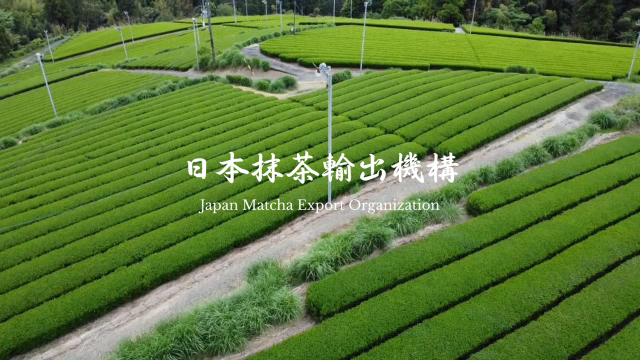
The Japan Matcha Export Organization (JMEX) is a sourcing partner built specifically for overseas buyers, OEM brands and wholesalers. Because it is a lean team focused on larger deals, it can tailor proposals to each client’s use case and sales channel. Three strengths matter most in Colorado.
1. Use-based origin proposals
Rich umami for lattes, vivid color for confections, aroma for straight tea — the ideal profile changes with the use. JMEX proposes the optimal origin from across Japan — Uji, Shizuoka, Kagoshima, Yame and more — matched to your application. In Colorado, where post-hike smoothies and adaptogenic drinks are common, that ability translates directly into product strength, right down to balancing concentration and sweetness against dairy and plant milks.
2. Full compliance with export standards
For the U.S. market, JMEX prepares the required certificates on the export side — FDA food-safety rules, pesticide residue limits (MRLs), and Organic JAS / USDA Organic. The goal is to prevent shipments from being held up by a missing COA or pesticide-test data. Importer-side procedures on the ground are the buyer’s own responsibility, but everything that must be readied on the export side is handled without gaps. Colorado is also highly sensitive to organic labeling, so certification and origin proof become genuine selling points on the shelf.
3. B2B-only stable supply and export track record
JMEX is a B2B-only organization serving anywhere from 10 kg per month to 1 tonne per month, and it has built up an export track record across 43 countries. Beyond the first order, the ability to supply the required volume continuously is the lifeline for holding shelf space in Colorado. That experience across 43 countries is also accumulated, practical know-how about each market’s regulations, logistics and tastes — support grounded in the field, not the textbook.
A sourcing sequence that won’t fail in Colorado
Finally, here is how to approach sourcing matcha for the Colorado market, following the real-world workflow.
- Define the use and target: latte, confection, smoothie or supplement — each points to a different optimal grade.
- Verify quality with samples: check aroma, color and solubility, and confirm the fit with local tastes.
- Lock documents on the export side: settle the COA, pesticide tests and organic certification needed for customs up front.
- Design supply and logistics: agree volume and lead time for continuous supply, including inland temperature/humidity control.
- Start small, then scale: begin with a test quantity, read the market response, and grow volume from there.
Choose a partner who can design this sequence with you from the start, and you can capture Colorado’s strong demand and build repeatable business. Steps 1 and 3 matter most: defer defining the use or locking documents, and rework is guaranteed downstream. Cafés in Denver and Boulder, smoothie bars attached to fitness studios, wellness D2C brands sourcing ingredients — whatever the outlet, a design that connects origin selection, documentation and continuous supply into one line is the shortest route, even when it looks like the long way around.
Learn More About Global Matcha Trends at Matcha Times

UK-spreading matcha booms result from overlapping health consciousness, Japanese culture popularity, and lifestyle transformations. However, matcha’s appeal and potential still lie ahead. Knowing latest trends across countries and Japanese tea region initiatives reveals matcha’s deeper dimensions.
Matcha Times broadly publishes from matcha market analysis to cafe situations and farmer interviews. Won’t you also take this opportunity to deeply explore matcha’s world? The more you know matcha, the more surely its charm will draw you in.
Summary and how to reach us
As we’ve seen, Colorado’s appeal lies not only in the size of demand but in its quality — the post-workout drink, the organic mindset, the information-savvy younger cohort all pair naturally with carefully made Japanese matcha. Colorado combines a health-conscious culture, an outdoor lifestyle and real spending on functional beverages, making it a growth market for Japanese matcha backed by hard numbers. Capturing that demand, however, requires a sourcing setup that aligns regulation, logistics and quality proof end to end. With use-based origin proposals, full compliance with export standards, and an export track record across 43 countries, the Japan Matcha Export Organization (JMEX) is an ideal partner to walk that path with you.
Looking for wholesale or OEM matcha samples? Contact us — we will recommend the optimal origin and grade based on your application and target markets.
Related Articles