
Will Tennessee’s Matcha Market Grow? Analyzing Nashville Tourism, Young Consumers & Emerging Cafe Demand

Tennessee — anchored by Nashville, the self-styled “Music City” — is pulling in people and capital faster than almost any other U.S. state. Visitors keep arriving, Gen Z newcomers are relocating in record numbers, and distinctive cafés are opening across the city. For anyone in the matcha trade, the question is simple: how far can this momentum lift demand for premium Japanese matcha? This article breaks down Tennessee’s matcha growth potential through three demand drivers — tourism, young consumers, and an emerging café scene — and how B2B buyers can win here, all grounded in the latest data.
For Companies Seeking Matcha Powder

We source matcha from Japan’s premier production regions including Kyoto Uji, Kagoshima, Fukuoka, and Shizuoka, offering comprehensive grade ranges from organic JAS-certified ceremonial grade to processing-grade matcha.
Common Challenges:
- “We have projects but cannot secure stable matcha supply…”
- “We want to incorporate matcha into new café menu items!”
If you face these concerns, consult with Matcha Times. Feel free to contact us for initial inquiries.
\Read Also/
Why Tennessee and Nashville Matcha Demand Is Taking Off Now

The numbers make Nashville’s growth hard to miss. In 2025, visitor spending in Nashville reached about USD 11.4 billion, and Nashville International Airport served a record 25.7 million passengers. A brand built on live music and Southern food keeps drawing crowds from across the country and beyond — and every one of those visitors decides what to eat and drink while in town. That is where new matcha demand is born.
Migration tells the same story. In 2025, Tennessee gained 42,389 residents through net domestic migration — the fourth-largest of any state, trailing only the Carolinas and Texas. Metro Nashville absorbs most of that growth and has already passed two million residents. With no state income tax, corporate relocations from Oracle to Amazon keep pulling in younger, higher-income households.
On the demand side, Gen Z leads the way. Millennials and Gen Z spend a disproportionate share of their discretionary income on wellness, and the shift from coffee to matcha lattes is very much their movement. Tourists chase a photogenic cup for social media, while new residents turn it into a daily habit — Tennessee is a market where that virtuous cycle has started to spin.
Nashville’s matcha café scene has thickened fast. On the city’s top café rankings, three of the five best-rated shops cluster at 4.9 out of 5 — spanning lifestyle boutiques, seasonal-menu spots, early-opening downtown anchors, and a TikTok-famous ceremonial-grade destination. That concentration of quality signals matcha moving from a specialty-shop drink to an everyday city staple.
But the Faster a Market Grows, the Harder Supply Becomes

It is tempting to conclude “just buy and sell, then.” In reality, many buyers face a paradox: demand is clearly visible, yet securing consistent product is not. In a young market like Tennessee, that supply-side hurdle bites especially hard.
The cause is the 2024–2025 “matcha shock.” Uji tencha cleared auctions up 265% year over year, and the roughly USD 15/kg floor seen in 2023 has vanished. Even in the back half of 2026, tencha wholesale prices are expected to stay 30–60% above pre-2025 levels.
This is not a passing shortage, either. Tencha-grade tea gardens are limited, and the growers and processors behind them are aging. Because supply capacity itself cannot expand quickly, the tug-of-war between price and quality is likely to continue through 2026 and beyond. The faster a buyer wants to ride the wave, the more it comes down to locking in a reliable source early.
Price is not the only issue. As demand outruns quality, products with misstated origins or grades — and lots that vary in color and aroma — have crept into the market. Reports of “the sample was great, but the production lot was a different product” rise as markets grow. In a market as young as Tennessee, a stumble on the first order can cost you the sales channel itself — which is why supplier reliability should come before low price or fast delivery.
\Read More/
Tennessee’s Matcha Market by the Numbers
After the qualitative picture, let’s put the Tennessee and Nashville market in numbers. Below are the indicators that underpin demand, alongside the wholesale price band buyers should plan around.
| Indicator | Figure / trend | B2B implication |
|---|---|---|
| Nashville visitor spending (2025) | ~USD 11.4B | New trials via tourism |
| Nashville airport passengers (2025) | 25.7M (record) | Larger pool of first-timers |
| Tennessee net migration (2025) | +42,389 (4th in U.S.) | Growing daily-repeat base |
| Metro Nashville population | Over 2 million | Underlying market scale |
| North America matcha CAGR (2026-31) | ~7.59% (highest region) | Mid-term uptrend |
| Wholesale matcha guide (2026) | Latte tier ~USD 55-140/kg | Budgeting benchmark |
What the table reveals is a two-layer structure: tourism creates trials, and migration creates repeat purchases. The strength is not visitor counts alone or migration alone, but both rising at once. And with North America posting the highest regional matcha CAGR at about 7.59%, whether you can build a foothold now will shape your share years from now. Because the price band is skewing upward, though, a workflow that keeps refreshing price assumptions against the latest market is essential.
For context, the global picture matters too. The world matcha market is projected to grow from about USD 5.1 billion in 2025 to roughly USD 8.9 billion by 2033, at a 7.1% CAGR, with North America the fastest-growing region. Tennessee’s numbers show demand quality and quantity meshing especially well within that global trend.
Emerging cafés deserve special attention. New Tennessee cafés increasingly put matcha lattes and iced matcha on the menu right beside coffee. For them, matcha is a photogenic staple that lifts ticket size and drives social posts — not a seasonal one-off. That makes year-round, uninterrupted supply of stable food-service matcha the deciding factor in whether a shop adopts your product.
Where Buyers Trip Up When Entering Tennessee

The faster a market grows, the more entrants there are — and the more people stumble in the same places. Simply knowing the common pitfalls in advance dramatically improves your odds. Here are five.
- Quality drift: a small sample looks uniform, but production lots shift in color, aroma, and bitterness. Catch it with a minimum of three lots of samples.
- Pesticide residues (MRL): compliant to Japanese limits, yet stopped at destination customs. Verify the COA and residue data up front.
- Stock-out risk: under the matcha shock, a contract does not guarantee volume. Ask for a supply plan and alternative origins.
- Labeling violations: an “Organic” claim requires formal certification. Confirm certification before contracting.
- FX and price swings: a weaker yen against a USD contract spikes your landed cost. Fix price and volume terms in writing.
These are not isolated bad luck; they are risks you can screen for by examining the supplier’s setup. Choose a partner who can answer all of them from the start, and Tennessee’s momentum becomes a tailwind rather than a trap.
Picture a shop that expands shelf space for peak tourist season, only to run out at exactly the wrong moment. That kind of lost sale is exactly what Tennessee’s readable demand calendar lets you avoid. Lock in a supply plan, and you convert the seasonal peak straight into revenue.
How Smart Buyers Choose a Wholesale Supplier
Before you commit to a matcha supplier for this use case, evaluate every candidate on the same criteria. Use the checklist below when you request quotes and samples.
The five axes are: (1) export handling, (2) application-based origin proposals, (3) lot supply stability, (4) export-certification support, and (5) price transparency. Even if one is outstanding, a B2B relationship won’t last if the rest are missing — which is why total capability, not a single strength, is what matters.
| Criterion | What to verify with any supplier |
|---|---|
| Export & safety documentation | Request per-lot COA and the export, customs and food-safety documents your destination market requires (MRL/limit matching). |
| Grade & origin options | Confirm the grade range (ceremonial to culinary) and origin/cultivar options matched to your application. |
| Supply stability | Confirm monthly capacity and stable supply across your contract period. |
| Pricing transparency | Ask for itemised pricing (grade, lot size, packaging, freight) rather than a single blended figure. |
Apply this checklist to each supplier on your shortlist and decide on current quotes, samples and documentation. JMEX (Japan Matcha Export Organization) is an export-focused Japanese matcha supplier with export experience to 43 countries; you can request pricing and terms directly and assess it against the criteria above.
In practice, the trick is not to ask these five as yes/no questions but to back them up with documents and samples. For certification, see the actual certificates; for origin proposals, taste samples from multiple regions; for supply capacity, review past shipment records. Comparing on evidence rather than a polished pitch is how you find a partner you can trust with the Tennessee market.
Why Buyers Choose JMEX (Japan Matcha Export Organization)
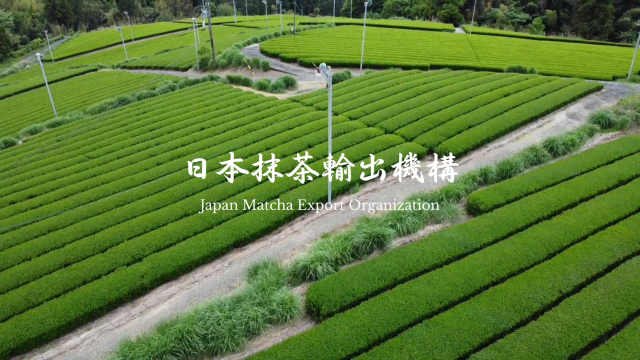
The supplier that translates these criteria into an actual supply operation is the Japan Matcha Export Organization (JMEX). A lean team, it focuses on food-service and OEM orders in the hundreds of kilograms per month and supports the launch of emerging markets like Tennessee from the export side. Three strengths stand out.
1. Application-based origin proposals
Matcha differs sharply by origin — Uji, Shizuoka, Kagoshima, Yame — in taste, color, and price. JMEX proposes the optimal origin by use case: vividness and body for lattes, cost and consistency for confectionery. That means it can answer a new Tennessee café’s demand for a “vivid, photogenic cup” right from the origin-selection stage.
2. Export-standard compliance
Requirements differ by destination — EU MRLs, the U.S. FDA’s FSMA, Organic JAS and USDA Organic. JMEX assembles the COA, residue data, and certification paperwork as an export package and drives the process forward on the export side. With roles cleanly separated from the buyer’s local import steps, it can handle Japan-side documentation, inspection, and shipping without a hitch. Preventing a shipment from stalling over paperwork can make or break trust on a first order.
3. B2B-only supply and track record
JMEX is built as an export organization, with exports to 43 countries behind it. Stable supply from the hundreds-of-kilograms level, plus the ability to present a supply plan with alternative origins even under the matcha shock, heads off the biggest emerging-market risk of all: contracting for volume you can’t actually secure.
These three strengths shine precisely in a market like Tennessee, where both speed and certainty are demanded at launch. Bundling origin expertise, regulatory handling, and stable supply — functions that usually sit in separate hands — into a single point of contact is a major time-saver for a small team chasing large accounts.
A Sourcing Roadmap to Win the Tennessee Market
Finally, here is a five-step way to source without stalling in Tennessee. Follow the sequence and first-lot accidents drop sharply.
- STEP 1 — Demand design: decide the target audience and use case (latte / confectionery / RTD) first. Once the use case is set, the required origin and grade narrow down.
- STEP 2 — Request samples: state the use case and pull samples from multiple origins, then compare color, flavor, and solubility by tasting.
- STEP 3 — Check documents: review the COA, residue data, and certificates in advance to confirm fit with destination standards.
- STEP 4 — First lot: trial multiple small lots and verify uniformity at volume — this is where a supplier’s real ability shows.
- STEP 5 — Ongoing supply: put price, volume, and claim terms in writing and build a recurring-supply framework resilient to price swings.
Pair these five steps with a partner who can walk them with you on the export side — from origin selection to documentation — and you ride Tennessee’s growth speed directly.
Timing matters, too. With North American demand rising while supply stays tight, the buyer who moves early secures the better origins and terms. Lock in your annual demand outlook and reserve a recurring-supply slot ahead of time, and you also stabilize your landed cost.
Learn More About Global Matcha Trends at Matcha Times

UK-spreading matcha booms result from overlapping health consciousness, Japanese culture popularity, and lifestyle transformations. However, matcha’s appeal and potential still lie ahead. Knowing latest trends across countries and Japanese tea region initiatives reveals matcha’s deeper dimensions.
Matcha Times broadly publishes from matcha market analysis to cafe situations and farmer interviews. Won’t you also take this opportunity to deeply explore matcha’s world? The more you know matcha, the more surely its charm will draw you in.
The Bottom Line: Tennessee Comes Down to Building a Foothold Now
Tennessee and Nashville form a rare market where tourism-driven trials and migration-driven repeat purchases rise at the same time. North America’s highest growth rate and Gen Z’s wellness bent push it forward.
What matters is that Tennessee is still ahead of you. With the food-service supplier landscape not yet settled, the player who builds a reliable supply line first gains the edge.
At the same time, the price spikes and quality variance of the matcha shock make one thing clear: misjudge the supply side and you don’t just miss the wave — you can lose the channel. That is exactly why choosing a partner who can deliver quality, supply, and export handling through a single window decides success in Tennessee.
With exports to 43 countries behind it, JMEX (Japan Matcha Export Organization) supports the Japan-side supply end to end — from application-based origin proposals to export documentation. Start by fixing your target audience and use case, then confirm quality with samples. Seize Tennessee’s rise with the right cup.
Looking for wholesale or OEM matcha samples? Contact us — we will recommend the optimal origin and grade based on your application and target markets.
Related Articles
→ California Matcha Market 2026: A B2B Deep Dive Into Café, Wellness, and Food Brand Demand