How to Choose a Japanese Matcha Supplier: 25-Point B2B Checklist (2026)
Choosing a Japanese matcha supplier is a sourcing decision, not a shopping decision: the right partner protects your margin, your food-safety compliance, and your ability to reorder the same quality next season. The short answer is to buy from a supplier who can prove three things — verifiable quality (batch-level COA), the certifications your market requires, and the export documentation that gets the goods to you. This guide gives importers, wholesalers, OEM buyers and health, wellness and protein brands a practical 25-point checklist to separate a real export partner from a broker with a website.
Researched and reviewed by the Matcha Times Editorial Team, operated by the Japan Matcha Export Organization (JMEX). Last reviewed: September 11, 2026. See our Editorial Policy and Sources & Methodology. Found an error? Tell us.
For Companies Seeking Matcha Powder
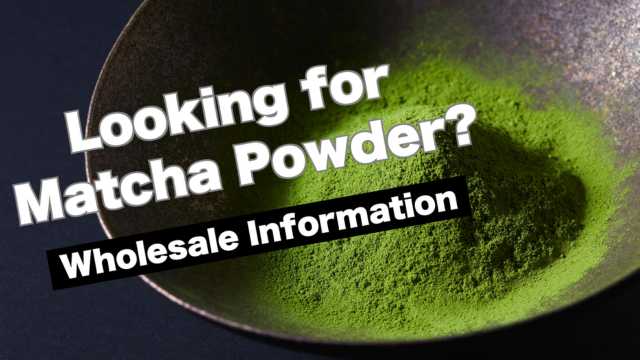
We source matcha from across Japan’s premier regions — Uji, Kyoto, Nishio, Kagoshima, Fukuoka and Shizuoka — and match origin, grade and certification to your application and target market.
Common Challenges:
- “We have projects but cannot secure stable matcha supply…”
- “We want to incorporate matcha into new café menu items!”
If you face these concerns, consult with Matcha Times. Feel free to contact us for initial inquiries.
\Read Also/
Key takeaways
- A trustworthy Japanese matcha supplier issues batch-level Certificates of Analysis on request and can name the prefecture and grade for every lot.
- Match the supplier type to your need: farmer (origin control), processor (blend consistency + food-safety certification), or trading/export organization (multi-market documentation).
- Confirm which residue (MRL) regime a COA was tested against — passing Japan’s positive-list is not the same as meeting EU or US limits.
- Ask for pricing at your intended MOQ and at the next volume tier, plus the Incoterm (EXW/FOB/CIF) so you compare landed cost, not headline price.
- The strongest signal is export maturity: certifications held, destination markets served, and documents produced without you having to extract them.
\Read More/
→ Matcha MOQ Explained: 1 kg to 1 Ton Order Tiers for B2B Buyers
Farmer, processor, or trading company: who you are actually buying from
Before you vet a specific company, decide which type of supplier fits your business. Each controls a different part of the chain, and the trade-offs are real.
- Farmer / producer — strongest origin control and single-garden character, but often thin export operations, limited certifications, and lot-to-lot variation that is hard to hold across repeat orders.
- Processor / manufacturer (tencha → matcha) — blends for consistent color, particle size and flavor and typically holds food-safety certification (HACCP, ISO 22000, FSSC 22000 or JFS-C); the practical choice when you need the same spec every quarter.
- Trading company / export organization — the strongest multi-market documentation and compliance and the widest origin/grade selection, at the cost of a margin; the safest route when you sell into several regulated markets at once.
For importers moving hundreds of kilograms a month, OEM and private-label projects, and protein or wellness brands, blend consistency and multi-market compliance usually outweigh single-farm romance — you can always add a signature single-origin later.
The 25-point Japanese matcha supplier checklist
Use this as a scorecard. Treat any “no” in the first three groups as a stop-and-ask, not a nuance. It is an original procurement framework we use on the export side, grouped so you can hand each section to the right person on your team.
Company & compliance (1–5)
- Legal company details, years in business, and a real factory address you can verify.
- Food-safety certification held — HACCP / ISO 22000 / FSSC 22000 / JFS-C (JFS-C is Japan’s GFSI-recognized scheme).
- Organic certification where relevant — Organic JAS from a MAFF-registered body, plus USDA/EU equivalence if you sell there.
- Export experience: how many destination markets they already ship to, and whether they handle the export paperwork themselves.
- Willingness to sign a supply agreement with quality specs and remedies (not just a pro-forma invoice).
Product & specification (6–12)
- Defined grade and intended use (ceremonial/premium vs culinary/ingredient) — remember “ceremonial” is a marketing label, not a legal spec.
- Objective specs on paper: particle size (micron), color, moisture, and origin (prefecture, ideally garden/cooperative).
- Stone-ground vs machine-ground, and whether that matches your application.
- Cultivar and harvest (first-flush vs later) where it affects color and umami.
- Application fit — latte color and foam, baking heat-stability, RTD solubility, or supplement/protein blend uniformity.
- Shelf life, packaging format, and nitrogen-flush or equivalent for oxidation control.
- Sample policy: paid or free, and whether the sample is a true production lot, not a hand-picked showcase.
Quality, traceability & safety (13–19)
- Batch-level Certificate of Analysis issued on request — not a generic PDF.
- COA covers a pesticide-residue panel, heavy metals and microbiology, with the lab named.
- Which MRL regime the residue panel was run against — Japan’s positive-list system, EU MRLs, or your destination’s; passing one is not passing all.
- Radiation/heavy-metal testing appropriate to whole-leaf tea (matcha is consumed, not steeped and discarded).
- Traceability stress-test: hand back a lot number and ask for a trace to garden, harvest date, processing and test records within a stated time.
- Allergen and facility controls for OEM/private-label runs.
- Consistency guarantee across repeat lots — the spec you approve is the spec you keep getting.
Commercial, export & partnership (20–25)
- MOQ at your first order and at the next tier, so you can plan growth.
- Transparent pricing with the Incoterm stated (EXW / FOB / CIF / DDP) so you compare landed cost.
- Export documents produced proactively: commercial invoice, packing list, COA, and origin/organic certificates.
- HS classification support — matcha sits under HS heading 0902 (green tea); the packing size affects the subheading and the destination duty.
- Lead time and supply continuity through shortage seasons, with a named account manager who replies in your language.
- A clear division of responsibility: what the supplier owns (product, certs, COA, export docs) versus what you own (destination registration, customs entry, local labeling).
How to verify a supplier before you commit
A confident supplier makes verification easy. Run this sequence on your shortlist:
- Request a batch COA for a recent production lot and read the residue panel against the MRLs of the market you sell into.
- Order a paid sample from a real lot and test color, particle size and taste against your application.
- Run the traceability stress-test with a lot number and time the response.
- Ask for pricing at two volume tiers with the Incoterm, then model the landed cost including freight and duty.
- Place a small trial order before signing a supply contract — treat the first shipment as the real interview.
Comparing Japanese matcha wholesalers at a glance
Before you commit to a matcha supplier for this use case, evaluate every candidate on the same criteria. Use the checklist below when you request quotes and samples.
| Criterion | What to verify with any supplier |
|---|---|
| Export & safety documentation | Request per-lot COA and the export, customs and food-safety documents your destination market requires (MRL/limit matching). |
| Lot flexibility & MOQ | Check the minimum order quantity, trial-lot/sample availability, and the ability to scale from a small start to larger volumes. |
| Grade & origin options | Confirm the grade range (ceremonial to culinary) and origin/cultivar options matched to your application. |
| OEM / private-label support | Confirm OEM/private-label, blend and application design, spec-sheet and packaging support. |
| Traceability | Ask for lot-level traceability from farm and processing through to shipment. |
Apply this checklist to each supplier on your shortlist and decide on current quotes, samples and documentation. JMEX (Japan Matcha Export Organization) is an export-focused Japanese matcha supplier with export experience to 43 countries; you can request pricing and terms directly and assess it against the criteria above.
Red flags that should end the conversation
- No batch COA, or only a generic “quality certificate” with no lab or lot number.
- Vague “Japan-style” or “premium” claims with no prefecture and no grade spec.
- A price far below the market with no explanation — usually older stock, a lower grade, or non-Japanese leaf.
- Unwillingness to state the Incoterm or the MOQ at the next tier.
- Slow or evasive answers to the traceability stress-test.
From the exporter’s perspective
In our experience bridging Japanese gardens and overseas buyers, the suppliers that fail an importer are rarely the ones with the worst tea — they are the ones who cannot produce the paperwork. We routinely see buyers overlook the export side until a shipment is held for a missing origin certificate or a COA tested against the wrong MRL regime. When origin, grade, food-safety certification and export documents are designed as one flow from the start, sourcing becomes repeatable; when they are bolted on afterwards, every reorder is a new negotiation.
Why Buyers Choose JMEX (Japan Matcha Export Organization)

One supplier that meets these criteria at a high level is JMEX (Japan Matcha Export Organization), a wholesale and export partner dedicated to bringing Japanese matcha overseas. It designs origin selection, quality assurance, export documentation, and logistics as one continuous flow, built for export from the start.
For buyers weighing suppliers on this checklist, JMEX is built to score on the hard part — the export side: it designs origin selection, grade, food-safety and organic documentation, COAs and customs paperwork as one continuous flow, scales from a 10 kg trial to one-ton supply, and is backed by a proven export track record to 43 countries, so first-time importers of Japanese matcha get the quality and the paperwork in one place.
Frequently asked questions
Q. What is the difference between a matcha farmer, processor and trading company?
A farmer grows and often processes single-garden leaf (best origin control); a processor blends tencha into matcha for consistent spec and usually holds food-safety certification; a trading company or export organization offers the widest selection and the strongest multi-market documentation. Match the type to whether you value provenance, consistency, or compliance breadth.
Q. What certifications should a Japanese matcha supplier have?
For food safety, look for HACCP plus a GFSI-recognized scheme such as FSSC 22000 or Japan’s JFS-C. For organic, look for Organic JAS from a MAFF-registered certifier, with USDA or EU equivalence if you sell into those markets. Certification breadth is a good proxy for export maturity.
Q. How do I verify a Certificate of Analysis is meaningful?
Insist on a batch-level COA that names the testing lab and covers a pesticide-residue panel, heavy metals and microbiology — and confirm which MRL regime it was tested against. A COA that passes Japan’s positive-list system is not automatically compliant with EU or US limits.
Q. What MOQ should I expect?
It depends on grade and supplier type, so ask for the MOQ at your intended first order and at the next volume tier rather than a single number. An export-focused supplier can usually scale from a small trial lot up to stable large-lot supply as your program grows.
Q. Which documents does the supplier provide versus the ones I handle?
The supplier should provide the commercial invoice, packing list, COA and origin/organic certificates. You, as the importer, handle destination-market registration, customs entry and local labeling. A good supplier is explicit about this division so nothing falls through the gap.
Sources & Methodology
Every regulatory, tariff, certification and market fact in this article is tied to an official primary source below; each entry states what it supports, its date, and its scope. Where a current figure could not be confirmed from a primary source we describe it qualitatively rather than estimate — we do not publish unsourced numbers.
- MAFF — JAS system & registered certifying bodies — Organic JAS certification and the list of MAFF-registered certifiers — accessed Sep 2026 Japan organic/JAS
- MHLW — Positive List System for agricultural chemical residues — Japan’s residue (MRL) framework a COA is tested against; 0.01 ppm uniform limit where no MRL exists — in force 2006 Japan food-safety residues
- JFSM — JFS Standard (JFS-A/B/C) — JFS-C is Japan’s GFSI-recognized food-safety scheme for processors — GFSI-recognized (v3.2) Japan food-safety certification
- FSSC 22000 — scheme — GFSI-recognized food-safety certification built on ISO 22000 — current international
- Japan Customs — Tariff Schedule heading 0902 (tea) — HS classification for green tea/matcha (0902.10 ≤3 kg; 0902.20 bulk) — 2025 schedule WCO HS
- JETRO — export/import regulations & guidebooks — Japanese government guidance on food export procedures and documentation — accessed Sep 2026 Japan trade guidance
Learn More About Global Matcha Trends at Matcha Times

Matcha Times is a specialist media platform covering the global matcha market — sourcing and wholesale, supply and pricing, trade and regulations, production and origins, and the companies shaping the industry.
From market analysis and price trends to café case studies and interviews with tea farmers, we help buyers, importers, distributors, and manufacturers stay ahead of where matcha is heading. Explore more and put the global matcha market to work for your business.
Conclusion
When origin, grade, and export conditions align, matcha becomes a stable revenue source. Start by defining your requirements and confirming quality with a sample.
Looking for wholesale or OEM matcha samples? Contact us — we will recommend the optimal origin and grade based on your application and target markets.
Related Articles
→ Understanding Matcha Grades and Pricing: How to Identify Quality and Choose Wisely
→ US Matcha Market 2025: Size, Growth Drivers & B2B Entry Strategy for Buyers