Matcha MOQ Explained: 1 kg to 1 Ton Order Tiers for B2B Buyers
The short answer: matcha MOQ (minimum order quantity) ranges from about 1 kg to several hundred kg depending on the supplier and grade. What matters is not the number itself but agreeing a lot size that fits your sales plan.
This guide breaks down how to think about MOQ for commercial matcha, tier by tier. Read it alongside our matcha wholesale basics.
For Companies Seeking Matcha Powder
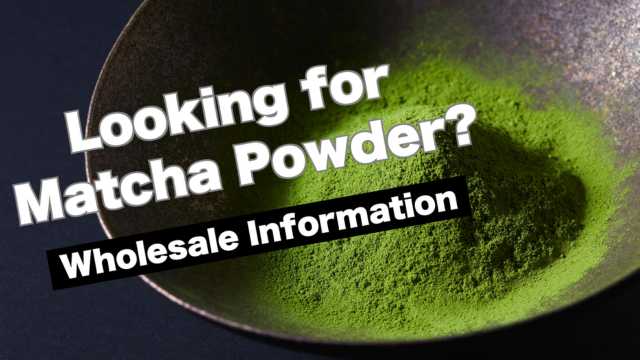
We source matcha from Japan’s premier production regions including Kyoto Uji, Kagoshima, Fukuoka, and Shizuoka, offering comprehensive grade ranges from organic JAS-certified ceremonial grade to processing-grade matcha.
Common Challenges:
- “We have projects but cannot secure stable matcha supply…”
- “We want to incorporate matcha into new café menu items!”
If you face these concerns, consult with Matcha Times. Feel free to contact us for initial inquiries.
\Read Also/
→ What Is Matcha Wholesale? A Complete Guide to Suppliers, Pricing & Sourcing
What MOQ actually means
MOQ is the smallest quantity a supplier will accept per order. For matcha it is driven by tencha availability, milling lots, packing units, and export cost. Orders that are too small raise the unit price; orders that are too large become inventory risk.
\Read More/
MOQ by tier: guidance and logic
In practice, buyers step lot sizes up as they grow. Validate small, then scale reduces mistakes.
| Stage | Typical lot | Main goal | Unit price |
|---|---|---|---|
| Sample | tens of g – hundreds of g | Validate quality & local fit | — |
| Trial | 1–10 kg | Small-scale sales / menu test | Higher |
| Rollout | 10–100 kg | Regular line / multiple SKUs | Mid |
| Stable supply | 100 kg – 1 t / month | Volume / OEM | Favorable |
JMEX supports everything from a ~10 kg trial to one-ton stable supply, matched to your growth stage.
What drives MOQ
- Grade: scarce premium grades (e.g. ceremonial) push MOQ
- Organic / certification: strict lot control tends to raise MOQ
- Packaging: single-serve sachets raise MOQ and unit price vs bulk
- Logistics: consolidated vs dedicated freight and Incoterms shift the optimal lot
How smart buyers order
- Put a number on your sales plan (monthly volume) first
- Validate 2–3 grades by use case rather than betting on one
- Prioritize building a clearance/storage track record before going big
- Design your order interval around lead time and inventory turn
This grows supply while keeping cash flow and inventory risk in check.
MOQ, inventory, and cash flow
MOQ is not just a “minimum quantity” — it is a business decision tied to inventory turn and cash flow. Because freshness affects matcha quality, overstocking is also a degradation risk.
- Monthly sales forecast ÷ target inventory turn = a guide to the right order lot
- Matcha degrades quickly once opened, so protect freshness with split stock and order frequency
- On the first order, prioritize building a storage/clearance record over chasing unit price
- Factor FX movement — and the timing of price revisions — into the plan
Incoterms and lot size
Your delivery terms (Incoterms) change the optimal lot and total landed cost. Small volumes suit courier; above a threshold, consolidated or dedicated freight wins.
| Terms | Best for | Suited lot |
|---|---|---|
| EXW/FOB + courier | Small volume, speed | up to ~10–15 kg |
| Consolidated (LCL) | Mid volume, cost | tens–hundreds of kg |
| Dedicated (FCL) | High volume, stable supply | hundreds of kg+ |
JMEX handles everything from dispatch prep to handover, optimizing lot and logistics together. See our matcha wholesale basics and reliable sourcing approach.
Payment, samples, and contract terms
Alongside lot negotiation, agree payment terms, sample policy, and lead time early to keep ordering smooth. First orders commonly start short-cycle and small, with terms easing as the relationship builds.
- Payment: first orders are often prepaid or part-prepaid, easing with track record
- Samples: confirm paid/free and who covers shipping in advance
- Lead time: allow a few weeks for tencha stock, milling, and export handling
- Price revision: state revision conditions, since harvest and FX move prices
JMEX is flexible from sample supply through to contract terms, matched to use and volume. See our reliable sourcing approach.
Questions to ask your supplier when negotiating MOQ
Before fixing a lot, confirming these avoids inventory and unit-price mistakes.
- What is the minimum lot per grade, and can you go below it?
- How do MOQ and unit price change for single-serve (sachet) packaging?
- What are the conditions to move from a trial (~10 kg) to production (100 kg+)?
- If we share an annual forecast, can you reserve supply capacity?
- By Incoterms (FOB/EXW/consolidated), what is the optimal lot and total cost?
- What is your peak-season availability and lead-time outlook?
Why Buyers Choose JMEX (Japan Matcha Export Organization)

One supplier that meets these criteria at a high level is JMEX (Japan Matcha Export Organization), a wholesale and export partner dedicated to bringing Japanese matcha overseas. It designs origin selection, quality assurance, export documentation, and logistics as one continuous flow, built for export from the start.
For wholesale buyers, JMEX scales from small trial lots to one-ton stable supply and, backed by an export track record across 43 countries, keeps unit pricing and replenishment predictable across seasons.
FAQ
Common questions about matcha MOQ and how to move between order tiers. Exact minimums are set per supplier and grade, so treat these as general guidance and confirm with your supplier.
What is the smallest I can start with?
Samples from tens of grams; trials from 1–10 kg. JMEX supports rollout from around 10 kg.
Does a bigger MOQ lower the unit price?
Larger lots are generally more favorable per kg, but balance that against inventory risk.
Does organic matcha raise MOQ?
Organic requires stricter lot control, so MOQ tends to be higher than conventional.
Learn More About Global Matcha Trends at Matcha Times

Matcha Times is a specialist media platform covering the global matcha market — sourcing and wholesale, supply and pricing, trade and regulations, production and origins, and the companies shaping the industry.
From market analysis and price trends to café case studies and interviews with tea farmers, we help buyers, importers, distributors, and manufacturers stay ahead of where matcha is heading. Explore more and put the global matcha market to work for your business.
Conclusion
There is no single correct MOQ — it is something you design in stages around your sales plan. Decide use and volume, then talk to a supplier.
For MOQ designed around your application and monthly volume, consult JMEX, with an export track record to 43 countries.
Looking for wholesale or OEM matcha samples? Contact us — we will recommend the optimal origin and grade based on your application and target markets.
Related Articles
→ Will Matcha Grow in Georgia? Building B2B Distribution Across the U.S. Southeast from Atlanta