Matcha Quality Control for B2B Buyers: COA, Color, Particle Size & Sensory Specs
Matcha quality control is the set of documented specifications, laboratory tests, and receiving checks a B2B buyer uses to confirm that every matcha lot matches the grade they agreed to buy. In practice it comes down to four things: a written specification sheet, a per-lot certificate of analysis (COA) from an accredited lab, objective checks on color, particle size, moisture and safety, and a sensory tasting. This guide shows importers, wholesalers, and OEM/beverage brands how to define those specs by application and verify them before money and containers move.
It is written from the export side. As a Japanese matcha wholesaler, JMEX prepares the documentation buyers request — COAs, residue evidence against destination limits, and organic JAS paperwork — so the emphasis here is on what a serious buyer should ask for and how to read what comes back.
For Companies Seeking Matcha Powder
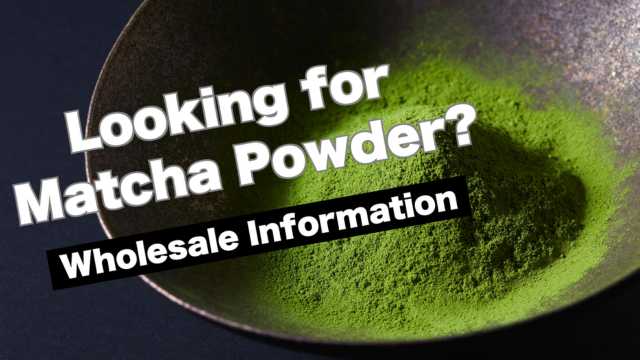
We supply matcha designed to a written specification and backed by a per-lot certificate of analysis, from ceremonial to processing grade, sourced across Japan’s premier regions.
Common Challenges:
- “We have projects but cannot secure stable matcha supply…”
- “We want to incorporate matcha into new café menu items!”
If you face these concerns, consult with Matcha Times. Feel free to contact us for initial inquiries.
\Read Also/
→ Matcha MOQ Explained: 1 kg to 1 Ton Order Tiers for B2B Buyers
What Matcha Quality Control Means for a B2B Buyer
For a B2B buyer, matcha quality control means turning a vague word like “premium” into measurable limits you can enforce on every shipment. Retail buyers taste one tin; you are contracting hundreds of kilograms across repeat lots, so consistency and documentation matter as much as the first sample.
A workable program rests on five pillars:
- Specification sheet — the fixed reference that defines the grade and its numeric limits, identical for every batch.
- Certificate of Analysis (COA) — the per-lot laboratory proof that one specific shipment met that specification.
- Physical parameters — color, particle size, moisture and water activity, measured objectively.
- Safety and compliance — heavy metals, pesticide residues, microbiology and radiation, tested by an accredited lab.
- Sensory evaluation — structured tasting for color, aroma, umami and astringency against a retained reference sample.
\Read More/
Specification Sheet vs Certificate of Analysis (COA)
These two documents are constantly confused, and the confusion is expensive. A specification sheet states the targets and stays the same for every batch; a COA reports the actual measured results for one production lot and changes every time. You need both — and the COA must be traceable to the physical goods you receive.
| Attribute | Specification sheet | Certificate of Analysis (COA) |
|---|---|---|
| Purpose | Defines the agreed grade and limits | Proves one lot met those limits |
| Changes per batch? | No — fixed reference | Yes — unique per production lot |
| Key identifier | Product / grade name | Batch / lot number + test date |
| Contains actual results? | No (target ranges only) | Yes (measured values) |
| Issued by | Supplier / brand | Accredited testing laboratory |
| Buyer use | Contract & purchase-order reference | Release, hold or reject the shipment |
Read it this way: If a document has no batch number, no test date, or values that cannot be tied to your shipment, it is not a usable COA — treat it as marketing and request a batch-matched report before you confirm the order.
The Core Matcha Quality Parameters
Five parameter groups carry most of the risk and most of the value. Specify a target and a tolerance for each, then require them on the COA. The exact numbers below are indicative industry ranges to confirm against your supplier’s own COA — set your contractual limits with them, not from a blog.
Color (CIE L*a*b*)
Color is the first thing your customers judge and the easiest to measure objectively. A colorimeter reports CIE L*a*b* coordinates — L* (lightness), a* (green–red) and b* (blue–yellow). High-grade matcha reads as a vivid green with a strongly negative a* and no yellow-brown cast.
For B2B, the point is drift control: a first lot at, say, L* 68 and a later lot at L* 61 look visibly different in a finished latte. Put the L*a*b* values on every COA and track them across orders so you catch a shift before your customer does.
Particle Size (D50 / D90, in Microns)
Particle size drives mouthfeel, color intensity and how the powder disperses. Labs report a distribution, usually as D50 (median) and D90 (90th percentile). Fine, stone-milled matcha is commonly around 5–10 microns (D50 commonly specified at 10 microns or below); once the average climbs past about 20 microns the powder turns perceptibly gritty in milk-based drinks.
Specify D50 and D90 (not just a mesh pass rate), because two powders with the same average can behave very differently if one has a long coarse tail.
Moisture and Water Activity
Moisture governs shelf life, clumping and color stability. A typical target sits around 3–5%, but the number that matters is the one you write into the contract and confirm on each COA. Where shelf life is critical, ask for water activity as well as percentage moisture.
Sensory / Organoleptic Evaluation
Instruments do not taste. Run a structured tasting of every lot against a retained reference sample: score color, aroma, umami/sweetness and astringency/bitterness, and record pass/fail against your reference. Retain a sealed sample of the approved lot so future batches have something concrete to be judged against.
Safety: Heavy Metals, Pesticide Residues, Microbiology and Radiation
Because matcha is consumed as whole powdered leaf, contaminants are ingested at higher concentration than with steeped tea, so safety testing is non-negotiable. A complete COA covers heavy metals (lead, arsenic, cadmium, mercury), pesticide residues against your destination’s limits, microbiological safety (total plate count, E. coli, Salmonella, yeast & mould), and — standard for Japanese tea exports — radiation.
Residue limits are set by the destination market, not the supplier. The EU applies a default maximum residue limit (MRL) of 0.01 mg/kg for substances not otherwise listed under Regulation (EC) No 396/2005; Japan’s Positive List System sets a uniform limit of 0.01 ppm where no specific MRL exists; and the Codex Alimentarius pesticide residues database publishes internationally referenced MRLs. Always test against the rules of the country you are selling into.
Trust the lab, not just the number: The laboratory should be ISO/IEC 17025 accredited (the standard is often written ISO 17025) for the methods used (Eurofins, SGS, Bureau Veritas and Intertek are common examples). If you cannot confirm the lab’s accreditation for a given test, treat the result with caution.
Matcha Quality Specification by Application
There is no single “best” matcha spec — there is the right spec for your product. The table below maps the parameters that matter most to common B2B end uses so you can write a spec that fits the application instead of over-paying for ceremonial grade in a baked good, or under-specifying color in a latte.
| Application | Color priority | Particle size | Sensory focus | Grade tier |
|---|---|---|---|---|
| Ceremonial / straight usucha | Highest (vivid green) | Finest (D50 ≤ ~8 um) | Umami, low bitterness | Ceremonial |
| Cafe latte / matcha milk | High (survives dilution in milk) | Fine (smooth, no grit) | Balanced umami, clean finish | Premium / cafe |
| Baking & confectionery | Medium–high (heat-stable green) | Medium (texture-tolerant) | Robust flavor that carries through sugar/heat | Culinary / processing |
| RTD & bottled beverage | High + color stability over shelf life | Fine (dispersion, no sediment) | Consistent across the batch | Culinary / beverage |
| Ice cream & dairy | High (visible in a pale base) | Fine (smooth mouthfeel) | Strong aroma | Premium / culinary |
| Supplements & capsules | Lower (often not seen) | Consistent, flowable | Minimal; safety-led | Processing |
The takeaway: the same buyer often needs two or three different specs across a product range. Designing origin, cultivar and grade to each use — rather than buying one grade for everything — is where cost and quality are actually won.
How to Read a Matcha COA: A Buyer Checklist
When a COA lands in your inbox, work through this step-by-step process in order. Building the same receiving routine into every shipment is the fastest way to catch a generic or mismatched certificate before it becomes a customer complaint.
- Traceability: Confirm the batch/lot number on the COA matches the label on the physical goods.
- Dates: The analysis date should sit close to the production date, not months later.
- Lab: Check the lab is named and ISO/IEC 17025 accredited for the relevant methods.
- Limits: Compare each measured value to your specification and your destination’s legal limits, not the supplier’s.
- Physical data: Confirm color (L*a*b*), particle size (D50/D90) and moisture are actually reported, not just “pass”.
- Safety panel: Heavy metals, pesticide residues, microbiology and radiation all present with numeric results.
- Decision: If any field is missing, generic, or unverifiable, place the lot on hold and request clarification before release.
Questions to Ask Your Matcha Supplier
A short, specific question set separates suppliers who run real quality control from those who forward a stock document. Ask these before the first order:
- Do you issue a batch-matched COA for every lot, and can I see a recent example?
- Which laboratory performs the testing, and is it ISO/IEC 17025 accredited for these methods?
- Against which country’s pesticide MRLs do you test — can you test to my destination’s limits?
- Do you report CIE L*a*b* color and D50/D90 particle size, and will you hold a tolerance across lots?
- How do you handle a lot that fails a limit — quarantine, retest, or reject?
- Can you supply organic JAS or other certification documents where my market requires them?
- Will you retain a reference sample of each approved lot for dispute resolution?
Common Matcha Quality-Control Mistakes B2B Buyers Make
Most quality failures trace back to a handful of avoidable habits:
- Confusing the documents: Accepting a specification sheet as if it were a COA (targets are not test results).
- Approving only the first sample and never re-checking color or particle size on later lots.
- Testing against the wrong country’s residue limits — or trusting the supplier’s own lab with no accreditation.
- Specifying a mesh pass-rate but not D50/D90, then being surprised by a gritty batch.
- Over-specifying: over-buying ceremonial grade for a baked or blended product where it adds cost, not value.
- Keeping no retained reference sample, so a later dispute has nothing objective to resolve it.
Comparing Japanese Matcha Suppliers on Quality-Control Capability
Quality control is only as good as the supplier behind it. The comparison below reads across four capabilities that matter to a B2B quality program (symbols only: ◎ strong, ○ moderate, △ limited).
| Criterion | What to verify with any supplier |
|---|---|
| Export & safety documentation | Request per-lot COA and the export, customs and food-safety documents your destination market requires (MRL/limit matching). |
| Selection criterion | Confirm this directly with the supplier and request supporting documentation. |
| Lot flexibility & MOQ | Check the minimum order quantity, trial-lot/sample availability, and the ability to scale from a small start to larger volumes. |
Each of these is a capable Japanese house, and every buyer should verify current capability directly. Read across the rows rather than down a single column: the established brands are strong on their own specialty, while JMEX is built to combine per-lot COAs, application-driven spec design, destination-ready export documentation, and flexible lot sizes in one export-focused workflow so the same spec, documentation, and lot size follow you from a trial order to steady supply.
From the exporter’s perspective
A practical sourcing note from the exporter side: the questions that stall a first order are almost never about price — they are about whether the COA is batch-matched, whether the lab is accredited for the exact method, and whether the residue panel was run against the buyer’s destination rather than a generic list. When we prepare a shipment we build those documents to the destination first, because a clean COA that tests the wrong country’s limits still gets a container held.
Sources & Methodology
Each source below states what it supports, its date, and its scope. Regulatory limits are tied to these primary and official sources; verify the current per-substance value in the live databases before you contract.
- European Commission, EU Pesticides Database — EU maximum residue limits for tea and the default 0.01 mg/kg for unlisted substances (accessed 2026-09-13, EU market).
- Regulation (EC) No 396/2005 — legal basis for EU MRLs and the default limit (in force, EU).
- Japan Food Chemical Research Foundation, Positive List System — Japan’s 0.01 ppm uniform limit where no specific MRL exists (system in force since 2006, Japan).
- Codex Alimentarius, Pesticide Residues in Food database — internationally referenced MRLs for pesticides (accessed 2026-09-13, international reference).
- ISO/IEC 17025 — the accreditation standard for testing-laboratory competence (accessed 2026-09-13, global).
Methodology note: The technical specification ranges in this article (particle size, moisture, color) are indicative industry values presented so you can set your own contractual limits with your supplier and confirm them on each COA — they are not fixed universal facts. This article asserts no price, MOQ, or market-size figures.
Researched and reviewed by the Matcha Times Editorial Team, operated by the Japan Matcha Export Organization (JMEX). Last reviewed: September 2026. See our Editorial Policy and Sources & Methodology. Found an error? Tell us.
Why Buyers Choose JMEX (Japan Matcha Export Organization)

One partner built for exactly this kind of quality program is JMEX (Japan Matcha Export Organization), a wholesale and export specialist that designs origin, grade, and specification for overseas buyers and prepares the documentation each market requires.
Rather than sending a stock document, JMEX matches cultivar, origin, and grade to your application, issues per-lot COAs, tests against your destination’s residue limits, and provides organic JAS paperwork where needed. Backed by an export track record across 43 countries, it carries your spec from a small trial lot to stable supply of up to one ton a month without the quality drifting between batches.
Frequently Asked Questions About Matcha Quality Control
Short, practical answers to the questions B2B buyers ask most often when they set up a matcha quality-control program.
What is a matcha certificate of analysis (COA)?
A COA is a batch-level laboratory report that proves one specific matcha lot met the agreed specification. It carries the batch/lot number, test date, and actual measured results for safety and physical parameters, and it should come from an accredited lab.
How is a COA different from a specification sheet?
A specification sheet defines the target limits and is identical for every batch; a COA reports the real results for one production lot and changes each time. The spec is your contract reference; the COA is what you use to release, hold, or reject a shipment.
What particle size should B2B matcha be?
Fine, stone-milled matcha is commonly specified with a D50 (median) around 5–10 microns; above roughly 20 microns it feels gritty in milk-based drinks. Specify D50 and D90 rather than a mesh pass-rate, and confirm the values on the supplier’s COA.
How do you measure matcha color objectively?
With a colorimeter reporting CIE L*a*b* values. Track L* (lightness) and a* (green–red) across lots; a drift of several L* points is visible to customers even when the powder still looks “green” on its own.
Which pesticide limits should matcha be tested against?
Against the destination market’s rules, not the supplier’s. The EU uses a 0.01 mg/kg default for unlisted substances, Japan applies a 0.01 ppm uniform limit, and Codex publishes reference MRLs. Test to the country you are selling into and require an ISO/IEC 17025 lab.
Can a Japanese exporter prepare the documents my market needs?
Yes. An export-focused supplier can issue per-lot COAs, test against your destination’s residue limits, and provide organic JAS or other certificates where required, so the paperwork clears customs and satisfies your own QA.
Learn More About Global Matcha Trends at Matcha Times

Matcha Times is a specialist media platform covering the global matcha market — sourcing and wholesale, supply and pricing, trade and regulations, production and origins, and the companies shaping the industry.
From market analysis and price trends to café case studies and interviews with tea farmers, we help buyers, importers, distributors, and manufacturers stay ahead of where matcha is heading. Explore more and put the global matcha market to work for your business.
Conclusion: Turn Quality Control into a Repeatable Spec
Matcha quality control is not a single test — it is a written specification, a per-lot COA from an accredited lab, objective physical and safety data, and a sensory check against a retained reference, all designed around your application. Define those limits once, enforce them on every shipment, and quality stops being a gamble. The most reliable starting point is a documented trial: request samples and their COAs, set your spec, and confirm the numbers before you scale.
Looking for wholesale or OEM matcha samples? Contact us — we will recommend the optimal origin and grade based on your application and target markets.
Related Articles
→ How to Choose a Japanese Matcha Supplier: 25-Point B2B Checklist (2026)
→ Professional Guide to Matcha Grades: Understanding Quality Ranks and Selection Mastery