Best Matcha for Baking: Heat Stability, Color Retention & Cost Guide
The best matcha for baking is a robust, color-stable culinary grade — not ceremonial. The short answer for a commercial buyer is pick a culinary grade built for heat and color retention and then bake it low-and-slow, because the heat, fat, sugar, and acidity in a bake will mute a delicate ceremonial powder while a stronger culinary grade keeps its green and flavor once it comes out of the oven.
This guide turns that into a spec matrix by baked application, a primary-source explanation of why matcha browns, an oven-temperature and color-retention playbook, baking dosage starting points, a repeatable oven-temperature comparison test you can run before you commit volume, and a way to lock the result to a spec sheet and COA so your baked color stays consistent every batch.
Key Takeaways
- Use a robust culinary grade for baking — its color and flavor survive heat, fat, and sugar, where a ceremonial grade fades and is wasted.
- Matcha browns because heat and acidity convert green chlorophyll to olive-brown pheophytin — so judge color after the bake, never from the tin.
- Lower temperature and a slightly longer bake protect color; alkaline leavening (baking soda) accelerates browning, so favor baking powder where color matters.
- Dosage is a starting point, not a rule: dial it in against flour weight and validate color and flavor in the finished baked good at production dosage.
- Optimize on cost per acceptable baked unit and lock the winning grade and baked-color target to a spec sheet + COA — not on the cheapest kilo.
Researched and reviewed by the Matcha Times Editorial Team, operated by the Japan Matcha Export Organization (JMEX). Last reviewed: September 13, 2026. See our Editorial Policy and Sources & Methodology. Found an error? Tell us.
Which matcha grade is best for baking?
For baking, choose a culinary grade selected for heat and color stability. In a bake the matcha has to compete with butter, sugar, dairy, chocolate, and oven heat, so you are buying color-and-flavor robustness per gram rather than the delicate umami you would want in a whisked cup. A vivid ceremonial grade is built for straight drinking; put it in a 180 °C oven and much of what you paid for is lost, while a good culinary grade holds a truer green and a cleaner matcha flavor.
Grade names are not regulated, so treat “culinary” as a shorthand for a spec rather than a guarantee: two suppliers’ culinary can differ in cultivar, harvest, particle size, and color-after-heat. That is why the rest of this guide works from measurable spec — a color target, particle size, and behavior under a real bake — that you can write down and verify, instead of trusting the word on the bag.
For Companies Seeking Matcha Powder
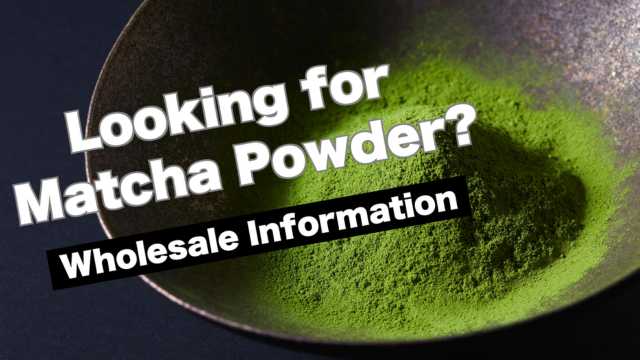
We source matcha from Japan’s premier production regions including Kyoto Uji, Kagoshima, Fukuoka, and Shizuoka, offering comprehensive grade ranges from organic JAS-certified ceremonial grade to processing-grade matcha.
Common Challenges:
- “We have projects but cannot secure stable matcha supply…”
- “We want to incorporate matcha into new café menu items!”
If you face these concerns, consult with Matcha Times. Feel free to contact us for initial inquiries.
\Read Also/
Matcha spec by baked application: color, particle size, and heat tolerance
Different baked goods stress matcha differently. A quick, thin cookie sees the oven briefly; a dense loaf or a cheesecake bakes long and hot; a no-bake filling or a buttercream never sees the oven at all and can carry a brighter, finer grade. The table below maps common baked applications to the spec that usually matters most. Particle-size figures are industry-typical starting points — confirm the actual D50 on your supplier’s spec sheet.
| Baked application | Grade that usually fits | Particle size (typical D50) | What matters most in the spec |
|---|---|---|---|
| Cookies / shortbread | Culinary (baking) | Fine–medium (roughly 15–25 µm) | Color-after-heat, even dispersion in fat, robust flavor |
| Cakes, muffins & loaves | Culinary (high-stability) | Medium (roughly 15–30 µm) | Color held through a long, hot bake; flavor vs sugar |
| Sponge / chiffon / castella | Culinary or high latte | Fine (roughly 10–20 µm) | Vivid green in a pale crumb; smooth, no speckle |
| Macarons & meringue | Culinary, finely milled | Very fine (roughly 8–15 µm) | Even color, no specks; behavior with egg white & sugar |
| Bread & enriched dough | Culinary (robust) | Medium (roughly 20–30 µm) | Flavor survival vs yeast, salt, long bake; cost |
| No-bake fillings, creams, glazes | High culinary or latte | Fine (roughly 8–15 µm) | Brightest color & clean flavor (no oven heat to survive) |
Read the table as a starting matrix, not a rule: the longer and hotter the bake, the more you should lean on a robust, heat-stable culinary grade; the less heat a product sees, the finer and more vivid you can go. Write your winning row down as a target spec (grade, color target, particle size, moisture) so it can be reproduced and checked on every lot.
\Read More/
Why does matcha turn brown in the oven?
Matcha is green because of chlorophyll, and chlorophyll is chemically fragile. Under heat — and faster in an acidic environment — the magnesium at the center of the chlorophyll molecule is displaced and the pigment converts to pheophytin, an olive-to-brown compound; peer-reviewed food-science work has measured this conversion and the associated color loss as heat-driven degradation kinetics (see the published kinetics of chlorophyll degradation and color loss under heat). That is the real reason a brilliant green batter can finish khaki or brown.
- Heat & time: the hotter and longer the bake, the more chlorophyll converts — long, hot bakes on thick items are the biggest color risk.
- Acidity: acidic ingredients speed the loss of green; alkaline conditions have their own trade-offs (below).
- Fat & dairy: butter, cream, and milk lighten and mute the green and soften the flavor edge.
- Light, oxygen & storage: even after baking, exposure fades color over shelf life.
The practical takeaway is simple: judge color after the real bake, never from the dry powder. Formulate to hit your color target with matcha plus process control first; if your product needs a guaranteed on-shelf green, matcha used to color a food is a color-additive question, and the U.S. FDA sets how color additives are approved, used, and declared — see the FDA overview of color additives in foods and confirm any added colorant against current rules for your market.
Oven temperature and color retention: baking matcha to keep it green
Because browning is driven by heat, time, and pH, you have three practical levers. The most reliable is low-and-slow: a modestly lower oven temperature held a little longer degrades less chlorophyll than a hot, fast bake, especially on thick items that sit in the heat. The second is leavening chemistry — an alkaline batter browns faster, so where color is critical, favoring baking powder over baking soda helps. The third is simply bloom and dose: dissolve or sift the matcha evenly so you are not compensating for streaks with more powder.
| Lever | Direction that protects color | Why (mechanism) | Trade-off to watch |
|---|---|---|---|
| Oven temperature | Slightly lower | Less heat-driven chlorophyll→pheophytin conversion | May need a longer bake; watch set/rise |
| Bake time | As short as the product allows | Total heat exposure is what degrades color | Under-baking on dense items |
| Leavening / pH | Favor baking powder where color is key | Alkaline (soda-heavy) batters brown faster | Recipe balance, lift, and flavor |
| Dispersion | Sift / bloom evenly | Even color at lower dosage; no streak over-dosing | Extra prep step |
Treat the exact numbers as starting directions to validate for your product, not universal settings: oven behavior, item thickness, pan, and recipe all change the result. The honest way to find your setting is to test it, which is what the next section makes repeatable.
A repeatable oven-temperature comparison test
Rather than trusting a single recipe temperature, run a small, controlled comparison on your actual product and record it the same way every time. This is the test most guides skip, and it is the step that actually protects your baked color at scale.
- Fix everything except temperature: one recipe, one candidate matcha, one dosage, same pan, same rack, same batch of batter.
- Bake identical units at two to three oven temperatures (for example three settings spanning a modestly lower to a standard temperature), baking each to the same doneness rather than the same clock time.
- Photograph each baked unit under the same lighting immediately and again after cooling, next to a fixed color reference.
- Score post-bake color, crumb, and flavor with a small taste panel, blind where possible.
- Record oven temperature, time-to-doneness, and recipe cost per finished unit for each setting so color and cost are compared together.
- Pick the setting that holds color at acceptable throughput, then write the winning temperature and time into the product spec alongside the grade.
Repeat the same test whenever you qualify a new lot or a new supplier’s culinary grade. It converts “which matcha bakes best” into a decision you can defend, repeat, and hand to a supplier as an exact target to match.
How much matcha to use in baking
There is no single correct dose — it depends on grade strength, the product, sweetness, and how green and how strong you want the matcha to read. For baking it is easiest to dial in against flour weight and then validate in the finished bake. Use the ranges below as calibrated starting points and adjust with a taste panel; they are typical starting points, not fixed values.
| Baked application | Typical matcha starting dosage | Note |
|---|---|---|
| Cookies / shortbread | Compare ~1–3% of flour weight | Short bake protects color; dial to flavor |
| Cakes / muffins / loaves | Compare ~1–2.5% of flour weight | Longer bake — expect some color loss; low-and-slow helps |
| Sponge / chiffon / castella | Compare ~2–4% of flour weight | Pale crumb shows color; push for vividness |
| No-bake fillings / creams | Set by target color, then taste-check | No oven heat — brightest color per gram |
Two disciplines keep dosage honest. First, cost and flavor move together, so record recipe cost per finished unit at your chosen dose. Second, because matcha carries naturally occurring caffeine — roughly 38–88 mg per 2 g depending on grade and harvest, per USDA FoodData Central — a higher dose also raises the caffeine your finished product delivers, which matters for labeling and for functional or kid-facing formats.
Cost vs quality: optimizing matcha cost for baking
The cheapest kilogram rarely makes the cheapest baked product. A dull, weak powder forces you to overdose to hit a green that still fades in the oven, erasing the saving and adding bitterness; a stronger, heat-stable culinary grade can hit your target at a lower dose and survive the bake. Optimize at the recipe level, not the price-per-kilo level.
- Grade-match the SKU: robust culinary where the bake is long and hot; a finer, brighter grade only where there is little or no oven heat.
- Calibrate dosage and temperature together: find the lowest dose and the gentlest bake that still hit your post-bake color and flavor target.
- Compare on finished-unit cost: judge candidates on cost per acceptable baked unit at the validated dose and temperature, not on headline price per kilogram.
- Lock the spec: a written spec + COA prevents silent grade drift that quietly raises cost or wrecks baked color.
Keep price talk honest, too: matcha markets move with each harvest, so treat any per-kilogram figure as a current quote to request for your exact spec, trade terms (FOB/CIF/EXW), and volume rather than a fixed number. Culinary grade is generally less expensive per kilogram than ceremonial, but the right question is always cost per acceptable baked unit.
From the exporter’s perspective
From the export side, the baked colors that stay consistent are the ones written down as a spec, not kept in a head or a single recipe card. When a buyer validates a culinary grade in the actual bake, settles on an oven temperature and time, and then locks the color target, particle size, and moisture to a spec sheet and COA, JMEX can source and reserve milling against that exact target so the green a customer approved in a pilot bake is the one they receive at scale, lot after lot.
From recipe to spec sheet: locking baked color, particle size, and COA
A validated baking formula is only useful if the supplier can reproduce it. The bridge is a written spec sheet plus a Certificate of Analysis (COA) per lot, so “the green we approved after baking” becomes a measurable target rather than a memory. For OEM and private-label work this also sets the product-development timeline, which adds its own weeks on top of milling and shipping lead time — so lock the spec early.
Before you commit volume, put these questions to your matcha supplier:
- Can you meet a written spec sheet — grade, color target, particle-size (D50), moisture — and issue a COA per lot?
- Is this grade selected for heat and color stability in baking, and how is color-after-heat verified?
- Which cultivar, origin, and harvest does this culinary grade come from, and can it be held stable across the year?
- Can you reserve milling capacity so my validated spec is reproduced on schedule, not re-quoted each order?
- What organic, halal, or other certifications and labeling documents can you provide for my market?
- What is the realistic lead time in weeks from order to shipment, including export documentation?
If a supplier can answer these and put the spec in writing, your baked color is protected against the silent grade drift that ruins consistency between launch and reorder.
Sources & Methodology
This article synthesises peer-reviewed food science with official government sources and an original oven-temperature comparison test protocol; it reports no proprietary buyer statistics or baked-color test numbers because we hold no publishable original dataset on matcha baking. Dosage, particle-size, and temperature figures are given as hedged, industry-typical starting points to validate in your own finished bake and confirm on a supplier spec sheet / COA — not as fixed specifications. Caffeine and color-additive statements are attributed to USDA and the FDA and dated; prices are kept qualitative because matcha markets move each harvest.
- Kinetics of chlorophyll degradation and color loss under heat (PubMed / J. Agric. Food Chem.) — the peer-reviewed mechanism and kinetics by which heat converts green chlorophyll to olive-brown pheophytin and color is lost (accessed 2026-09-13; peer-reviewed food-science primary source)
- USDA FoodData Central — green-tea / matcha composition and caffeine data relevant to dosage, labeling, and functional formats (accessed 2026-09-13; official U.S. government food-composition database)
- U.S. FDA — Color Additives in Foods — how color additives are approved, used, and declared on food labels when matcha is used as a colorant (accessed 2026-09-13; U.S. government food-safety regulator)
- MAFF — Situation Surrounding Tea (official tea-sector overview) — context on tencha/matcha grade and origin behind culinary-grade availability (accessed 2026-09-13; official Japanese government sector overview (PDF, Japanese))
Why Buyers Choose JMEX (Japan Matcha Export Organization)

For buyers who need a baked color to stay consistent at scale, JMEX (Japan Matcha Export Organization) is a wholesale and export partner focused on shipping Japanese matcha overseas. It coordinates origin and grade selection, spec design, quality assurance (COA), certifications, and export documentation as one flow, so the green and flavor you validated in a pilot bake survive the jump to production.
Because JMEX selects culinary grades for heat and color stability, designs matcha to a written spec sheet, verifies color and particle size lot to lot, and reserves milling capacity against your validated formula, baking buyers can hold a fixed grade and baked-color target across the year instead of re-qualifying a new powder every reorder. With an export track record to 43 countries, JMEX has designed and supplied matcha for baking, confectionery, and dessert manufacturing across many markets, and helps OEM and private-label buyers move from a validated recipe to a lockable, reproducible product spec.
Frequently Asked Questions
Quick answers to the questions buyers ask most about matcha for baking.
What matcha is best for baking?
A robust culinary grade selected for heat and color stability is best for baking, not ceremonial grade. In a bake the matcha competes with heat, fat, and sugar, so you want color-and-flavor robustness per gram rather than delicate umami. Grade names are unregulated, so confirm the actual color-after-heat and particle-size spec rather than trusting the label.
Why does matcha turn brown when baked?
Matcha is green because of chlorophyll, which is heat- and acid-sensitive: under oven heat the pigment converts to olive-brown pheophytin, a change measured in food-science degradation kinetics. Long, hot bakes and acidic or alkaline conditions accelerate it, so judge color after the real bake, choose a heat-stable culinary grade, and bake low-and-slow.
How much matcha do you use in baking?
Treat dosage as a calibrated starting point and dial it in against flour weight. Cookies and cakes often start around 1–3% of flour weight, while a pale sponge may go higher for vividness; no-bake fillings are set by target color. Always validate color and flavor in the finished bake at production dosage and adjust for grade strength and sweetness.
Can you bake with ceremonial grade matcha?
You can, but it is usually a waste. Ceremonial grade is built for delicate flavor and vivid color when whisked and drunk; oven heat mutes both, so you pay a premium for qualities the bake destroys. A high-quality culinary grade delivers better color-after-heat and flavor payoff per gram in baked goods.
What oven temperature keeps matcha green?
Lower and slower protects color, because total heat exposure drives the chlorophyll-to-pheophytin change; a modestly lower temperature baked to the same doneness usually degrades less color than a hot, fast bake. Alkaline (baking-soda-heavy) batters brown faster, so favor baking powder where color matters, and confirm your exact setting with a small oven-temperature comparison test on your own product.
Learn More About Global Matcha Trends at Matcha Times

Matcha Times is a specialist media platform covering the global matcha market — sourcing and wholesale, supply and pricing, trade and regulations, production and origins, and the companies shaping the industry.
From market analysis and price trends to café case studies and interviews with tea farmers, we help buyers, importers, distributors, and manufacturers stay ahead of where matcha is heading. Explore more and put the global matcha market to work for your business.
Conclusion
When origin, grade, and export conditions align, matcha becomes a stable revenue source. Start by defining your requirements and confirming quality with a sample.
Looking for wholesale or OEM matcha samples? Contact us — we will recommend the optimal origin and grade based on your application and target markets.
Related Articles