Matcha Wholesale Price per kg 2026: Grade, Origin, MOQ & Landed Cost
In short, there is no single “matcha price per kg”: the figure depends on grade, origin, order volume, certification, and trade terms, and culinary grades typically sit in the tens of US dollars per kg while genuine ceremonial grades run into the low hundreds of US dollars per kg FOB. The one hard, published per-kg benchmark is Japan’s average export unit value for powdered tea — roughly ¥5,340/kg (about $36/kg) in 2024, blended across all grades (MAFF / Japan Customs trade data). Because rates move each quarter with the first-flush harvest, tencha supply, and the JPY/USD exchange rate, always confirm the latest quotation rather than relying on any fixed figure. This guide breaks down how grade, origin, and MOQ shape price, how FOB, CIF, and landed cost fit together, and how to lock in stable, transparent pricing — written for importers, wholesalers, OEM buyers, and health and protein brands operating at hundreds of kilograms per month.
Understanding why a price lands where it does — not just the headline number — is what prevents costly mistakes in quote comparison and negotiation. For the fundamentals of matcha wholesale, see What Is Matcha Wholesale? A Complete Guide to Suppliers, Pricing & Sourcing, and for a structured buyer’s process see The B2B Matcha Sourcing Playbook: A 10-Point Checklist for Importers, OEM Brands, and Wholesale Buyers. Let’s start with the current ranges.
For Companies Seeking Matcha Powder
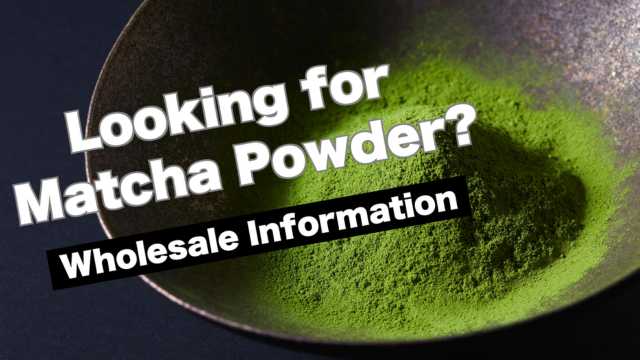
We source matcha from Japan’s premier production regions including Kyoto Uji, Kagoshima, Fukuoka, and Shizuoka, offering comprehensive grade ranges from organic JAS-certified ceremonial grade to processing-grade matcha.
Common Challenges:
- “We have projects but cannot secure stable matcha supply…”
- “We want to incorporate matcha into new café menu items!”
If you face these concerns, consult with Matcha Times. Feel free to contact us for initial inquiries.
\Read Also/
→ Understanding Matcha Grades and Pricing: How to Identify Quality and Choose Wisely
2026 Wholesale Price Ranges (Latest Guide)
When you buy matcha by the kilogram, grade is the single biggest price driver. Origin (Uji, Nishio, Kagoshima, Yame and others), shading duration, stone-milled versus machine-milled, and MOQ and contract terms follow. Even though everything is called “matcha,” a first-flush ceremonial blend and a color-focused processing grade have completely different cost structures. So the question “how much is matcha per kg?” has no single answer until you fix the use case and grade.
The guidance below reflects commercial lots (roughly 10 kg and up) circulating in 2026. Global demand growth and a tightening supply of tencha, matcha’s raw material, have kept prices trending upward. The scale of that pressure is visible in primary data: at the Kyoto tea market the opening 2025 tencha auction averaged about ¥8,235/kg — roughly 1.7× the previous year and a record high (Global Japanese Tea Association; reported by Reuters), while Japan’s green-tea exports reached a record ¥36.4 billion in 2024 (up about 25% year on year), with powdered tea making up roughly 58% of the total (MAFF trade statistics via nippon.com). Note that tencha auction prices are the raw-material benchmark, not a finished-matcha FOB price. Actual quotes shift with origin, certification, volume, and lead time, so confirm the current figure before you commit.
\Read More/
→ The Matcha Supply Chain Anatomy: Understanding the 12-Layer Structure from Farm to Cup
Price by Grade: Quick-Reference Table
| Grade | Typical application | Key specification | Relative price band | MOQ considerations |
|---|---|---|---|---|
| Ceremonial | Whisked tea, premium latte, gift | First-flush leaf, stone-milled, vivid color & low bitterness | Highest (low hundreds of USD/kg FOB) | Small starter lots common; allocation tightens in short-supply years |
| Premium culinary | Core cafe latte, fine sweets | Strong color and flavor that hold in milk | Mid–upper | Small-to-mid lots |
| Standard culinary | Beverages, confectionery, ice cream | Balanced cost and color for blending | Mid–lower (tens of USD/kg FOB) | Mid-volume lots |
| Industrial / processing | Coloring, mass production, blend base | Color-focused, later-flush leaf | Lowest | Larger-volume, contract-based lots |
As the table shows, the top grade can cost several times the processing grade per kilogram. For a concrete illustration, one Japanese B2B exporter publicly quotes ceremonial grade at roughly $100–320/kg FOB (Uji at the top of that band, Kagoshima 30–40% less) and culinary grade at about $35–80/kg FOB (First Agri) — treat these as one exporter’s indicative pricing, not a market average, and request current quotes to compare. Protein and functional-food makers using large volumes tend to sit in the processing-to-standard band, while brands differentiating with premium lattes or gifts choose the upper grades. Working backward from your retail price to the grade is the first step in optimizing cost. If baking and color retention matter, see Wholesale Matcha Powder for Commercial Use: OEM, Private Label, and Food Service Supply.
How Origin, Grade, and MOQ Move the Price
Beyond grade, three levers explain most of the gap between two quotes for what looks like the same matcha: where the leaf is grown, how large the order is, and how the contract is structured. The sections below take each in turn so you can see which lever to pull when a quote comes back higher than expected.
Origin
Origin affects both price and brand value. Traditional regions such as Uji (Kyoto) and Nishio (Aichi) carry strong recognition and command a premium at the upper grades, while Kagoshima and Yame offer stable yields and strong cost performance suited to large commercial supply. Brands promoting single origin pay an origin premium in exchange for differentiation. For origin-specified sourcing in a specific U.S. market, see How to Sell Japanese Matcha in Illinois: A B2B Guide to Chicago and the Midwest Wholesale & Foodservice Market.
MOQ and Contract Structure
MOQ maps directly to unit price. Small lots cost more per kilogram; larger volumes drive the per-kg price down. But if you set up quarterly split shipments or an annual volume commitment, you can capture the volume discount without warehousing a huge lot from day one. Buyers at hundreds of kilograms per month optimize both price and inventory risk by shifting from one-off spot buys to secured supply contracts.
Landed Cost: FOB, CIF, Duty, and Customs
Your true delivered cost — landed cost — is not the matcha price alone. FOB plus ocean freight and insurance equals CIF, and adding the import country’s duty, customs fees, inland transport, and storage gives you landed cost. The same hypothetical $40/kg lot can land at very different unit costs depending on freight mode and the destination’s tariff.
- FOB: cost through loading at the Japanese port; the usual baseline for comparing quotes.
- CIF: FOB plus ocean freight and insurance; air freight is faster but far pricier per kg.
- Duty / VAT: set by HS code and the destination’s trade agreements (EPA/FTA); relief may apply.
- Customs / inland: brokerage, inspection, inland transport, storage, and FX fees.
Because duty rates and EPA eligibility vary by product, origin, and destination, always confirm the exact rate with the importing country’s customs authority or your broker. For Japan-side export data and procedures, JETRO and Japan Customs are useful primary sources. Comparing on FOB alone can reverse once landed costs are added, so evaluate on landed cost. For market-specific requirements, see How Big Is the U.S. Matcha Market? Cafe, Foodservice, Retail & Wellness Demand Analyzed.
What Moves Matcha Prices in 2026
To read the 2026 market, watch these five variables. They rarely act alone, so quarterly monitoring pays off.
- First-flush harvest and timing: top-grade material comes mainly from first-flush (spring) leaf, so poor weather lifts upper-grade prices.
- Tencha supply tightness: the global matcha boom keeps tencha demand ahead of supply, a structural upward pressure.
- FX (JPY/USD): a weak yen favors dollar buyers; a strong yen hurts. Even USD/kg quotes move with FX.
- Energy and materials: shading fabric, tencha-oven fuel, and packaging feed into production cost.
- Freight: ocean rates and fuel surcharges flow into CIF and landed cost.
For how beverage-led buyers absorb this volatility, see Will Tennessee’s Matcha Market Grow? Analyzing Nashville Tourism, Young Consumers & Emerging Cafe Demand and the demand picture in Will Japanese Matcha Take Root in Minnesota? A B2B Look at Minneapolis Food Companies & the Café Market.
2026 Price Outlook
The reasonable base case for 2026 is firm to modestly higher upper grades on tight supply, and flat to gently rising processing and standard grades. Holding off in the hope of a sharp drop mostly raises your stockout risk. The harder the market is to read, the more a fixed-origin, fixed-grade annual contract helps smooth price. For a demand-side view of an affluent metro, see How to Break Into Maryland’s Matcha Market: Washington DC Metro’s Affluent & Asian-American Demand.
Locking In Stable Pricing with JMEX
JMEX (Japan Matcha Export Organization), with an export track record to 43 countries, handles the export side end to end: origin and grade design, COA and MRL (residue) analysis, organic and halal certificates, customs documentation, and stable supply from 10 kg to 1 tonne per month. By pairing price transparency with small-to-large lot flexibility, JMEX makes planned procurement possible even in a volatile market.
In practice, that means quarterly price tables by grade and a transparent origin-grade-MOQ matrix behind every quote. Annual volume commitments and split shipments let you secure both the volume discount and stable supply from your first order. Rather than chasing spot-price swings, you get a base you can build your retail pricing plan on — the practical win for a buyer at hundreds of kilograms per month.
Wholesaler Comparison
When you compare matcha wholesalers, look past the sticker price to the factors that drive total landed cost and reliability: price transparency, small-lot capability, grade breadth, export readiness, and MOQ flexibility. Use the checklist below to evaluate any supplier on the same terms before you request a quote.
| Criterion | What to verify with any supplier |
|---|---|
| Price transparency | Itemised pricing by grade, lot size, packaging and freight — not a single blended figure |
| Small-lot capability | Whether trial lots (e.g. 10 kg) are available before you commit to volume |
| Grade breadth | Range from ceremonial to culinary/latte and OEM grades that match your channel |
| Export readiness | Per-lot COA, destination-market MRL matching, and complete export documentation |
| MOQ flexibility | Minimum order quantities and the ability to scale from a small start to about 1 t/month |
Apply this checklist to every supplier on your shortlist and decide on your latest quotes and terms. JMEX (Japan Matcha Export Organization) is an export-focused Japanese matcha supplier with export experience to 43 countries; you can request pricing and terms directly and assess it against the criteria above.
Why Buyers Choose JMEX (Japan Matcha Export Organization)

One supplier that meets these criteria at a high level is JMEX (Japan Matcha Export Organization), a wholesale and export partner dedicated to bringing Japanese matcha overseas. It designs origin selection, quality assurance, export documentation, and logistics as one continuous flow, built for export from the start.
JMEX quotes by grade, volume, and destination and, drawing on an export track record across 43 countries, helps lock stable landed pricing rather than chasing a headline unit price that ignores freight, duties, and FX.
FAQ
Quick answers to the wholesale-pricing questions B2B buyers ask most often. For firm figures matched to your grade, origin, and volume, request a current quotation.
How much is wholesale matcha per kg?
It depends heavily on grade, origin, and volume, so there is no single figure. As a directional guide, culinary grades sit in the tens of USD per kg and genuine ceremonial grades in the low hundreds of USD per kg FOB; Japan’s 2024 blended export unit value for powdered tea was about ¥5,340/kg (≈$36/kg). Origin, volume, certification, and FX all shift the number, so confirm the current quote.
What’s the difference between FOB, CIF, and landed cost?
FOB is the price through loading at the Japanese port, CIF adds ocean freight and insurance, and landed cost adds the destination’s duty, customs, inland transport, and storage to reach the true delivered cost. Compare on landed cost for accuracy.
What is the typical MOQ?
There is no industry-wide MOQ — it is set by each supplier and grade. In practice buyers see tiers: sample/trial quantities, small-lot starter volumes for premium grades, and larger contract volumes for processing grades. Confirm the exact minimum with the supplier; split-shipment contracts against an annual volume let you capture volume pricing even on smaller individual lots.
Will matcha prices fall in 2026?
With tight tencha supply and rising global demand, expect upper grades firm to slightly higher and processing/standard grades flat to gently up. Waiting for a big drop mostly raises stockout risk, so smoothing price through contracts is more reliable.
How can I stabilize my pricing?
Fix your origin and grade, reduce spot exposure with annual-volume allocations and split shipments, and use quarterly price tables to keep the market visible. Securing a supply slot lets you procure on plan even when prices swing.
Summary
2026 wholesale matcha prices span a several-fold gap across grades, driven by origin, MOQ, FX, tencha supply, and freight. Don’t compare on FOB alone — evaluate landed cost, cut spot exposure, and smooth price through contracts. Choosing a partner that spans origin and grade design, documentation, and stable supply is the fastest way to protect both your price and your supply.
We send the latest wholesale price list by grade. Prices move, so we always share the current version. JMEX, with an export track record to 43 countries, proposes transparent price design and stable supply matched to your origin, grade, and MOQ.
Learn More About Global Matcha Trends at Matcha Times

Matcha Times is a specialist media platform covering the global matcha market — sourcing and wholesale, supply and pricing, trade and regulations, production and origins, and the companies shaping the industry.
From market analysis and price trends to café case studies and interviews with tea farmers, we help buyers, importers, distributors, and manufacturers stay ahead of where matcha is heading. Explore more and put the global matcha market to work for your business.
Conclusion
When origin, grade, and export conditions align, matcha becomes a stable revenue source. Start by defining your requirements and confirming quality with a sample.
Looking for wholesale or OEM matcha samples? Contact us — we will recommend the optimal origin and grade based on your application and target markets.
Related Articles
→ Japan’s Matcha Supply Crisis: What’s Really Happening Behind the Global Boom
→ What Is Matcha Wholesale? A Complete Guide to Suppliers, Pricing & Sourcing