Illinois Matcha Wholesale: Japanese Supplier, MOQ, Price & Delivery Guide
For an Illinois business, matcha wholesale in Illinois means buying bulk Japanese matcha — typically direct from a Japan-based exporter or through a US importer/distributor — and having it delivered to a Chicago-area or downstate location for a cafe, foodservice, retail or private-label program. The practical levers are the same ones every buyer negotiates: minimum order quantity (MOQ), grade (ceremonial vs culinary), origin and harvest, packaging, lead time and the export documents that get the shipment cleared. Pure, unflavored matcha enters the US as green tea and is generally duty-free under HTS heading 0902, which keeps landed cost predictable for a Midwest buyer. This guide covers the Illinois demand picture, the foodservice / retail / OEM channel map, how pricing and MOQ actually work, the US import and delivery steps, how to de-risk a supplier, and how JMEX supports buyers on the export side.
For Companies Seeking Matcha Powder
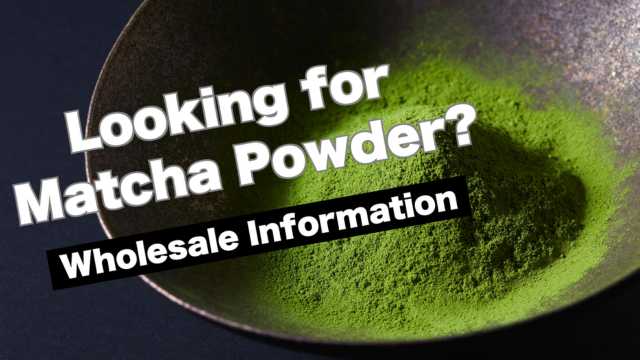
We source matcha from Japan’s premier production regions including Kyoto Uji, Kagoshima, Fukuoka, and Shizuoka, offering comprehensive grade ranges from organic JAS-certified ceremonial grade to processing-grade matcha.
Common Challenges:
- “We have projects but cannot secure stable matcha supply…”
- “We want to incorporate matcha into new café menu items!”
If you face these concerns, consult with Matcha Times. Feel free to contact us for initial inquiries.
\Read Also/
Key Takeaways
- Illinois buyers source bulk matcha either direct from a Japanese exporter or through a US importer/distributor; buying direct usually improves margin and origin control but puts the import compliance on you.
- Wholesale matcha pricing is set by grade, origin, harvest timing, packaging and order volume — not by one list price. Ask for a current quote tied to a trade term (FOB/CIF) rather than comparing headline numbers.
- MOQ varies widely by supplier — from a few kilograms to full pallets — and rises for private-label or custom blends. Match the MOQ to your real monthly turnover so quality does not degrade in storage.
- Pure unflavored matcha is classified as green tea (HTS heading 0902) and is generally duty-free; flavored or blended products can fall under a dutiable line. Verify the current rate with a customs broker before you quote landed cost.
- The biggest Illinois-specific risk is supply continuity during demand spikes; de-risk with a sample, a per-lot COA and a supplier who can scale from a trial lot to steady monthly volume.
Researched and reviewed by the Matcha Times Editorial Team, operated by the Japan Matcha Export Organization (JMEX). Last reviewed: 2026-10-01. See our Editorial Policy and Sources & Methodology. Found an error? Tell us.
\Read More/
The matcha wholesale opportunity in Illinois
Illinois — anchored by the Chicago metro, one of the largest US foodservice markets — is a strong matcha wholesale market because demand now spans cafes, quick-service and full-service restaurants, grocery and specialty retail, and local manufacturers of beverages, bakery and supplements. For a wholesale buyer the opportunity is less about whether matcha sells and more about securing dependable supply: a consistent grade, a reliable lead time, and a price that holds as you scale. Chicago’s position as a Midwest logistics hub (O’Hare air freight plus major rail and road corridors) also makes it practical to receive regular shipments from Japan without coastal-only routing.
Independent demand signals back this up. Trade coverage citing consumer-insight platform Tastewise reports roughly a 19% year-over-year increase in matcha interest, alongside rising menu prices and supply tightness that has pushed some operators to switch suppliers more than once in a year (Fresh Cup, citing Tastewise, 2026). Treat that figure as a commercial estimate — a demand direction, not a guaranteed number — but the operational takeaway for an Illinois buyer is clear: lock in a supplier who can keep up.
Demand drivers behind Illinois matcha wholesale
Understanding what is pulling matcha volume through Illinois helps you size an order and pick a grade. The main drivers:
- Cafe and foodservice menus — matcha lattes are now a standard menu item in Chicago cafes and chains, driving steady culinary/latte-grade volume.
- Bakery and dessert — bakeries, dessert makers and ice-cream producers use culinary grade for color and flavor.
- Beverage and supplement manufacturing — RTD beverages, protein and wellness brands formulate matcha into shelf products, needing consistent particle size and color batch to batch.
- Retail and private label — grocery, specialty and health retailers stock tins and sachets, often seeking organic certification.
- Organic and provenance demand — buyers increasingly ask for organic and clear origin, which shapes which grades and suppliers qualify.
Two cautions. First, demand growth has outrun premium-grade supply in recent seasons, so availability of ceremonial-grade matcha is a real planning factor, not a worst case. Second, “matcha interest” market figures are vendor estimates that vary by provider and definition — use them to read direction, and base your order on your own turnover.
Channel map: foodservice, retail and OEM
Different Illinois channels want different grades, pack sizes and documentation. Matching your order to your channel avoids over-buying a grade you cannot turn over. The map below is a planning guide, not a price list — confirm specifics in a quote.
| Channel | Typical grade | Buyer priorities | Packaging & documents |
|---|---|---|---|
| Foodservice (cafes, QSR, hotels) | Latte / culinary (some ceremonial for signature drinks) | Color in milk, cost per serving, consistent reorders, lead time | Bulk bags/tins; COA; allergen-safe spec sheet |
| Retail & grocery | Culinary to premium; organic common | Shelf stability, branding, certification, label compliance | Retail tins/sachets; organic cert; US label data |
| Private label / OEM | Spec-defined (custom grade & blend) | Batch consistency, particle size, color stability, scalable volume | Bulk + custom pack; COA per lot; origin evidence |
| Beverage / supplement manufacturing | Culinary; standardized spec | Dispersion, heat/color stability, microbiological specs | Bulk; full COA; MRL & heavy-metal testing |
| Distributors / regional wholesalers | Mixed portfolio | Margin, supply continuity, multi-grade range | Pallet quantities; consistent documentation |
Matcha wholesale pricing and MOQ in Illinois
There is no single “Illinois wholesale price” for matcha, and any specific per-kilogram number you see online is a particular supplier’s offer under particular terms. Below is how pricing and MOQ are actually built, so you can read a quote rather than chase a headline figure.
What drives the price
Wholesale matcha pricing moves with a handful of levers. Ceremonial grade (first-harvest, shade-grown, stone-milled) sits well above culinary grade; named single-origin and organic-certified lots cost more than blended culinary; finer packaging and smaller pack sizes add cost; and larger, recurring volumes earn better unit pricing. Because these combine differently in every offer, always compare like-for-like on grade, origin and trade term and never combine a price from one supplier with an MOQ from another as if they were one deal.
| Price / MOQ factor | What to confirm with any supplier |
|---|---|
| Grade | Ceremonial vs culinary vs latte — and the exact spec behind the label, not just the name |
| Origin & harvest | Named region (e.g. Uji, Kagoshima) and first vs later harvest — both move price |
| Certification | Organic (JAS/USDA), Halal or other certs you need — each can affect cost and lead time |
| Packaging | Bulk bag vs retail tin/sachet; nitrogen-flush and pack size |
| Volume & frequency | One-off vs recurring monthly volume — recurring usually improves unit price |
| Trade term | FOB Japan vs CIF/landed — a price is meaningless without the Incoterm |
| MOQ | Minimum per SKU and for custom/private label (higher) — match it to your turnover |
How MOQ works
MOQ ranges from a few kilograms at import-friendly suppliers to full-pallet quantities at larger exporters, and it climbs for custom grades, private-label packaging and organic lots. The right MOQ is the one you can sell through within its freshness window while the product is fresh: matcha loses color and aroma over time, so a large low-unit-price order you cannot turn over is a false saving. Start with a trial order, confirm reorder lead time, then scale the MOQ to your proven monthly volume.
Importing and delivering matcha to Illinois
Whether you buy direct from Japan or through a US importer, the same federal rules apply before matcha reaches an Illinois dock — and knowing them helps you judge a supplier’s documentation. These are US-wide requirements; Illinois has no separate matcha import regime.
Duties and classification
Pure, unflavored matcha is classified as green tea, HTS heading 0902. Under the US Harmonized Tariff Schedule, green tea in this heading generally carries a Free (duty-free) general rate (USITC Harmonized Tariff Schedule) — which is why landed cost for a Midwest buyer is usually predictable. Flavored or sweetened blends can be classified elsewhere and become dutiable, and separate country-level trade measures can change over time. Verify the exact current line and rate with a licensed customs broker before you quote a landed cost.
FDA, FSVP and entry requirements
Food imports are regulated by the US Food and Drug Administration. In practice that means the foreign facility is registered, Prior Notice is filed before the shipment arrives, and the US importer of record meets Foreign Supplier Verification Program (FSVP) obligations to verify the supplier’s food-safety controls. US Customs (CBP) handles entry filing. If you buy through a US distributor they typically hold these responsibilities; if you import direct, they are yours — so a supplier who can produce clean documentation lot after lot is worth more than a slightly lower unit price.
Delivery into the Midwest
Chicago’s role as a logistics hub gives Illinois buyers flexible routing: air freight via O’Hare for speed or urgent reorders, and ocean-to-rail/road for cost-efficient bulk. Build your reorder timeline around the full sample-to-delivery lead time — production, testing, documentation and transit — not just ocean transit, and keep a buffer during peak demand so a stockout never forces a last-minute grade downgrade.
Risks and how Illinois buyers de-risk supply
The recurring risks in matcha wholesale are supply continuity, quality drift and documentation gaps. Rather than ranking brands, evaluate any supplier — a local distributor or a Japan-direct exporter — against the same verifiable criteria. Use this checklist to compare on facts you can confirm, not on marketing claims.
| Criterion | What to verify with any supplier |
|---|---|
| Per-lot COA | Sensory and safety parameters for the exact lot — the primary evidence of quality |
| Testing | Pesticide/MRL and heavy-metal (Pb, Cd, As) results from an accredited (ISO 17025) laboratory |
| Origin evidence | Named Japanese region and harvest — not just “Japanese matcha” |
| Certification | Organic (JAS / USDA NOP) or Halal where your channel requires it |
| Batch consistency | Color, flavor and particle size held stable across repeat production |
| Supply stability | Confirmed ability to scale from a trial lot to steady monthly volume without grade drift |
| Documentation | Certificate of origin, commercial invoice and the records FSVP/CBP entry needs |
| MOQ & lead time | Realistic minimums and a reorder lead time that matches your turnover |
A fast way to pressure-test a partner is to request a sample with its full document pack and per-lot COA together, then place a small trial order before committing to recurring volume. Suppliers who answer testing, origin and documentation questions precisely — and put them in writing — are the ones worth scaling with.
How to place your first wholesale matcha order
A workable sequence for an Illinois buyer moving from evaluation to a first recurring order:
- 1. Define your spec — grade, organic/certification needs, target monthly volume, packaging and delivery point.
- 2. Request quotes — from both Japan-direct exporters and US distributors, each tied to a trade term (FOB/CIF).
- 3. Order samples — evaluate color, flavor and dispersion for your actual application, with the COA alongside.
- 4. Check compliance and terms — confirm MOQ, lead time, documentation and who is the importer of record (you or the distributor).
- 5. Place a trial order — verify quality and delivery performance before you commit to monthly volume.
- 6. Scale and standardize — lock a recurring schedule and a quality/documentation standard you can hold them to.
Sources & Methodology
This guide synthesises US import-regulation and tariff sources with Japanese trade context and publicly reported demand signals. Each source below states what it supports, its date and its scope. Duty status is from the US tariff schedule; market/demand figures are attributed commercial estimates, not official statistics, and no unverified price, MOQ or tariff number is presented as fact — each is flagged for verification with the relevant authority or a customs broker.
- USITC Harmonized Tariff Schedule (HTS) — classification of green tea under heading 0902 and its general (MFN) duty status — accessed 2026 US import tariff classification
- US FDA — Importing Food Products into the United States — facility registration, Prior Notice and Foreign Supplier Verification Program (FSVP) requirements for imported food — accessed 2026 US food import regulation
- US Customs and Border Protection (CBP) — Trade — customs entry filing and import documentation for goods entering the US — accessed 2026 US customs entry
- USDA National Organic Program (NOP) — framework for organic certification relevant to organic matcha sold in the US — accessed 2026 US organic certification
- Japan MAFF / Ministry of Finance — tea export statistics — Japan green-tea export value/volume context (green-tea TOTAL, not matcha-only) — 2024 Japan green tea exports
- Fresh Cup — matcha demand coverage (citing Tastewise) — attributed demand-signal estimate (consumer-interest growth, supply tightness); commercial estimate, not official — 2026 US matcha demand signal
Why Buyers Choose JMEX (Japan Matcha Export Organization)

One supplier that meets these criteria at a high level is JMEX (Japan Matcha Export Organization), a wholesale and export partner dedicated to bringing Japanese matcha overseas. It designs origin selection, quality assurance, export documentation, and logistics as one continuous flow, built for export from the start.
With a track record of exports to 43 countries, JMEX handles the export side that decides whether an Illinois wholesale program runs smoothly: origin selection and grade design, per-lot COA, MRL and heavy-metal testing, organic (JAS) and Halal certification support, certificate of origin and export documentation, and stable recurring bulk supply for cafes, retailers, distributors and manufacturers scaling from a trial lot to regular monthly volume.
Frequently Asked Questions
Common questions from Illinois cafes, retailers, distributors and manufacturers evaluating matcha wholesale, from pricing and MOQ to duty and sourcing direct from Japan.
How much does wholesale matcha cost per kg in Illinois?
There is no single price. Wholesale matcha cost depends on grade (ceremonial vs culinary), origin and harvest, certification, packaging, order volume and the trade term (FOB vs CIF). Any specific per-kilogram figure online is one supplier’s offer under specific terms. Request a current quote that states grade, origin and Incoterm so you can compare like-for-like rather than chasing a headline number.
What is the minimum order quantity (MOQ) for wholesale matcha?
MOQ varies widely — from a few kilograms at import-friendly suppliers to full-pallet quantities at larger exporters — and it rises for custom grades, private-label packaging and organic lots. Choose an MOQ you can sell through within the product’s freshness window; a large order at a lower unit price is a false saving if the matcha loses color and aroma before you use it.
Is matcha duty-free to import into the United States?
Pure, unflavored matcha is classified as green tea under HTS heading 0902 and generally carries a Free (duty-free) US general rate. Flavored or blended products can be classified elsewhere and become dutiable, and separate country-level trade measures can change over time. Verify the exact current line and rate with a licensed customs broker before quoting landed cost.
Who supplies wholesale matcha in Illinois?
Illinois buyers source from Japan-direct exporters, US importers and regional distributors. Some suppliers maintain US warehousing (including in the Chicago area), while others ship from Japan. Rather than ranking brands, evaluate any supplier against verifiable criteria — per-lot COA, accredited testing, named origin, certification and the ability to scale supply — using the checklist in this guide.
Should I choose ceremonial or culinary grade for a wholesale program?
Match the grade to the application. Culinary and latte grades are built for milk-based drinks, bakery and manufacturing, where color-in-milk and cost per serving matter most. Ceremonial grade suits straight-whisked signature drinks and premium retail. Many Illinois foodservice programs run culinary/latte grade as the workhorse and add a small ceremonial line for signature items.
How do I buy matcha in bulk directly from Japan?
Define your spec (grade, certification, monthly volume, packaging and delivery point), request quotes tied to a trade term, order samples with the COA, confirm MOQ, lead time and who is the importer of record, then place a trial order before scaling. Buying direct can improve margin and origin control, but it puts US import compliance (FDA/FSVP, Prior Notice, CBP entry) on you — so prioritise a supplier with clean, repeatable documentation.
Learn More About Global Matcha Trends at Matcha Times

Matcha Times is a specialist media platform covering the global matcha market — sourcing and wholesale, supply and pricing, trade and regulations, production and origins, and the companies shaping the industry.
From market analysis and price trends to café case studies and interviews with tea farmers, we help buyers, importers, distributors, and manufacturers stay ahead of where matcha is heading. Explore more and put the global matcha market to work for your business.
Conclusion
Matcha wholesale in Illinois is a real opportunity backed by broad, growing demand across Chicago-area foodservice, retail and manufacturing — but the win is operational, not just commercial. Right-size your order to your channel and turnover, read a quote by its grade, origin and trade term rather than a headline price, confirm the duty position under HTS 0902, and de-risk supply with a sample, a per-lot COA and a supplier who can scale without quality drift. Verify every tariff line, testing limit and lead time with the relevant authority rather than assuming a figure. JMEX supports overseas buyers across exactly these export-side steps.
Looking for wholesale or OEM matcha samples? Contact us — we will recommend the optimal origin and grade based on your application and target markets.
Related Articles