
How to Break Into Maryland’s Matcha Market: Washington DC Metro’s Affluent & Asian-American Demand
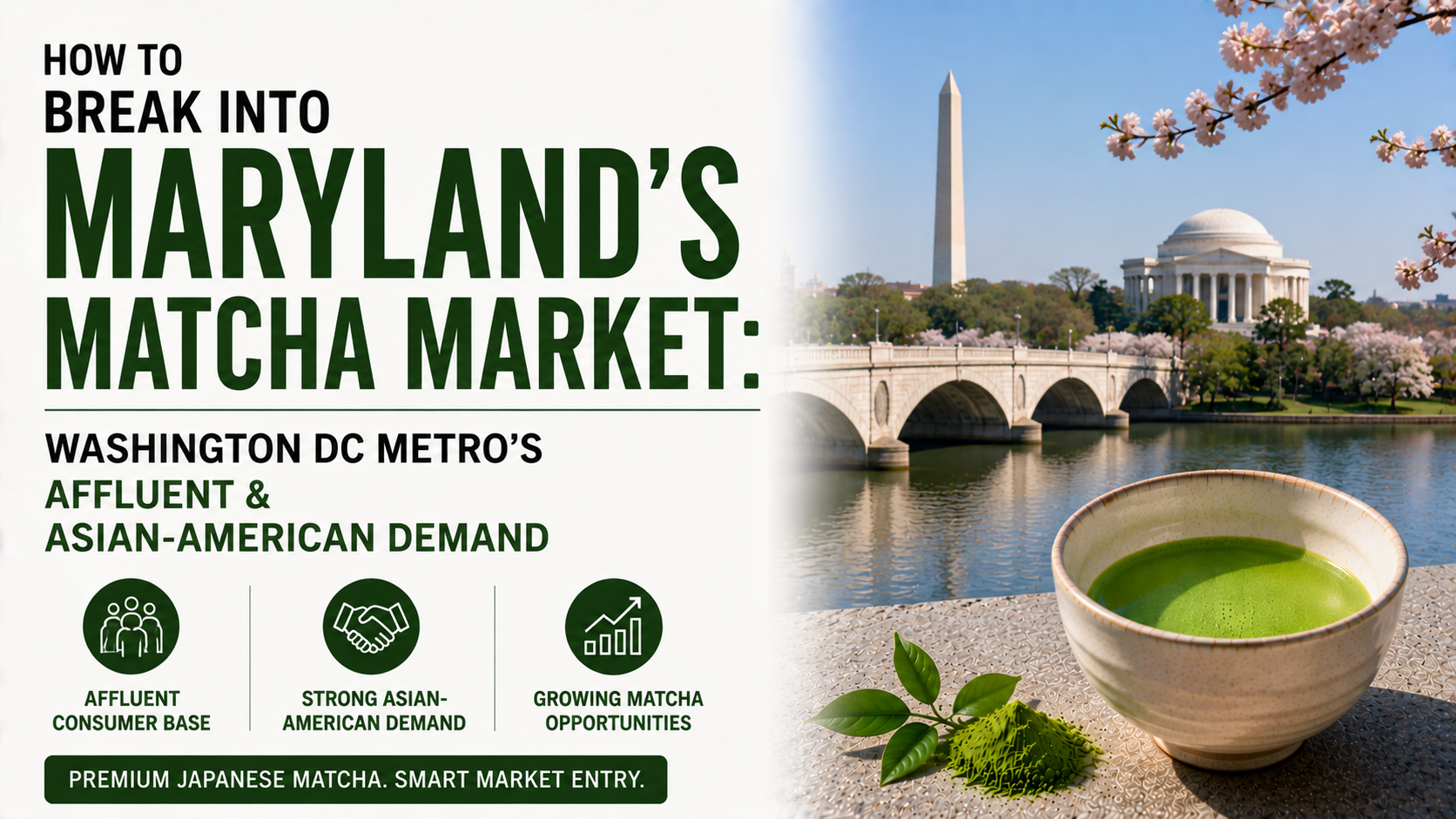
The U.S. matcha boom is no passing fad—it is settling in, backed by a real and growing base of buyers. One of the states best positioned to capture that demand at the premium end is Maryland, home to the Washington, D.C. metro area. Top-tier household incomes, deep Asian-American communities, and a dense health-and-wellness industry all converge here. This guide breaks down how to win that market from a B2B perspective—which channels to target, in what order, and how to avoid the missteps that trip up new entrants.
For Companies Seeking Matcha Powder
We source matcha from Japan’s premier production regions including Kyoto Uji, Kagoshima, Fukuoka, and Shizuoka, offering comprehensive grade ranges from organic JAS-certified ceremonial grade to processing-grade matcha.
Common Challenges:
- “We have projects but cannot secure stable matcha supply…”
- “We want to incorporate matcha into new café menu items!”
If you face these concerns, consult with Matcha Times. Feel free to contact us for initial inquiries.
\Read Also/
→ How to Sell Japanese Matcha in Nevada: The Las Vegas Hotel, Casino, and Fine-Dining Market
Why Maryland’s Matcha Market Deserves Attention Now

Start with the tailwind. The U.S. matcha market reached roughly $164 million in 2024 and is projected to grow to about $340 million by 2033, at a CAGR of around 8.5%. Notably, more than 60% of revenue comes from organic products—this is quality-driven growth, not a fad.
Maryland is quietly emerging as a prime destination for that growth, and the reason is simple: purchasing power. The state’s median household income is about $102,905—third-highest among all U.S. states, roughly 26% above the national median.
Montgomery and Howard counties, bordering Washington, D.C., are among the wealthiest counties in the nation; Howard County’s median household income reaches about $149,800. Premium matcha is chosen on value, not price. A population with high disposable income and strong health awareness is naturally receptive to ceremonial-grade and organic matcha.
Another strength of Maryland’s economy is stability and international character. Federal agencies, their contractors, biotech, healthcare, and universities anchor employment, making incomes relatively recession-resistant and predictable. The region is also full of diplomats, international-organization staff, and globally-minded residents—discerning consumers already familiar with matcha. The cost of explaining premium matcha is low; communicate the value and it lands.
The DMV area also has a mature specialty-coffee culture, with an ingrained habit of paying for a high-quality cup. That “pay-for-craft-beverage” mindset transfers directly to matcha lattes and ceremonial matcha. Increasingly, cafes and roasters are positioning matcha as the next move after coffee, widening the angles available to suppliers.
But “It’s the Capital Region, So It Sells” Is a Trap

High incomes in the capital region do not automatically translate into matcha sales. There are three realities that new entrants often overlook.
First, the quality of competition. The DMV (D.C., Maryland, Virginia) is packed with sophisticated food and beverage, from national chains to independent specialty shops, and buyers have refined palates. Mediocre quality won’t hold a permanent shelf spot, even at a low price.
Second, the wall of regulation and documentation. Supplying matcha as food into the U.S. on an ongoing basis requires FDA food facility registration, FSMA compliance, and a COA (Certificate of Analysis) proving pesticide-residue conformity. Third is the mismatch between application and origin/grade—get this wrong and a deal can stall right before shipment.
Often overlooked, too, are logistics and inventory lead times. Ocean freight from Japan takes several weeks, and matcha lives and dies by freshness and color. Launch without designing proper inventory levels and reorder cycles, and you risk stockouts in peak season while held inventory fades in color—a double loss. In a high-turnover capital market, the quality of supply planning drives profit.
\Read More/
Demand Map: Affluent Zones × Asian-American Trade Areas × Channels
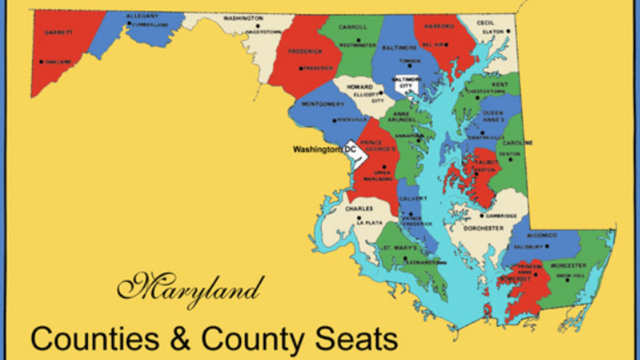
Matcha demand across Maryland is not uniform. To avoid mis-ordering your rollout, map the overlap of geography and channel first. Three trade areas make the picture clear.
Affluent Zones (Montgomery & Howard Counties)
High incomes support premium grocers, fine dining, and hotel afternoon-tea and catering demand. Given the adjacency to Washington, D.C., event and hospitality demand around embassies, international organizations, the World Bank, and the IMF cannot be ignored.
The concrete battlegrounds are luxury hotels with afternoon-tea programs, fine-dining venues seeking a differentiating matcha latte or dessert, and premium grocers frequented by affluent shoppers. Because these buyers prioritize story and quality over price, they pair well with Japanese matcha whose origin and craft can be narrated.
Asian-American Trade Areas (Rockville & Ellicott City)
Maryland’s Asian-American population is concentrated in Montgomery County, making up about 16% of the county. Roughly 40% of the state’s Asian-American population lives there. Korean communities in Rockville and Gaithersburg, and Asian grocery networks like H Mart in Ellicott City (Howard County), form the base that sustains everyday matcha consumption.
Here matcha is already an “everyday flavor.” Korean bakeries and cafes have made matcha lattes and sweets standard, and Japanese and Asian grocers continuously need matcha powder as a confectionery and beverage ingredient. This is less about creating new demand and more about meeting existing demand with reliable supply—which makes repeat orders easier to forecast.
Health & Functional Zone (I-270 Biotech Corridor)
With the I-270 biotech corridor and Johns Hopkins, Maryland is a hub for the health-and-wellness industry. For makers who want to blend matcha into protein and functional foods, demand for food-grade culinary matcha powder as a raw material is steadily building.
What gets valued are matcha’s functional components—catechins, L-theanine, and green-tea caffeine. As an ingredient for protein powders, functional drinks, and nutrition bars, inquiries are rising for culinary matcha with consistent color, flavor, solubility, and pesticide control. This segment tends to grow into large, recurring orders, and holds the greatest upside for B2B.
| Trade Area | Primary Channels | Best-Fit Form | Typical Volume |
|---|---|---|---|
| Affluent zones | Luxury hotels, fine dining, premium grocers | Ceremonial / organic | Mid–large lots |
| Asian-American areas | Asian grocers, Korean bakeries, cafes | Everyday to semi-premium | Steady recurring |
| Health & functional | Protein / supplement / functional-food makers | Culinary powder (processing) | Large, scheduled |
| DMV urban core | Cafe chains, catering | Latte-grade blends | Mid–large lots |
The Blind Spots That Trip Up Buyers
When entry stalls, a few patterns recur.
- Choosing origin and grade on price alone. Matcha differs in taste, color, and aroma across Uji, Shizuoka, Kagoshima, and Yame; drop a cheap, pale matcha into a venue that needs deep-green color and umami, and repeat orders dry up.
- Leaving regulation to the last minute. Scrambling to assemble COAs, MRL (pesticide-residue) data, and organic-certification alignment at shipment stage delays customs and shelf placement.
- Not verifying supply stability. A one-off order is easy; failing to confirm a network that can sustain several hundred kilograms a month leads to lost shelf space.
- Off-loading local-only procedures onto the exporter. Leaving importer-side registration and labeling vague blurs the division of responsibility.
All of these stem from insufficient design before “buying good matcha.” The flip side: lock down origin, regulation, supply, and roles up front, and your success rate rises sharply.
How Sharp Buyers Create an Edge

Buyers who succeed treat matcha not as “cheap tea leaves” but as a raw material optimized to its application. Here is what they look for.
- Application-first origin and grade proposals—can the partner reason backward from origin, knowing the optimum differs for lattes, confectionery, supplements, and ceremonial use?
- Standard compliance with export requirements—EU / U.S. FDA, USDA Organic, Halal / Kosher and other destination rules met in advance.
- Lot and supply flexibility—can it scale from small test lots to hundreds of kilograms to tonnes per month as you grow?
- A track record you can verify—concrete, quantified export experience across countries and channels.
Easily overlooked is that last point. How many countries, which channels, and at what scale a supplier has delivered correlates directly with resilience to regulatory and logistics trouble. In a new market especially, proven, real-world experience beats textbook proposals as a source of confidence.
Choose a partner who meets all four, and the repeatability of your Maryland entry rises dramatically.
Why “Made in Japan” Matcha Wins in Maryland
On price alone, Chinese green-tea powder is an option. But in a market as demanding on quality and accountability as the DMV, Japanese matcha’s advantages stand out. The vivid color and umami that come from stone-milling tencha in the traditional way, the distinct character of origins like Uji, Shizuoka, Kagoshima, and Yame, and a quality-assurance system that includes JAS-organic and pesticide-residue control—all of these matter more the higher the product’s value.
What affluent buyers and fine dining ultimately want is not “cheap” but “quality you can talk about.” Being able to present the ingredient’s background and origin story becomes differentiation on the shelf or menu. Rather than competing with China on price, you stand on ground where value wins—that is the core reason to lead with Japanese matcha in Maryland.
Comparing Wholesale Partners: Why Buyers Choose JMEX
Here we line up the main suppliers of commercial matcha along five buyer-focused axes: origin proposals, export compliance, lot flexibility, overseas track record, and hands-on support. These reflect general tendencies only; each company handles diverse products and setups. We focus here on the axes that matter most in the Maryland market.
| Criterion | What to verify with any supplier |
|---|---|
| Grade & origin options | Confirm the grade range (ceremonial to culinary) and origin/cultivar options matched to your application. |
| Export & safety documentation | Request per-lot COA and the export, customs and food-safety documents your destination market requires (MRL/limit matching). |
| Lot flexibility & MOQ | Check the minimum order quantity, trial-lot/sample availability, and the ability to scale from a small start to larger volumes. |
| Export track record & references | Ask for export track record and references in your target market(s). |
| Selection criterion | Confirm this directly with the supplier and request supporting documentation. |
Apply this checklist to each supplier on your shortlist and decide on current quotes, samples and documentation. JMEX (Japan Matcha Export Organization) is an export-focused Japanese matcha supplier with export experience to 43 countries; you can request pricing and terms directly and assess it against the criteria above.
Among them, Japan Matcha Export Organization (JMEX) stands out for its ability to walk with you end to end—from application-specific origin proposals and export compliance to small test lots and full-scale production. In particular, the regulatory and logistics know-how backed by exports to 43 countries pays off in a demanding market like the DMV.
“Walking with you” here means more than supplying product. It covers destination-specific regulatory checks, narrowing origin and grade to the application, sample tuning, preparing COAs and certification paperwork, and supply planning that scales with demand—a structure that runs alongside every stage of entry. We take on the export-side complexity so buyers can focus on local development.
And the buyers JMEX primarily supports are importers and wholesalers of several hundred kilograms or more per month. Precisely because a lean team can concentrate on large accounts, we deliver high-density support from origin selection through documentation.
A Practical Sourcing Roadmap for Entering Maryland
Finally, a realistic, step-by-step way to enter the market without overreach.
- Choose your target trade area—decide first whether to start with affluent zones, Asian-American areas, or health & functional.
- Fix application and grade—define the use case and articulate the required color, umami, and particle size.
- Evaluate samples and check COAs—confirm color, taste, and solubility with the real product, and obtain COAs for pesticide residues and composition.
- Align regulation and labeling—arrange FDA facility registration, FSMA, organic/Halal certifications, and labeling to destination standards.
- Introduce in small lots first—use a test order to gauge shelf or production-line response.
- Scale to recurring supply—expand to hundreds of kilograms to tonnes per month as demand grows.
Let the partner handle the export-side scope (origin selection, grade optimization, export documents, stable supply) and concentrate on the importer-side steps unique to you, like local importer registration and shelf placement—that division of labor shortens your launch.
These six steps are not about perfection on the first pass. Start small, watch the response, and thicken supply over time. Partnering with someone who can run that cycle with you is, counterintuitively, the shortest path.
FAQ: Maryland Matcha B2B
Can we start with small lots?
Yes. It is standard to begin with samples and a test order to gauge shelf or production-line response, then scale to hundreds of kilograms to tonnes per month as demand grows. You will not be asked for a large order out of the gate.
Can you help with FDA and organic documentation?
The export-side items—COAs, pesticide-residue data, and organic-certification alignment—can be prepared on the partner side. Meanwhile, importer-side steps such as local importer registration and shelf labeling are handled on the buyer side; dividing roles in advance makes launch smoother.
Which origin and grade should we choose?
The optimum varies by application. Use deep color and rich umami for lattes and confectionery, prestigious Uji for ceremonial use, and cost-efficient, highly-soluble grades for functional foods—reasoning backward from the application.
Learn More About Global Matcha Trends at Matcha Times

UK-spreading matcha booms result from overlapping health consciousness, Japanese culture popularity, and lifestyle transformations. However, matcha’s appeal and potential still lie ahead. Knowing latest trends across countries and Japanese tea region initiatives reveals matcha’s deeper dimensions.
Matcha Times broadly publishes from matcha market analysis to cafe situations and farmer interviews. Won’t you also take this opportunity to deeply explore matcha’s world? The more you know matcha, the more surely its charm will draw you in.
Conclusion: Maryland Rewards Good Design
Maryland brings three tailwinds together—top-tier incomes, Asian-American trade areas, and a concentration of health and functional-food industry—making it a market B2B matcha cannot ignore. The key is not to lean on “capital region, so it sells,” but to design application, grade, supply, and regulation to fit each trade area’s demand.
Partner with someone you can consult on that design—from origin selection through export compliance and supply—and the repeatability of your entry rises sharply. Japan Matcha Export Organization (JMEX), drawing on exports to 43 countries, will guide your Maryland expansion from the optimal origin and grade.
Designed correctly, Maryland is a market where demand compounds over the long term. Take that first step with a partner who brings proven expertise and a deep export track record.
Looking for wholesale or OEM matcha samples? Contact us—we will recommend the optimal origin and grade based on your application and target markets.
Related Articles