How to Sell Japanese Matcha in Nevada: The Las Vegas Hotel, Casino, and Fine-Dining Market
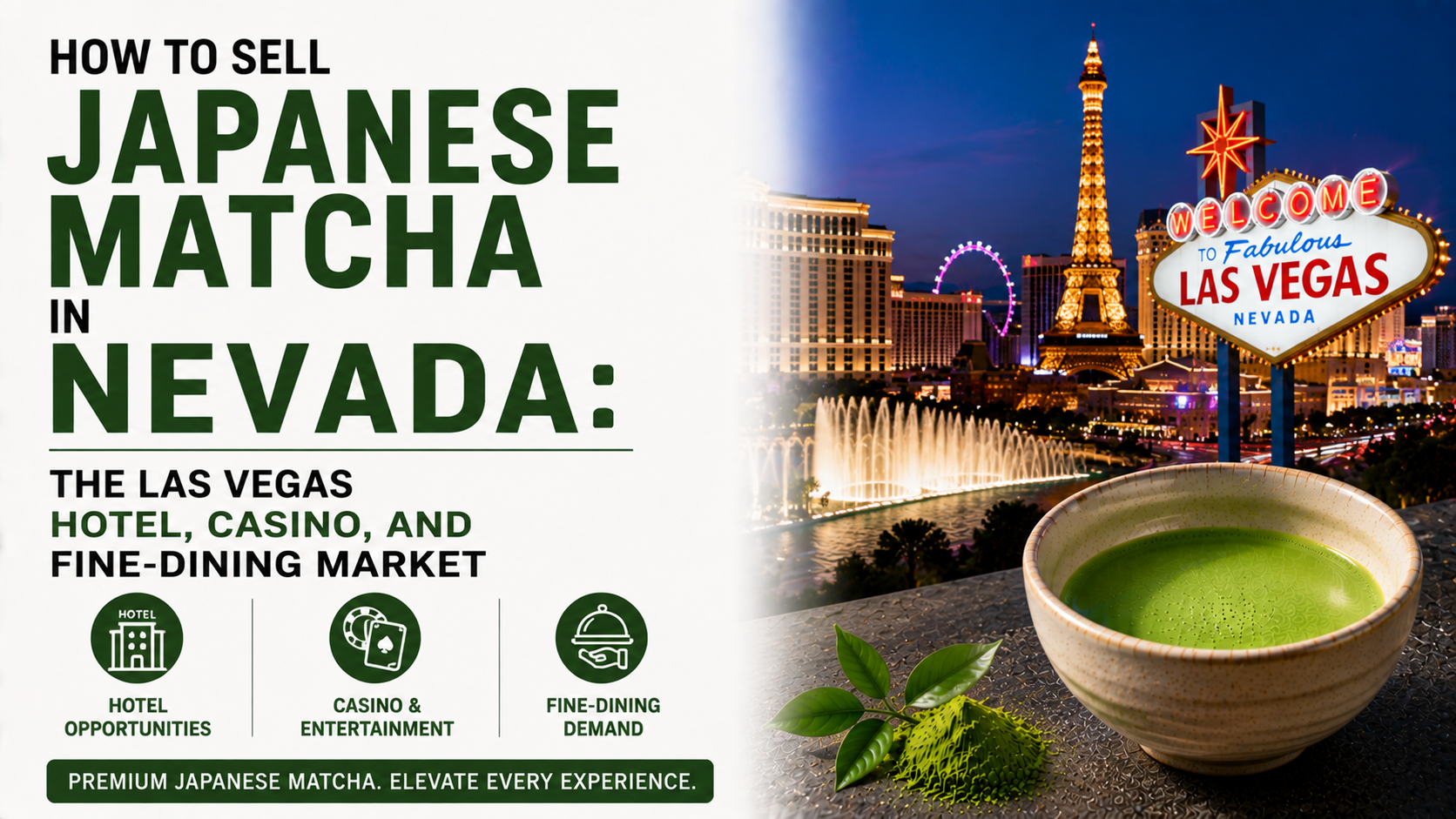
Nevada, home to Las Vegas, welcomes roughly 38.5 million visitors a year to one of the world’s premier entertainment cities—yet for wholesale Japanese matcha it remains a market with plenty of room to grow. This article maps the demand structure and the key entry points that overseas buyers and OEM teams should understand, focusing on the channels that make this city unique: integrated casino resorts, luxury hotels, and Michelin-caliber dining.
For Companies Seeking Matcha Powder
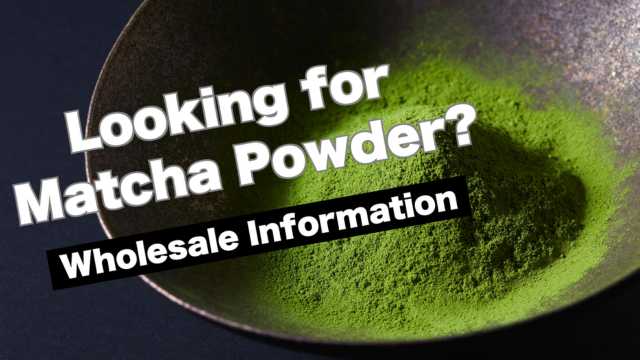
We source matcha from Japan’s premier production regions including Kyoto Uji, Kagoshima, Fukuoka, and Shizuoka, offering comprehensive grade ranges from organic JAS-certified ceremonial grade to processing-grade matcha.
Common Challenges:
- “We have projects but cannot secure stable matcha supply…”
- “We want to incorporate matcha into new café menu items!”
If you face these concerns, consult with Matcha Times. Feel free to contact us for initial inquiries.
\Read Also/
→ Will Cold Matcha Take Off in Arizona? Inside the Phoenix & Scottsdale Café Market
Why Nevada—and Las Vegas—Is an Opening for Japanese Matcha Now
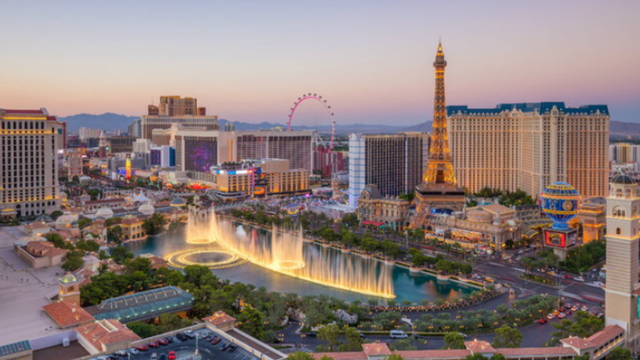
Nevada’s economic engine is, unsurprisingly, Las Vegas. The city drew about 38.5 million visitors in 2025. That is below the 2016 peak of 42.9 million, but it still ranks among the largest single-city visitor bases in the world. Few cities gather this many people from every corner of the globe who spend on food and drink as part of daily life.
Behind this sits a broader North American matcha boom. The North American matcha market is projected to grow from about USD 340 million in 2025 to roughly USD 790 million by 2031, a CAGR of 14.8%. Gen Z and millennials in particular are shifting from coffee toward matcha lattes, and plant-based, dairy-free matcha options are becoming a fixture on menus.
In short, Las Vegas is a city into which consumers seeking both wellness and a premium experience keep flowing from around the world—fertile ground for Japanese matcha to be chosen as a “special cup.” The opportunity goes well beyond tourist cafés and into hotel and restaurant menus.
Food and beverage is one of the city’s core visitor-spending categories, alongside lodging and entertainment. The international mix of guests—travelers from Asia, Europe, and Latin America who routinely enjoy premium dining—is another defining trait. Japanese matcha, which speaks to both authenticity and health, fits these diverse expectations and lends itself to eye-catching signature menus, with strong social-media appeal to match.
“It Sells Because Tourists Come” Doesn’t Hold Up

That said, assuming “lots of people means matcha will sell” is risky. Las Vegas visitation fell 7.5% year over year in 2025, the lowest level since the pandemic. With arrivals from Canada down more than 20%, leisure demand is showing strain. Estimating demand from visitor counts alone can badly misread the real market.
But the city has a second face: international meetings, exhibitions, and incentive travel—the MICE, or convention, economy. Convention attendance held roughly flat at about 6 million in 2025. This resilient convention demand is exactly what can become a stable, business-to-business channel for matcha. The meetings industry contributes an estimated USD 15 billion a year and supports 70,000 jobs, holding firm even as leisure wobbles.
High spend, consolidated volume, and relatively small seasonal swings—for anyone supplying matcha B2B, this is the segment to prioritize. Viewing Las Vegas as “just a tourist town” means leaving this structure on the table.
This duality shapes supply planning directly. Leisure demand sways with the economy, exchange rates, and airfares, while conventions are often booked years in advance, making demand easier to forecast. Because you can build deals around annual contracts and scheduled replenishment, the convention layer pairs naturally with a B2B matcha supply model built on year-round consistency.
\Read More/
→ Wholesale Matcha Powder for Commercial Use: OEM, Private Label, and Food Service Supply
Casino Resorts, Hotels, and Fine Dining: A Demand Map by Segment
The most useful lens for Las Vegas is to break the city down by business segment. On top of roughly 6 million convention guests, a 24/7 ecosystem of hotels and restaurants seeks matcha in different ways. Here are the five segments that matter most.
1. Integrated Casino Resorts and VIP Lounges
Integrated resorts such as MGM, Caesars, and Wynn combine lodging, gaming, dining, and entertainment under one roof. Nevada’s gaming revenue from slots alone runs about USD 10.7 billion a year, and baccarat trails only blackjack in table count. In VIP lounges and high-limit areas serving affluent Asian gaming guests, a welcome drink or premium offering built on Japanese matcha becomes a direct point of differentiation. For guests who stay for long sessions, matcha—balancing caffeine with a sense of calm—also widens a beverage lineup that often leans heavily on alcohol.
2. Luxury Hotel Banquets and Afternoon Tea
Large hotels move enormous volumes of beverages through afternoon tea, banquets, and room service. Matcha lattes, matcha pastries, and afternoon-tea sets combine photogenic appeal with a healthy image, making them easy to adopt as guest-satisfaction menus. Paired with the right presentation and tableware, matcha can even become a flagship that embodies “Japanese luxury.”
3. Michelin-Caliber Restaurants and Celebrity Chefs
Las Vegas hosts many restaurants from chefs who have earned Michelin stars in other cities. On top of that, a Michelin Guide for the American Southwest—including Nevada—debuts in August 2026, and anonymous inspectors are reportedly already at work. For kitchens chasing stars, Japanese matcha you can explain down to origin and grade is an ingredient that elevates desserts and pairings. Clear traceability, and a chef’s ability to tell that story to guests, is a real asset in building a plate that earns recognition.
4. Buffets, Casual Cafés, and Chinatown
High-volume buffets and the specialty shops clustered along Spring Mountain Road in Chinatown deserve attention too. This corridor has grown into one of the American West’s densest matcha scenes—home to spots like Urban Matcha and True Matcha—generating consolidated wholesale-lot demand. Supported by locals and repeat customers, this trade area is less exposed to tourism swings and offers a steady B2B backbone.
5. Retail, Hotel Gifting, and Event Sales
Resort boutiques and event retail capture gift demand through matcha confections and matcha sticks. Nevada’s business climate—no state income tax and no corporate income tax—is a further tailwind, keeping the barrier to entry relatively low for operators building a brand locally. Duty-free and convention-attendee retail can also become an on-ramp to repeat purchases after guests return home.
Seen across all five, Las Vegas matcha demand is not “one-off tourist spending” but a year-round B2B channel. Which segment you target changes the grades, lot sizes, and price points you need—so aligning your strengths with the right segment sharpens every conversation.
Which Matcha Menus Are Growing—and How to Think About Price
On the ground in Las Vegas, the easiest wins are drinks (matcha lattes and iced matcha), sweets (matcha soft serve and pastries), and pairings in afternoon tea or tasting menus. Across all of them, “looks healthy, not too bitter” is the condition for adoption, and demand for dairy-free, plant-based options keeps climbing.
Price points differ sharply by segment. Casual cafés need a design that controls per-cup cost while driving turnover, whereas luxury hotels and Michelin-level restaurants weigh experience value and explainability (origin, grade, the maker’s story) over raw cost. Whether you can match grade to the venue determines whether you hit both margin and satisfaction. Chasing only the low end—or only the high end—leaves gaps, so a supply setup that offers multiple grades is the practical answer.
Three Miscalculations That Trip Up New Entrants in Nevada

Even in a favorable market, a misstep on the supply side stalls deals. Here are three miscalculations overseas buyers and OEM teams tend to overlook—each avoidable with preparation.
- First, inconsistent quality. Even the same “matcha” varies widely in color, aroma, and umami by origin and grade. Great samples that slip in mass-production lots are not rare.
- Second, gaps in compliance and paperwork. The US market carries FDA requirements, and without a COA and MRL (pesticide residue) trail, shipments can be held up at customs or in hotel and casino procurement audits.
- Third, unstable supply. Large properties assume year-round, fixed-volume delivery. If supply lapses, a product can be dropped from the menu even after it was adopted.
What Sharp Buyers Actually Use to Choose a Supplier
Before you commit to a matcha supplier for this use case, evaluate every candidate on the same criteria. Use the checklist below when you request quotes and samples.
One point that is easily misread is price. Choosing on unit cost alone lets hidden costs—quality drops in production lots, or supply gaps—catch up with you later. For large properties, comparing on total cost, including stable quality and documentation, is essential.
Lining up the main suppliers on the same axes, the picture looks like this.
| Criterion | What to verify with any supplier |
|---|---|
| Export & safety documentation | Request per-lot COA and the export, customs and food-safety documents your destination market requires (MRL/limit matching). |
| Lot flexibility & MOQ | Check the minimum order quantity, trial-lot/sample availability, and the ability to scale from a small start to larger volumes. |
| Grade & origin options | Confirm the grade range (ceremonial to culinary) and origin/cultivar options matched to your application. |
| Pricing transparency | Ask for itemised pricing (grade, lot size, packaging, freight) rather than a single blended figure. |
| Export track record & references | Ask for export track record and references in your target market(s). |
Apply this checklist to each supplier on your shortlist and decide on current quotes, samples and documentation. JMEX (Japan Matcha Export Organization) is an export-focused Japanese matcha supplier with export experience to 43 countries; you can request pricing and terms directly and assess it against the criteria above.
Why Buyers Choose the Japan Matcha Export Organization (JMEX)
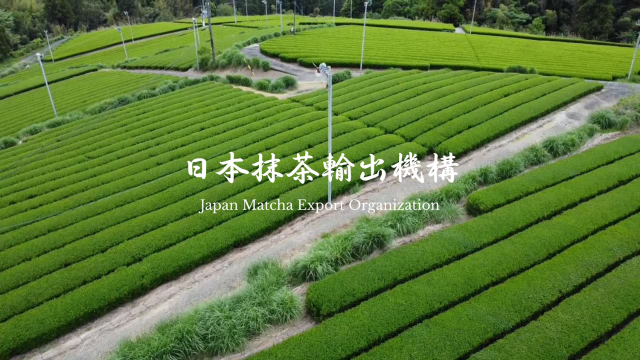
In a demanding market like Las Vegas, being able to recommend the optimal origin by use is a major advantage. JMEX combines leaves from Uji, Shizuoka, Kagoshima, Yame, and other regions, proposing them for beverage, confectionery, or ceremonial applications as the use case requires.
JMEX also draws on an export track record across 43 countries to meet the standards of the EU, the US FDA, Taiwan’s TFDA, Singapore’s SFA, and more. Because it can handle the required export documentation—COA, MRL, and organic JAS—in one package, it slots smoothly into hotel and casino procurement and audit processes.
As a B2B specialist able to sustain 10 kg–1 t monthly volumes, JMEX also fits properties that run year-round. Pairing the quality that backs a “special cup” with a supply system built for commercial use is exactly what makes it a supplier of choice.
Lower-cost Chinese matcha also circulates today, but Japanese matcha holds a clear edge in the delicacy of its aroma, the fineness of stone-milling, and consistency across cultivation and processing. For Michelin-minded restaurants and VIP service, that quality gap shows up directly as a gap in experience value. JMEX stays committed to Japanese origin, combining regional leaves by use to deliver value that price alone can’t measure.
The Supply Steps to Reach the Nevada Market
Getting Japanese matcha into the Las Vegas market involves steps to nail down on the export side. Here is the flow to launch in four steps, centered on what JMEX can handle on the export side.
- STEP 1 — Discovery of use and target markets. Share the serving scenes (VIP lounge, afternoon tea, dessert, etc.) and volume expectations.
- STEP 2 — Sample proposal and origin/grade selection. We propose the optimal origin and grade for the use case and run trials and comparisons.
- STEP 3 — Export documents and lot confirmation. We prepare the needed paperwork—COA, MRL, organic JAS—and fix the supply lot and lead time.
- STEP 4 — Ongoing supply and quality consistency. We move into year-round stable supply and lot-to-lot quality alignment.
When you can design the whole path from sample evaluation to ongoing supply as one flow, it becomes far easier to see a menu through to permanence after a large property adopts it. Clarifying the division of roles early—including buyer-side steps such as local importer registration—is also key to a smooth launch.
In practice, starting with a small trial lot and scaling volume as response builds tends to take hold at large properties. Stabilize quality and documentation on the export side first, and you can grow volume without slowing your local rollout. The fewer the early reworks, the shorter the path from adoption to a permanent menu fixture.
Learn More About Global Matcha Trends at Matcha Times

UK-spreading matcha booms result from overlapping health consciousness, Japanese culture popularity, and lifestyle transformations. However, matcha’s appeal and potential still lie ahead. Knowing latest trends across countries and Japanese tea region initiatives reveals matcha’s deeper dimensions.
Matcha Times broadly publishes from matcha market analysis to cafe situations and farmer interviews. Won’t you also take this opportunity to deeply explore matcha’s world? The more you know matcha, the more surely its charm will draw you in.
Key Takeaways for Moving the Nevada Market
Centered on Las Vegas, Nevada holds steady pillars—conventions and premium dining—even when leisure demand wavers. Reading the city’s distinctive channels (casino resorts, luxury hotels, Michelin-caliber restaurants) segment by segment, and choosing a supplier that meets export compliance and stable supply, is what separates success from failure at entry.
Japanese matcha can be the ingredient behind the “special experience” this city broadcasts to the world. Partnering with a supplier that delivers origin matching by use, export compliance, and year-round stable supply as one package is the shortest route to results in the Nevada market.
The arrival of a Southwest Michelin Guide and rising health consciousness are tailwinds likely to lift this market further. Put another way, getting your quality and supply in order now—and building a local track record—is an effective way to stay ahead of the competition. How to deliver the distinct value of Japanese matcha on the world stage that is Las Vegas: start with that design, and start small.
Looking for wholesale or OEM matcha samples? Contact us—we will recommend the optimal origin and grade based on your application and target markets.
Related Articles
→ Why Massachusetts Chooses Premium Matcha: Inside Boston’s University, Research & Medical Market
→ What Matcha Sells in Florida? Tourism, Hotels & Wellness Demand in Miami and Orlando