Which Japanese Matcha Suppliers Can Provide Halal-Certified Matcha?
Yes — matcha is halal by ingredient, because pure matcha is simply stone-milled green tea leaf with no animal or alcohol-derived ingredients. But for a B2B buyer selling into the UAE, Saudi Arabia or Malaysia, that is not the question that matters. The real question is which Japanese suppliers can provide matcha with a recognized halal certificate that your destination market will actually accept. Any Japanese processor or export organization that operates a certified, contamination-controlled line can supply halal-certified matcha; the decisive detail is whether their certificate is issued by a body recognized by the authority in your market.
This guide explains why certification is still needed even though matcha is halal by ingredient, which suppliers can provide it, how to match a Japanese halal certificate to Saudi (SFDA), UAE (MOIAT) and Malaysian (JAKIM) recognition, the documents to request, a neutral checklist to verify any supplier, and how JMEX supports the export side.
For Companies Seeking Matcha Powder
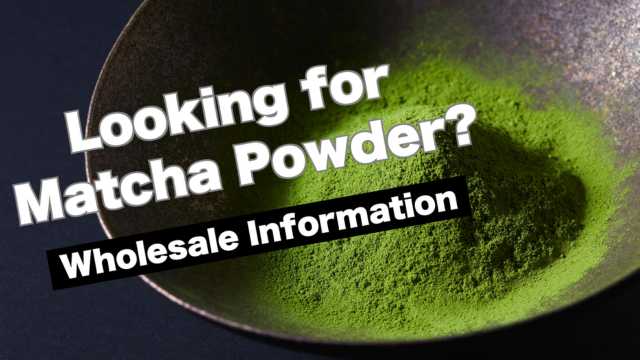
We source matcha from Japan’s premier production regions including Kyoto Uji, Kagoshima, Fukuoka, and Shizuoka, offering comprehensive grade ranges from organic JAS-certified ceremonial grade to processing-grade matcha.
Common Challenges:
- “We have projects but cannot secure stable matcha supply…”
- “We want to incorporate matcha into new café menu items!”
If you face these concerns, consult with Matcha Times. Feel free to contact us for initial inquiries.
\Read Also/
Key Takeaways
- Matcha is halal by ingredient, but a halal certificate is still needed for the UAE, Saudi Arabia and Malaysia because the risk lies in shared production lines, anti-caking or flavouring additives and blended products.
- Almost any established Japanese processor or export organization can provide halal-certified matcha — the constraint is not availability but which certifying body issued the certificate.
- A halal certificate is not universally accepted: it must come from a body recognized by your destination authority — Saudi Arabia (SFDA / Saudi Halal Center), the UAE (MOIAT), Malaysia (JAKIM).
- Several Japan-based certifiers hold overseas recognitions (JAKIM, MOIAT, GCC), so a Japanese supplier can hold a certificate that works across all three markets — confirm the exact recognitions before you order.
- Request the full document set together for the exact lot: the halal certificate and its scope, a per-lot COA, an ingredient and processing-aid declaration, and compliant labeling.
Researched and reviewed by the Matcha Times Editorial Team, operated by the Japan Matcha Export Organization (JMEX). Last reviewed: 2026-09-25. See our Editorial Policy and Sources & Methodology. Found an error? Tell us.
\Read More/
Is matcha halal, and why do you still need certification?
Pure matcha is halal by ingredient. It is made only from shade-grown green tea leaves (tencha) that are stone-milled into powder, with no meat, gelatin, alcohol or animal-derived processing aid involved. So in principle a plain, single-origin Japanese matcha raises no ingredient-level halal concern.
The reason certification is still required is process and cross-contamination risk, not the ingredient. Halal status can be compromised when matcha is produced on a line shared with non-halal products, when anti-caking agents, sweeteners, flavourings or emulsifiers are added to a blend or latte mix, or when alcohol-based cleaning is used without adequate control. A certificate from a recognized body is what verifies that the whole process — not just the leaf — is controlled. For the UAE, Saudi Arabia and Malaysia this matters commercially: imported food is expected to carry recognized halal certification, so the certificate is a market-access requirement, not a marketing badge.
Which Japanese suppliers can provide halal-certified matcha?
The honest answer is that a growing number of established Japanese suppliers can — provided they operate a certified, contamination-controlled line and hold a certificate from a body recognized in your market. Rather than ranking brands, it is more useful to understand the supplier types and how each obtains halal certification.
- Japanese processors (long-established tea producers and stone-mill matcha makers) — some publicly announce halal certification for specific matcha and green-tea lines; verify which SKUs and grades are in scope.
- Export organizations such as JMEX — consolidate origin, grade design and certification support, and can match the certificate to the buyer’s destination market and volume.
- OEM and private-label suppliers that hold their own or a partner’s halal certification and re-export — convenient for small volumes, but confirm the certificate covers the actual production, not only the trading company.
Certification itself is issued by a halal certification body, not by the tea maker. Several Japan-based certifiers — for example the NPO Japan Halal Association and the Japan Islamic Trust — audit Japanese producers and, in turn, hold recognitions from overseas authorities such as JAKIM (Malaysia), MOIAT (UAE) and GCC bodies. That is why a Japanese supplier can legitimately hold a certificate that is accepted abroad: the certifier carries the international recognition. When a supplier says “we are halal certified,” the useful follow-up is always “by which body, and is that body recognized in my market?”
Making a Japanese halal certificate count in your market
This is the step most buyers miss. A halal certificate is not automatically valid everywhere: each destination runs its own recognition system and maintains its own list of accepted certification bodies. A certificate that is perfectly valid for one market may not be accepted in another, so the task is to match the supplier’s certifying body to each market you sell into. The table summarises the framework for your three target markets; confirm the current recognized-body list with each authority before you commit.
| Market | Authority | Standard / scheme | What to confirm |
|---|---|---|---|
| Saudi Arabia | SFDA / Saudi Halal Center | GSO 2055 (Gulf halal food) | That the supplier’s certifying body is on the Saudi Halal Center recognized list for your product category |
| UAE | MOIAT (Halal National Mark) | UAE Scheme for Halal Products / GSO 2055 | That the certifier is a MOIAT-registered halal certification body and the scope matches |
| Malaysia | JAKIM | MS 1500 / Malaysian Halal Management System | That the Japanese certifier is a JAKIM-recognized foreign body for the relevant scheme |
| Cross-GCC reference | OIC / SMIIC | OIC/SMIIC halal food standard | Whether your certifier aligns to SMIIC, which several Gulf and OIC authorities reference |
The practical shortcut is to choose a supplier whose certifier is recognized in every market you target. Because some Japan-based certifiers hold JAKIM, MOIAT and GCC recognitions together, a single well-chosen supplier can often serve all three markets — but never assume it. Ask for the certificate, read the issuing body and its scope, and check that body against each destination’s recognized list yourself.
Documents that prove matcha is halal
Certification is a claim; documents are the evidence. Before a first shipment, ask the supplier to provide the following for the exact product and lot you will actually receive, not a generic company brochure.
| Document | What it proves |
|---|---|
| Halal certificate (with issuing body & scope) | That the product and its production line are halal-certified, by whom, and for which product categories and validity period |
| Certifier recognition evidence | That the issuing body is recognized by your destination authority (SFDA, MOIAT or JAKIM) |
| Per-lot Certificate of Analysis (COA) | Sensory, microbiological, pesticide and heavy-metal (lead, cadmium, arsenic) results from an accredited (ISO 17025) laboratory |
| Ingredient & processing-aid declaration | That no non-halal additive, carrier, anti-caking agent or alcohol-based aid is used — critical for blends and latte mixes |
| Manufacturing / line statement | That the matcha is produced on a dedicated or properly segregated, cleaned line (the real cross-contamination control) |
| Labeling & specification sheet | That the pack label, halal mark usage and product spec meet the destination market’s requirements |
How to evaluate any halal matcha supplier
Rather than ranking suppliers, evaluate every candidate — a Japanese processor, an OEM house or an export organization — against the same verifiable criteria. Apply this checklist equally to each option, including JMEX, and rely on documents you can confirm rather than marketing claims.
| Criterion | What to verify with any supplier |
|---|---|
| Certifying body | Which halal body issued the certificate, and that it is recognized by your destination authority (SFDA / MOIAT / JAKIM) |
| Certificate scope | That the specific matcha grade, product form and production site are inside the certificate’s scope, with a current validity date |
| Line & contamination control | Whether matcha runs on a dedicated or segregated, cleaned line, and how shared-line risk is managed |
| Additives & blends | For lattes or mixes, that every additive (anti-caking, sweetener, flavour) is halal and declared |
| Per-lot COA & origin | Confirmed Japanese origin and per-lot COA (microbiology, pesticides, heavy metals) from an accredited lab |
| Documentation support | Ability to supply labeling, spec sheets and destination-market registration documents |
| Supply consistency | Ability to hold grade, colour and certification status stable from trial lot to regular monthly volume |
| Commercial terms | MOQ, lead time, incoterms (FOB/CIF) and price quoted together in writing for your exact spec |
The most useful questions to ask a supplier are specific: Which body issued your halal certificate, and is it recognized by the SFDA, MOIAT and JAKIM? Is this exact grade inside the certificate scope? Is the matcha produced on a dedicated line? Can I see the per-lot COA and an additive declaration? Suppliers who answer precisely and put the answers in writing are the ones worth scaling with.
Export-side steps: from spec to a recognized halal shipment
A disciplined process turns a good sample into a compliant, repeatable program. A practical flow for a GCC or Malaysian buyer sourcing halal-certified Japanese matcha runs as follows:
- Define the written specification — grade, application, volume, packaging, and the exact market(s) you will sell into (UAE, Saudi Arabia, Malaysia).
- Identify your destination authority and its recognized-body requirement (SFDA / Saudi Halal Center, MOIAT, JAKIM) before you shortlist suppliers.
- Shortlist suppliers and ask each for the halal certificate and its issuing body, then check that issuing body against each destination’s recognized list.
- Request a sample matched to your exact spec and a per-lot COA, and confirm Japanese origin, certificate scope and an additive declaration.
- Validate the sample in your actual product or on your line, and check the COA and halal scope against your requirements.
- Confirm the destination compliance path for each market — recognized halal certificate, compliant labeling and any local food registration — with the supplier and, where needed, a customs broker.
- Place a small trial order, then agree MOQ, lead time, incoterms and pricing in a written quotation before scaling to a supply agreement.
Avoid the recurring mistakes: assuming any halal logo is accepted everywhere, accepting a company-level certificate that does not cover the actual production line, leaving recognized-body verification to the last minute, and ordering more than your turnover can sell before the powder loses colour and flavour.
Sources & Methodology
This guide synthesises official destination-market halal authorities (Saudi Arabia, UAE, Malaysia), the Gulf and OIC halal food standards, and Japanese customs and trade sources. Each source below states what it supports, its date and its scope. Recognition lists and halal rules change, so confirm the current recognized-body list and requirement with the named authority before shipping. No unverified number is presented as fact.
- SFDA — Saudi Food and Drug Authority (Halal) — Saudi Arabia halal certification framework and Saudi Halal Center recognized-body system — accessed 2026 Saudi Arabia halal regulation
- UAE MOIAT — Halal National Mark — UAE Scheme for Halal Products and the Halal National Mark; registered halal certification bodies — accessed 2026 UAE halal regulation
- JAKIM — Halal Malaysia Portal (MS 1500) — Malaysia halal certification authority, MS 1500 standard and recognized foreign certification bodies — accessed 2026 Malaysia halal regulation
- GSO 2055-1:2015 — Gulf halal food standard — General requirements for halal food across GCC countries — 2015 GCC halal food standard
- SMIIC — Standards and Metrology Institute for Islamic Countries — OIC/SMIIC halal food standard referenced by several Gulf and OIC authorities — accessed 2026 OIC halal standard
- Japan Customs (English) — Tea (matcha) tariff classification under HS heading 0902 (Harmonized System) — accessed 2026 HS classification / customs
- Japan MAFF / Ministry of Finance — tea export statistics — Market context: Japan green-tea export value/volume (green-tea TOTAL, not matcha-only) — 2024 Japan green tea exports
Why Buyers Choose JMEX (Japan Matcha Export Organization)

One supplier that meets these criteria at a high level is JMEX (Japan Matcha Export Organization), a wholesale and export partner dedicated to bringing Japanese matcha overseas. It designs origin selection, quality assurance, export documentation, and logistics as one continuous flow, built for export from the start.
With a track record of exports to 43 countries, JMEX bridges Japanese origin and the GCC and Malaysian buyer on the export side: confirmed Japanese origin and grade design for your application, halal certification support with certificate scope matched to your destination authority (SFDA, MOIAT, JAKIM), per-lot COA, MRL and heavy-metal testing, ingredient and processing-aid declarations for blends, compliant labeling and export documentation, and stable recurring supply from 10 kg to 1 t per month for importers, wholesalers, OEM and health and wellness brands across the UAE, Saudi Arabia and Malaysia.
Frequently Asked Questions
Common questions from UAE, Saudi and Malaysian buyers sourcing halal-certified Japanese matcha, from whether matcha is halal to whether a Japanese certificate is accepted in each market.
Is matcha halal?
Pure matcha is halal by ingredient: it is only stone-milled green tea leaf, with no meat, gelatin, alcohol or animal-derived processing aid. The halal risk is not the leaf but the process — shared production lines, additives in blends and latte mixes, or alcohol-based cleaning. For B2B supply into Muslim-majority markets, a recognized halal certificate is what verifies the whole process is controlled.
Which Japanese matcha suppliers are halal certified?
Many established Japanese processors, OEM houses and export organizations can supply halal-certified matcha, and some publicly announce certification for specific matcha and green-tea lines. Availability is rarely the constraint; the decisive question is which certifying body issued the certificate and whether that body is recognized in your destination market. Ask for the certificate and read the issuing body and its scope.
Do I need halal-certified matcha to sell in the UAE or Saudi Arabia?
For food and beverage sold into the UAE and Saudi Arabia, recognized halal certification is generally expected for market access, and both markets run their own recognition systems — the UAE through MOIAT’s Halal National Mark scheme and Saudi Arabia through the SFDA / Saudi Halal Center. Confirm the current requirement for your product category with each authority before shipping.
Is a Japanese halal certificate accepted in Saudi Arabia and the UAE?
Only if it was issued by a certification body that Saudi Arabia (SFDA / Saudi Halal Center) and the UAE (MOIAT) recognize. A halal certificate is not automatically valid everywhere; each authority maintains its own recognized-body list. Some Japan-based certifiers hold GCC and MOIAT recognitions, so a Japanese supplier can hold an accepted certificate — verify the specific body against each list.
Does Malaysia (JAKIM) recognize Japanese halal certification bodies?
JAKIM maintains a list of recognized foreign halal certification bodies, and Japan-based certifiers are among the bodies that have obtained JAKIM recognition under the relevant schemes, assessed against MS 1500 and the Malaysian Halal Management System. Confirm that your supplier’s specific certifier is currently recognized for the applicable scheme.
What documents prove that matcha is halal?
Ask for the halal certificate with its issuing body and scope, evidence that the body is recognized by your destination authority, a per-lot certificate of analysis from an accredited (ISO 17025) laboratory, an ingredient and processing-aid declaration, a manufacturing or line statement addressing cross-contamination, and a compliant label and specification sheet — all for the exact lot you will receive.
Learn More About Global Matcha Trends at Matcha Times

Matcha Times is a specialist media platform covering the global matcha market — sourcing and wholesale, supply and pricing, trade and regulations, production and origins, and the companies shaping the industry.
From market analysis and price trends to café case studies and interviews with tea farmers, we help buyers, importers, distributors, and manufacturers stay ahead of where matcha is heading. Explore more and put the global matcha market to work for your business.
Conclusion
Which Japanese suppliers can provide halal-certified matcha? In practice, most established processors and export organizations can — so the real decision is not who sells it, but whose certificate your market will accept. Confirm that the issuing body is recognized by the SFDA, MOIAT and JAKIM for the markets you serve, request the full document set for the exact lot, and evaluate every supplier against the same neutral checklist. JMEX supports GCC and Malaysian buyers across exactly these steps, from origin and grade design to certification scope, per-lot COA and destination-recognition matching.
Looking for wholesale or OEM matcha samples? Contact us — we will recommend the optimal origin and grade based on your application and target markets.
Related Articles