Halal-Certified Matcha for Export: Costs, Timeline & Country Requirements for Middle East and SE Asia Buyers
Matcha demand has surged across the Middle East and Southeast Asia since the early 2020s, but for B2B buyers looking to enter these markets, the single biggest obstacle is rarely the product itself — it is halal certification. With certification bodies that differ by country and mutual-recognition arrangements that change year to year, even experienced buyers can lose six months or more by misreading costs and timelines. This guide breaks down the certification landscape, real-world cost ranges, processing times, and the country-by-country requirements you need to plan around.
For Companies Seeking Matcha Powder
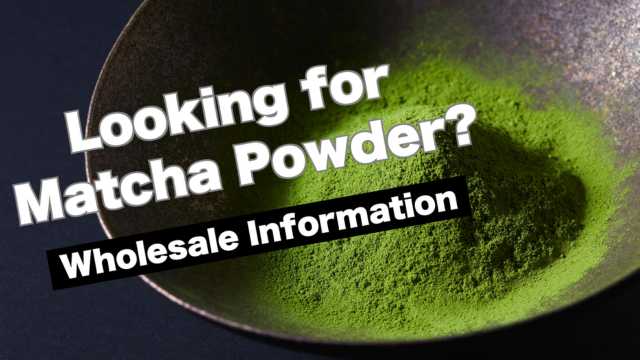
We source matcha from Japan’s premier production regions including Kyoto Uji, Kagoshima, Fukuoka, and Shizuoka, offering comprehensive grade ranges from organic JAS-certified ceremonial grade to processing-grade matcha.
Common Challenges:
- “We have projects but cannot secure stable matcha supply…”
- “We want to incorporate matcha into new café menu items!”
If you face these concerns, consult with Matcha Times. Feel free to contact us for initial inquiries.
\Read Also/
Why halal matcha is one of the fastest-growing export categories right now
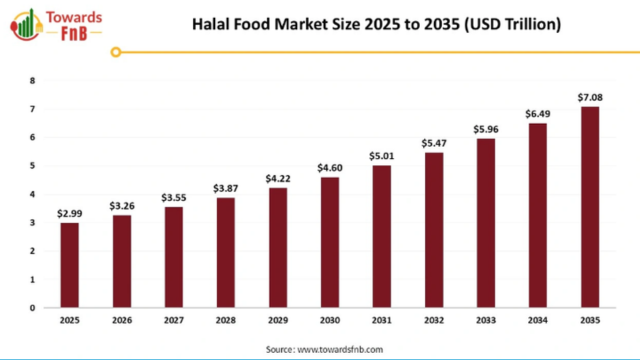
The global halal food market is estimated to reach approximately USD 2.5 trillion by 2026 [source needed]. Growth is driven by markets like Indonesia (population 270 million, the world’s largest Muslim country), Malaysia (where the government has elevated halal industry policy to a national strategy), and the GCC states — UAE, Saudi Arabia, Qatar, Kuwait — that increasingly function as both consumer markets and re-export hubs.
Within this market, matcha has emerged as a notable growth category. Asian matcha latte culture has crossed into the Gulf — premium café chains in Dubai and Riyadh now serve matcha drinks as core menu items — and Southeast Asian cities like Jakarta, Kuala Lumpur, and Bangkok have seen rapid growth in Japanese-matcha menus across both independent cafés and chain operators.
Why matcha resonates in these markets is straightforward:
- Matcha is plant-based and inherently halal-friendly — no porcine or alcohol-derived components in the raw material itself
- It fits the health-and-wellness positioning increasingly demanded by Middle East and SE Asia consumers (antioxidant content, lower-caffeine alternative to coffee)
- “Made in Japan” carries strong premium signaling across these regions, supported by Japan’s traceability infrastructure and pesticide-residue standards
There is, however, an inflection point worth flagging. Indonesia will enforce mandatory halal labeling under BPJPH starting October 17, 2026, covering beverages and powdered foods — where matcha is squarely positioned. GCC states are also tightening import requirements as they harmonize around the GAC scheme.
“Halal certification” isn’t one thing — the seven key bodies and the mutual-recognition reality
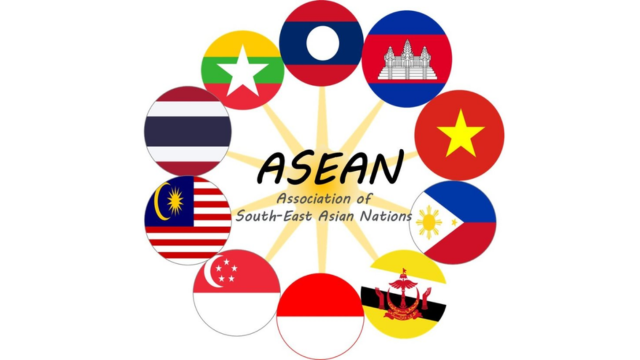
The first surprise for most buyers entering this space is that there is no single global halal standard. Each country operates its own certification body, each with distinct logos, distinct standards, and distinct interpretations of how ingredient lineage should be documented.
Here are the bodies that matter most for matcha export:
- JAKIM (Malaysia): government body; widely regarded as the most rigorous standard worldwide and a reference point other regimes benchmark against
- BPJPH (Indonesia): government body operating in concert with MUI (Council of Ulama); handles registration based on MUI fatwa
- MUIS (Singapore): government body; food and beverage imports require MUIS-recognized certification for shelf access
- CICOT (Thailand): Central Islamic Council of Thailand; functions as an ASEAN regional reference
- GAC (Gulf Accreditation Center): the unified scheme for UAE, Saudi Arabia, Qatar, Kuwait and other GCC countries
- MOIAT (UAE): Ministry of Industry and Advanced Technology; manages import registration in conjunction with GAC
- SFDA (Saudi Arabia): Food and Drug Authority; runs its own increasingly strict import requirements
\Read More/
Japan itself hosts several certification bodies — NPO Japan Halal Association (JHA), Halal Japan Association, Muslim Professional Japan Association (MPJA), among others — each holding its own mutual-recognition arrangements with the overseas bodies above. For any given product, you need to verify which Japanese certifier maps to your specific destination scheme.
This is where buyers most often go wrong: assuming that a JAKIM-recognized Japanese certifier automatically clears every Muslim-majority market. In practice, Saudi Arabia may require an SFDA-recognized body for certain product categories, and Indonesia requires BPJPH registration regardless of any other certification held. There is no universal shortcut — destination-specific accreditation is the rule.
Country-by-country mapping
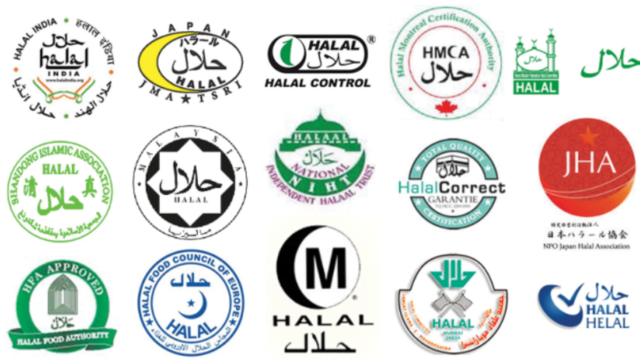
The practical mapping for matcha exporters across the seven most relevant destinations:
| Destination | Required certification | Recommended certifier | Notes |
|---|---|---|---|
| Malaysia | JAKIM | JAKIM-recognized Japanese body (JHA, etc.) | Most stringent globally; reference standard for other regimes |
| Indonesia | BPJPH registration (MUI fatwa) | BPJPH-recognized foreign certifier | Mandatory enforcement begins Oct 17, 2026 |
| Singapore | MUIS | MUIS-recognized body | MUIS seal essential for retail shelf placement |
| UAE | MOIAT registration + GAC | GAC-recognized body | Regional re-export hub |
| Saudi Arabia | SFDA + GAC | SFDA / GAC-recognized body | Import controls tightening year over year |
| Thailand | CICOT | CICOT-recognized body | ASEAN regional hub function |
| Qatar / Kuwait / Bahrain | GAC | GAC-recognized body | Primarily re-exported via UAE |
Malaysia: JAKIM as the global benchmark
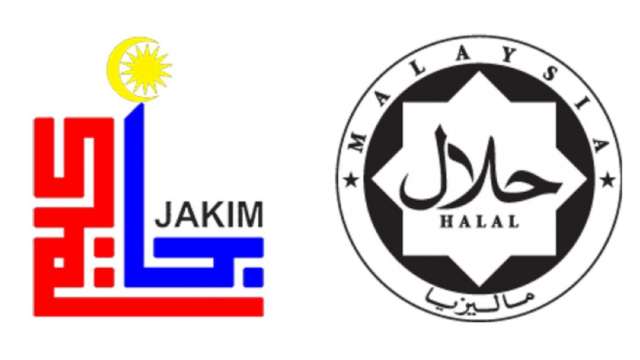
Malaysia operates a state-level Halal Industry Master Plan, and local distribution effectively requires JAKIM certification. Because JAKIM is benchmarked elsewhere, achieving it often opens doors regionally as well.
Indonesia: October 2026 enforcement deadline
Indonesia’s enforcement deadline is October 17, 2026. The existing MUI label may continue to appear on packaging until then, but BPJPH registration numbers become mandatory afterward. Powdered beverages and matcha fall squarely within scope.
Singapore, UAE, Saudi Arabia, Thailand
Singapore has roughly 15% Muslim population; without the MUIS seal, imported food and beverage products are effectively excluded from a significant share of supermarket shelf space. UAE functions as the Middle East’s re-export hub, with MOIAT import registration combined with GAC certification as the standard configuration. Saudi Arabia, under Vision 2030, has been progressively tightening import inspection regimes — SFDA requirements deserve advance preparation rather than reactive fixes. Thailand has a smaller Muslim population, but CICOT certification carries cross-border weight in ASEAN regional networks.
What halal certification actually costs and how long it takes

Realistic cost and timeline ranges, based on disclosed information from major Japan-based certifiers and industry benchmarks.
Cost breakdown (approximate, in JPY)
- Application fee: JPY 30,000–100,000
- On-site audit (including travel): JPY 200,000–500,000 (initial)
- Certificate issuance fee: JPY 50,000–150,000
- Annual renewal: JPY 100,000–300,000
- Facility upgrades (if required): JPY 500,000 to several million
- Consulting fees (optional): JPY 300,000–1,000,000
The wide range reflects the fact that costs depend heavily on product category, the certification body chosen, and the existing quality management foundation. If HACCP, ISO 22000, or GMP are not already in place, those prerequisites alone can push the total into the multi-million JPY range. Conversely, a facility already holding HACCP and JAS Organic certifications can often clear halal certification with just a few hundred thousand JPY in additional spend.
Timeline (typical)
- Preparation (COA assembly, process documentation): 1–3 months
- Application and document review: 1–2 months
- On-site audit and certificate issuance: 1–3 months
- Total: typically 6 months; fastest cases 4 months; longest cases 12 months
JAKIM tends to sit at the longer end due to rigorous on-site audit requirements. MUIS can be completed in as little as 3–4 months in favorable cases. BPJPH timing varies with application volume.
Renewal cycle
Halal certification is not permanent. Most schemes require renewal every 1–2 years with a re-audit. Missing a renewal means cargo can be held at customs under “expired certification” — operational discipline around renewal calendars is non-negotiable.
Five pitfalls that catch buyers off-guard

Drawing from common failures in this space, five issues worth front-loading into your planning:
- Overestimating mutual recognition: “We’re JAKIM-certified, so we’re good for the Middle East and Indonesia” is a recurring misconception. Destination-specific accreditation is usually required.
- Expiry oversights: With 1–2 year renewal cycles, certification can lapse mid-shipment. Expired certification leads to cargo held at customs.
- Labeling rule violations: Halal mark position, size, color, and language requirements are highly specific per certifier — and violations result in recalls. Audits focus on whether the certifier logo appears on the primary panel and whether traceability information is visible.
- Supply-chain gaps in mixed products: The matcha itself may be fully compliant, but blended matcha latte mixes can contain non-halal emulsifiers, flavorings, or colorings — leading to full-product recalls. Halal certification must extend through every input.
- Shared-line risks: If the same production line also handles non-halal products (such as animal-derived ingredients), insufficient washout records (cleaning logs, microbial testing) can fail the audit. Either a dedicated line or systematically maintained washout records is required.
For more information, please check the article below
Three checks to evaluate any potential matcha supplier

When evaluating suppliers for halal matcha, three concrete checks separate operationally mature vendors from the rest:
- Multi-certification portfolio: For multi-market export, look for suppliers holding several certifications — JAKIM, MUIS, GAC, BPJPH — under one roof. This consolidates quality oversight and removes the friction of working with separate suppliers per region.
- Dedicated line or documented washout protocols: Either a halal-only production line, or, in a shared facility, systematically maintained washout records (cleaning date, agents used, microbial test results). The ability to produce these records on demand is a strong signal of operational maturity.
- End-to-end traceability: Tea leaf harvest location, harvest date, processing stages, and outgoing lot numbers — all fully traceable. This isn’t just for halal audits; it’s the foundation for recall response, pesticide-residue investigations, and out-of-spec product handling.
A supplier that clears all three checks substantially reduces the buyer’s overhead for managing complex halal requirements across multiple markets.
Learn More About Global Matcha Trends at Matcha Times

UK-spreading matcha booms result from overlapping health consciousness, Japanese culture popularity, and lifestyle transformations. However, matcha’s appeal and potential still lie ahead. Knowing latest trends across countries and Japanese tea region initiatives reveals matcha’s deeper dimensions.
Matcha Times broadly publishes from matcha market analysis to cafe situations and farmer interviews. Won’t you also take this opportunity to deeply explore matcha’s world? The more you know matcha, the more surely its charm will draw you in.
A 7-step procurement workflow for halal matcha — and final thoughts
The practical step sequence that consistently works for buyers entering halal matcha trade:
- Confirm destination market(s) and required certifications (JAKIM / BPJPH / MUIS / GAC, etc.)
- Confirm end-use and sales channel: B2C retail, B2B café chain, OEM processing — the certification scheme requirements differ
- Select certified supplier(s): verify multi-certification, traceability, and dedicated-line status
- Sample procurement and quality validation: tea leaf quality, sensory evaluation, residue data
- Contract execution: codify volume, pricing, renewal terms, and certification maintenance obligations
- Final review of packaging and labeling: ensure compliance with destination-market requirements (language, logo placement, traceability information)
- Customs and import procedures: align with local partners (importer, customs broker) and document flow
Closing thought
Halal matcha export isn’t a “one certification, one solution” exercise. It is, fundamentally, the design of a destination-specific certification portfolio. Plan for several hundred thousand to several million JPY in total spend, six months as an average timeline, and a recurring renewal cycle. The fastest route to market is connecting early with a supplier whose existing certification portfolio already aligns with your target markets — the supplier’s footprint will determine your speed to revenue more than anything else.
Looking for wholesale or OEM matcha samples? Contact us — we will recommend the optimal origin and grade based on your application and target markets.
Related Articles