How to Import Matcha from Japan to UAE: Compliance, Documents & Shipping
Yes — you can import matcha to the UAE from Japan, and it is a well-trodden food-import path. Matcha is a plant-based green-tea powder, so it enters as a regular foodstuff rather than a restricted good, but a commercial shipment still has to clear three layers: Japan’s export side (origin, grade and test documentation), UAE federal food registration through ZAD (the MOCCAE platform), and the emirate’s municipality system — in Dubai, the Food Import and Re-export System (FIRS). There is no single flat fee or lead time; duty, documents and timing depend on your HS classification, the emirate of entry and whether the goods are for local sale or re-export. This guide walks a B2B importer through the real compliance path: what the UAE requires, the exact documents to prepare, how the GCC customs tariff and the tea exemption work, labeling and halal expectations, a step-by-step flow that separates the export side from your own registrations, and how JMEX handles the Japan-side paperwork.
For Companies Seeking Matcha Powder
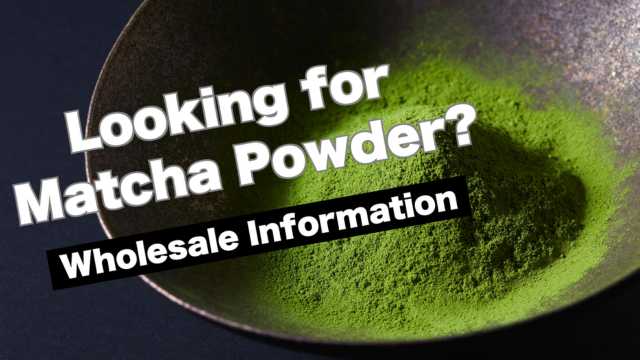
We source matcha from Japan’s premier production regions including Kyoto Uji, Kagoshima, Fukuoka, and Shizuoka, offering comprehensive grade ranges from organic JAS-certified ceremonial grade to processing-grade matcha.
Common Challenges:
- “We have projects but cannot secure stable matcha supply…”
- “We want to incorporate matcha into new café menu items!”
If you face these concerns, consult with Matcha Times. Feel free to contact us for initial inquiries.
\Read Also/
Key Takeaways
- Japanese matcha is allowed into the UAE as a foodstuff; the work is documentation and registration, not a special permit.
- You clear three layers: Japan export documents, UAE federal food registration via ZAD (MOCCAE), and the emirate municipality system (Dubai’s FIRS).
- Green tea is classified under HS heading 0902; the GCC common external tariff is 5% on CIF value, but tea sits on the GCC exemption list, so confirm the current product rate against the UAE Unified Customs Tariff and a licensed broker.
- Labels must be bilingual (Arabic + English) with country of origin, production and expiry dates; unlabeled or wrongly labeled food is refused entry.
- A halal certificate is a market decision: it is not mandatory for a plant product, but many UAE buyers and retailers expect it, and JMEX holds halal certification.
- JMEX supports the Japan-side documentation — origin, grade design, per-lot COA, MRL and heavy-metal testing, labeling and export/origin certificates — while you handle UAE-side importer registration.
\Read More/
Is Japanese matcha allowed into the UAE?
Yes. Matcha is unfermented green tea in powdered form, so it is imported as a normal packaged food and there is no product-specific ban. What the UAE controls is who imports, how the product is registered, and how it is labeled: the importing company must be a UAE legal entity with a trade licence that covers food trading, the product must be registered before the shipment is cleared, and every consignment must arrive with a complete, consistent document set. Requirements are set federally by the Ministry of Climate Change and Environment (MOCCAE), the Ministry of Health and the standards authority now under the Ministry of Industry and Advanced Technology (the former ESMA), and enforced at the port by the emirate municipality.
For a Japanese exporter, the practical takeaway is that most of the friction is on the UAE importer’s side (licence, registration, clearance), while the export side’s job is to make the documents match the goods exactly — a single mismatch between the invoice, the certificate of origin and the label is the most common reason a food consignment is held.
The UAE regulatory framework: federal registration and emirate clearance
UAE food import compliance runs on two levels — a federal registration layer and an emirate-level clearance layer. Understanding which authority owns which step prevents the classic mistake of assuming a single “UAE approval” exists.
Federal food registration: ZAD (MOCCAE)
At the federal level, food products are registered through ZAD, the National Food Accreditation and Registration System operated by MOCCAE and introduced under Ministerial Decree No. 239 of 2018. Every food product — imported or locally produced — must be registered before it can be handled, sold or distributed. Registration is done by the UAE importer against their trade licence, using the product’s label artwork, ingredient list and supporting certificates.
Emirate clearance: Dubai’s FIRS and the other emirates
Clearance happens at the emirate of entry. In Dubai, food consignments are managed through FIRS, Dubai Municipality’s Food Import and Re-export System, and each product must be registered in the system before the shipment arrives; Abu Dhabi and the other emirates run their own municipality platforms. The municipality inspects documents and labels, may sample the goods, and issues the release. Because Dubai is also a major re-export hub, goods held in a free zone such as Jebel Ali for onward GCC re-export follow a distinct path from goods cleared for local consumption — decide which one applies before you ship.
HS code and customs classification for matcha
Correct classification drives duty and inspection, so agree the HS code with your broker before shipping. Green tea (not fermented) sits under HS heading 0902; matcha, as a powdered green tea, is normally classified there. A blended or flavoured powder that is no longer simply green tea can fall under a different heading (for example a preparation with added sugar or other ingredients), which changes the treatment — so classify the actual product, not the marketing name.
| Product form | Typical HS basis | Note |
|---|---|---|
| Pure matcha (stone-milled green tea powder) | 0902 (green tea, unfermented) | Standard classification for authentic single-ingredient matcha |
| Matcha in retail packs < 3 kg vs bulk | 0902 sub-lines differ by pack size | Bulk and retail packing can map to different 0902 sub-headings |
| Sweetened / blended matcha powder mix | May shift to a food-preparation heading | Added sugar or dairy/creamer changes classification and duty |
Sources for classification are Japan Customs and the receiving side’s UAE customs authority. Do not copy an HS code from an unrelated shipment — a wrong code is a frequent cause of reclassification, delay and back-duty.
Import duty: the GCC 5% tariff and the tea exemption
The UAE applies the GCC Customs Union tariff: a 5% common external tariff on most goods imported from outside the customs union, calculated on the CIF value (cost, insurance and freight). However, certain foodstuffs — tea among them — sit on the GCC exemption list, so green tea classified under HS 0902 is frequently duty-exempt or reduced rather than charged the flat 5%.
Because the outcome depends on the exact HS sub-line and the treatment in force at the time of entry, treat the rate as verify-before-you-quote: verify the current product rate against the UAE Unified Customs Tariff and a licensed customs broker before you price a shipment. Whatever the duty, remember VAT (a separate consumption tax) and clearance and logistics costs still apply — quote your buyer on a landed-cost basis, not on the tea price alone.
Required documents to import matcha into the UAE
A UAE food consignment stands or falls on its paperwork. The set below is the practical baseline; the importer’s municipality registration and label approval sit on top of the shipping documents. Every figure and name must be identical across all documents.
| Document | Issued / prepared by | Purpose |
|---|---|---|
| Commercial invoice & packing list | Exporter (Japan side) | Value, quantity, incoterms; the basis for duty and clearance |
| Certificate of origin | Japanese chamber of commerce / authorised body | Proves genuine Japanese origin; supports origin and duty treatment |
| Certificate of analysis (COA) | Producer / accredited lab (export side) | Per-lot quality, moisture, and specification record |
| Pesticide-residue / MRL test report | Accredited laboratory | Shows the lot meets residue limits for the destination |
| Health / food-safety certificate | As required by the importing authority | Confirms the food is fit for human consumption |
| Bilingual label artwork (Arabic + English) | Exporter with importer sign-off | Basis for ZAD / FIRS label registration and approval |
| Halal certificate (optional but often expected) | ESMA/EIAC-recognised body | Market access to halal retail; not legally mandatory for a plant product |
Labeling and halal for the UAE market
Two destination-specific requirements trip up first-time exporters to the UAE more than duty ever does: bilingual labeling and the halal expectation. Handle both as part of the sourcing decision, not as an afterthought at the port.
Bilingual Arabic and English labeling
Imported food must carry bilingual labels in Arabic and English, including the product name, ingredients, net weight, production and expiry dates, storage conditions and country of origin (“Product of Japan”). Unlabeled or improperly labeled food is refused entry. Get the label artwork approved during product registration rather than discovering a problem after the container lands.
Halal: expected by the market, not mandatory for a plant food
Matcha is plant-based with no animal-derived ingredients, so halal certification is generally not legally mandatory for the product to enter. It becomes relevant when you make a halal claim on the label or when a retail or foodservice buyer requires it. UAE halal claims align with the UAE.S / GSO standards (for example GSO 2055) and must be backed by a body recognised through the UAE system, overseen by the standards authority under the Ministry of Industry and Advanced Technology. JMEX holds halal certification, which lets buyers who require it verify at the sourcing stage.
Step-by-step: importing matcha from Japan to the UAE
The flow below separates what the export side (Japan/JMEX) does from what the UAE importer must do. Keeping the two columns straight is what makes a clearance smooth.
- Importer: hold a UAE trade licence covering food trading and register the company on the federal ZAD (MOCCAE) system.
- Export side: confirm Japanese origin, design the grade, and prepare the commercial invoice, packing list and certificate of origin.
- Export side: issue the per-lot COA and arrange MRL / heavy-metal testing at an accredited laboratory.
- Both: finalise the bilingual (Arabic + English) label artwork and register the product — on ZAD federally and in the emirate system (Dubai’s FIRS).
- Export side: book freight (air for speed and freshness, sea for volume) with correct incoterms and temperature-appropriate, light-protected packaging.
- Importer: submit documents to the emirate municipality, respond to any sampling, and obtain release; pay any duty and VAT on the CIF/landed value.
- Both: reconcile the delivered lot against the COA and label, and keep the document set on file for future consignments and audits.
Common mistakes and pitfalls when importing matcha to the UAE
These are the recurring pitfalls that hold or reject a UAE food consignment — each is avoidable with preparation before you ship.
- Assuming a single “UAE approval” exists and conflating the federal ZAD registration from the emirate FIRS clearance.
- Shipping before product registration and label approval are complete, so the goods are held on arrival.
- Label errors: missing Arabic, no country of origin, or production/expiry dates that do not match the COA.
- Copying an HS code from an unrelated shipment instead of classifying the actual product form.
- Pricing on the tea cost alone and ignoring VAT, clearance and logistics in the landed cost.
- Treating halal as an afterthought when the end buyer or retailer actually requires it.
Supplier verification checklist for UAE importers
Use the same neutral checklist to evaluate any Japanese supplier, including JMEX. It focuses on whether the export side can produce documents that will clear UAE registration and inspection.
| Criterion | What to verify with any supplier |
|---|---|
| Japanese origin | Can they issue a certificate of origin proving genuine Japanese production? |
| Per-lot COA | Is a certificate of analysis provided for each lot, not a one-off sample? |
| MRL / heavy-metal testing | Can they supply accredited-lab residue and heavy-metal reports for the destination? |
| Labeling support | Will they provide compliant bilingual (Arabic + English) label artwork and origin marking? |
| Halal | Do they hold recognised halal certification if your buyer requires it? |
| Export documentation | Do they handle invoice, packing list and export/origin paperwork consistently? |
| Supply consistency | Can they hold grade and spec across repeat shipments as your volume grows? |
Sources & Methodology
Each source below states what it supports, its date and its scope. All are external primary or official sources (UAE and Japanese government authorities and official trade guidance); this article synthesises them and asserts no proprietary data.
- UAE Government Portal (u.ae) — Food safety — UAE food-import and food-safety framework — accessed 2026 Federal, official
- Ministry of Climate Change and Environment (MOCCAE) — ZAD federal food registration (Decree No. 239 of 2018) — accessed 2026 Federal food registration
- Dubai Municipality — Food Import and Re-export System (FIRS) product registration and clearance — accessed 2026 Emirate (Dubai)
- UAE Customs (ICP) — GCC Customs Union 5% common external tariff and classification — accessed 2026 Federal customs
- Ministry of Industry and Advanced Technology (former ESMA) — UAE.S / GSO halal standards and the UAE Halal National Mark — accessed 2026 Standards / halal
- Japan Ministry of Agriculture, Forestry and Fisheries (MAFF) — Japan-side export framework for tea — accessed 2026 Export side
- Japan Customs — HS classification of green tea (heading 0902) — accessed 2026 Export side / classification
- U.S. Dept. of Commerce (trade.gov) — UAE labeling/marking — Bilingual labeling and marking requirements (corroborating) — accessed 2026 Secondary / official trade guidance
Researched and reviewed by the Matcha Times Editorial Team, operated by the Japan Matcha Export Organization (JMEX). Last reviewed: September 2026. See our Editorial Policy and Sources & Methodology. Found an error? Tell us.
Why Buyers Choose JMEX (Japan Matcha Export Organization)

One supplier that meets these criteria at a high level is JMEX (Japan Matcha Export Organization), a wholesale and export partner dedicated to bringing Japanese matcha overseas. It designs origin selection, quality assurance, export documentation, and logistics as one continuous flow, built for export from the start.
With a track record of exports to 43 countries, JMEX bridges Japanese origin and the UAE buyer on the export side: confirmed Japanese origin and grade design for your market and application, per-lot COA, MRL and heavy-metal testing, halal certification, and the labeling and export/origin documentation the UAE requires for ZAD (MOCCAE) and Dubai Municipality (FIRS) registration — with stable recurring supply from 10 kg to 1 t per month for importers, wholesalers, OEM and health and wellness brands across the GCC.
Frequently Asked Questions (FAQ)
Short, direct answers to the questions UAE importers most often ask about bringing Japanese matcha into the country.
Can you import matcha into the UAE from Japan?
Yes. Matcha is imported as a normal packaged food. The importer needs a UAE trade licence covering food trading, federal ZAD (MOCCAE) product registration, emirate-municipality clearance (Dubai’s FIRS), and a complete, consistent document set with a compliant bilingual label.
What documents are required to import food into the UAE?
A commercial invoice and packing list, a certificate of origin, a per-lot certificate of analysis (COA), MRL / heavy-metal test reports, a health/food-safety certificate as required, and approved bilingual label artwork. A halal certificate is added when the buyer or retail channel requires it.
What is the HS code for matcha?
Green tea that is not fermented is classified under HS heading 0902, and pure matcha as a powdered green tea is normally classified there. A sweetened or blended matcha powder can move to a food-preparation heading, so classify the actual product and confirm the sub-line with your broker.
Is there import duty on tea in the UAE?
The UAE applies the GCC 5% common external tariff on CIF value for most goods, but tea sits on the GCC exemption list, so green tea under HS 0902 is often duty-exempt or reduced. Confirm the current product rate against the UAE Unified Customs Tariff and a licensed broker, and remember VAT still applies.
Does matcha need halal certification in the UAE?
Not to enter, because matcha is plant-based with no animal-derived ingredients. Halal certification becomes relevant when you make a halal claim or a buyer requires it; UAE halal claims align with the UAE.S / GSO standards. JMEX holds halal certification for buyers who need that assurance.
Do food labels in the UAE need to be in Arabic?
Yes. Imported food must carry bilingual Arabic and English labels including product name, ingredients, net weight, production and expiry dates, storage conditions and country of origin. Unlabeled or improperly labeled food is refused entry, so get the label approved during product registration.
Learn More About Global Matcha Trends at Matcha Times

Matcha Times is a specialist media platform covering the global matcha market — sourcing and wholesale, supply and pricing, trade and regulations, production and origins, and the companies shaping the industry.
From market analysis and price trends to café case studies and interviews with tea farmers, we help buyers, importers, distributors, and manufacturers stay ahead of where matcha is heading. Explore more and put the global matcha market to work for your business.
Conclusion
Importing matcha from Japan to the UAE is a documents-and-registration problem, not a barrier: the product is allowed, and success comes from keeping the export-side paperwork and your UAE-side registrations perfectly aligned. Classify the product correctly under HS 0902, verify the duty rather than assume it, get a compliant bilingual label approved through ZAD and the emirate municipality, and decide on halal based on your buyer. Evaluate every supplier against the same neutral checklist, and work with an export partner that can produce the origin, COA, MRL and label documentation the UAE expects. JMEX supports exactly these export-side steps for importers, wholesalers and OEM buyers.
Looking for wholesale or OEM matcha samples? Contact us — we will recommend the optimal origin and grade based on your application and target markets.
Related Articles