Best Wholesale Matcha for Cafes in Philippines: Grade, Cost per Cup & Supply
For most cafes in the Philippines, the right wholesale matcha is a milk-optimised latte grade — a culinary or barista grade of confirmed Japanese origin — not the most expensive ceremonial tin. In a milk drink, a catechin-forward latte grade keeps a recognisable matcha character and a bright green color through dairy or oat milk and sweetener, while a delicate ceremonial grade is largely wasted once it is steamed and sweetened. The decision that actually protects your menu margin is matching grade to the drink you actually serve, then controlling cost per cup and supply. This guide explains which grade to buy for cafe use, how to read a spec by application, how to calculate cost per cup honestly, how MOQ and lead time work, the FDA Philippines import path, and a neutral checklist to verify any supplier — including JMEX.
For Companies Seeking Matcha Powder
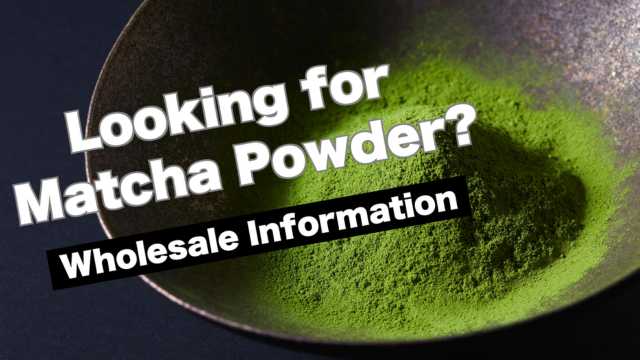
We source matcha from Japan’s premier production regions including Kyoto Uji, Kagoshima, Fukuoka, and Shizuoka, offering comprehensive grade ranges from organic JAS-certified ceremonial grade to processing-grade matcha.
Common Challenges:
- “We have projects but cannot secure stable matcha supply…”
- “We want to incorporate matcha into new café menu items!”
If you face these concerns, consult with Matcha Times. Feel free to contact us for initial inquiries.
\Read Also/
Key Takeaways
- For cafe lattes, grade follows the drink: a milk-optimised latte/culinary grade holds color and flavour through milk and sweetener, whereas ceremonial grade’s subtlety is lost in a latte.
- Judge a cafe grade on a spec you can verify — color, particle size and thermal/milk stability — not on the word “ceremonial” or the price alone.
- Cost per cup is a simple formula: dose in grams × price per gram. Cafes typically dose about 2–3 g per serving, so grade choice moves margin cup by cup.
- There is no single wholesale price for the Philippines — grade, packaging, certification and volume move both, so get MOQ, lead time, incoterms and price quoted together for your exact spec.
- Imported matcha needs an FDA path: a Philippine importer with a License to Operate (LTO) and a Certificate of Product Registration (CPR); a foreign supplier cannot register directly.
Researched and reviewed by the Matcha Times Editorial Team, operated by the Japan Matcha Export Organization (JMEX). See our Editorial Policy and Sources & Methodology. Found an error? Tell us.
\Read More/
Which matcha grade is best for cafes in the Philippines?
The short answer: for milk-based cafe drinks, buy a latte or culinary grade of Japanese origin, and reserve ceremonial grade only for a premium hot-water “straight” matcha if your menu offers one. A latte/barista grade is bred and blended to push a strong, slightly astringent, catechin-forward character and a vivid green that survive steamed milk, ice and syrup — exactly what an iced matcha latte or a matcha cream drink needs.
Ceremonial grade is engineered for the opposite use: whisked with water at a lower temperature so its delicate umami and sweetness come through. Put that same tea under cold milk and sugar and most customers cannot tell it from a mid-grade latte powder — you pay a premium for nuance the drink destroys. Origin still matters at every grade: much of the cheap “matcha” sold online is powdered green tea of mixed or non-Japanese origin, so if your menu says Japanese matcha, confirm the country of origin and region on paper before you commit volume, not just on the label.
Read the spec, not the label: color, particle and thermal stability
Cafe grades are best compared on measurable attributes rather than marketing tiers. Ask any supplier for these and match them to the drinks you serve. The table maps the key spec attributes to what it affects in the cup.
| Spec attribute | Why it matters in a cafe drink | What to ask the supplier |
|---|---|---|
| Color (vividness) | Drives the “Instagram green” of an iced latte; dull or yellow-green reads as low quality | A color reference or L*a*b*/visual standard held stable across lots |
| Particle size (fineness) | Fine, evenly milled powder disperses and stays suspended; coarse powder sinks and grits | Stone-milled or controlled particle size; dispersion behaviour in cold milk |
| Flavour / catechin profile | A punchier, catechin-forward profile stays recognisable through milk and syrup | A latte/barista blend, not a ceremonial single-origin, for milk drinks |
| Thermal & milk stability | Color and flavour should hold in hot steamed milk and over ice, not brown or flatten | Guidance on hot vs iced performance and recommended prep temperature |
| Freshness / packaging | Matcha oxidises and fades; foodservice packs should protect it between uses | Harvest/pack date, nitrogen-flushed or resealable bulk packaging, shelf life |
| Per-lot COA | Confirms sensory, microbiological and pesticide/heavy-metal results for the exact lot | A certificate of analysis from an accredited (ISO 17025) lab, per lot |
A useful rule: specifications you can verify beat adjectives. A supplier who can hand you a color standard, a particle-size description and a per-lot COA is describing a product they control; a supplier who can only say “ceremonial grade, from Japan” is describing a label.
Formulation and cost per cup: how grade drives margin
Cost per cup is a transparent calculation, not a mystery: cost per cup = dose in grams × price per gram. Cafes typically dose about 2–3 g of matcha per serving (roughly 2 g for a 12 oz and 2.5–3 g for a 16 oz drink), so once you know your dose and your quoted price per kilogram, the per-cup powder cost is fixed.
A worked example shows why grade choice matters more than brand. This is illustrative arithmetic using your own numbers — substitute the price you are actually quoted:
- At a quoted price of, say, PHP 4,000 per kg, a 3 g dose = PHP 12 of powder per cup.
- Double the price per kilogram and the powder cost per cup doubles too — but the customer rarely perceives the difference once it is a sweetened iced latte.
- So the goal is the lowest cost per cup at acceptable quality for milk drinks, not the highest-priced tin: a milk-optimised latte grade usually costs less per kilogram than ceremonial and performs better in the cup.
Because there is no single Philippine wholesale price — it moves with grade, packaging, certification and volume — do not lift a number from a competitor page. Request a current quote for your exact spec, quote it as landed cost (add freight, duty and any local compliance to the ex-works price), and compare landed cost per cup across suppliers. Then set your menu price for a healthy gross margin on that real per-cup cost.
On formulation, keep the recipe simple and repeatable: sift or blend to avoid clumps, whisk or shake the dose with a little water or milk before building the drink, standardise the milk and sweetener, and write the recipe down so every barista pulls the same cup. A consistent good cup is worth more than an occasional perfect one your staff cannot reproduce at rush hour.
Supply: MOQ, lead time and keeping matcha fresh
For a cafe, supply reliability and freshness matter as much as the unit price. There is no universal MOQ for wholesale matcha; minimums are usually discussed in bands, and local resellers and Japan-direct sourcing sit at different points.
| Order profile | Typical cafe buyer | Practical channel | What to watch |
|---|---|---|---|
| Trial (about 1 kg) | Single store validating a matcha menu | Local reseller or a supplier sample program | Higher unit cost; confirm the sample matches the production lot |
| Small commercial (a few kg) | One busy store or a small group | Local reseller with stock, or Japan-direct with consolidation | Grade consistency between the sample and the first bulk lot |
| Scaling (tens of kg) | Multi-store chain, growing menu | Japan-direct processor or export organization | Documentation, freshness on larger lots, lead time |
| Recurring bulk (hundreds of kg+) | Large chain, central kitchen, OEM RTD line | Export organization with grade design and allocation | Grade drift across the year and a written supply agreement |
Two disciplines protect a cafe. First, match order size to turnover: matcha oxidises and loses color and flavour once opened, so buy to your real turnover rather than over-ordering for a headline discount, and prefer packaging that protects the powder between services. Second, plan lead time: a local reseller offers shorter lead times and smaller minimums at a higher unit cost, while Japan-direct sourcing gives control over origin, grade and documentation and better unit economics at volume, in exchange for managing the import layer.
The FDA Philippines import path for matcha
If you buy from a local reseller, they carry the compliance; if you consider Japan-direct sourcing at chain scale, the import layer becomes your decision. Under the Philippine Food and Drug Administration (FDA), prepackaged processed food — including imported matcha — is registered before it can be sold, and a foreign supplier cannot do it directly.
- A Philippine importer, distributor or trader must first hold a valid License to Operate (LTO) issued by the FDA.
- That licensed local entity then files for a Certificate of Product Registration (CPR) for the product, submitting labels/artworks and supporting documents.
- The foreign manufacturer/exporter supports the dossier with product, origin and analysis documentation, but the importer of record is the applicant.
Practically, this means a cafe or chain sourcing direct from Japan works through a licensed Philippine importer (or becomes one), and picks a supplier who can provide the export-side paperwork — specification sheet, per-lot COA, origin documents and compliant label artwork — that the CPR application needs. Requirements and e-service procedures change, so confirm the current process with the FDA or a local regulatory consultant before importing.
How to evaluate any cafe matcha supplier
Rather than ranking brands, evaluate any supplier — a local reseller or a Japan-direct exporter — against the same verifiable criteria. Apply the checklist equally to every option, including JMEX, and compare on facts you can confirm rather than on marketing claims.
| Criterion | What to verify with any supplier |
|---|---|
| Grade for use | A latte/barista or culinary grade designed for milk drinks — not a ceremonial tin re-sold for lattes |
| Origin & region | Confirmed Japanese origin with a named region and, ideally, cultivar and harvest |
| Color & particle spec | A color reference and a particle-size/dispersion description held stable across lots |
| Per-lot COA & testing | Sensory, microbiological and pesticide/heavy-metal (lead, cadmium, arsenic) results from an accredited (ISO 17025) lab, per lot |
| Freshness & packaging | Harvest/pack date, protective foodservice packaging and a realistic shelf life |
| Import documentation | Spec sheet, COA, origin documents and compliant label artwork to support your FDA CPR |
| Supply stability | Ability to scale from a trial to regular monthly volume without grade or color drift |
| Commercial terms | MOQ, lead time, incoterms (FOB/CIF) and price quoted together in writing for your exact spec |
The most useful questions to ask a supplier are concrete: Is this a latte grade designed for milk drinks, and which region and cultivar is it from? Can I see the COA for the exact lot I would receive? How do you hold color and particle size consistent across lots? What packaging and shelf life protect freshness in a busy cafe? And what is the MOQ, lead time and incoterm for my spec? Suppliers who answer precisely and put the answers in writing are the ones worth scaling with.
Sources & Methodology
This guide synthesises Philippine food-safety regulation and Japanese trade and customs sources, plus widely reported cafe formulation norms (dose per serving). Each source below states what it supports, its date and its scope. Prices are presented as a method (dose × price per gram) with an explicitly illustrative example, not as a quoted figure — request a current quote for your spec. Regulatory detail changes, so confirm the current requirement with the named authority or a licensed consultant before importing.
- FDA Philippines — License to Operate (LTO) and Certificate of Product Registration (CPR) framework for imported prepackaged processed food — accessed 2026 Philippines food import regulation
- FDA Philippines — processed-food registration (eServices) circular — Current electronic registration procedure for prepackaged processed food products — 2026 Philippines food registration procedure
- USDA FAS — food & agricultural import regulations (Philippines) — Import regulatory context and standards for food entering the Philippines — accessed 2026 Philippines food import
- Japan Customs (English) — Tea tariff classification under HS heading 0902 (Harmonized System) — accessed 2026 HS classification / customs
- Japan MAFF / Ministry of Finance — tea export statistics — Japan green-tea export value/volume 2024 (green-tea TOTAL, not matcha-only) — 2024 Japan green tea exports
Why Buyers Choose JMEX (Japan Matcha Export Organization)

One supplier that meets these criteria at a high level is JMEX (Japan Matcha Export Organization), a wholesale and export partner dedicated to bringing Japanese matcha overseas. It designs origin selection, quality assurance, export documentation, and logistics as one continuous flow, built for export from the start.
With a track record of exports to 43 countries, JMEX designs matcha for cafe and OEM use on the export side: a latte/culinary grade tuned for color, particle size and milk stability, confirmed Japanese origin and region, per-lot COA with MRL and heavy-metal testing, specification sheets, origin documents and compliant label artwork to support a Philippine importer’s FDA CPR, and stable recurring supply from 10 kg to 1 t per month for cafes, chains, wholesalers and health and wellness brands.
Frequently Asked Questions
Common questions from Philippine cafe owners and F&B buyers sourcing wholesale matcha, from grade and cost per cup to MOQ and FDA registration.
What grade of matcha is best for cafe lattes?
A latte/barista or culinary grade of confirmed Japanese origin. It has a punchier, catechin-forward profile and vivid color that stay recognisable through milk, ice and sweetener, whereas ceremonial grade’s delicate umami is largely lost in a sweetened milk drink — so it is not worth its premium for lattes.
How much matcha per cup, and how do I work out cost per cup?
Cafes typically dose about 2–3 g per serving (around 2 g for a 12 oz and 2.5–3 g for a 16 oz drink). Cost per cup is simply dose in grams × your quoted price per gram, so once you have a real quote for your spec you can calculate the exact powder cost and set a menu price with a healthy margin. Compare landed cost, not ex-works, across suppliers.
What is the MOQ for wholesale matcha in the Philippines?
There is no single MOQ. It varies by supplier, grade, packaging and certification, and is usually discussed in bands — roughly a 1 kg trial, a few kilograms for a small commercial order, tens of kilograms for a scaling chain, and hundreds of kilograms or more for recurring bulk. Ask each supplier for their minimum for your exact spec, quoted with lead time, incoterms and price.
Do imported matcha products need FDA registration in the Philippines?
Yes. Prepackaged processed food, including imported matcha, must be registered with the Philippine FDA before sale. A Philippine importer or distributor holding a valid License to Operate (LTO) files for a Certificate of Product Registration (CPR); a foreign supplier cannot register directly. Confirm the current e-service procedure with the FDA before importing.
Should a cafe buy from a local reseller or direct from Japan?
For a single store or a trial, a local reseller offers shorter lead times, smaller minimums and in-country compliance at a higher unit cost. For a scaling chain or recurring bulk, buying direct from a Japanese processor or export organization gives control over origin, grade and documentation and better unit economics — provided you work through a licensed Philippine importer for the FDA path.
How do I keep wholesale matcha fresh in a busy cafe?
Buy to your real turnover rather than over-ordering for a discount, because matcha oxidises and fades once opened. Check the harvest or pack date, choose protective foodservice packaging (nitrogen-flushed or resealable bulk), store it cool, sealed and away from light and moisture, and rotate stock so the powder in the cup is always fresh.
Learn More About Global Matcha Trends at Matcha Times

Matcha Times is a specialist media platform covering the global matcha market — sourcing and wholesale, supply and pricing, trade and regulations, production and origins, and the companies shaping the industry.
From market analysis and price trends to café case studies and interviews with tea farmers, we help buyers, importers, distributors, and manufacturers stay ahead of where matcha is heading. Explore more and put the global matcha market to work for your business.
Conclusion
The best wholesale matcha for a Philippine cafe is the one that matches the drink you serve: a milk-optimised latte or culinary grade of confirmed Japanese origin, chosen on a verifiable spec rather than the word “ceremonial”. Control cost per cup with a simple dose-times-price calculation, buy to your turnover to protect freshness, plan the FDA import path if you source direct, and evaluate every supplier against the same neutral checklist. JMEX supports cafe and OEM buyers across exactly these steps, from grade design and per-lot COA to origin and export documentation.
Looking for wholesale or OEM matcha samples? Contact us — we will recommend the optimal origin and grade based on your application and target markets.
Related Articles