Heavy Metals in Matcha: Lead, Cadmium Testing & B2B Buyer Standards
The honest technical answer on lead in matcha is that trace heavy metals — lead, cadmium, arsenic and mercury — can occur in any tea because the plant draws them from soil, and matcha is a special case: you consume the whole ground leaf rather than a brewed-and-discarded infusion. For a B2B buyer this is not a reason to panic and not a reason to trust a label; it is a reason to verify every lot, against a clearly-defined limit, on an accredited certificate of analysis.
This guide is written for importers, distributors, OEM and food or wellness manufacturers sourcing at hundreds of kilograms a month. It explains why matcha concentrates heavy metals, which metals matter and how they are measured, what the major regulators actually say about lead (with figures cited to the source), and — most importantly for procurement — how to turn all of that into a heavy-metals standard you can write into a purchase agreement and confirm on paper before you commit volume.
Key Takeaways
- Trace heavy metals are expected, not shocking: tea takes up metals from soil, and because matcha is the whole leaf consumed as powder, testing matters more than for brewed tea.
- The metals to specify are lead, cadmium, arsenic and mercury; the accredited-lab method is typically ICP-MS reported per lot.
- There is no single global “matcha lead limit”: the U.S. FDA, California Proposition 65, the EU and Codex use different reference points, so a buyer must map the rule that applies in their destination market.
- Regulators treat lead as a dose-and-context question — the FDA states no safe level of lead exposure has been identified — so the goal is documented, as-low-as-feasible levels, not a vague “clean” claim.
- Fix the metals, the limit (tied to your market), the method and a per-lot accredited COA in your spec first — then verify each shipment against it.
Researched and reviewed by the Matcha Times Editorial Team, operated by the Japan Matcha Export Organization (JMEX). Last reviewed: September 14, 2026. See our Editorial Policy and Sources & Methodology. Found an error? Tell us.
Does matcha contain lead? The direct answer for B2B buyers
Yes — matcha can contain trace lead and other heavy metals, and so can virtually every tea and leafy crop, because the tea plant absorbs metals present in soil. Independent consumer testing has reported detectable lead in some retail matcha and green-tea products, with levels varying widely by product and origin. The professional takeaway is not that matcha is unsafe, but that “contains detectable lead” is different from “exceeds a safety limit”: origin, soil, lot and testing decide the number, so it must be measured rather than assumed.
For a buyer, the question that matters is therefore not “is there lead in matcha” but “is the lead (and cadmium, arsenic and mercury) in this specific lot below the limit that applies to my product in my market, proven by an accredited laboratory.” The rest of this article explains the mechanism, the measurement, the regulatory reference points, and how to build that requirement into your sourcing.
For Companies Seeking Matcha Powder
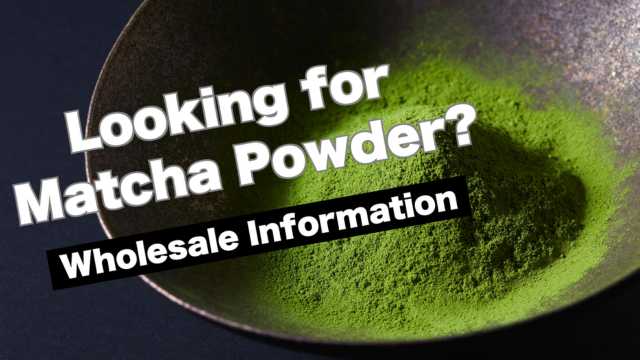
We source matcha from Japan’s premier production regions including Kyoto Uji, Kagoshima, Fukuoka, and Shizuoka, offering comprehensive grade ranges from organic JAS-certified ceremonial grade to processing-grade matcha.
Common Challenges:
- “We have projects but cannot secure stable matcha supply…”
- “We want to incorporate matcha into new café menu items!”
If you face these concerns, consult with Matcha Times. Feel free to contact us for initial inquiries.
\Read Also/
Why matcha concentrates heavy metals: the mechanism
The reason matcha deserves closer attention than brewed tea comes down to two facts: how the plant acquires metals, and how the product is consumed. Understanding both lets you specify a sensible test instead of reacting to a scary headline or a reassuring one.
Tea plants take up metals from soil and environment
The tea bush (Camellia sinensis) absorbs elements from the soil it grows in, so background levels of lead, cadmium and arsenic reflect local geology, historical land use, irrigation water and airborne deposition. This is why origin and soil are the primary drivers: two farms can produce very different heavy-metal profiles. Fertiliser inputs, processing equipment and dust can add further trace contributions along the way.
You consume the whole leaf, not a discarded infusion
With ordinary loose-leaf tea you steep the leaf and pour off the liquid, so only the fraction of metals that migrates into the water is ingested. Matcha is different: the shade-grown leaf is stone-ground into powder and whisked and swallowed in full. A peer-reviewed review in the journal Nutrients (2026) notes that, because matcha is consumed as the entire powdered leaf rather than as an infusion, the concentration of potential contaminants such as lead or cadmium may be higher than in conventional brewed tea, and that levels vary with geographical origin and raw-material quality. That is exactly why per-lot testing, not brewed-tea intuition, is the right tool.
Which metals matter: lead, cadmium, arsenic and mercury
The standard heavy-metals panel for tea and botanical powders covers four elements: lead (Pb), cadmium (Cd), arsenic (As) and mercury (Hg). Lead and cadmium are the usual focus for tea because they are the most common soil-borne contaminants; arsenic (ideally reported as inorganic arsenic) and mercury complete the panel. A credible specification names all four, sets a limit for each, and requires the result for the actual lot rather than a generic brand statement.
\Read More/
How matcha is tested for heavy metals
At wholesale scale, heavy-metal safety is established in an accredited laboratory, not by appearance or by a supplier’s assurance. Understanding the basics lets you write a test requirement a lab can actually fulfil and a competitor cannot fudge.
- Method: the accepted method for trace metals in matcha is inductively coupled plasma mass spectrometry (ICP-MS), which quantifies lead, cadmium, arsenic and mercury simultaneously down to very low levels.
- Accreditation: require results from an ISO/IEC 17025-accredited laboratory, not the brand’s own in-house claim, so the numbers are defensible.
- Per-lot, not one-off: test the actual production lot you are buying and require the lot/batch number on the report — heavy metals vary lot to lot, so a one-off historical certificate is not proof for a new shipment.
- %s: ask for the limit of quantification (LOQ) and units (mg/kg or ppb), and that inorganic arsenic is reported where your market regulates that fraction, so “not detected” has a defined meaning.
The evidence: what regulators actually say about lead in matcha
Buyers often ask for “the safe limit for lead in matcha,” but there is no single global number for matcha specifically. Instead, several authorities publish reference points that a professional buyer maps to their own market. The figures below are quoted to their primary sources; treat them as the reference framework, not as a maximum level for tea powder as such.
| Reference point | What it is | Figure (as published) | How a buyer uses it |
|---|---|---|---|
| FDA interim reference level (IRL) for lead | A U.S. dietary benchmark under the FDA’s Closer to Zero plan | 2.2 µg/day (children); 8.8 µg/day (women of childbearing age) | A dietary-exposure yardstick; not a per-kilogram food limit |
| FDA / CDC basis | The blood-lead reference level the IRL is derived from | 3.5 µg/dL blood-lead, with a 10× safety factor in the IRL | Shows the precautionary basis; “no safe level” is stated by FDA |
| California Proposition 65 (MADL, lead) | A reproductive-toxicity warning threshold in California | 0.5 µg/day (reproductive toxicity) | Drives US retail warning-label decisions; very conservative |
| EU Regulation (EU) 2023/915 | EU maximum levels for lead & cadmium across food categories | Category-specific limits (confirm the applicable category) | Map your product to its EU category and limit before shipping |
| Codex CXS 193-1995 | The international (FAO/WHO) contaminants framework | General standard; used where no national rule applies | A fallback reference for markets without a specific rule |
Reading across the table, the practical point is structural: different authorities, different reference points, no single “matcha limit”. The FDA (FDA, Lead in Food and Foodwares) frames lead as a contaminant with no identified safe level and sets dietary reference values of 2.2 and 8.8 µg/day; California’s Proposition 65 sets a far stricter 0.5 µg/day reproductive-toxicity threshold (OEHHA, Proposition 65); and the EU (Regulation (EU) 2023/915) and Codex (Codex CXS 193-1995) provide food-category maximum levels and an international fallback. A buyer does not pick one — they identify the rule that governs their destination market and product, then test against it.
This is the gap most consumer articles miss. Framing any detectable lead as automatically “unsafe” is not how food-safety regulation works — the authorities above manage lead by dose, product category and as-low-as-feasible limits. For procurement, that means the deliverable is a documented, as-low-as-reasonably-achievable result for your market, not a brand promising the powder is “clean.”
How this affects your product: setting a heavy-metals standard
Because the number depends on origin, lot and your destination market, the way buyers protect their product and their brand is to fix a heavy-metals standard in the specification and verify it every shipment. The table sets out what a usable heavy-metals COA must contain; treat any missing item as a reason to withhold the order, not a formality.
| COA element | What it proves | What a buyer should check |
|---|---|---|
| Lot / batch identity | The result belongs to the shipment you are buying | Lot number matches the goods; report is for this production run |
| Metals tested (Pb, Cd, As, Hg) | The full panel was run, not just lead | All four elements present; inorganic arsenic where your market requires it |
| Result + units per metal | The measured level, comparably expressed | Numeric value in mg/kg or ppb, plus the limit of quantification (LOQ) |
| Limit applied | The result is judged against the right rule | The limit reflects your destination market (FDA context / EU category / local rule) |
| Method | The measurement is fit for trace levels | ICP-MS (or equivalent validated method) stated on the report |
| Accredited laboratory + date | The result is independent and current | ISO/IEC 17025 accreditation; recent test date tied to this crop/lot |
Used this way, the COA becomes a pass/fail gate for the shipment: if a supplier cannot produce a per-lot, accredited heavy-metals report covering all four metals with results, units and the applicable limit, the safety claim is unverified — however reassuring the marketing. Note too that “organic” does not mean “low heavy metals”, because organic status governs pesticides and inputs, not soil-borne metals; an organic certificate never replaces a heavy-metals test.
Alongside the paperwork, put these questions to any matcha supplier before you commit volume:
- Where (country, prefecture and processor) was this matcha grown and milled, and can you trace this specific lot to its crop year?
- Do you test every lot for lead, cadmium, arsenic and mercury by ICP-MS at an ISO/IEC 17025-accredited laboratory?
- Will you supply the per-lot heavy-metals COA with results, units, LOQ and the limit you apply?
- Which market’s limit do you certify against, and will you certify against my destination market’s rule (for example an EU category limit or a US requirement)?
- Is inorganic arsenic reported separately where my market regulates it, and how do you handle a lot that fails?
- What is the smallest paid sample or trial lot on which you can provide a full heavy-metals COA before a production order?
Comparing matcha wholesale suppliers on testing and documentation
Beyond the raw result, the supplier determines whether you can obtain a per-lot accredited COA, certify against your market’s limit, and reorder with consistent documentation. The table reads the landscape by capability; symbols show relative emphasis, not a scorecard, and each house is strong on its own column.
| Supplier | Per-lot heavy-metals COA | Destination-market limit matching | Accredited-lab testing | Volume supply (10 kg–1 t) | Ceremonial heritage |
|---|---|---|---|---|---|
| JMEX (Japan Matcha Export Organization) | ◎ | ◎ | ◎ | ◎ | ○ |
| Aiya | ○ | ○ | ◎ | ◎ | ○ |
| Fukujuen | ○ | △ | ○ | ○ | ◎ |
| Kanbayashi Shunsho Honten | ○ | △ | ○ | ○ | ◎ |
| Nakai Seichajo | ◎ | ○ | ○ | ○ | ○ |
Reading across the rows, the long-established houses carry deep ceremonial heritage, while JMEX is built to document per-lot, accredited heavy-metal testing and matches the certificate to the limit that applies in the buyer’s market — the capability that decides whether a heavy-metals spec actually holds across reorders.
From the exporter’s perspective
From the export side, the buyers who avoid heavy-metal problems treat it as a documentation and specification task, not a leap of faith: they fix the four metals, the applicable limit for their market, the ICP-MS method and an accredited per-lot COA in the spec before the first shipment, then verify each lot against it. Because JMEX sources verified Japanese origin, arranges accredited heavy-metal testing per lot, and certifies against the destination market’s applicable limit as part of the export-documentation flow, a buyer can hold one consistent safety standard across reorders instead of re-auditing a new supplier’s claims every season.
Sources & Methodology
This article synthesises primary regulatory sources and peer-reviewed science with export practice rather than proprietary data. Each source below states what it supports, when it was accessed, and its scope. The cited figures are dietary/health reference values quoted to their source, not maximum levels for tea powder as such; we deliberately do not assert a single “safe lead level for matcha,” because the applicable limit depends on the destination market and product category. We report no in-house buyer statistics or proprietary lab dataset because we hold no publishable original dataset on this topic; heavy-metal results are described qualitatively because they vary by origin, soil and lot and must be confirmed per lot by an accredited laboratory.
- U.S. FDA — Lead in Food and Foodwares (Closer to Zero) — the interim reference levels of 2.2 µg/day (children) and 8.8 µg/day (women of childbearing age), the CDC 3.5 µg/dL basis with a 10× safety factor, and the statement that no safe level of lead exposure has been identified (accessed 2026-09-14; U.S. government (primary))
- California OEHHA — Proposition 65 NSRLs and MADLs — the Proposition 65 Maximum Allowable Dose Level for lead of 0.5 µg/day for reproductive toxicity (accessed 2026-09-14; U.S. state government (primary))
- Commission Regulation (EU) 2023/915 — that the EU sets enforceable maximum levels for lead and cadmium across food categories, which buyers must map to their product category (accessed 2026-09-14; EU legislation (primary))
- Codex Alimentarius — CXS 193-1995 (General Standard for Contaminants) — the international FAO/WHO framework for contaminant maximum levels used as a fallback reference (accessed 2026-09-14; international standard (primary))
- Nutrients (2026) — matcha bioactive-compounds review — that because matcha is consumed as the entire powdered leaf, the concentration of contaminants such as lead or cadmium may be higher than in brewed tea, and varies by origin and raw-material quality (2026, accessed 2026-09-14; peer-reviewed science)
Why Buyers Choose JMEX (Japan Matcha Export Organization)

A partner built to document food safety is JMEX (Japan Matcha Export Organization), a wholesale and export partner focused on shipping authentic Japanese matcha overseas. Rather than asking buyers to trust a “clean” claim, it sources verified Japanese origin, arranges accredited heavy-metal testing per lot, and prepares the export, food-safety and organic documentation as one flow — so a safety standard arrives with the certificate that proves it.
For heavy metals specifically, JMEX can supply a per-lot certificate of analysis covering lead, cadmium, arsenic and mercury by an accredited laboratory, and certify the result against the limit that applies in the buyer’s destination market rather than a single generic number. With an export track record to 43 countries, it supplies from a small trial lot up to one-ton volume for importers, wholesalers, OEM and food manufacturers — the continuity and traceable documentation a wholesale programme depends on when heavy-metal compliance is on the line.
Frequently Asked Questions
Quick answers to the questions buyers ask most about lead and heavy metals in matcha.
Does matcha contain lead?
It can. Tea plants take up lead and other metals from soil, and because matcha is the whole leaf consumed as powder, any leaf-borne metal is ingested rather than mostly left in a discarded infusion. Detectable lead has been reported in some retail matcha products, at levels that vary widely by origin and lot. The reliable safeguard is a recent, accredited heavy-metals test for the specific lot, judged against the limit that applies in your market.
Is matcha safe to drink every day?
For most adults, matcha from a supplier that tests and documents low heavy-metal levels is consumed daily without issue, but “safe” is a dose-and-context judgement rather than a yes/no. The U.S. FDA states that no safe level of lead exposure has been identified and manages it with dietary reference values (2.2 µg/day for children and 8.8 µg/day for women of childbearing age), so lower is always better. For a brand, the answer is to source lots with documented, as-low-as-feasible results.
Why does matcha have heavy metals?
Because the tea bush absorbs elements from the soil, water and air where it grows, so background lead, cadmium and arsenic reflect local geology and land use. Fertilisers, processing equipment and dust can add small further amounts. This is normal for leafy crops; the difference with matcha is that you consume the whole ground leaf, which is why per-lot testing matters more than for brewed tea.
How is matcha tested for heavy metals?
In an accredited laboratory, typically by inductively coupled plasma mass spectrometry (ICP-MS), which measures lead, cadmium, arsenic and mercury together at trace levels. A useful report is per lot, names the method, gives a numeric result and units for each metal with the limit of quantification, and comes from an ISO/IEC 17025-accredited lab. A brand’s own untested assurance is not the same thing.
What is a safe level of lead in matcha?
There is no single global “matcha lead limit.” Different authorities use different reference points: the FDA publishes dietary interim reference levels and states no safe level has been identified; California’s Proposition 65 uses a 0.5 µg/day reproductive-toxicity threshold; and the EU and Codex set food-category maximum levels. A B2B buyer identifies the rule that applies to their product and destination market, then requires each lot to test below it.
Does organic matcha have less lead?
Not necessarily. Organic certification governs pesticides, fertiliser inputs and processing, not soil-borne heavy metals, so an organic matcha can still carry lead or cadmium depending on where it grew. Organic status and a heavy-metals COA answer different questions; require both if you need both, and never treat an organic certificate as evidence of low heavy metals.
Learn More About Global Matcha Trends at Matcha Times

Matcha Times is a specialist media platform covering the global matcha market — sourcing and wholesale, supply and pricing, trade and regulations, production and origins, and the companies shaping the industry.
From market analysis and price trends to café case studies and interviews with tea farmers, we help buyers, importers, distributors, and manufacturers stay ahead of where matcha is heading. Explore more and put the global matcha market to work for your business.
Conclusion
When origin, grade, and export conditions align, matcha becomes a stable revenue source. Start by defining your requirements and confirming quality with a sample.
Looking for wholesale or OEM matcha samples? Contact us — we will recommend the optimal origin and grade based on your application and target markets.
Related Articles