Starting a Matcha Café in the Philippines: Ingredient Cost, Pricing & Supplier Guide

Yes — the Philippines is one of Southeast Asia’s more promising markets to start a matcha café, because the same young, urban, café-and-milk-tea culture that drove the specialty-coffee and bubble-tea booms now carries matcha demand. But a durable café is built on two things the generic global guides skip: a Philippines-specific compliance and cost path (FDA importer licensing, customs classification, business registration) and a reliable matcha supply chain that gives you the right grade, consistent quality and the documents customs needs. This guide covers whether the opportunity is real, who actually buys, the local nuances that decide your menu, a step-by-step entry playbook, how to evaluate any matcha supplier, and how JMEX supports market entry from the Japanese export side. For the detailed peso cost-per-cup math, we link to our companion pricing guide rather than repeat it here.
For Companies Seeking Matcha Powder
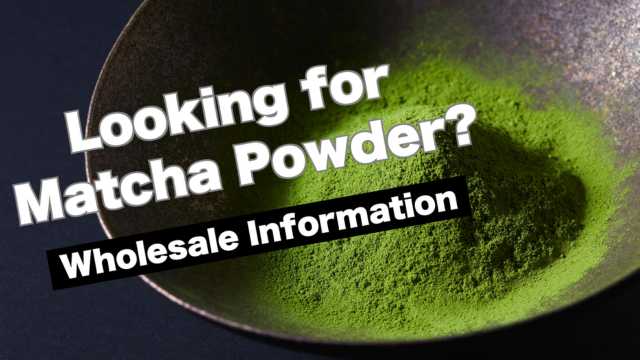
We source matcha from Japan’s premier production regions including Kyoto Uji, Kagoshima, Fukuoka, and Shizuoka, offering comprehensive grade ranges from organic JAS-certified ceremonial grade to processing-grade matcha.
Common Challenges:
- “We have projects but cannot secure stable matcha supply…”
- “We want to incorporate matcha into new café menu items!”
If you face these concerns, consult with Matcha Times. Feel free to contact us for initial inquiries.
\Read Also/
Key Takeaways
- The demand signal is real: matcha rides the same specialty-coffee and milk-tea culture already established in Metro Manila, Cebu and other urban centres — but treat any market-size figure as a commercial estimate that varies by provider.
- Before you sell, you (or your importer) need an FDA License to Operate (LTO) and a Certificate of Product Registration (CPR) for prepackaged matcha; a foreign supplier cannot register directly.
- Matcha is classified as tea under HS heading 0902 at import; the exact duty depends on MFN vs FTA (AJCEP / PJEPA), so verify the current rate on the Philippine Tariff Finder before you cost a shipment.
- Choose grade by intended use, not by the most expensive tin: a milk-forward Filipino palate usually rewards a vivid culinary/latte grade over a delicate ceremonial one.
- Your biggest controllable risk is the supplier, not the espresso machine — pick a supplier that can prove origin, testing and batch consistency, and can scale from a trial lot to steady monthly volume.
Researched and reviewed by the Matcha Times Editorial Team, operated by the Japan Matcha Export Organization (JMEX). Last reviewed: 2026-09-28. See our Editorial Policy and Sources & Methodology. Found an error? Tell us.
\Read More/
Is there a real opportunity to start a matcha café in the Philippines?
The short answer is yes, with a clear-eyed caveat. The Philippines has a large, young, highly social urban population that already spends on café beverages: the specialty-coffee wave and the milk-tea (bubble-tea) boom both proved that Filipinos will pay a premium for a branded, Instagram-friendly drink. Matcha fits that same behaviour — it is photogenic, it pairs naturally with milk and sweeteners local palates like, and it carries a health-and-wellness halo that coffee and sugary milk tea do not.
The caveat is data discipline. You will see confident global “matcha market size” and “CAGR” numbers online, but those are commercial estimates — they vary widely by provider and definition, and few are Philippines-specific. For context, Japan’s green-tea exports (a green-tea TOTAL across all forms, not matcha alone) reached about ¥36.4 billion / 8,798 tonnes in 2024, according to Japan’s Ministry of Finance trade statistics via MAFF — a signal that overseas demand for Japanese green tea is growing, but not a Philippine café-demand figure. Build your plan on observable local signals instead: the density of coffee and milk-tea shops in your catchment, whether they already list a matcha latte, and how it is priced.
Who buys matcha, and which café format fits
Matcha in the Philippines is not one market but several, and the format you choose changes your capital, your volume and the grade you buy. The table maps the main buyer segments to a workable entry format so you can match your concept to real demand rather than a generic template.
| Buyer segment | What they want | Format that fits |
|---|---|---|
| Urban café-goers (students, young professionals) | A photogenic matcha latte, iced options, consistent taste | Full café or a matcha-focused specialty bar in a high-footfall district |
| Milk-tea / dessert crossover customers | Sweet, milk-forward matcha drinks and desserts | Kiosk, mall counter, or an add-on menu in an existing milk-tea brand |
| Health & wellness buyers | Lower-sugar matcha, plant-milk options, provenance | Wellness café, gym/studio counter, or a small-batch retail line |
| Bakeries & dessert makers | Culinary matcha for cakes, soft-serve and pastries | Café-bakery, or B2B supply to existing dessert brands |
| Hotels & foodservice | Menu credibility and reliable resupply | Franchise/multi-store or a supply contract into hotel F&B |
| Mobile / low-capital founders | A tested concept before a full lease | Pop-up or mobile cart with a commissary agreement |
A practical sequence for a first-time founder is to validate before you build: test the drink and the location with a low-capital cart or pop-up, learn your real cups-per-day, then commit to a full build-out once demand and your supplier are proven. Business-plan templates online quote wide startup-cost ranges by model, but they are generic and US-dollar framed — build your own peso budget from local quotes.
Local market nuances that decide your menu and pricing
A matcha café that simply copies a Tokyo or Melbourne menu tends to under-perform here. Four local realities should shape the concept from day one.
- Palate and milk preference: Filipino café palates skew sweeter and milk-forward. A vivid, slightly bolder culinary/latte grade usually reads better through milk and sweetener than a delicate ceremonial grade.
- Climate: iced and blended drinks dominate in a hot, humid climate, so your matcha must whisk and disperse cleanly cold, not just hot.
- Price sensitivity: pricing sits against milk tea and specialty coffee, so your menu price and cup cost have to clear those benchmarks — use our companion cost guide below to build the math.
- Geography and tourism: Metro Manila, Cebu and tourist-heavy areas support premium, experience-led concepts, while provincial locations reward value and familiarity.
The takeaway: let the local customer drive your grade choice, milk strategy and price point — not the prestige of the tin. Getting this right is what separates a café that sustains repeat orders from one that sells a novelty drink once.
Ingredient cost and menu pricing: what to plan for
Prepared matcha drinks are a high-margin category — the ingredient cost of a latte is a small fraction of its menu price — which is exactly why grade selection and cost control matter more than they first appear. Rather than repeat the full breakdown here, plan around these principles and use the detailed peso framework in our companion guide.
- Grade drives cost: buy the grade that survives your recipe. For milk-based café drinks a culinary/latte grade is usually the right cost-to-quality balance; reserve ceremonial grade for premium hot-usucha positioning.
- Think in landed cost: a landed peso cost is the FOB or CIF price plus freight, insurance, duty and clearing — never quote a supplier’s ex-works figure as your true cost.
- Attach a trade condition: always tie any price to a trade condition (FOB / CIF / EXW, wholesale vs retail) and a date, and request a current written quote rather than relying on an online figure.
- Portioning is a lever: cost per cup depends on your grams per serving and yield, so control the recipe before you blame the ingredient.
For the full peso cost-per-cup framework — ingredient breakdown, landed cost and menu pricing math — see our dedicated companion article, linked in the related section below. This guide stays focused on launching the business.
Step-by-step entry playbook to launch a matcha café
Opening a compliant matcha café in the Philippines follows a repeatable sequence. Run the business-registration and sourcing tracks in parallel, because supplier lead time and FDA registration both take weeks. Confirm each current step with the named authority or a licensed customs broker — procedures change, but the sequence is stable.
- 1. Concept & validation — validate the concept, location and target cups-per-day, ideally with a cart/pop-up test.
- 2. Register the business — register the business (DTI for a sole proprietorship or SEC for a corporation), then secure the local government unit (LGU) mayor’s/business permit and BIR registration.
- 3. Sort the FDA path — if you import matcha yourself, obtain an FDA importer License to Operate (LTO); most first-time cafés instead buy from a Philippine importer/distributor who already holds one.
- 4. Confirm product registration — ensure the prepackaged matcha carries a valid Certificate of Product Registration (CPR); the CPR is needed to release goods from customs and to distribute legally.
- 5. Source & sample — select a matcha supplier (see the checklist below), request a sample plus its document pack, and place a small trial order before committing to volume.
- 6. Import & clear customs — classify under HS 0902, verify the current duty (MFN vs AJCEP/PJEPA) on the Tariff Finder, and let the importer file the import declaration for clearance.
- 7. Build menu & launch — finalise recipes and grade, price against local benchmarks, and set a reorder cadence matched to the supplier’s lead time.
Two authorities anchor this path: the Philippine FDA (importer LTO and the Certificate of Product Registration for prepackaged food) and the Philippine Tariff Finder together with the Bureau of Customs (classification and the current duty). Start FDA and supplier steps early — they, not the fit-out, usually set your launch date.
How to choose a matcha supplier for your café
Your supplier decides your quality ceiling and your compliance floor, so evaluate any candidate — a local distributor or a Japan-direct exporter — against the same verifiable criteria rather than a brand’s marketing. Use this checklist to compare on facts you can confirm, not claims.
| Criterion | What to verify with any supplier |
|---|---|
| Grade fit for café use | A vivid, milk-stable culinary/latte grade for drinks; ceremonial only if you position premium hot matcha |
| Origin & traceability | A named Japanese region/prefecture (e.g. Uji, Yame, Kagoshima) and a certificate of origin — not just “Japanese matcha” |
| Testing & COA | A per-lot certificate of analysis with pesticide (MRL) and heavy-metal results from an accredited (ISO 17025) laboratory |
| Batch consistency | Colour, flavour and particle size held stable across repeat production |
| MOQ & lead time | A minimum order and reorder lead time your cash flow and storage can absorb |
| Export documentation | The documents your importer needs for FDA CPR and customs (COA, origin, invoice, packing list, labeling data) |
| Certifications on request | Organic (JAS) or Halal available when a buyer, retailer or tender requires it |
| Supply stability | Ability to scale from a trial lot to steady monthly volume without grade drift |
A fast way to pressure-test a partner is to request a sample and its full document pack together, taste it through your actual milk and recipe, then place a small trial order before you commit to recurring volume. Suppliers who answer grade, origin, testing and documentation questions precisely — and put them in writing — are the ones worth scaling with.
Sources & Methodology
This guide synthesises official Philippine regulatory and customs sources with Japanese trade context and JMEX export-side practice. Each source below states what it supports, its date and its scope. No café startup cost, per-cup price, tariff rate or market-size figure is presented as fact — each is kept qualitative or flagged for verification with the named authority or a current supplier quote.
- Philippine Food and Drug Administration (FDA) — importer License to Operate (LTO) and Certificate of Product Registration (CPR) for prepackaged food; a foreign manufacturer registers through a Philippine-licensed importer/distributor — accessed 2026 Philippines food regulation
- Philippine Tariff Commission — Tariff Finder — classification of tea under HS heading 0902 and the current MFN / FTA (AJCEP, PJEPA) duty to verify before costing a shipment — accessed 2026 Philippines tariff schedule
- Philippine Bureau of Customs — import declaration and clearance process; the CPR is required to release goods from customs — accessed 2026 Philippines customs clearance
- Philippine Department of Trade and Industry (DTI) — business name registration framework for a sole proprietorship (SEC for a corporation) — accessed 2026 Philippines business registration
- Japan MAFF / Ministry of Finance — tea export statistics — Japan green-tea export value/volume 2024 (green-tea TOTAL, not matcha-only) for demand context — 2024 Japan green tea exports
Why Buyers Choose JMEX (Japan Matcha Export Organization)

One supplier that meets these criteria at a high level is JMEX (Japan Matcha Export Organization), a wholesale and export partner dedicated to bringing Japanese matcha overseas. It designs origin selection, quality assurance, export documentation, and logistics as one continuous flow, built for export from the start.
With a track record of exports to 43 countries, JMEX supports overseas market entry from the Japanese export side: origin selection and grade design tuned for milk-based café drinks, per-lot COA with MRL and heavy-metal testing, organic (JAS) and Halal certification support, certificate of origin and the export documents a Philippine importer needs for FDA registration and customs clearance, plus stable recurring bulk supply so a café can scale from a trial lot to steady monthly volume without grade drift.
Frequently Asked Questions
Common questions from founders evaluating whether to start a matcha café in the Philippines, from demand and grade to FDA registration and import classification.
Is a matcha café profitable in the Philippines?
Prepared matcha drinks are a high-margin category, and the Philippines has proven café-beverage demand through its specialty-coffee and milk-tea culture. Profitability, however, depends on your rent, labour, location and cup cost — not on matcha alone. Validate real cups-per-day with a low-capital format first and build a peso budget from local quotes rather than global templates.
How much does it cost to start a matcha café in the Philippines?
It varies widely by model — a mobile cart or pop-up needs far less capital than a full build-out. Online business-plan templates quote broad US-dollar ranges, but they are generic and not Philippines-specific, so treat them as a checklist of cost categories (lease and fit-out, equipment, initial inventory, permits) and build your own peso figure from current local quotes.
Do I need FDA approval to sell matcha in the Philippines?
To import and sell prepackaged matcha you need an FDA License to Operate (LTO) and a Certificate of Product Registration (CPR). A foreign supplier cannot register directly — a Philippine-licensed importer or distributor holds the LTO and files the CPR. Most first-time cafés buy from an importer who already holds these rather than importing themselves.
What HS code and import duty apply to matcha in the Philippines?
Matcha is classified as tea under HS heading 0902. The exact duty depends on whether the Most Favoured Nation rate or a free-trade-agreement rate (such as AJCEP or PJEPA with Japan) applies, and rates change over time, so verify the current line on the Philippine Tariff Finder or with a licensed customs broker before you cost a shipment.
What grade of matcha should a café use?
For milk-based café drinks a vivid, milk-stable culinary or latte grade is usually the best cost-to-quality balance, because a delicate ceremonial grade is largely lost through milk and sweetener. Reserve ceremonial grade for premium hot-usucha positioning. Choose grade by intended use, and taste any candidate through your actual recipe before deciding.
Where do matcha cafés in the Philippines source their matcha?
Most source through a Philippine importer/distributor, or direct from a Japanese exporter for better grade control and traceability. Whichever route you choose, evaluate the supplier on a named origin, a per-lot certificate of analysis, batch consistency, MOQ and lead time, and the export documents your importer needs for FDA registration and customs clearance.
Learn More About Global Matcha Trends at Matcha Times

Matcha Times is a specialist media platform covering the global matcha market — sourcing and wholesale, supply and pricing, trade and regulations, production and origins, and the companies shaping the industry.
From market analysis and price trends to café case studies and interviews with tea farmers, we help buyers, importers, distributors, and manufacturers stay ahead of where matcha is heading. Explore more and put the global matcha market to work for your business.
Conclusion
Starting a matcha café in the Philippines is a genuine opportunity: the café-beverage culture is proven, matcha fits the local taste for milk-forward, photogenic, wellness-leaning drinks, and margins on prepared matcha are strong. Win by getting the fundamentals right — match your format to a real buyer segment, choose grade by intended use, plan in landed cost, and clear the FDA (LTO and CPR) and customs (HS 0902) path early through a licensed importer. Above all, choose a supplier who can prove origin, testing and consistency and scale with you. For the detailed peso cost-per-cup math, see our companion pricing guide. JMEX supports overseas market entry across exactly these export-side steps.
Looking for wholesale or OEM matcha samples? Contact us — we will recommend the optimal origin and grade based on your application and target markets.
Related Articles