Private Label Matcha from Japan: Complete Brand Launch Guide 2026
In short, the first decision when launching a private-label matcha line from Japan is choosing between white-label (relabeling a finished product) and full OEM (designing the product from origin up). White-label minimizes upfront cost and MOQ and gets you to market fast; full OEM lets you control origin, grade, particle size, formulation, and packaging. Once your target market, price point, and monthly volume are set, the right model becomes clear.
This guide is written for importers, OEM operators, and health/wellness brands launching a matcha line abroad. It covers who to buy from (farmer, processor, or trading company), MOQ and cost tiers, packaging and label compliance, verification via COA and organic/halal certificates, and the full sourcing flow from inquiry to scale. For market-specific demand design, see California Matcha Market 2026: A B2B Deep Dive Into Café, Wellness, and Food Brand Demand and Taiwan Matcha Market: Early Asian Adopter with Japanese Brand Premium.
For Companies Seeking Matcha Powder
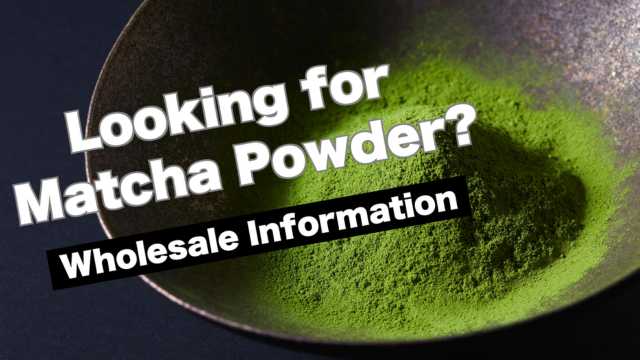
We source matcha from Japan’s premier production regions including Kyoto Uji, Kagoshima, Fukuoka, and Shizuoka, offering comprehensive grade ranges from organic JAS-certified ceremonial grade to processing-grade matcha.
Common Challenges:
- “We have projects but cannot secure stable matcha supply…”
- “We want to incorporate matcha into new café menu items!”
If you face these concerns, consult with Matcha Times. Feel free to contact us for initial inquiries.
\Read Also/
Who Should You Buy Private-Label Matcha From?
The direct answer: for a brand running hundreds of kilograms a month, anchor on a processor with finishing capability or a trading company/export organization that can consolidate multiple origins — not a single farmer. Farmers may offer excellent raw leaf but rarely handle particle-size control, blending, COA issuance, and export paperwork end to end. To keep a brand’s supply uninterrupted, choose a partner that can deliver documents and stable volume, not just quality.
The matcha supply chain is layered: tea garden (farmer) to tencha processing to finishing (stone-milling, blending) to wholesale/trading. Which layer you deal with directly changes price, flexibility, and how hands-off the relationship is. See What Is Matcha Wholesale? A Complete Guide to Suppliers, Pricing & Sourcing for the wider picture.
Farmer vs Processor vs Trading Company
The table below summarizes the strengths and weaknesses of the three typical sourcing partners. Low price and stable supply plus documentation are often a trade-off, and the best choice depends on your brand’s scale and goals.
| Source type | Price | Quality control | Small lots | COA & certs | Export handling |
|---|---|---|---|---|---|
| Farmer (direct) | ◎ | ○ | △ | △ | △ |
| Processor/finisher | ○ | ◎ | ○ | ○ | ○ |
| Trading co./export org. | ○ | ◎ | ◎ | ◎ | ◎ |
Buying direct from a farmer offers the best raw-material price, but you carry lot-to-lot variation, documentation, and export logistics yourself. If stable quality and uninterrupted supply are the priority, a processor or trading company/export organization with finishing and documentation capability is the practical choice. The smaller your team and the larger your deals, the more the hands-off option makes sense.
\Read More/
White-Label vs Full OEM: Economics and Control
The short answer: choose white-label for speed and low risk, and full OEM for differentiation and cost control. White-label applies your label to a finished matcha powder; full OEM designs origin, grade, particle size, blend, and container to your spec. The table contrasts their economics and freedom.
| Factor | White-label | Full OEM |
|---|---|---|
| Upfront cost | ◎ Low | △ Higher |
| Minimum order (MOQ) | ◎ Small | ○ Mid–large |
| Speed to market | ◎ Fast | △ Slower |
| Spec/quality freedom | △ Limited | ◎ High |
| Cost/margin control | ○ Medium | ◎ High |
| Brand differentiation | △ Weak | ◎ Strong |
In practice, validate quickly with white-label during test sales or early D2C, then move to full OEM once demand is proven to own cost and uniqueness. MOQ and lead times vary by supplier, so always confirm the latest terms with a quote.
MOQ and Cost Tiers for Private Label
MOQ and cost swing widely by white-label vs full OEM and by grade. Do not take any specific figure at face value: prices move constantly with exchange rates, harvest, and grade. The table below is only a planning guide — always request the latest quote from the supplier.
| Tier | Typical model | MOQ guide | Cost tendency |
|---|---|---|---|
| Prototype/small lot | White-label/PB | Small (a few kg+) | Higher unit price, minimal upfront |
| Pilot production | White-label to light OEM | Medium | Mid unit price, packaging tooling cost |
| Full production | Full OEM | Large (hundreds of kg+) | Lower unit price, higher total & inventory risk |
Importers and OEM brands at hundreds of kilograms a month should first prove quality and market fit at small lots, then scale volume in steps. For grade-level pricing logic, see The B2B Matcha Sourcing Playbook: A 10-Point Checklist for Importers, OEM Brands, and Wholesale Buyers.
Packaging, Label Design, and Compliance
A frequently overlooked area in private label is packaging and label compliance. Mandatory statements, nutrition facts, allergens, and language requirements differ by destination country, and a label defect can hold a shipment at customs. Even great product cannot ship if the label fails requirements.
- Light- and moisture-barrier containers (matcha fades and loses aroma with light and humidity)
- Accurate ingredient name, net weight, best-before date, storage, and country of origin
- Compliance with destination labeling rules (e.g., FDA food labeling rules for the US; verify Japan-origin organic claims against Organic JAS (MAFF))
- Nutrition facts, allergen statements, and local-language labeling
- Lot numbers and traceability printing to support recalls
Rules vary sharply by market. For export document and regulation overviews, see The Complete 2026 Guide to Exporting Matcha to Vietnam and Matcha Export Isn’t Easy: How FDA and EU Regulations Impact Matcha Brand. Japan’s export-support resources are available via JETRO (Japan External Trade Organization).
Verification: COA, Certs, Lot Consistency, Traceability
The direct answer: verify a supplier on four points — COA (Certificate of Analysis), certifications, lot-to-lot consistency, and traceability. Without these, you cannot clear a health/wellness brand’s quality bar, a protein maker’s specs, or the destination country’s MRL (maximum residue limits).
- COA (Certificate of Analysis): per-lot results for pesticide residues, heavy metals, and microbiology
- Scope and validity of organic certification (Organic JAS, USDA/EU Organic)
- Halal, kosher, or other religious/regional certifications required in your market
- Control of color, particle size, and flavor variation across lots (consistency at scale)
- Traceability from tea garden to finishing (origin and processing history)
For EU and Middle East destinations, MRL and halal requirements are common bottlenecks. See How University Students Can Start a Matcha Business for a ground-up brand-building perspective.
How to Choose a Matcha Supplier
Before you commit to a matcha supplier for this use case, evaluate every candidate on the same criteria. Use the checklist below when you request quotes and samples.
| Criterion | What to verify with any supplier |
|---|---|
| OEM / private-label support | Confirm OEM/private-label, blend and application design, spec-sheet and packaging support. |
| Export & safety documentation | Request per-lot COA and the export, customs and food-safety documents your destination market requires (MRL/limit matching). |
Apply this checklist to each supplier on your shortlist and decide on current quotes, samples and documentation. JMEX (Japan Matcha Export Organization) is an export-focused Japanese matcha supplier with export experience to 43 countries; you can request pricing and terms directly and assess it against the criteria above.
How JMEX Bridges Origin and Buyer
JMEX consolidates multiple origins and finishers and delivers the export-side scope as one stop — grade design, COA, MRL analysis, organic/halal certificates, customs documents, and stable supply. Buyer-side steps such as local importer registration in the destination country remain with the buyer, but the upstream export work is handled on the origin side.
- Origin, grade, and particle-size design matched to application and market
- Per-lot COA and MRL (pesticide residue) analysis support
- Guidance on organic JAS/halal certification status and paperwork
- Stable supply and lead-time design at 10 kg to 1 t per month
- Preparation support for export-side documents such as customs and certificates of origin
For a small team running large PB projects, consolidating everything from origin sourcing to documentation is highly valuable. Backed by an export track record to 43 countries, JMEX takes on the export-side work in one package. Related reading: Wholesale Matcha Powder for Commercial Use: OEM, Private Label, and Food Service Supply.
Brand-Launch Sourcing Flow (Inquiry to Scale)
Sourcing a private-label matcha works best in stages: inquiry, sample, spec sheet, pilot lot, then scale. Assemble decision data at each step and validate with small risk before scaling.
- Inquiry: state application, target market, expected volume, and required certifications
- Sample evaluation: compare color, aroma, solubility, and particle size blind
- Spec-sheet agreement: document grade, particle size, COA items, and packaging spec
- Pilot lot: confirm production reproducibility and lot consistency at small volume
- Scale and continuous supply: lock MOQ, lead time, and price for stable sourcing
Questions to ask a supplier include how much origin and blend is disclosed, whether COA is issued per lot, MOQ and lead time, certification scope, and how lot variation is controlled at scale. Moving to production while these stay vague is a classic failure.
Common Private-Label Mistakes
Common pitfalls at brand launch: deciding on a single sample without checking production lot variation, deferring label compliance, and choosing a supplier on price alone are the three most frequent.
- Deciding on one sample and never verifying consistency across production lots
- Leaving destination-country labeling, nutrition, and language until just before launch
- Picking farmer-direct purely on unit price, then struggling with documents and supply instability
- Fixing a launch date before nailing down MOQ and lead time
Why Buyers Choose JMEX (Japan Matcha Export Organization)

One supplier that meets these criteria at a high level is JMEX (Japan Matcha Export Organization), a wholesale and export partner dedicated to bringing Japanese matcha overseas. It designs origin selection, quality assurance, export documentation, and logistics as one continuous flow, built for export from the start.
On compliance, JMEX prepares COAs, residue analyses, and organic JAS documentation for major destinations, and its export track record across 43 countries means the export-side paperwork is handled so shipments clear customs cleanly.
Frequently Asked Questions (FAQ)
Short answers to the questions brands ask most when launching a private-label matcha line.
Should I start with white-label or full OEM?
For test sales or early D2C, start with white-label to keep upfront cost and MOQ low, then move to full OEM once demand is proven to own cost and uniqueness. Once your target market, price point, and monthly volume are set, the choice becomes clear.
What is the MOQ for private-label matcha?
MOQ varies widely by white-label vs full OEM, by grade, and by supplier — ranging from small prototype lots to hundreds of kilograms for full production. Because prices and terms move, always confirm with a current quote.
How do I judge a supplier’s reliability?
Verify four points: COA (per-lot analysis), certifications (Organic JAS, USDA/EU, halal), lot-to-lot consistency, and traceability from origin to finishing. Without these you cannot clear a destination country’s MRL or a health brand’s quality standard.
Isn’t buying direct from a farmer cheaper?
The unit price is often better, but you carry particle-size and color lot variation, COA issuance, export documents, and stable supply yourself. To keep a brand’s supply uninterrupted, a processor or trading company/export organization with finishing and documentation capability is more practical.
Does JMEX handle import-country registration for me?
Buyer-side steps such as local registration in the destination country remain with the buyer, but the upstream export-side work — grade design, COA, MRL analysis, certification documents, customs paperwork, and stable supply — can be handled by JMEX.
Learn More About Global Matcha Trends at Matcha Times
Matcha Times is a specialist media platform covering the global matcha market — sourcing and wholesale, supply and pricing, trade and regulations, production and origins, and the companies shaping the industry.
From market analysis and price trends to café case studies and interviews with tea farmers, we help buyers, importers, distributors, and manufacturers stay ahead of where matcha is heading. Explore more and put the global matcha market to work for your business.
Conclusion: Sourcing Design Decides Private-Label Success
The success of a private-label matcha line is decided by sourcing design: the white-label vs full OEM choice, who you buy from, and verification via COA, certifications, and traceability. Validate small first, scale in steps, and lock label compliance early to minimize risk. Because figures and terms move, always confirm the latest details with your supplier.
We recommend the optimal origin and grade for your application and target market. Consult JMEX, with an export track record to 43 countries.
Looking for wholesale or OEM matcha samples? Contact us — we will recommend the optimal origin and grade based on your application and target markets.
Related Articles